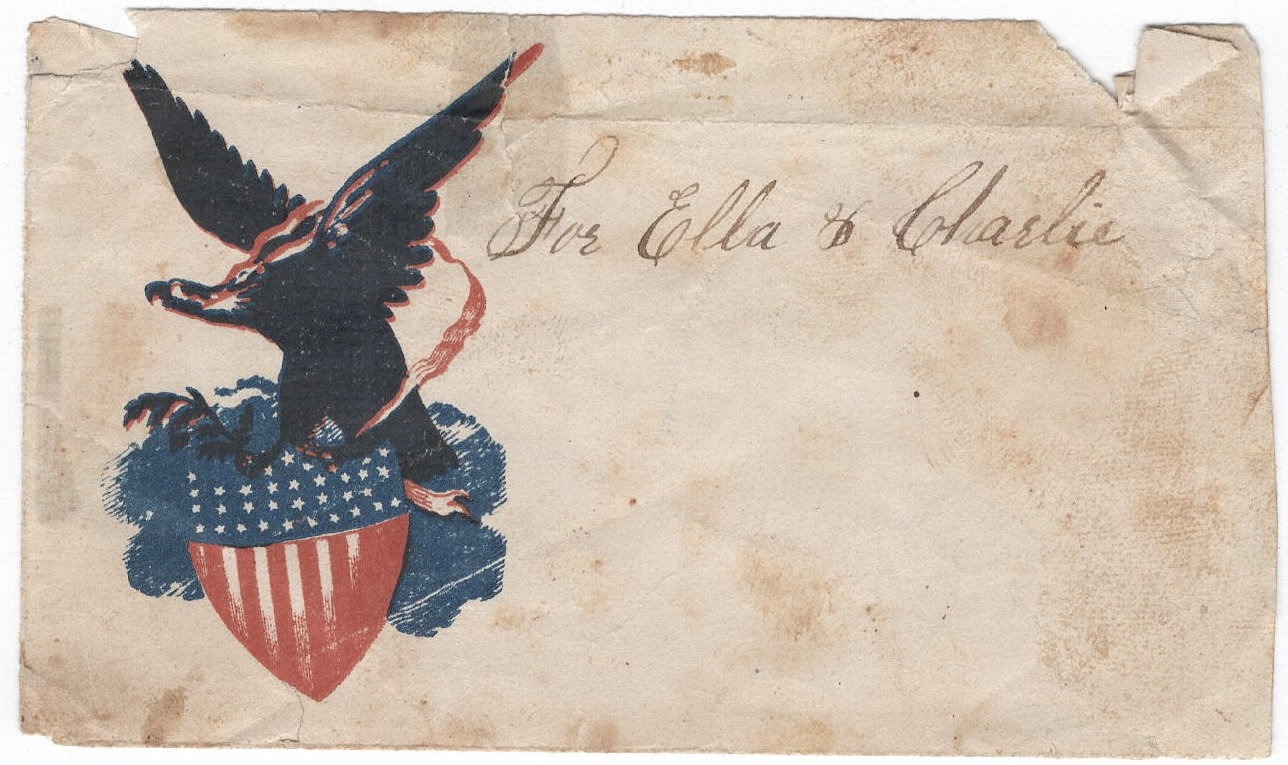
The following letter was written by Julius Theodore Barrett (1823-1862) of Bloomer, Michigan, who kissed his wife of 12 years, Mary Jane (Patrick) Barrett (1826-1897), and his three children, Ella (age 11), Charlie (age 9), and Flora (age 3) to enlist in Co. K, 21st Michigan Infantry on 12 August 1862. He served just over four and a half months before he was killed “by gunshot wound” at the Battle of Stones River on 31 December 1862.
In this heart-wrenching letter from the banks of the Ohio River near Louisville, Julius communicates to his children, for their “amusement and instruction,” a glimpse into the harrowing sights and scenes he has observed since departing from home. He recounts the war’s “blighting and desolating” impacts on the citizens he met in Kentucky, alongside descriptions of various scenes in Louisville. Our awareness of his impending death renders the act of reading this letter all the more difficult.
T R A N S C R I P T I O N
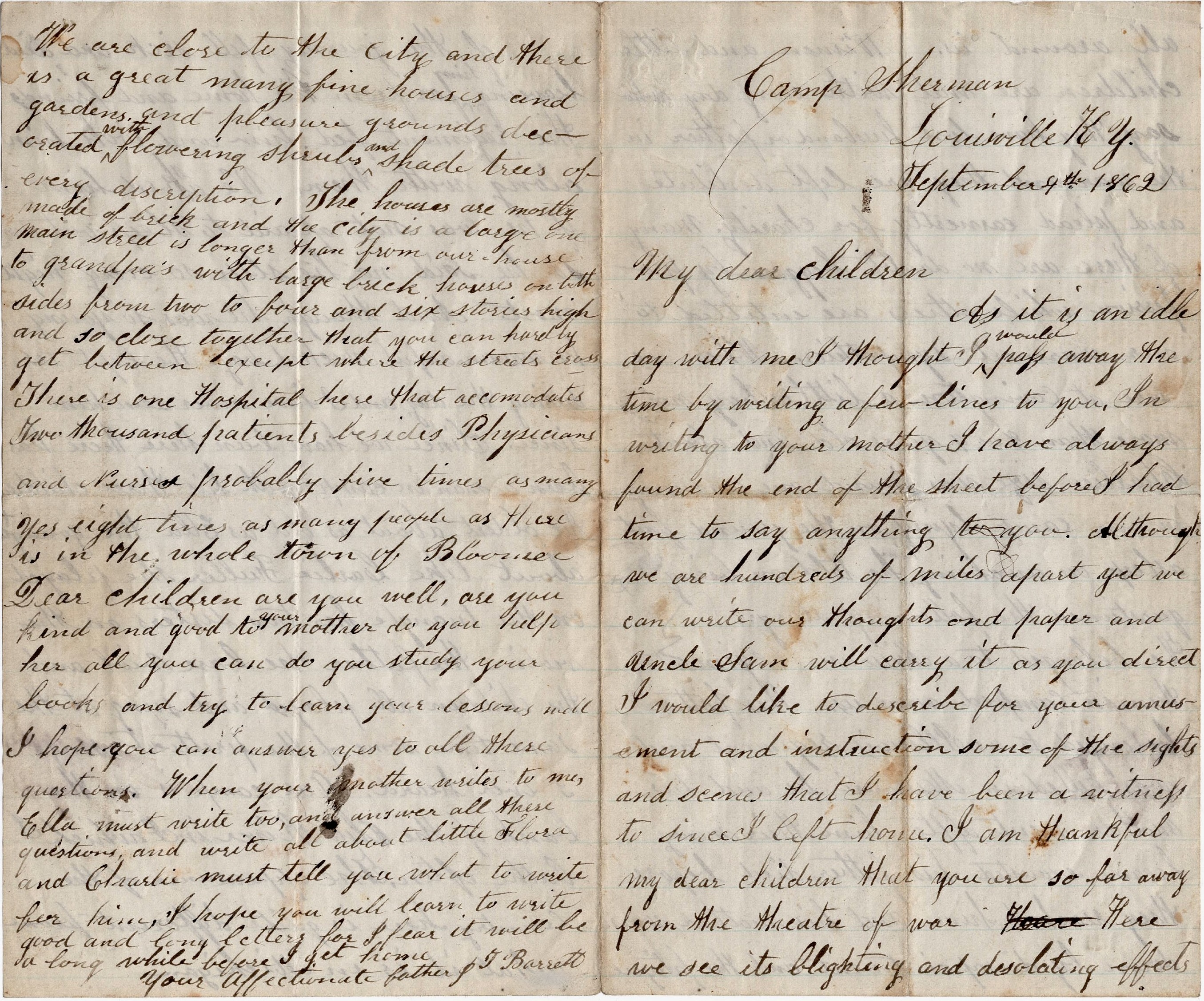
Camp Sherman
Louisville, Kentucky
September 9th 1862
My dear children,
As it is an idle day with me, I thought I would pass away the time by writing a few lines to you. In writing to your mother, I have always found the end of the sheet before I had time to say anything to you. Although we are hundreds of miles apart, yet we can write our thoughts on paper and Uncle Sam will carry it as you direct.
I would like to describe for your amusement and instruction some of the sights and scenes that I have been a witness to since I left home. I am thankful, my dear children, that you are so far away from the theatre of war. Here we see its blighting and desolating effects all around us. Women and little children are met with every day who say they have lost husband or father in the war and they are left destitute and plead earnestly for charity. Many of these are no doubt beggars by profession while others are entitled to our warmest sympathies.
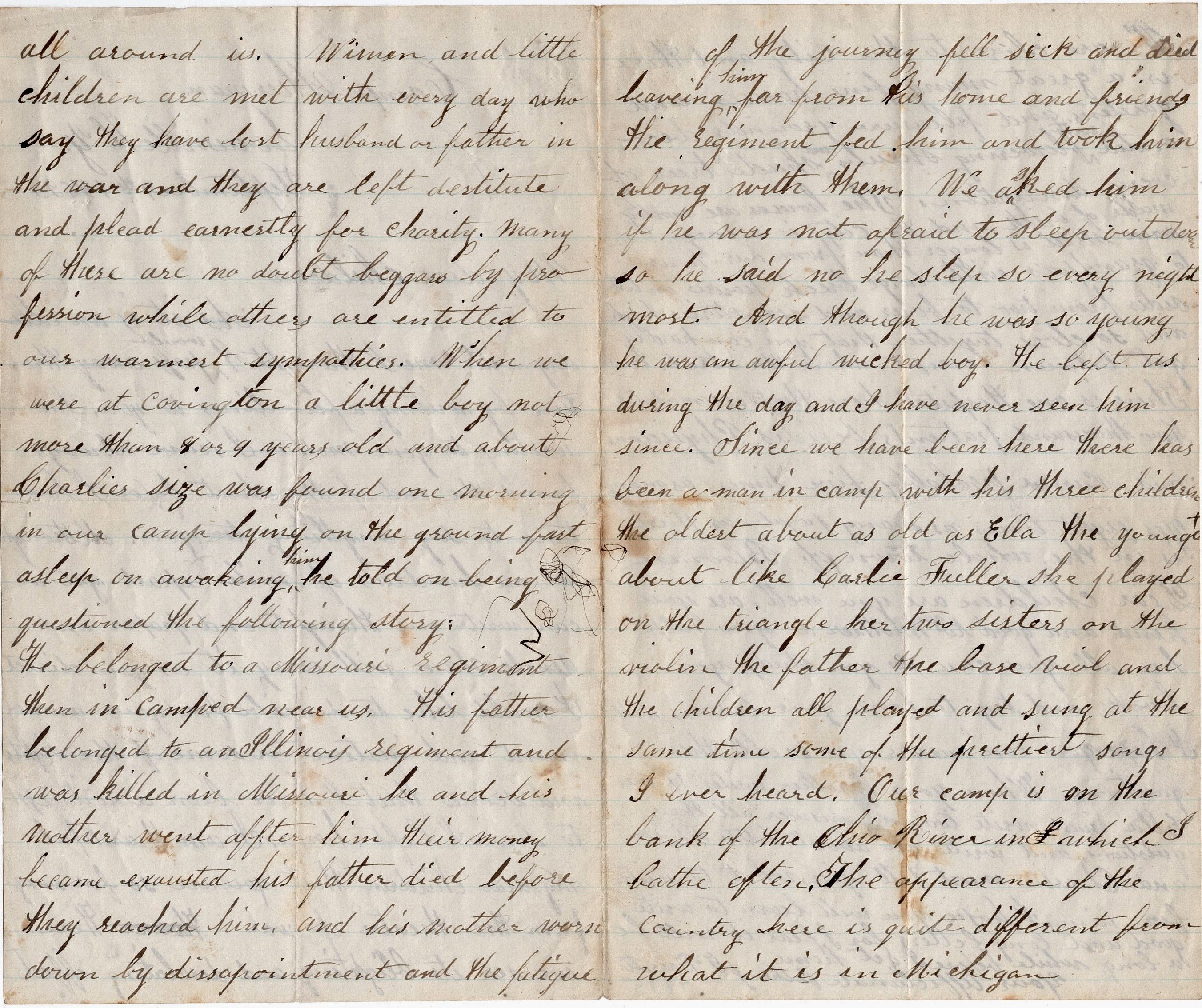
When we were at Covington, a little boy not more than 8 or 9 years old and about Charlie’s size was found one morning in our camp lying on the ground fast asleep. On awakening him, he told on being questioned the following story. He belonged to a Missouri regiment then in camp near us. His father belonged to an Illinois regiment and was killed in Missouri. He and his mother went after him. Their money became exhausted, his father died before they reached him, and his mother wore down by disappointment and the fatigue of the journey, fell sick and died leaving him far from his home and friends. The regiment fed him and took him along with them. We asked him if he was not afraid to sleep out doors so. He said no—he slept so every night most. And though he was so young, he was an awful wicked boy. He left us during the day and I have never seen him since.
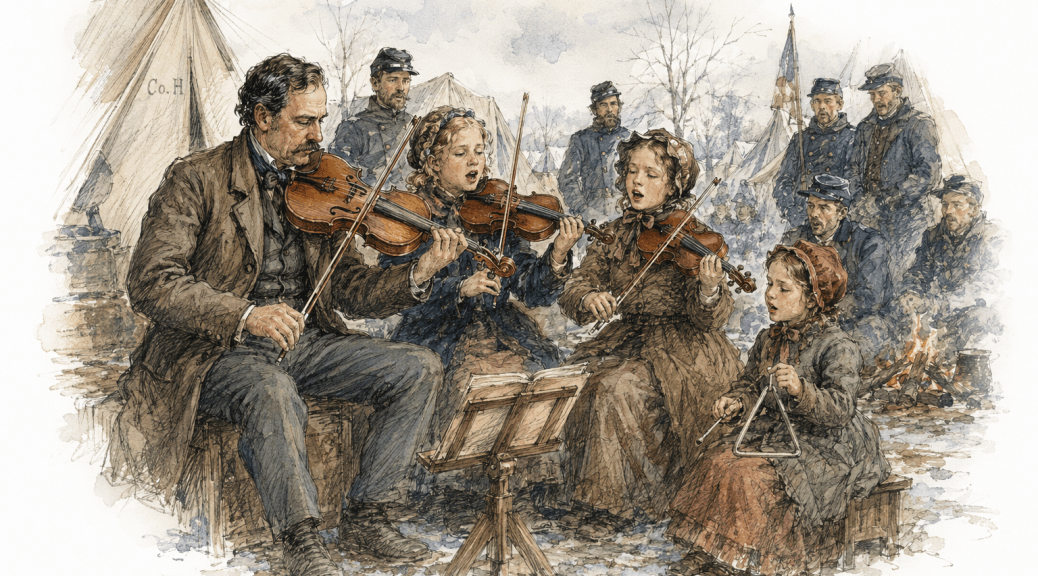
Since we have been here, there has been a man in camp with his three children, the oldest about as old as Ella. The youngest about like Carlie Fuller. She played on the triangle, her two sisters on the violin, the father the base viol and the children all played and sung at the same time some of the prettiest songs I ever heard.
Our camp is on the bank of the Ohio River in which I bathe often. The appearance of the country here is quite different from what it is in Michigan. We are close to the city and there is a great many fine houses and gardens and pleasure grounds decorated with flowering shrubs and shade trees of every description.The houses are mostly made of brick and the city is a large one. Main Street is longer than from our house to grandpa’s with large brick houses on both sides from two to four and six stories high and so close together that you can hardly get between except where the streets cross. There is one hospital here that accommodates two thousand patients, besides physicians and nurses, probably five times as many—yes, eight times as many people as there is in the whole town of Bloomer.
Dear children, are you well? Are you kind and good to your mother? Do you help her all you can? Do you study your books and try to learn your lessons? Well I hope you can answer yes to all these questions. When your mother writes to me, Ella must write too, and answer all these questions and write all about little Flora and Charlie must tell you what to write for him. I hope you will learn to write good and long letters for I fear it will be a long while before I get home.
Your affectionate father, — J. T. Barrett