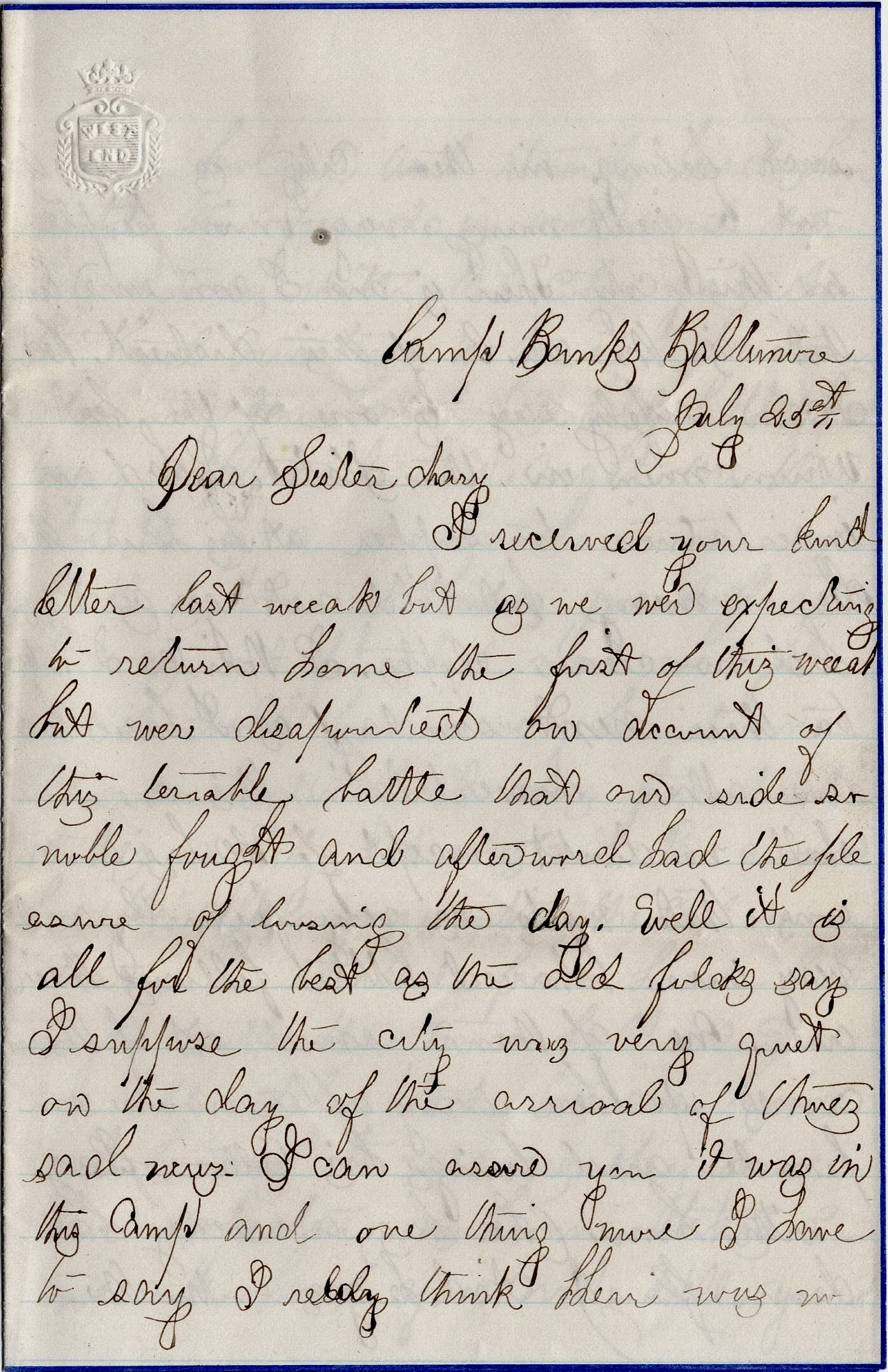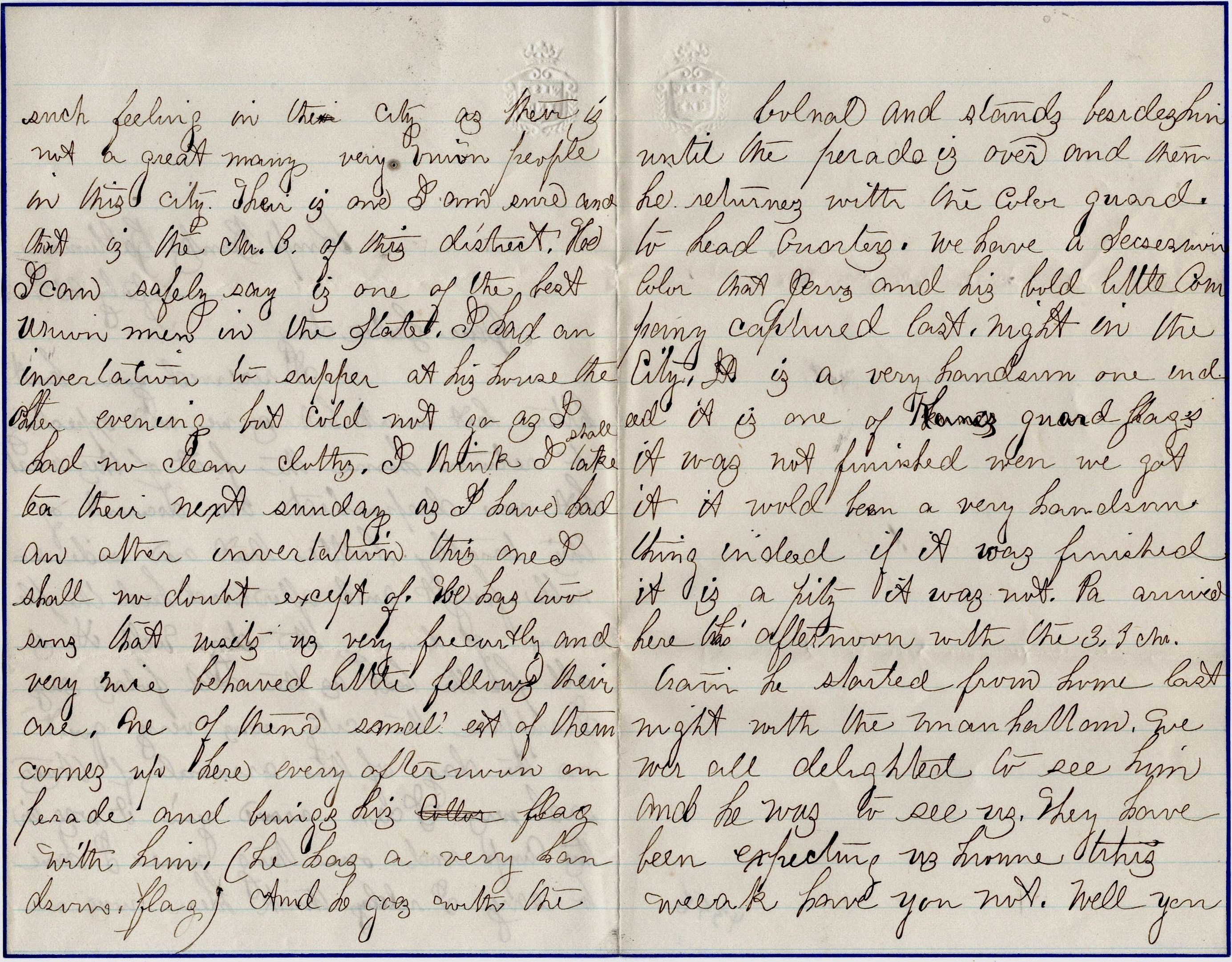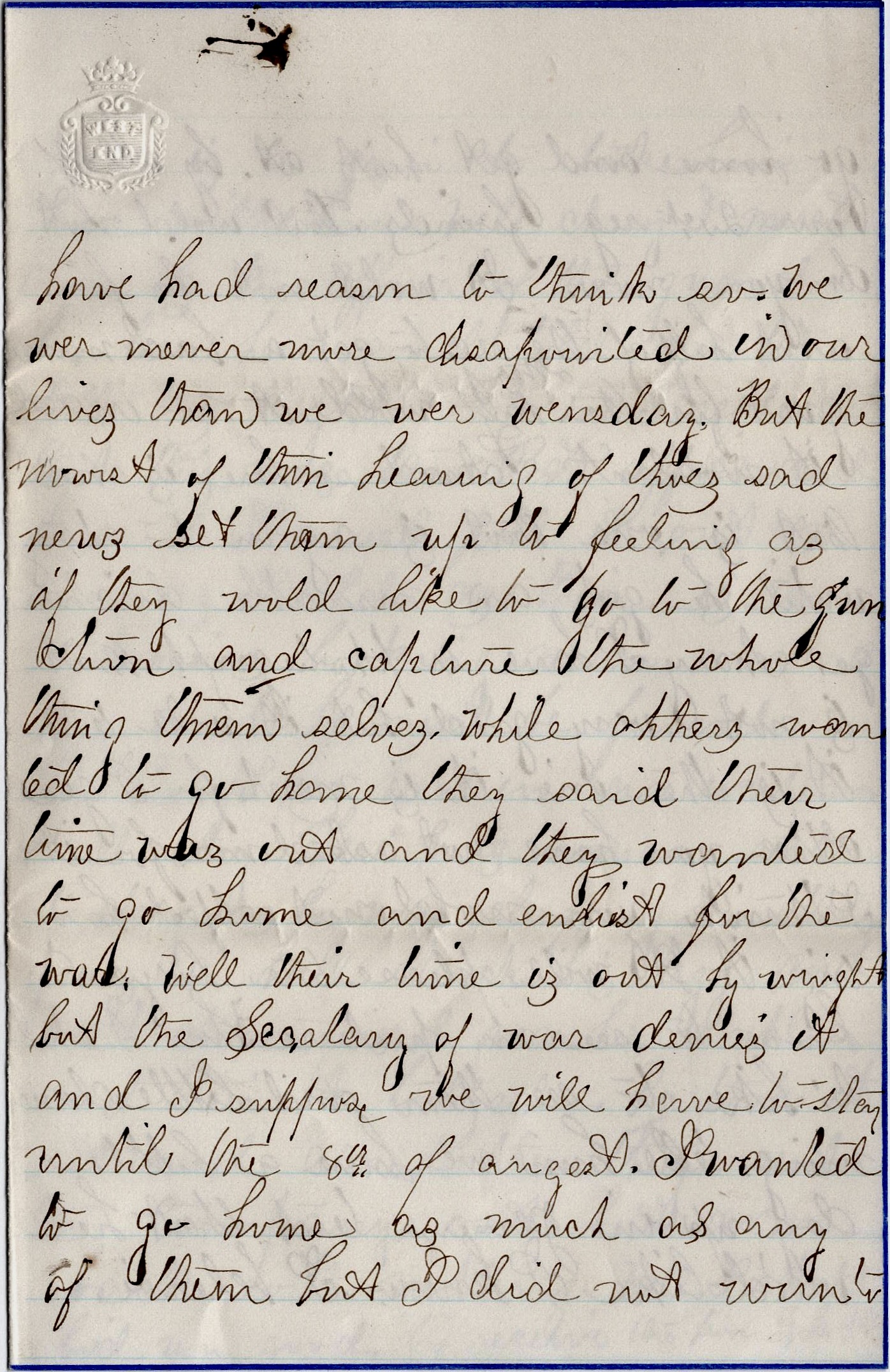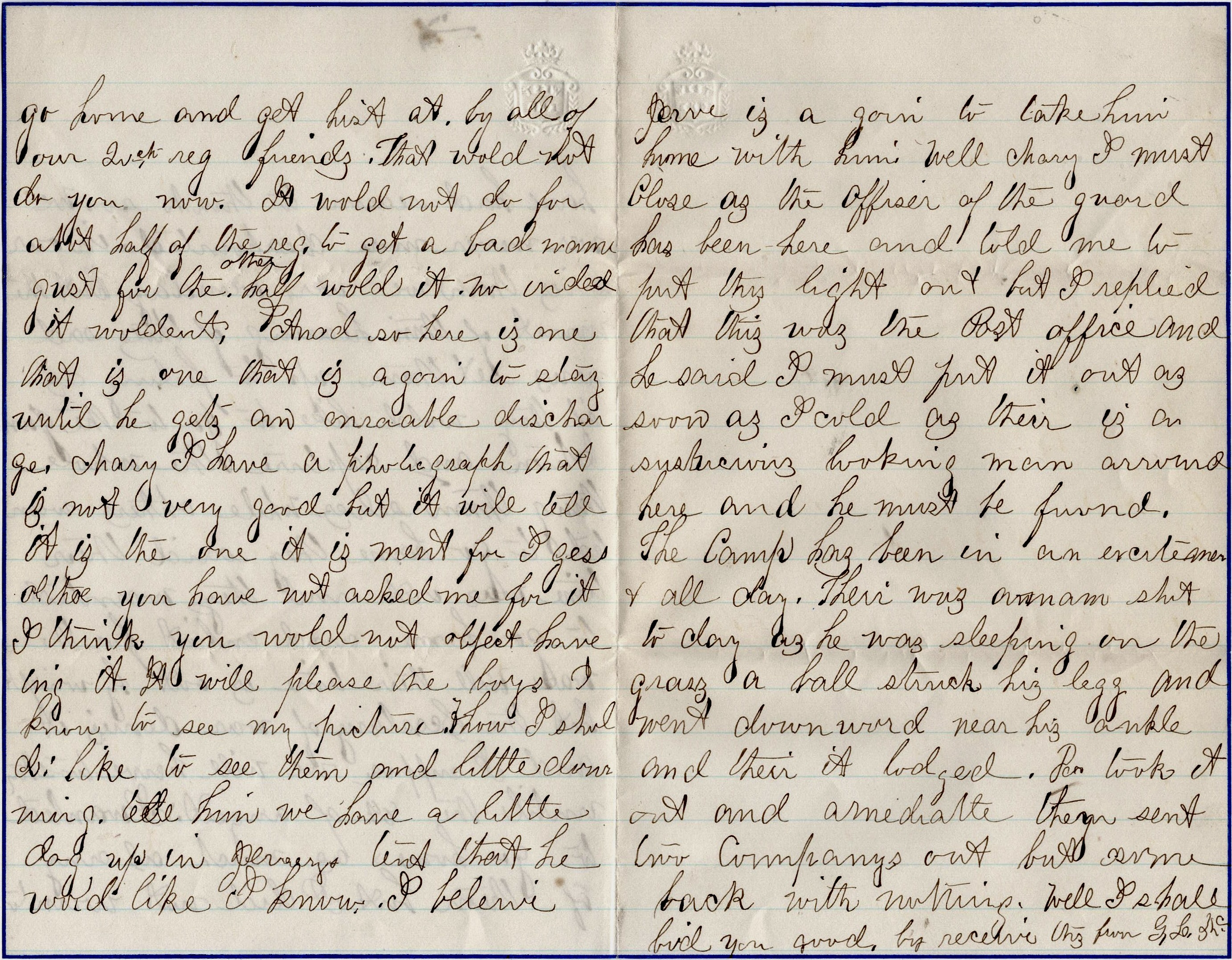
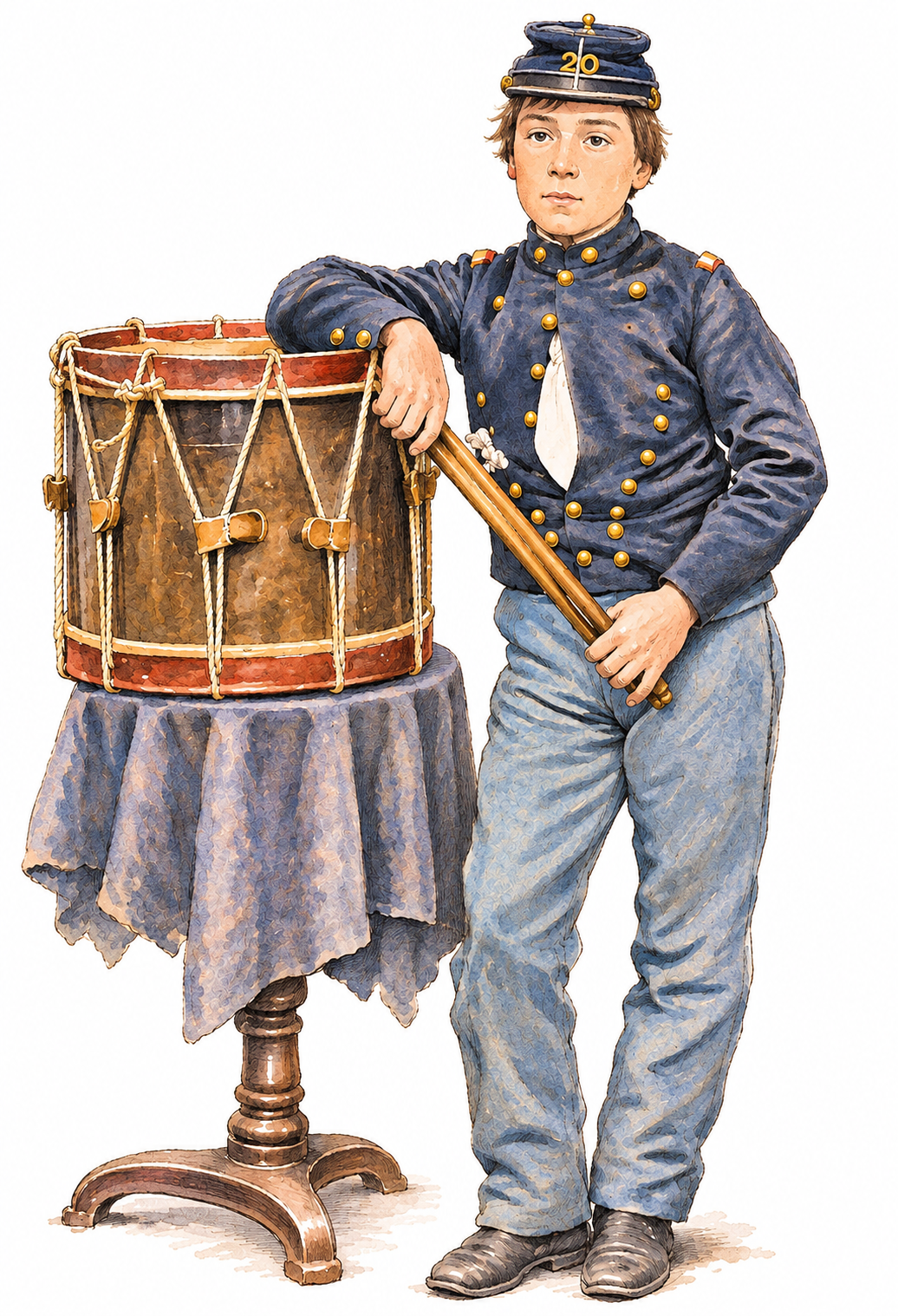
This incredible letter was written by Girard Lindsley McEntee (1847-1913) who enlisted at the age of 14 to serve as a drummer in Co. F, 20th New York State Militia (a.k.a. “Ulster Guard.” He was the son of James Smith McEntee (1800-1887) and Sarah Jane Goetchius (1805-1883) of Rondout, Ulster county, New York. He served from April through August in 1861. Serving with him in the same regiment were two older brothers, lieutenants, Jervis McEntee (1828-1891) and Maurice Wurts McEntee (1836-1883). In 2024, one of Jervis’ letters came to me for transcription which can be found here—1861: Jervis McEntee to Anna Gertrude (Sawyer) McEntee.
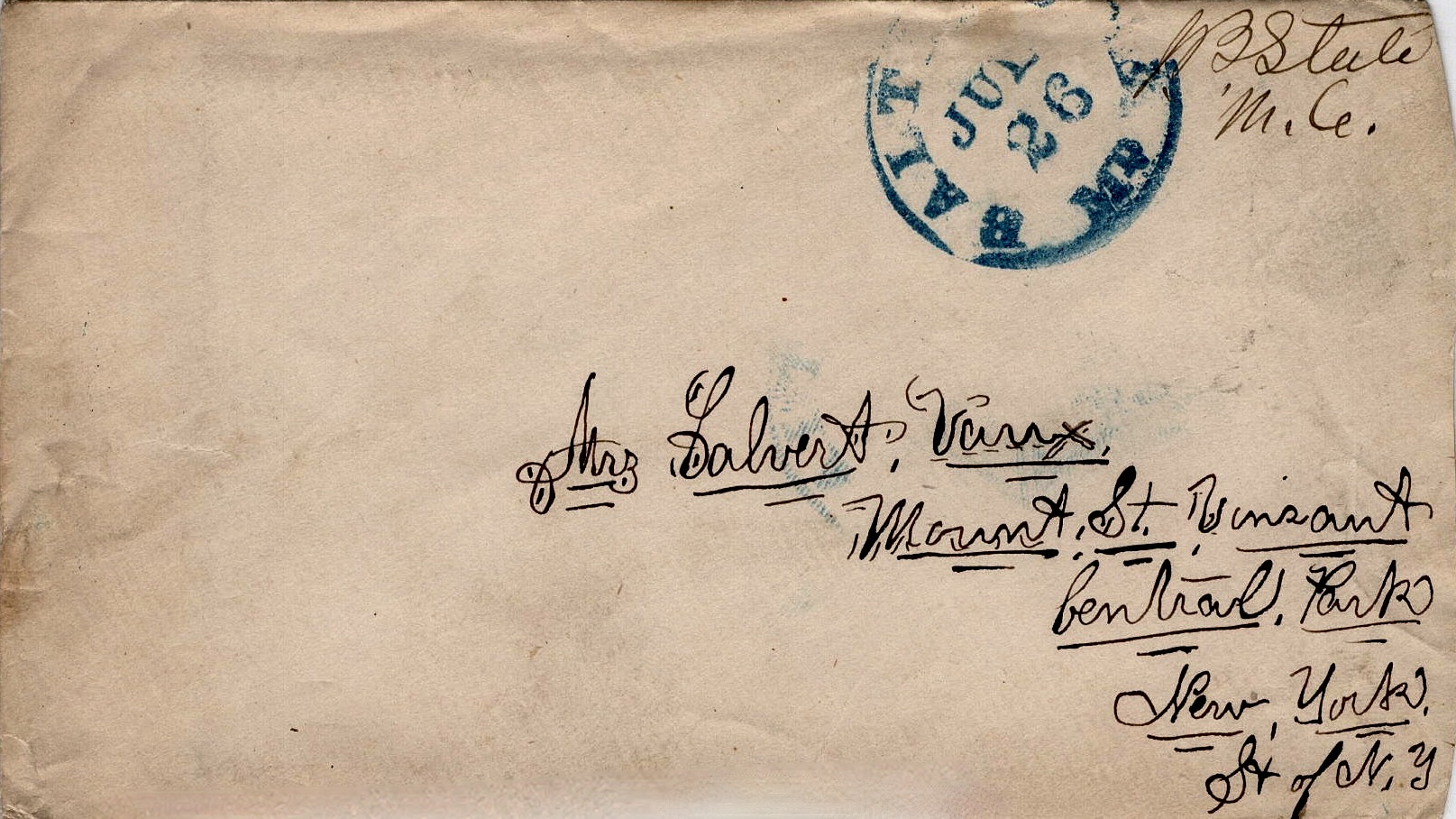
Girard wrote this letter to his older sister, Mary Swan (McEntee) Vaux (1830-1892), the wife of Calvert Vaux—a prominent landscape architect who collaborated with Frederick Law Olmstead in the design of Central Park in New York City and well as other important similar projects in Buffalo and Chicago.
Girard’s letter was datelined from Camp Banks near Patterson’s Park on the east side of Baltimore, Maryland, where they had been since the 29th of June, 1861. It contains his reaction to the Battle of Bull Run.
T R A N S C R I P T I O N
Camp Banks, Baltimore
July 25th [1861]
Dear Sister Mary,
I received your kind letter last week but as we were expecting to return home the first of this week but were disappointed on account of this terrible battle that our side so noble fought and afterward had the pleasure of losing the day. Well it is all for the best as the old folks say, I suppose.
The city [of Baltimore] was very quiet on the day of the arrival of this sad news, I can assure you. I was in the camp and one thing more I have to say, I really think there was no such feeling in this city as there is not a great many very union people in this city. There is one, I am sure, and that is the Mr. B of this district. He, I can safely say, is one of the best Union men in the state. I had an invitation to supper at his house the other evening but could not go as I had no clean clothes. I think I shall take tea there next Sunday as I have had another invitation. This one I shall no doubt accept of. He has two sons that visits us very frequently and very nice behaved little fellows they are. One of them—smallest of them—comes up here every afternoon on parade and brings his flag with him (he has a very handsome flag). And he goes with the Colonel [George Watson Pratt] and stands beside him until the parade is over and then he returns with the color guard to headquarters. 1
We have a secession color that Jervis and his bold little company captured last night in the city. It is a very handsome one indeed. It is one of Kane’s Guard flags. It was not finished when we got it. It would been a very handsome thing indeed if it was finished. It is a pity it was not. 2
Pa arrived here this afternoon with the 3 o’clock train. He started from home last night with the [steamer] Manhattan. We were all delighted to see him and he was to see us. They have been expecting us home this week. Have you not? Well, you have had reason to think so. We were never more disappointed in our lives than we were Wednesday. But the most of them hearing of this sad news, set them up to feeling as if they would like to go to the [Manassas] Junction and capture the whole thing themselves. While others wanted to go home—they said their time was out and they wanted to go home and enlist for the war. Well their time is out by right, but the Secretary of War denies it and I suppose we will have to stay until the 8th of August. I wanted to go home as much as any of them but I did not want to go home and get hissed at by all of our 20th Regiment friends. That would not do, you now. It would not do for about half of the regiment to get a bad name just for the other half, would it? No, indeed, it wouldn’t. And so here is one that is agoin’ to stay until he gets an honorable discharge.
Mary, I have a photograph that is not very good but it will tell. It is the one it is meant for, I guess, although you have not asked me for it. I think you would not object having it. It will please the boys, I know, to see my picture. How I should like to see them. And little Downing, tell him we have a little dog up in Jervrey’s tent that he would like, I know. I believe Jerce is agoin’ to take him home with him.
Well, Mary, I must close as the Officer of the Guard has been here and told me to put the light out but I replied that this was the Post Office and he said I must put it out as soon as I could as there is a suspicious looking man around here and he must be found. The camp has been in an excitement all day. There was a man shot today as he was sleeping on the grass. A ball struck his leg and went downward near his ankle and there it lodged. Dr. took it out and immediately then sent two companies out but came back with nothing. 3
Well, I shall bid you goodbye. Receive this from G. L. Mc.
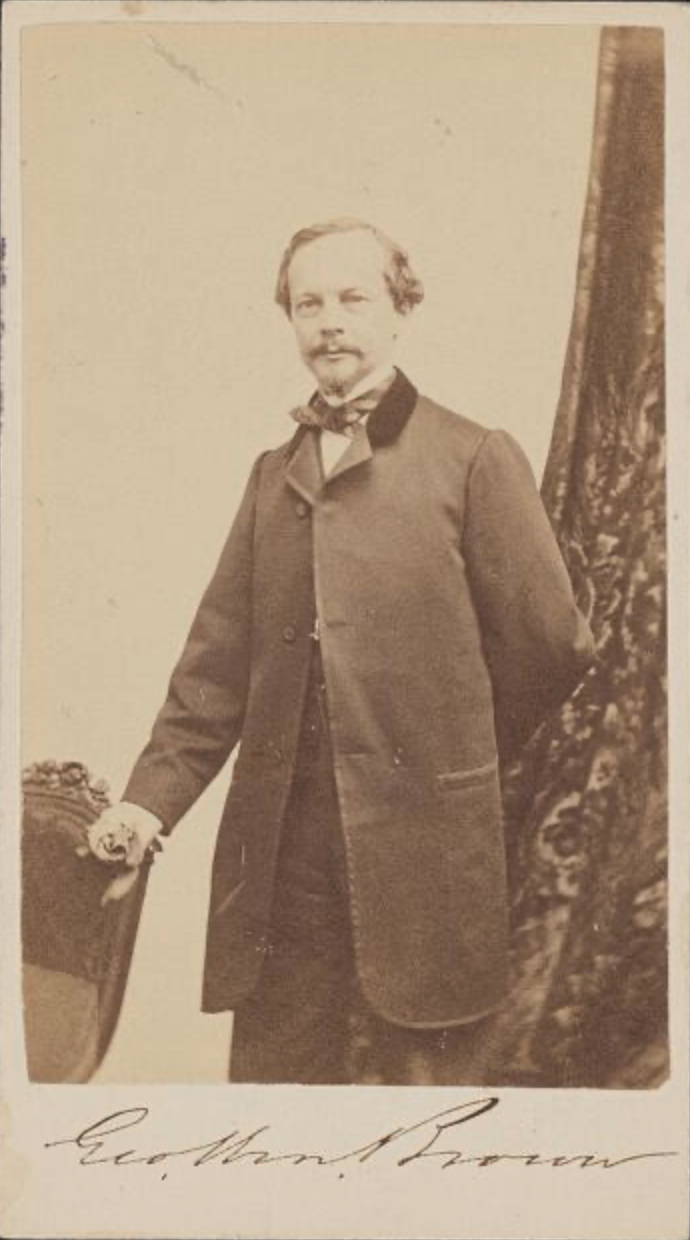
1 My hunch is that “Mr. B” was none other than George William Brown (1812-1890), the mayor of Baltimore. He was married to Clara Maria Brune (1817-1919) and the two young boys that Girard mentions would have been his sons, Arthur (b. 1843), and Frederick (b. 1847).
2 In the regimental history of the Ulster Guard” by Theodore B. Gates (page 105), it is reported that, “Frequent detachments were sent out in search of concealed arms designed for improper purposes, and large quantities were from time to time seized. A large quantity of arms and munitions of war, were found concealed in the building occupied by Marshal Kane. Captain Lent’s Co. E. went out at midnight, on the 24th of July, a short distance from camp, on the Philadelphia Road, and fished out from under a hay rick a quantity of arms and war munitions. About the same time Lieut. Jervis M’ Entee, H. Co., captured two secession flags, which were about being sent South. In one house where a search was made for arms, was found among other things, a drum belonging to the Sixth Massachusetts Regiment, and which had been captured at the time of the brutal atack upon the regiment in the streets of Baltimore. We took possession of the drum not only, but also of its custodian, and turned him over to the Provost-Marshal to explain the circumstances under which the drum came into his possession. It was prima facie evidence of his connection with the rioters who had attacked the Sixth Massachusetts.”
3 The regimental history (page 108) informs us that, “A few days before our final departure from Patterson Park, Simon S. Roos, of Company C, was wounded in the leg by a Minie ball whilst he was lying upon a bench, within a hundred yards of regimental headquarters, and far inside the line of sentinels. No report of the gun was heard, and no one could tell from whence the shot came. The direction of the wound indicated that the ball must have been fired from the north side of the camp, and three companies were soon scouring the country, but failed to discover the would-be assassin.”