All posts by Griff

My passion is studying American history leading up to & including the Civil War. I particularly enjoy reading, transcribing & researching primary sources such as letters and diaries.

“I would have sold my skin for a five-cent piece!” Edgar A. Burpee, 19th Maine Infantry at Battle of Fredericksburg

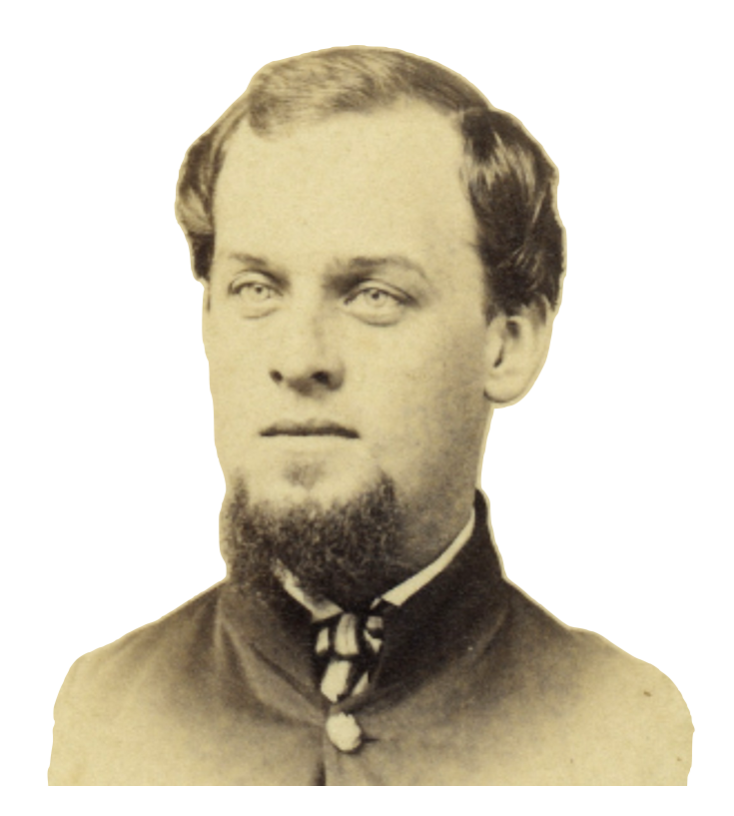
Edgar A. Burpee, Co. I, 19th Maine Infantry Maine State Archives

This incredible letter was written by Edgar Alphonso Burpee (1839 – 1919) of Rockland, Maine, who enlisted in Co. I, 19th Maine Infantry on August 25, 1862. He was mustered in as a corporal and rose in rank to captain of his company in 1863. He was wounded at Gettysburg, and later in the war, while mapping out the enemy’s location, he was captured (June 1864) and was imprisoned at Macon, Georgia, and at Camp Asylum, Columbia, South Carolina. Exchanged and mustered out of the service, he returned to Rockland, married Annie Farwell, and resumed his painting business. Eventually he joined his family’s furniture business.
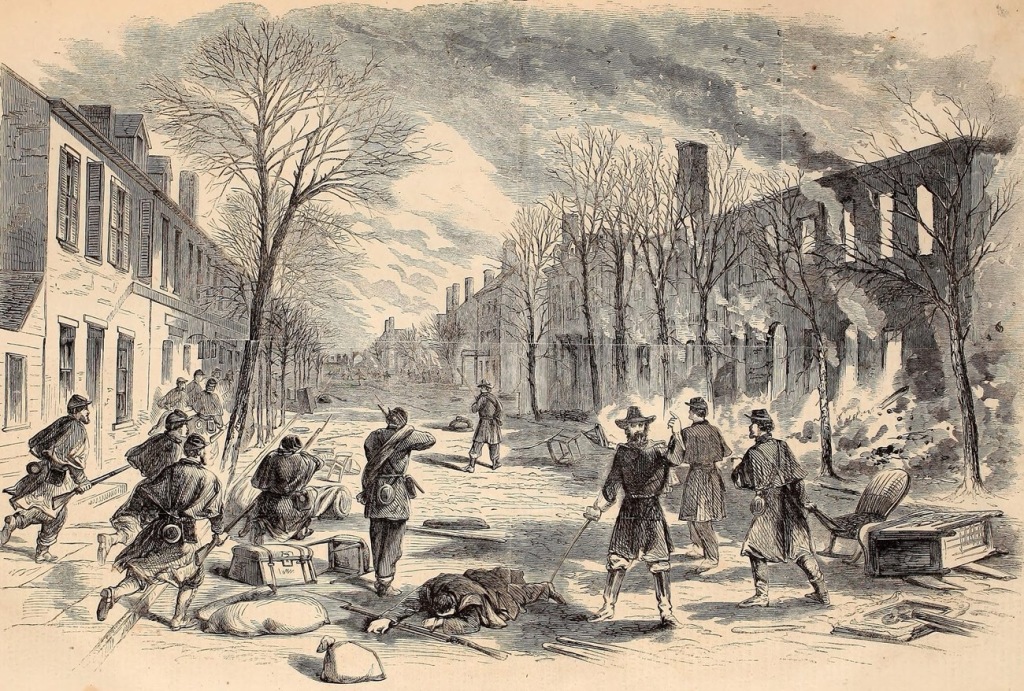
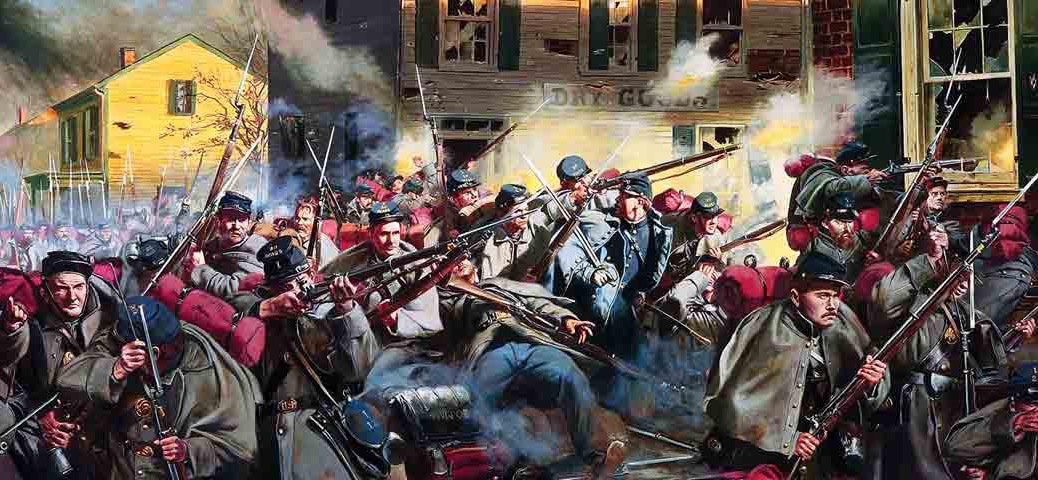
US soldiers fight in the streets of Fredericksburg on 11 December 1862
Harpers Weekly

[Note: This letter is from the private collection of Derrick Williams who made it available for transcription and publication on Spared & Shared by express consent.]

Transcription

Fredericksburg [Virginia]
December 15th 1862

Dear Father,

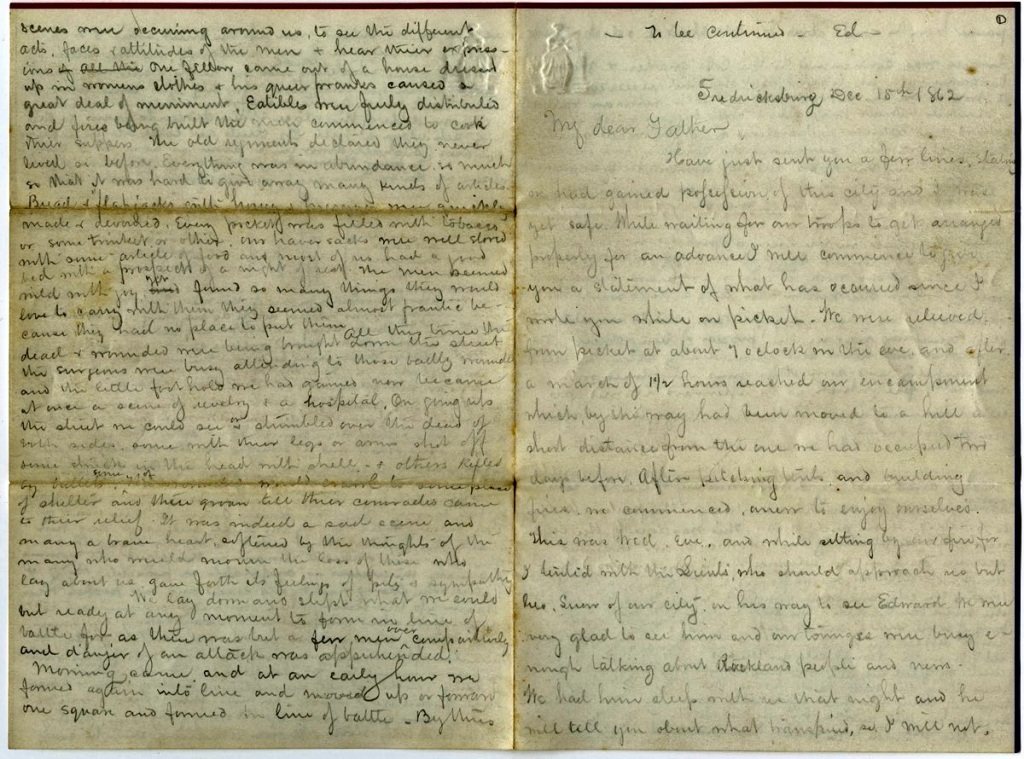
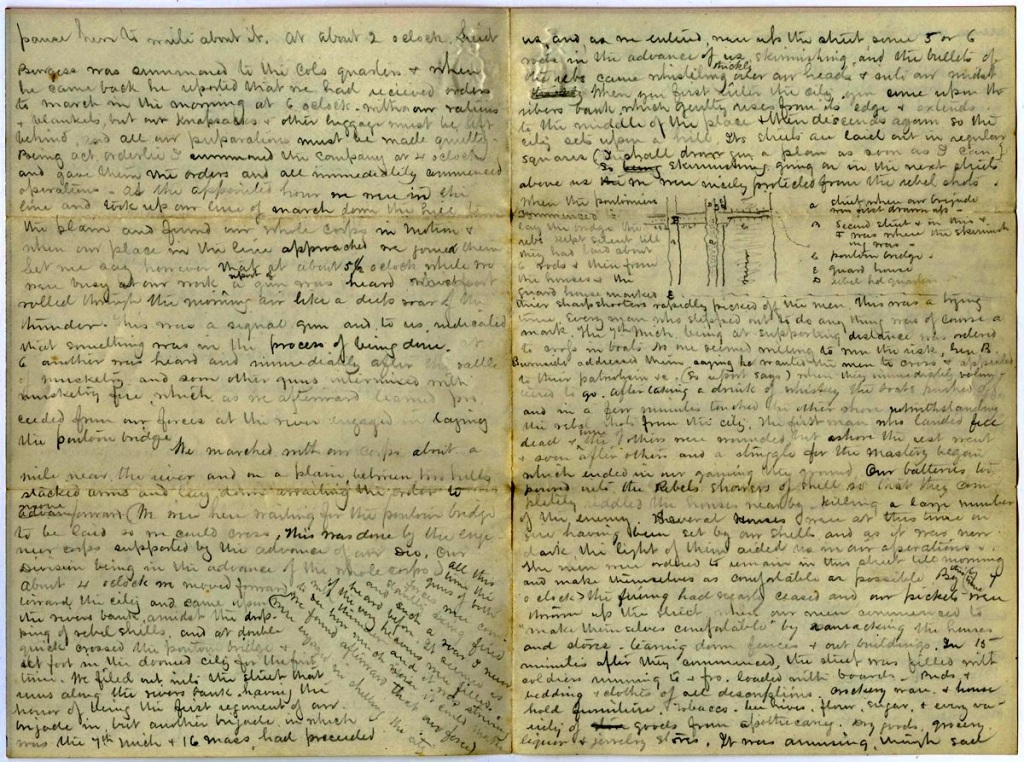
Have just sent you a few lines stating we had gained possession of this city and I was yet safe. While waiting for our troops to get arranged properly for an advance, I will commence to you a statement of what has occurred since I wrote you while on picket. We were relieved from picket at about 7 o’clock in the eve and after a march of 1.5 hours reached our encampment which, by the way had been moved to a hill a short distance from the one we had occupied two days before. After pitching tents, and building fires, we commenced anew to enjoy ourselves. This was Wednesday evening and while sitting by our fire for I tented with the Lieutenants, who should approach us but Geo. Green of our city on his way to see Edward. We were very glad to see him and our tongues were busy enough talking about Rockland people and news. We had him sleep with us that night and he will tell you about what transpired so I will not pause here to write about it.

At about 2 o’clock, Lieut. [Gershom F.] Burgess was summoned to the Colonel’s quarters and when he came back he reported that we had received orders to march in the morning at 6 o’clock with our rations and blankets but not knapsacks & other baggage must be left behind, and all our preparations must be made quietly. Being acting orderly, I summoned the company at 4 o’clock and gave them the orders and all immediately commenced operations. At the appointed hour we were in the line and took up our line of march down the hill to the plain and found our whole corps in motion & when our place in the line approached, we found them. Let me say, however, that at about 5:30 o’clock, while we were busy at our work, the report of a gun was heard which rolled through the morning air like a deep roar of the thunder. This was a signal gun and to us indicated that something was in the process of being done. At 6 another was heard and immediately after the rattle of musketry and some other guns intertwined with musketry from our forces at the river engaged in laying the pontoon bridge.

We marched with our Corps about a mile near the river and on a plain between the two hills stacked arms and lay down awaiting the order to move forward. We were here waiting for the ponton bridge to be laid so we could cross. This was done by the Engineer Corps supported by the advance of our division (our division being in the advance of the whole corps). All this time the guns of both forces were constantly being fired and such a roar I never heard before. It seems as if the very heavens were filled with thunder and it was striving to see how much noise it could make. We found afterward that our force were engaged in shelling the city.

About 4 o’clock we moved forward toward the city and came upon the river bank amidst the dropping of rebel shells, and at double quick crossed the pontoon bridge & set foot in the doomed city for the first time. We filed out into the street that runs along the river’s bank, having the honor of being the first regiment of our brigade in, but another brigade, in which was the 7th Michigan & 16th Massachusetts had preceded us, and as we entered, ran up the street some 5 or 6 rods in the advance of us skirmishing and the bullets of the rebs came whistling thickly over our heads and into our midst.

When you first enter the city, you come upon the river’s bank which gently rises from its edge and extends to the middle of the place & then descends again so the city sits upon a hill. Its streets are laid out in regular squares (I shall draw you a plan as soon as I can). Some skirmishing going on in the next street above us. The men nicely protected from the rebel shots.
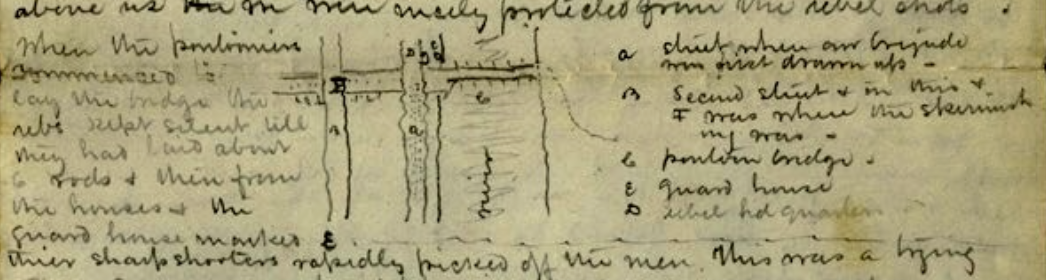
When the pontooniers commenced to lay the bridge, the rebs kept silent till they had laid about 6 rods & then from the houses & the guard house marked [on sketch], their sharpshooters rapidly picked off the men This was a trying time. Every man who stepped out to do anything was of course a mark. The 7th Michigan being at supporting distance was ordered to cross in boats. No one seemed willing to run the risk. Gen. Burnside addressed them saying he wanted the men to cross & appealed to their patriotism &c. (so report says) when they immediately volunteered to go. After taking a drink of whiskey, the boats pushed off and in a few minutes touched the other shore notwithstanding the rebel shots from this city. The first man who landed fell dead & some of the others were wounded but ashore the rest went & soon after others and a struggle for the mastery began which ended in our gaining the ground.

The laying of the pontoon bridge over the Rappahannock

Our batteries too poured into the Rebels showers of shell so that they completely riddled the houses nearby killing a large number of the enemy. Several houses were at this time on fire having been set by our shells and as it was near dark, the light of them aided us in our operations. The men were ordered to remain in this street till morning and make themselves as comfortable as possible. By 7 o’clock the firing had nearly ceased and our pickets were thrown up the street when our men commenced to making themselves comfortable by ransacking the houses and stores, tearing down fences and out buildings. In 15 minutes after they commenced, the street was filled with soldiers running to and fro, loaded with boards, beds and bedding and clothes of all descriptions, crockery ware and household furniture, tobacco, bee hives, flour, sugar, and every variety of goods from apothecary, dry goods, grocery, liquor, and jewelry stores. It was amusing though sad scenes were occurring around us, to see the different acts, faces & attitudes of the men & hear their expressions. One fellow came out of a house dressed up in women’s clothes & his queer pranks caused a great deal of merriment. Eatibles were freely distributed and fires being built them men commenced to cook their suppers.
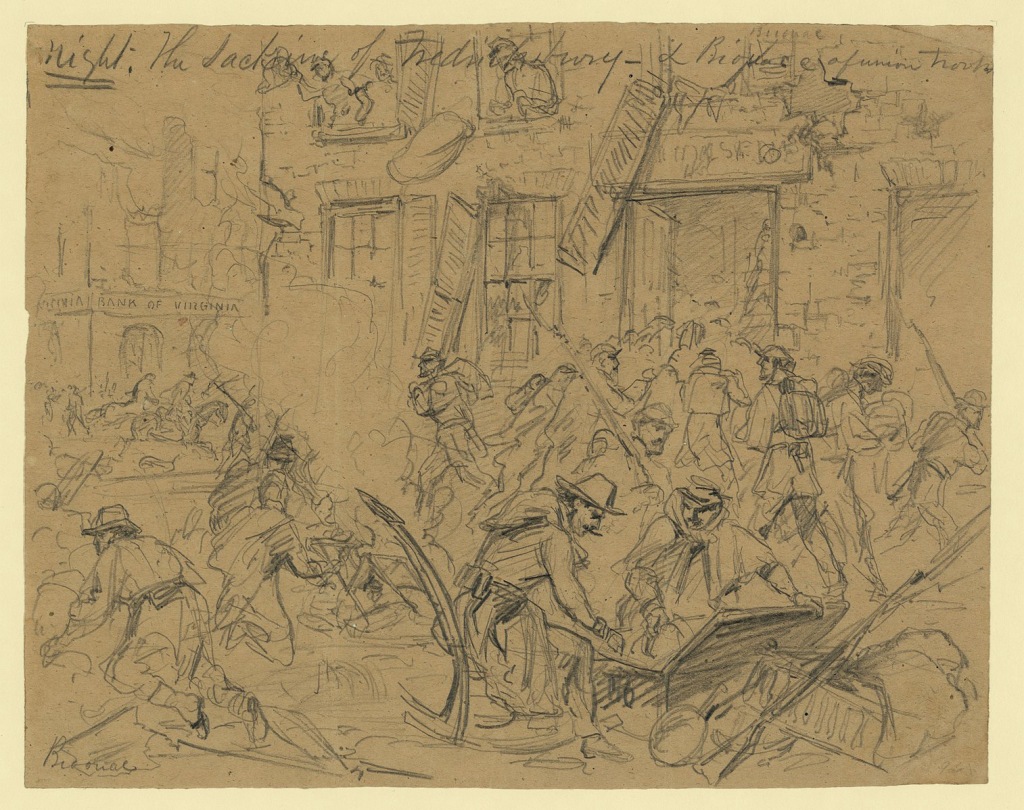
The ransacking of Fredericksburg by Union troops

The old regiments declared thy never lived as before. Everything was in abundance, so much so that it was hard to give away many kinds of articles. Bread and flapjacks with honey & preserves were quickly made and devoured. Every pocket was filled with tobacco or some trinket or other. Our haversacks were well stored with some article of food and most of us had a good bed with a prospect of a night of rest. The men seemed wild with joy, yet found so many things they would love to carry with them they seemed almost frantic because they had no place to put them.

All this time the dead and wounded were being brought down the street. The surgeons were busy attending to those badly wounded and the little foothold we had gained now became at once a scene of revelry & a hospital. On going up the street we could see & stumbled over the dead of both sides, some with their legs or arms shot off, some struck in the head with shell, and others rifled by bullets. Some of the wounded would crawl to some place of shelter and there groan till their comrades came to their relief. It was indeed a sad scene and many a brave heart softened by the thoughts of the many who would mourn the loss of those who lay about us gave forth its feelings of pity and sympathy.

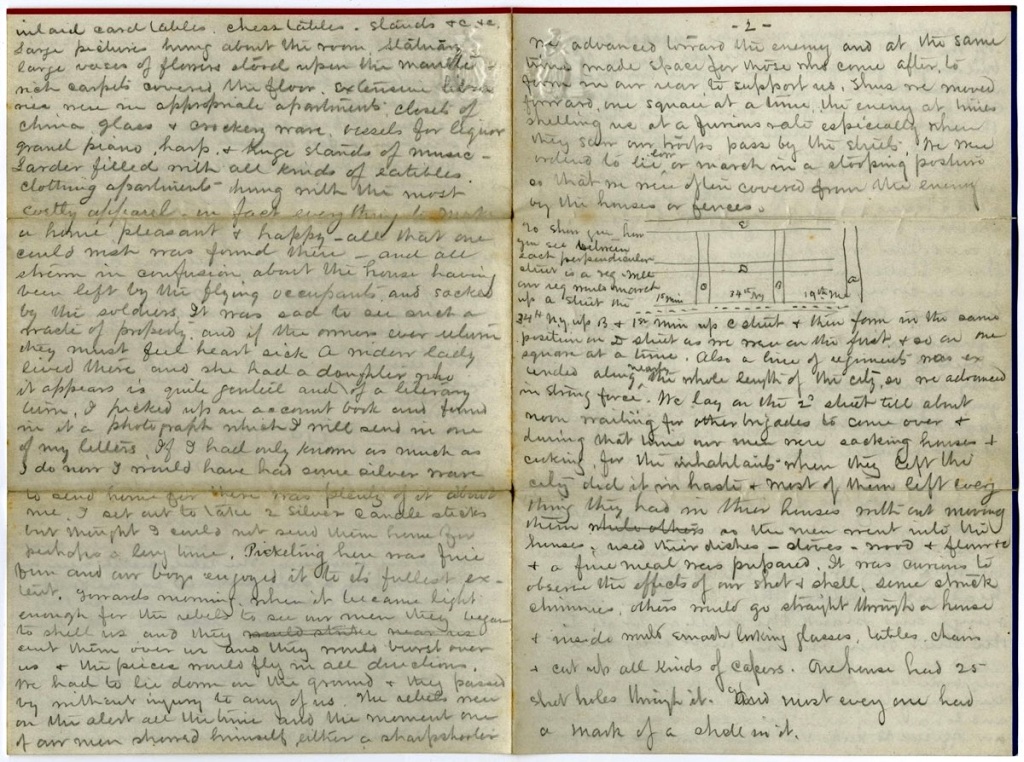
We lay down and slept what we could but ready at any moment to form in line of battle for as there was but few men over comparatively and danger of an attack was apprehended. Morning came and at any early hour we formed again into line and moved up or toward one square and formed in line of battle. By this we advanced toward the enemy and at the same time made space for more who came after, to form in our rear to support us. Thus we moved forward, one square at a time, the enemy at times shelling us at a furious rate—especially when they saw our troops pass by the streets. We were ordered to lie low or march in a stooping position so that we were often covered from the enemy by the houses or fences.

To show you how you see between each perpendicular street is a regiment. Our regiment marched up A street, the 34th New York up B, 1st Minnesota up C street, and then form in the same position in D street as we were on the first, and so on, one square at a time. Also a line of regiments was extended along nearly the whole length of the city so we advanced in strong force. We lay on the 2nd street till about noon waiting for other brigades to come over and during that time our men were sacking houses & cooking, for the inhabitants, when they left the city, did it in haste and most of them left everything they had in their houses without moving them. As the men went into the houses, used their dishes, stoves, wood, and flour, &c. and a fine meal was prepared. It was curious to observe the effects of our shot and shell. Some struck chimneys, others would go straight through a house & inside would smash looking glasses, tables, chairs, and cut up all kinds of capers. One house had 25 shot holes through it. And most every one had a mark of a shell in it.
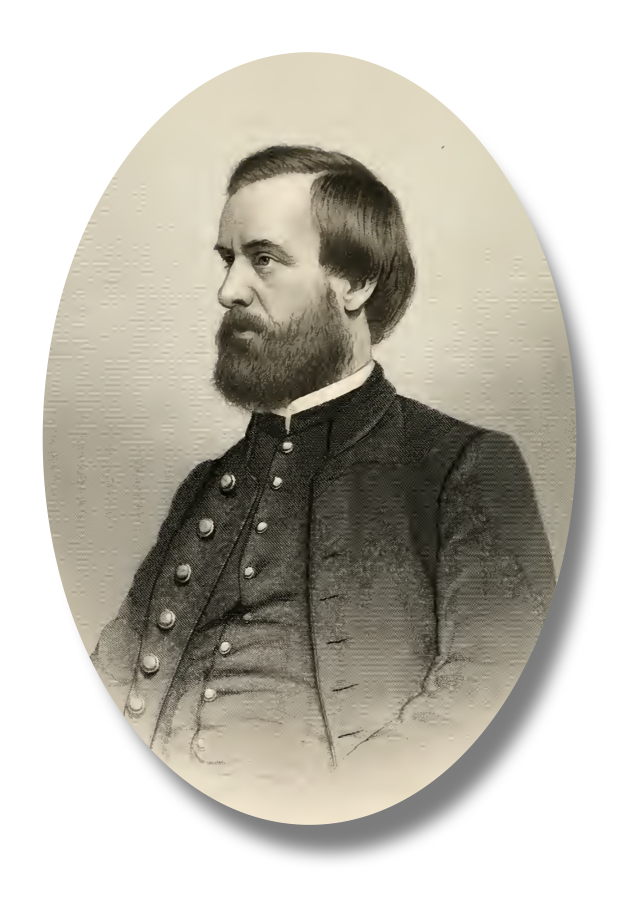
Chaplain A. B. Fuller, 16th Mass. Regt.

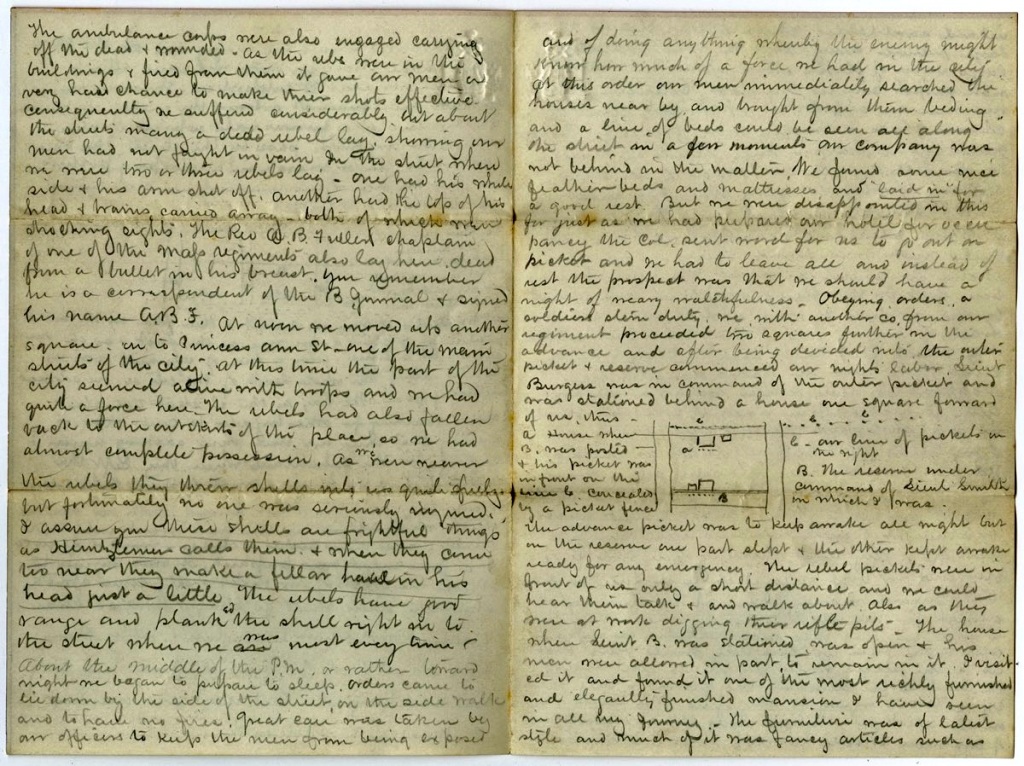
The ambulance corps were also engaged carrying off the dead and wounded. As the rebs were in the buildings & fired from them, it gave our men a very hard chance to make their shots effective. Consequently we suffered considerably. All about the streets, many a dead rebel lay, showing our men had not fought in vain. In the street where we were two or three rebels lay; one had his whole side and his arm off, another had the top of his head and brains carried away—both shocking sights. The Rev. A[arthur] B[uckminster] Fuller, chaplain of one of the Mass. Regiments also lay here dead from a bullet in his breast. You remember he is a correspondent of the Boston Journal and signed his name A. B. F.

At noon we moved up another square in to Princess Ann Street—one of the main streets of the city. At this time the part of the city seemed alive with troops and we had quite a force here. The rebels had also fallen back to the outskirts of the place so we had almost complete possession. As we were nearer the rebels they threw shells into us quite freely but fortunately no one was seriously injured. I assure you these shells are frightful things as [Gen.] Heintzelman calls them and when they come too near they make a feller haul in his head just a little. The rebels have good range and plunked the shell right into the street where we was most every time.

About the middle of the p.m., or rather toward night, we began to prepare to sleep. Orders came to lie down by the side of the street, on the sidewalk, and to have no fires. Great care was taken by our officers to keep the men from being exposed and of doing anything whereby the enemy might know how much of a force we had in the city. At this order our men immediately searched the houses nearby and brought from them bedding and a line of beds could be seen all along the street in a few moments. Our company was not behind in the matter. We found some nice feather beds and mattresses and “laid in” for a good rest. But we were disappointed in this for just as we had prepared our hotel for occupancy, the Colonel sent word for us to go out on picket and we had to leave all and instead of rest, the prospect was that we should have a night of weary watchfulness.

Obeying orders—a soldier’s stern duty—we with another company from our regiment proceeded two squares further in the advance and after being divided into the outer picket and reserve, commenced our night’s labor. Lieut. Burgess was in command of the outer picket and was stationed behind a house one square forward of us thus [sketch]
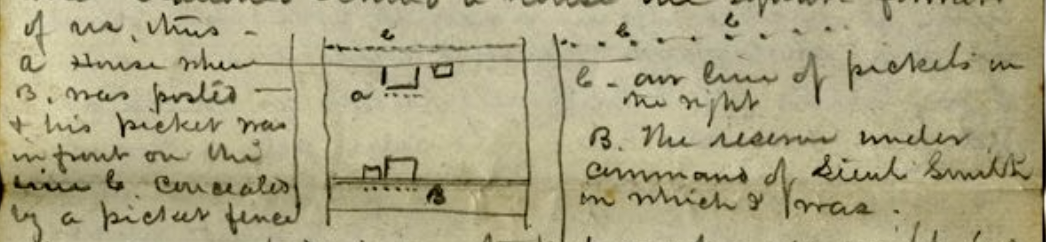
The advance picket was to keep awake all night but in the reserve one part slept and the other kept awake, ready for an emergency. The rebel pickets were in front of us only a short distance and we could hear them talk & walk about. Also as they were at work digging their rifle pits. The house where Lieut. Burgess was stationed was open and his men were allowed in part to remain in it. I visited it and found it one of the most richly furnished and elegantly finished mansion I have seen in all my journey. The furniture was of latest style and much of it was fancy articles such as inlaid tables, chess tables, stands, &c. &c. large pictures hung about the room, statuary, large vases or flowers stood upon the mantle, rich carpets covered the floor, extensive libraries were in appropriate apartments, closets of china, glass and crockery ware, vessels for liquor, grand piano, harp, and huge stands of music. Larder filled with all kinds of eatables. Clothing apartments hung with the most costly apparel. In fact, everything to make a home pleasant & happy—all that one could wish was found there—and all strewn in confusion about the house having been left by the flying occupants and sacked by the soldiers. It was sad to see such a waste of property, and if the owners ever return, they must feel heart sick.

A widow lady lived there and she had a daughter who it appears is quite genteel and of a literary turn. I picked up an account book and found in it a photograph which I will send in one of my letters. If I had only known as much as I do now, I would have had some silver ware to send home for there was plenty of it about me. I set out to take 2 silver candle sticks but thought I could not send them home for perhaps a very long time. Picketing here was fine fun and our boys enjoyed it to its fullest extent. Towards morning when it became light enough for the rebels to see our men, they began to shell us and they sent them over us and they would burst over us and the pieces would fly in all directions. We had to lie down on the ground and they passed by without injury to any of us. The rebels were on the alert all the time and the moment one of our men showed himself, either a sharpshooter or the batteries on the hill beyond would send a shot at him. This music was kept ip all the forenoon and we had exercise enough to keep us warm by dodging shells and changing about keeping watch.

About twelve o’clock skirmishing commenced on our left and in half an hour our troops became engaged in good earnest. Regiments were sent out to reinforce the picket. Some brigades advanced. Batteries came to the front and a general movement commenced along the whole line. We were relieved by another company & rejoined our regiment which was in line and on the move. The streets were filled with moving lines of soldiers. Officers were busy riding with speed to different parts of the city. Orderlies from the headquarters of the generals commanding issued forth with orders and the different brigades were quickly formed in position to advance. The whole force moved to the left and by the streets running directly from the river toward the rebel batteries, went onto the field. We advanced slowly down the street under cover of the houses till we came near the scene of conflict. We could here see nearly the whole field and our brave men as they advanced under the heavy fire from the enemy’s batteries and the musketry fire from their rifle pits which made our situation very critical. Our men were suffering greatly.

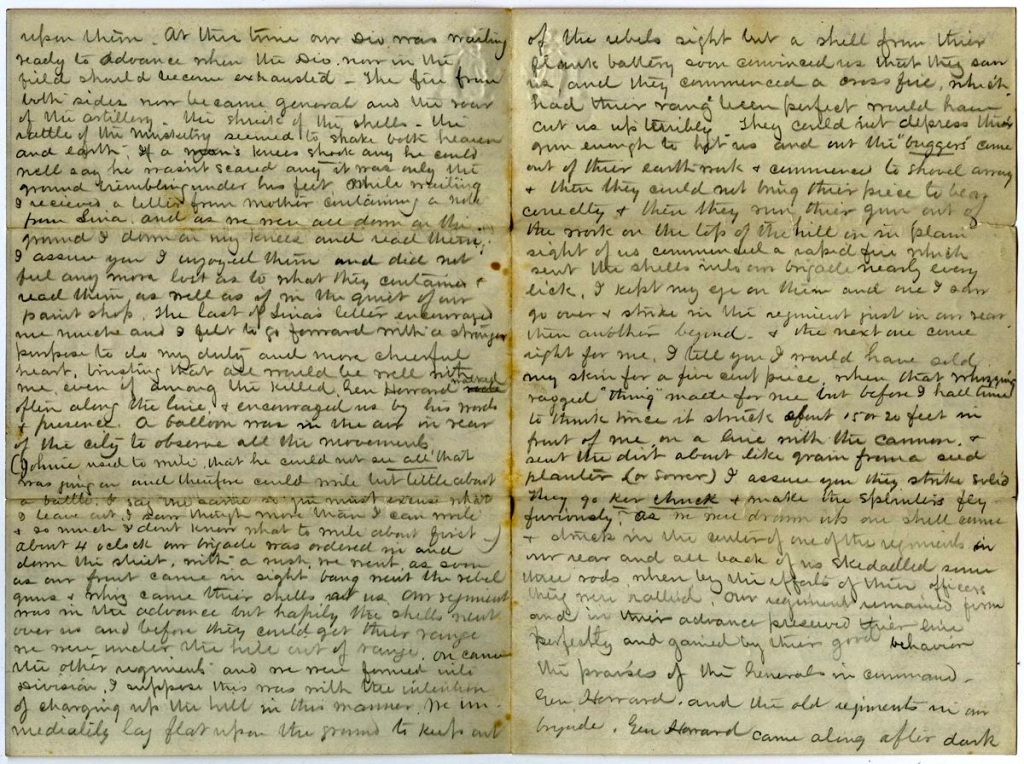
The wounded were brought in twos and threes and in quick succession. The dead thickly lay upon the field and our lines became rapidly thinned and we seemed to gain but little ground. the rebels had a grand position. Their fire was direct and yet they could cross fire and their men was entirely concealed by their pits. Their lines of battle stood up in the hill ready for reinforcement and it appears almost impossible for us to make any impression upon them. At this time our division was waiting ready to advance when the division now in the field should become exhausted. The fire from both sides now became general and the roar of the artillery, the shriek of the shells, the rattle of the musketry, seemed to shake both heaven and earth. If a man’s knees shook any, he could well say he wasn’t scared any—it was only the ground trembling under his feet. While waiting, I received a letter from Mother containing another from Sina and as we were all down on the ground, I [got] down on my knees and read them. I assure you, I enjoyed them and did not feel any more lost as to what they contained & read them as well as if in the quiet of our paint shop. The last of Sina’s letter encouraged me much and I felt to go forward with a stronger purpose to do my duty, and more cheerful heart, trusting that all would be well with me, even if among the killed.

Gen. [Oliver O.] Howard walked often along the line & encouraged us by his words and presence. A balloon was in the air in rear of the city to observe all the movements. (Johnnie used to write that he could not see all that was going on and therefore could not write but little about a battle. I say the same so you must excuse what I leave out. I saw though more than I can write & so much I don’t know what to write about first.)

About 4 o’clock our brigade was ordered in and down the street with a rush we went. As soon as our front came in sight, bang went the rebel guns and whiz came their shells at us. Our regiment was in the advance but happily the shells went over us and before they could get their range, we were under the hill out of range. On came the other regiments and we were formed into division. I suppose this was with the intention of charging up the hill in this manner. We immediately lay flat upon the ground to keep out of the rebels sight but a shell from their flank battery soon convinced us that they saw us and they commenced a cross fire which had their range been perfect, would have cut us up terribly. They could not depress their gun enough to hit us and out the “buggers” came out of their earthwork and commence to shovel away and then they could not bring their piece to bear correctly and they they run their gun out of the work on the top of the hill and in plain sight of us, commenced a rapid fire which sent the shells into our brigade nearly every lick. I kept my eye on them and one I saw go over and strike in the regiment just in our rear, then another beyond, & the next one came right for me. I tell you, I would have sold my skin for a five cent piece when that whizzing, ragged thing made for me. But before I had time to think twice, it struck about 15 or 20 feet in front of me on a line with the cannon & sent the dirt about like grain from a seed planter (or sower). I assure you, they strike solid. They go ker chuck and make the splinters fly furiously.
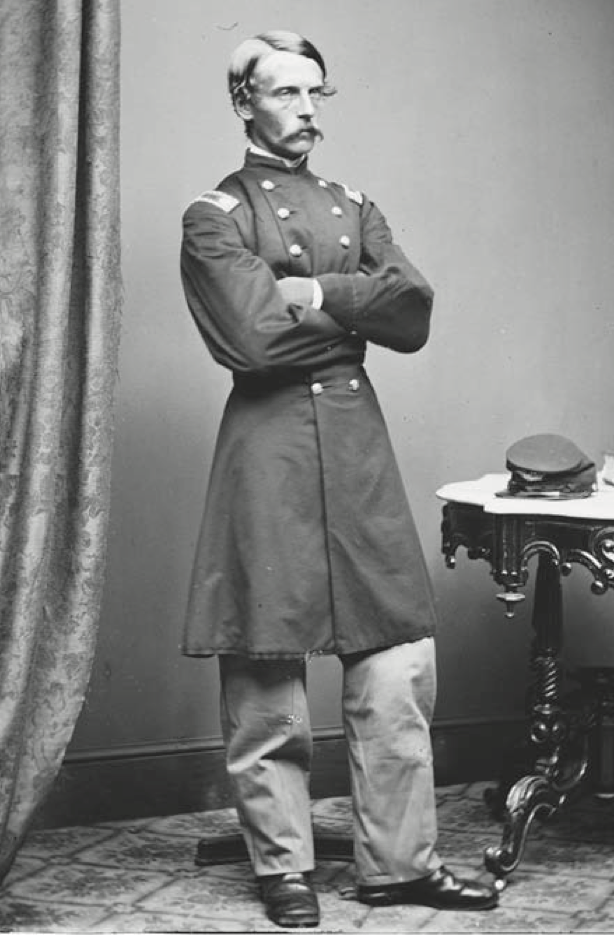
Col. Francis E. Heath, 19th Maine Infantry“cool in danger—courageous in battle.”

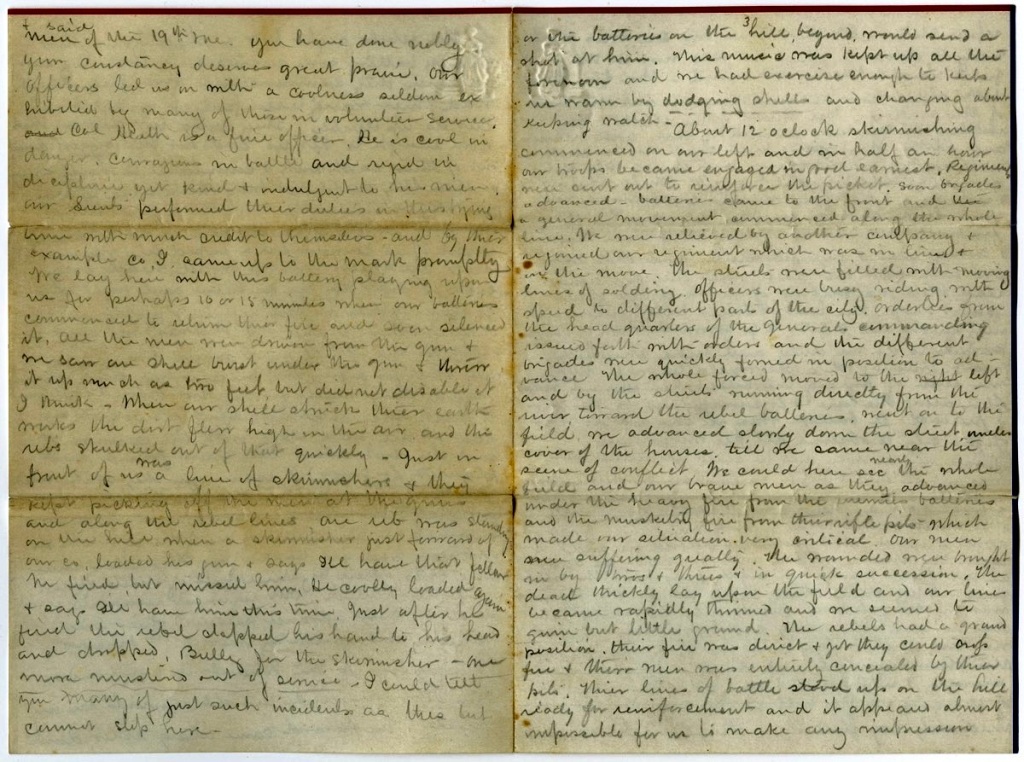
As we were drawn up, one shell came and struck in the center of one of the regiments in our rear and all back of us skedaddled some three rods, when by the efforts of their officers they were rallied. Our regiment remained firm and in their advance preserved their line perfectly and gained by their good behavior the praises of the general in command. Gen. Howard and the old regiments in our brigade. Gen. Howard came along after dark and said, “Men of the 19th Maine, you have done nobly. Your constancy deserves great praise.” Our officers led us in with a coolness seldom exhibited by many of those in volunteer service. Col. [Francis E.] Heath is a fine officer. He is cool in danger. Courageous in battle and rigid in discipline yet kind and indulgent to his men. Our lieutenants performed their duties in this trying time with much credit to themselves and by their example, Co. I came up to the mark promptly.

We lay here with this battery playing upon us for perhaps 10 or 15 minutes when our batteries commenced to return their fire and soon silenced it. All the men were driven from their gun & we saw one shell burst under the gun & there it up much as two feet but did not disable it, I think. When our shells struck their earthworks, the dirt flew high in the air and the rebs skulked out of that quickly. Just in front of us a line of skirmishers kept picking off the men at their guns and along the rebel lines. One reb was standing on the hill when a skirmisher just forward of our company loaded his gun and days, “I’ll have that fellow.” He fired but missed him. He cooly loaded again and says, “I’ll have him this time.” Just after he fired, the rebel clapped his hand to his head and dropped. Bully for the skirmisher. One more mustered out of service. I could tell many of just such incidents as this but cannot. Stop here. —-Ed
1865: Anonymous to Gideon Welles

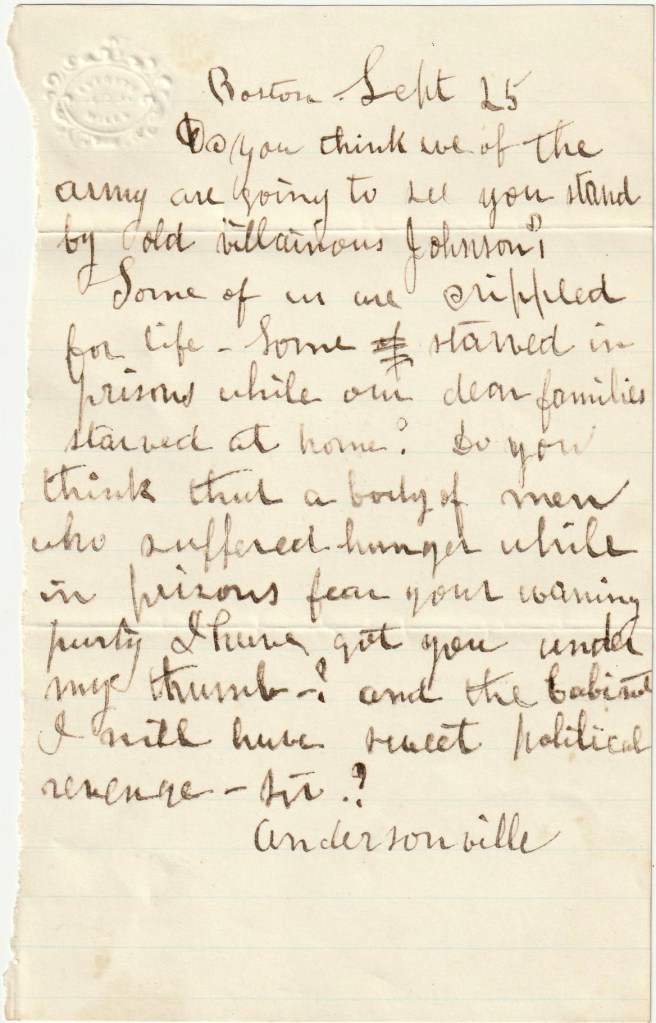
The following vitriolic letter was directed toward Gideon Welles, Secretary of the Navy in the Lincoln/Johnson Administration. It was written by an anonymous former Massachusetts soldier who probably spent time as a prisoner of war at Andersonville and who disliked the reconstruction plan laid out by President Johnson and members of his cabinet, including Welles who publicly supported the plan.

In less than a month after becoming President, Johnson began executing his plan for reconstructing the South. Johnson pardoned all rebels except Confederate leaders. He also restored all rebel property except for slaves. Finally, he authorized each rebel state to call a convention of white delegates to draw up a new constitution. Once completed, a new state government could then be formed, and the state could apply for readmission to the Union. 

When Congress finally met in early December, the Republicans, in control of both the House and Senate, expressed outrage at the actions of Johnson and his supporters in the Executive branch, albeit not as strongly as the author of this letter. They saw the same men who had led the rebellion returning to power throughout the South. Worse still, the new Southern governments were passing “black codes,” which made it difficult for freedmen to work in certain jobs, own land, or even quit a white employer. Most troubling to Republicans in  Congress was that President Johnson had, on his own authority, established a reconstruction plan for the South. Many Republicans believed this was the job of Congress and Congress alone. This schism between the President and Congress eventually led to Johnson’s impeachment.

The letter itself is on a single half sheet of paper and relatively short. Apparently after he sealed the letter, he thought of a few more things to say!

[Note: This letter is from the private collection of Richard Weiner and was made available for transcription and publication on Spared & Shared by express consent.]

Transcription

Boston [Massachusetts]
September 25, [1865]

Do you think we of the army are going to see you stand by old villainous Johnson? Some of us are crippled for life. Some starved in prisons while our dear families starved at home. Do you think that a body of men who suffered hunger while in prisons fear your waning party? I have got you under my thumb, and the Cabinet [too]. I will have sweet political revenge, sir.

— Andersonville

The letter’s original cover, addressed to “Gideon Welles, Sec. of Navy, Washington, D.C.”, is franked by a #65 3c rose tied by Sept- 26 dated CAMBRIDGE/MASS double circle & circle grid. More interestingly, the envelope (both front & back) contains more angry & disturbed scribbling by the same writer. On face: “When did you suffer the pangs of hunger, Sir? Did that vile ‘my policy’ man ever have an empty belly? I sneer at you both; will have sweet revenge. Will take the stump against our enemies; mark it: Andersonville.”  Separately on the cover face is the docketing “anonymous.”

Writing all across the back of cover, the anonymous author continues: “Conservatives are played out. The soldiers detest them. What ‘we’ of the North swear to accomplish, God helping, is to raise an army to help carry out the confiscation act—take rebel property and give it to poor soldiers. If the next Congress (I warn them in time) do not confiscate the properties of late traitors, 500,000 soldiers from the north will go down South and drive them all into the gulf of Mexico. Conservatives must beware; Soldiers will not listen to them. So Conservatives, stand from under; we’ll make your eyes stick out. We come soon – vi et armis – voe victis.” [Latin for “by force & arms – woe to the defeated”]

1862 Diary of Lewis W. Thompson, Co. H, 4th Ohio Vol. Cavalry

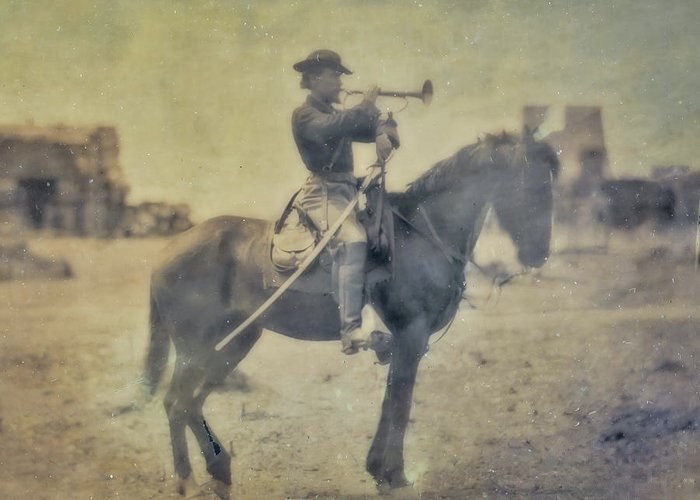
The following diary was kept in 1862 by Lewis W. Thompson (1839-1918), a bugler in Co. H, 4th Ohio Volunteer Cavalry (OVC). Lewis enlisted on 13 September1861 and was discharged from the service on 10 February 1863.

The company roster for Lewis states that he enlisted as a 21 year-old bugler and that he was capture and paroled on 18 October 1862 at the Battle of Lexington, Kentucky. He was discharged on 10 February 1863 by means of his enlistment in the Mounted Service, USA.

After the war, in 1880, Lewis was married to Velma Harvey.

[Note: This diary is in the private collection of Greg Herr and was made available for transcription and publication on Spared & Shared by express consent.]

A sample of Lewis’s handwriting

Transcription

February 1862

Sunday, February 9, 1862—I and a squad went down to Green River this afternoon. Had a fine time of it. It was quite cool.

10th—[Gen. Ormsby M.] Mitchell’s Brigade left Camp Jefferson about 6 o’clock and crossed Green river about one p.m. We encamped about a mile from the river.

11th—It was a pleasant day. I was orderly bugler this day…

12th—Our regiment was out scouting today. Our company was out on picket. We got marching orders.

13th—We left camp at daylight, come through Cave City at noon. We encamped about 18 miles from Green river in Barren county.

14th—We started at daylight and got at Bowling Green 11:30 a.m. Commenced shelling it at noon. Struck our tents on the rebel’s camp.

15th—We went into Bowling Green. I took my dinner in a hotel. We’re now in Hardee’s quarters.

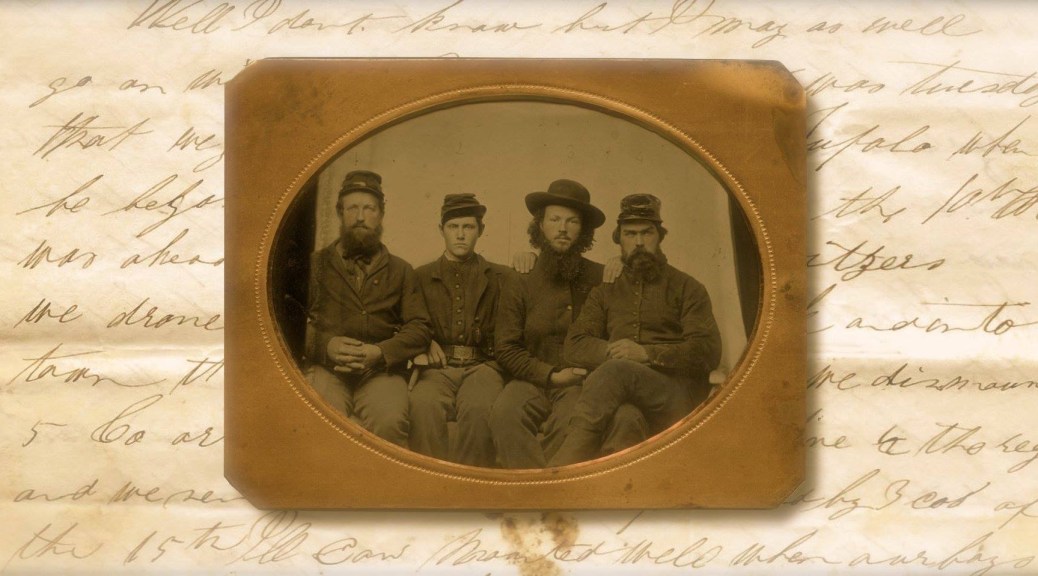
Tintype of William Barnhart who served in Co. C, 4th OVC (Ohio Memory)

16th—Our company went out on picket about five miles from Bowling Green. It was a cold day.

17th—We come off picket at noon and in the afternoon went for some rebel horses. We got five.

18th—We come back from capturing some horses. I rode a rebel horse into Bowling Green. Got marching orders.

19th—It was raining all day and I was sleepy all day. We’re now encamped 15 miles from Bowling Green.

20th—I wasn’t doing anything today. We got marching orders.

21st—We took up our march at daylight. We came through Franklin about noon. Cross the line in p.m. into Tennessee. Cross through Mitchellville 2 p.m. First night in Tennessee.

22nd—We take up our march at daylight. It was raining all day. We marched all day in the rain. We stopped 9 miles from Nashville.

23rd—It was a pleasant day. I was sleeping very near all day. We’re encamped 9 miles from Nashville.

24th—We left our camp this afternoon and struck our tents. Two miles from Nashville. We was in [  field]

25th—It was a fine day. I wasn’t doing anything today. We got marching orders.

26th—We started from our camp of 8 a.m., crossed the river at dark into Nashville. There was a teamster drowned.

27th—We were very near all day in Nashville. This afternoon went 8 miles from town. The bugler of Co. E was shot in the side.

28th—I wasn’t doing anything today. This evening our company went on picket and I with them.

March 1862

Saturday, March 1, 1862—Our company was on picket till night. Part of our company was out scouting and captured several things.

2nd—I wasn’t doing anything today. It was raining in the afternoon and all night.

3rd—It was a fine day. I wasn’t doing anything.

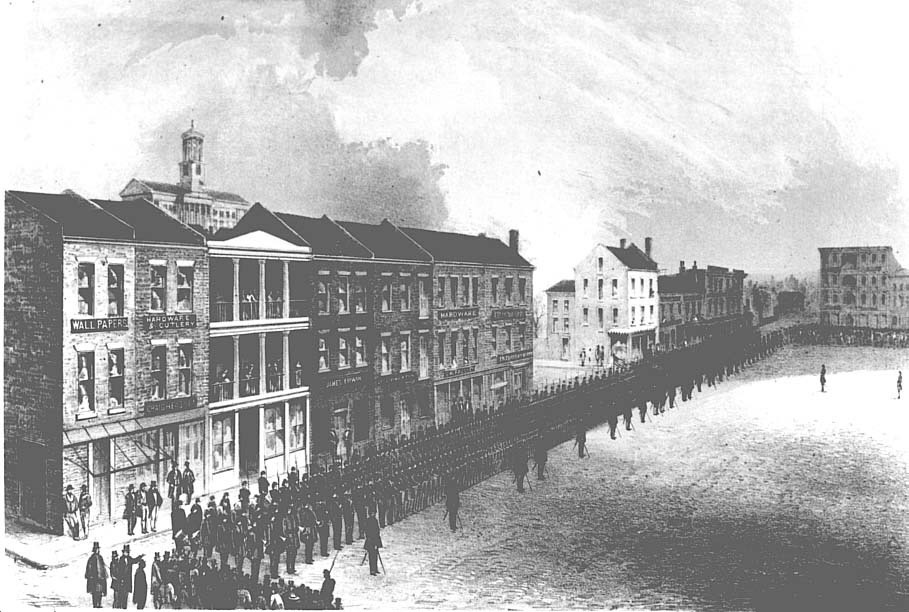
“The First Union Dress Parade In Nashville.” Print showing the 51st Ohio Volunteer Regiment, led by Col. Stanly Mathews, on dress parade in Nashville, Tennessee, March 4, 1862.

4th—Our company was out a scouting. We captured a lot of clothing and some cattle.

5th—We was out drilling in the afternoon and in the forenoon we wasn’t doing anything.

6th—I wasn’t doing anything today. It was all quiet in camp.

7th—Our company was on guard today. I wasn’t doing anything. Our pickets was drove in at night.

8th—We was out fighting this afternoon. 8 killed and wounded and two on our side wounded.

March 8, 1862 in Nashville, Tennessee – On March 8, a detachment of Confederate cavalry, commanded by Col. John H. Morgan, raided the suburbs of Nashville. There was not much damage done but this let the Union army know that the Confederate cavalry raiders were still active in the area.

9th—We was out scouting today all day. We caught two more prisoners. I am tired tonight.

10th—We was out scouting. Took two prisoners. Rode all over creation.

11th—Our company was on picket today and I was out bushwhacking in the night.

12th—I and captain and 14 men was out scouting. Capture a black horse.

13th—I wasn’t doing nothing till evening when we started to give Old Morgan a fight. We met Old Capt. Morgan & [___wood] and their escort which [ ] out of our fight.

14th—It was raining very near all day. Our pickets was drove in about 10 o’clock. We was called out in the night.

15th—Our company was on guard today. It was a raining very near all day.

16th—I wasn’t doing anything today. Company C brought in three of Morgan’s men this afternoon. All quiet in camp.

17th—I wasn’t doing anything today. I am sick and lay in my tent all day. I wrote a letter to Mills.

18th—We got marching orders. Started from camp Andrew Jackson about 9 a.m. Stop about 5 miles south of Lavergne. I was sick all day.

19th—We started at daylight this morning. It rained till noon. We got in Murfreesboro 8 o’clock in the night. I slept in a barn.

20th—We left our camp at Murfreesboro at 12 a.m. We’re now in camp and south of town on Stone river.

21st—I wasn’t doing anything today. I laid in my tent all day. I am not well.

22nd—I am [not] doing anything. I am not well. Our company went out scouting. I wrote a letter to Mills.

23rd—I was Orderly Bugler today. All was quiet in camp.

24th—I wasn’t doing anything today. It was a fine day. Co. C brought in four of Morgan’s men.

25th—I wasn’t doing anything till about 6 o’clock. Then we started on a scout. We crossed the Cumberland Mountain at 11 o’clock at night.

26th—We started and come into Shelbyville at noon. Then started for Tullahoma. About 6 p.m. got into town.

27th—We left Tullahoma at one o’clock and stayed near Shelbyville that night. I was taken prisoner. Didn’t stay long.

28th—We left there about 8 a.m.. Got back from Shelbyville 6 m. when our company and Co. E was ordered back toward the town and crick.

29th—I was a fishing in the morning. I and six of our [company] went out scouting about 2 p.m. We raise a flag on the Court House.

30th—I was fishing in the forenoon and in the afternoon I wasn’t doing anything but sleeping. Very warm.

31st—I wasn’t doing anything. Only fishing till 8 o’clock. I went on picket. We look to be attacked.

April 1862

Tuesday, April 1, 1862—I am off picket this morning and in the afternoon made our quarters.

2nd—I wasn’t doing anything, only shushing some. It was a pleasant day. All was quiet in camp.

3rd—I wasn’t doing anything. All quiet in camp.

4th—I wasn’t doing anything today. Was fishing in the forenoon. Got scouting orders. Three days rations.

5th—We left camp 8 a.m. on a scouting expedition. Come into Tullahoma 2 p.m. Traveled on till midnight. Encamp 10 miles from Tullahoma.

6th—We started at 4 o’clock in the morning. Cross the Cumberland Creek in the afternoon. Capture a locomotive and take 22 prisoners.

7th—We started at daylight from the mill and feed about noon. Got back in camp at 5 o’clock p.m.

8th—I wasn’t doing nothing today. We got marching orders.

9th—We started from Camp Halleck at daylight. March to Fayetteville at 7 p.m. and cross Elk river and encamp there. Shelbyville to Fayetteville 25 [miles]

10th—We left Fayetteville about 11 a.m. and marched till 10 at night. Encamped in a clover field. We got in Alabama at 3 o’clock in the afternoon.

11th—We started before daylight. Got in Huntsville at sun up. Take 17 locomotive, 273 prisoners, and a lot of sugar. From Fayetteville to Huntsville 30 miles.

After destroying the buildings, the 4th OVC advanced to Huntsville, Alabama, where the command captured a train with seventeen locomotives, multiple railroad cars, and eight hundred enemy soldiers as passengers. The regiment next moved to the Alabama communities of Decatur and Athens, before returning to Huntsville.

12th—We started for Decatur and took possession of it. Capture a rebel camp and a lot of cotton.

13th—I wasn’t doing anything today, being sick all day.

14th—I started for Decatur this afternoon. Went on the cars. I could not stand to ride. I am sick.

15th—I am sick; hardly able to be out.

16th—I was sick; hardly able to be out.

17th—I am sick. Wasn’t doing anything all day. Quiet in camp. Was on the battle ground.

18th—I am some better but I wasn’t doing anything, It rained in the evening.

19th—I wasn’t doing anything. It was a raining all day.

20th—I spent Easter Sunday by laying in my tent all day. It was raining all day.

21st—We started from Decatur at daylight and arrive in Tuscumbia at night. It rained all day. From Decatur to Tuscumbia is 40 miles.

22nd—We was out scouting today. Drove in their pickets. Take one prisoner. Fine day.

23rd—We was out scouting today. Went some twelve miles from here. Didn’t see anything. Fine day. Got wounded.

24th—We went out scouting. Had a skirmish with the rebel cavalry. Retreated from Tuscumbia in the evening about six o’clock.

25th—We was on our retreat. Had a fight with the rebel cavalry. Had one wounded and four taken prisoner of our company.

26th—We left Cortland about 1 p.m. Got in Decatur at dark. Got a horse 2 miles on this side of Cortland.

27th—I was roving all over the country all day. Our company left about 5 p.m.. I was left behind.

28th—Started away from Tennessee river at 8 a.m. Got in camp about 5 p.m. Got a letter from Mills & wrote one back to him.

29th—I wasn’t doing anything today till 9 o’clock at night. We was ordered out on a scout. Travel till two in the morning.

30th—We started at daylight. Scout the country through. Got back in camp about 4 p.m.

May 1862

Thursday, May 1, 1862—We left camp at 1 p.m. March till night. Stay in a meadow three miles from Athens.

2nd—We got in Athens little after sun up, Follow the rebels till about 12 o’clock when we got on to them. Had a heavy fight with them.

In May 1862, the 4th helped defend Athens from a Confederate cavalry attack, driving the enemy soldiers from the town. The regiment’s division next advanced towards Chattanooga, Tennessee, with the 4th leading the advance. 

3rd—We stay all night two miles this side of our battle ground. Got in Athens about 11. Came on to Green River Creek. Traveled about thirty miles.

4th—We left Tennessee river creek about 7 a.m. and came along the railroad. Got in camp about 4 p.m. 25 miles.

5th—I wasn’t doing anything today. We caught about 100 prisoners today.

6th—I wrote a letter to Mills. I wasn’t doing anything. It is a fine day. All quiet in camp. They was firing salutes in the morning.

7th—I wasn’t doing [anything] this forenoon. This afternoon we made our camp in a pine grove.

8th—I was Orderly Bugler this day. All quiet in camp. Our company was down this evening to serenade Old Gen. Mitchell.

9th—I wasn’t doing anything today. We were ordered back to Athens. Started at 8 p.m.

10th—We got in Athens at 7 a.m. Wasn’t doing anything. There was a great excitement in town.

11th—I was scouring the country through, I and J. M. Darmond. It was a warm day. Was a man killed accidentally.

12th—I and two of our company was to Morrisville 15 miles from here. It was a warm day.

13th—Our brigade started from Athens 2 p.m. For at Elk River at sun down. Our company across the river at 2 p.m. Travel till two in the morning. One member of Co. K drowned.

14th—We stay 4 miles from the river last night. Gen. L______’s Brigade cross Elk River about 11 a.m. Came back in Athens at night.

15th—I wasn’t doing anything today. Warm day.

16th—We started from Athens 8 a.m. Got in camp 2 p.m.. Was a warm day.

17th—Wasn’t doing anything this day. Warm day. I got a letter from my stepfather. I wrote one back to him.

18th—Our regiment was ordered out. I was a raining near all day. We went to Winchester, Tennessee.

19th—I was Orderly Bugler this day. I wrote a letter to Lewis Mills.

20th—I wasn’t doing anything today. It was a pleasant day.

21st—I was Orderly Bugler this day.

22nd—I wasn’t doing anything today. It is a warm day.

23rd—I wasn’t doing anything today. It rained in the evening.

24th—I wasn’t doing anything this day. It was a fine day. The regiment got back from Winchester.

25th—I wasn’t doing anything this day. It was a warm day. All quiet. Our regiment went up the mountains.

26th—Ten out of A Company went to Shelbyville with Gen. [Ormsby] Mitchell. Quite warm.

27th—I wasn’t doing anything today. Quite warm.

28th—I was orderly bugler today. Warm day.

29th—I wasn’t doing anything all day. Quiet in camp. I wrote two letters. One to Mill & Murphy.

30th—I wasn’t doing anything today. All quiet.

31st—I was orderly bugler this day. We got the news of Corinth being taken. The cannon fired 24 rounds.

June 1862

Sunday, June 1, 1862—I went over the mountains on a scouting expedition.

2nd—I got back into camp in the forenoon. Wrote a letter to John F. O’Neill.

3rd—I was orderly bugler today. Warm day.

4th—I wrote a letter to Mills. I wasn’t doing anything. Our regiment was ordered out. The boys was first onto. Killed 2 and 8 wounded. We was paid off. $65 was my pay.

5th—I was orderly bugler today. We buried [Corp.] George McConnell. He was killed at Point Rock on the 4th. [Editor’s note: The company roster only states that he “died 4 June 1862” without any further details.]

6th—I wasn’t doing anything. I was all over town in the afternoon. I wrote a letter to Augustus Coffman. Warm day.

7th—I was orderly bugler. Buried a member of Co. A shot accidentally. Warm day.

8th—I wasn’t doing anything today. We buried a member of Co. A. Died in the hospital.

9th—I wasn’t doing anything today. Only wrote a letter to Mills.

10th—I was orderly bugler. Quiet in camp. Warm day.

11th—I wasn’t doing anything today. It was a warm day. One member of Co. I was killed and one of Co. F wounded in the head.

12th—I wasn’t doing anything today. It is a warm day.

13th—I was out scouting today. Took two bushwhackers and four shotguns. It was a warm day.

14th—I was orderly bugler. Warm day.

15th—I was not doing anything today. All quiet. Very warm.

16th—I was orderly bugler. Warm day.

17th—I ain’t doing nothing. Fine day.

18th—I wasn’t doing anything this day. Fine day.

19th—I wasn’t doing anything this day. Cool day.

20th—I was orderly bugler. All quiet. Very warm day.

21st—I wasn’t doing anything today. Very warm day.

22nd—I wasn’t doing anything today. Very warm. The boys got back from Chattanooga, They [were] fired into again.

23rd—I wasn’t doing anything today. Not very well. Warm day.

24th—I got a letter from Mills. I wrote one back to Mills and one to W. Crook. Rain in the afternoon.

25th—I wasn’t doing anything today. It was a warm day.

26th—I wasn’t doing anything today. Very warm. All quiet in camp.

27th—I was orderly bugler today. Warm day.

28th—I wasn’t doing anything today. Very warm. I was digging for some money this morning.

29th—I wasn’t doing anything this day. Very warm. I got a letter from A. Koffman this morning.

30th—I was at the 1st O. V. Seen some of the old boys. Warm day.

July 1862 [From this point on I will only transcribe entries with something significant]

2nd—I was orderly bugler today. One of the Co. G was killed and one wounded.

14th—I was orderly bugler this day. Gen. Rosecrans takes command in our Division in Mitchell’s place. Buell had three rebels shot. One of the 24 shot Buell in the [?]

15th—I wasn’t doing anything today. It rained in the afternoon and blowed hard. Blowed our tent down and several other tents. Very war, in the forenoon.

23rd—We left camp 5 o’clock. Crossed the river Tennessee at 8 a.m., got in Tuscumbia 2 p.m. Pass through Luka 4 p.m., got in Corinth 6 p.m. Got supper at the hotel.

24th—We was laying all day in Corinth. 16 of our company got a keg of ale. Had good deal of sport. very warm day.

25th—We left Corinth 9 a.m. Got in Luka at 11:15 a.m. They boys was fighting among themselves in the afternoon.

26th—We left Iuka 7 a.m. Got our horses at Eastport. Cross the river at 2 p.m. Stayed ten miles of Florence.

27th—We started at daylight. Got in Florence at 10 a.m. Left own at noon. I was at the 35th OVI. Saw some of the boys.

28th—We started at daylight. Cross Elk River at noon. Got into Athens at dark.

29th—We started from Athens at sun up. Got in camp 1 p.m. Had inspection of horses in the afternoon and got our horses in the evening.

August 1862

8th—We left camp 6 a.m. Got at Elk 11 a.m. We run four hours to Pulaski. Got in Pulaski after dark. Very warm.

9th—We left Pulaski 1:30 p.m. Had bad luck. Run two cars off the track. Broke two mens legs. We got in Nashville 2 o’clock at night.

11th—We stay all day in town [Nashville]. Got our horses in the evening. Good many of the boys was drunk.

12th—We started from Nashville at sun up. Got in Franklin at dark.

13th—We left Franklin 9 a.m. Stop 7 miles from town. Started 6 p.m. Travel nearly all night.

14th—We started at two a.m. Got on the [guerrillas?] 9 a.m. but left about five minutes before we got to them.

15th—We stay 7 miles this side of Centerville. Got in town sun up. We left town 10 a.m. and got in Williamsport 9 p.m.

16th—We left Williamsport at daylight. Got in Columbia 2 p.m. We stopped three miles this side of town.

17th—We left our camp this afternoon 3 p.m. Went till about 9 o’clock, then stop this side of Morrisville.

18th—We started 6 a.m. Got in Gordonsville 10 a.m. Caight 7 bushwhackers. Got plenty of whiskey. Start at 9 m. for Fayetteville.

19th—We got in Fayetteville 7 a.m. Started from there 11 a.m. Crossed the [state] line 3 p.m. Stayed all night ten miles from Fayetteville.

20th—We started 2 a.m. Got in camp 7 a.m. Moved our camp this day.

23rd—We moved our camp back to our old place this morning. Fixing all day. Was very warm.

24th—We had an inspection this morning. Got marching orders. Packed up and struck our tents but did not leave.

25th—We got marching orders but it was countermanded and pitch our tents again in the afternoon.

September 1862

In September 1862, the 4th joined the Army of the Ohio’s pursuit of Confederate General Braxton Bragg’s army, which had launched an invasion of Kentucky and was threatening Ohio’s southern border. Upon reaching Elizabethtown, Kentucky, officials ordered the regiment to Brownsville, Kentucky, where the organization escorted the Army of the Ohio’s supply train to the mouth of the Salt River. The 4th next advanced through the Kentucky communities of Shepherdstown, Frankfort, Harrodsburg, and Danville. At this final location, a detachment from the regiment accompanied a Union force towards Lexington, Kentucky. Confederate General John Hunt Morgan’s cavalry captured 250 men from the 4th on this expedition. The remainder of the regiment advanced, via Crab Orchard and Lebanon, to Nashville.

Monday, September 1, 1862—We started at daylight. got in Futsvile 4 p.m. Stayed on the other side of town.

2nd—We stayed 6 miles this side of Futsville [?]. Started from there at sun up. Stopped 1 mile from Shelbyville.

3rd—We started at sun up and stopped in our old camp two miles this side of Murfreesboro.

4th—We stayed all day. Got orders to march but was countermanded. I went to 35th Ohio [infantry] and stayed there all night.

5th—I left the 35th OVI little after sun up. Got in Laverne 2 p.m. Pass our old camp and stop 3 miles this side of Nashville.

6th—I wasn’t doing anything today. Haven’t heard any from my regiment yet. I was at the 35th OVI this evening.

7th—I wasn’t doing anything today. I am 3 miles this side of Nashville with Co. G.

10th–I was orderly bugler today. We left camp 8 p.m. Cross Cumberland 10 p.m. March till four in the morning.

11th—we started 11 a.m. and got at the Big Springs 5 p.m. Stay there all night. they had a fight here in the morning.

12th—We started 7 a.m. and got at Mitchellville at dark. Stay there all night.

13th—We was on picket last night. Started from Mitchellville 11 a.m. March till after dark. Stop 12 miles from Bowling Green [Kentucky].

14th—We started at day light and stop at Sinking Creek. Stayed there all night. Warm day.

15th—We stay all night 3 miles of Bowling Green. Left there 7 a.m. Run through town 10 a.m. Went in camp 1.5 miles this side of town.

16th—I was orderly bugler this day. We got marching orders. Started at sundown. March till 2:30 a.m next morning.

17th—We started 6:30 a.m. Got into rebel’s picket 8 a.m. Killed one & took one prisoner. It rained very hard in the evening. Camp 15 miles this side of Bowling Green.

18th—We started for Glasgow early in the morning. Got there 11:30 a.m. Took 800 prisoners and part of a wagon train with flour.

19th—We stayed all night six miles from Glasgow. Paroled our prisoners. Left in the afternoon. Went two miles and encamped there.

20th—We started from our camp 1 p.m. for Glasgow. Got there at sundown. Encamped at Cave City.

21st—We started at sun up, scouted all day. Got in Glasgow 5 p.m. Started after rebel train. Went near 20 miles. Got back in town at 9 at night.

22nd—We started from Glasgow at sun up. I was in the horse cave 10 a.m. Cross Green River after dark. In camp at Mumfordville.

23rd—We left Mumfordville 4 p.m. Got in our old camp Jefferson 8 p.m. Over now with Thas’ Division/

24th—We stared from Camp Jefferson at sun up. March hard all day. Come in Elizabethtown in camp 2 miles from town.

25th—We left early in the morning. Cross [ ] Creek 3 p., Got in Miller town 3 p.m. in camp on a creek for the night.

26th—We started at sun up and marched all day. Went in camp 20 miles from Bowling Green. Warm day.

27th—We started at sun up and got at Green River at slack water landing 10 a.m. Going to stay all day. Rained nearly all day.

28th—We started 7 a.m. and got at Brownsville sundown. Fine day. Meet our train at Brownsville.

29th—We was laying at the river all day. In the evening out company went on picket. Fine day.

30th—we started early in the morning and marched till dark. Stay 16 miles from Green river.

October 1862

Wednesday, October 1, 1862—We started at sun up. Got in Leitchfield [?]. Stayed all night two miles this side of town in field.

2nd—We started at sun up. March all day. Stop for the night 20 miles south of Salt River. It rained in the afternoon.

3rd—We started early in the morning. Got at West Point 5 p.m. Cross Sale River at night. Stop 1 mile this side of the river on the road.

4th—We started 6 a.m. Got in Shepherdsville 3 p.m. Went into camp this side of town. wrote a letter to Mills.

6th—We [left] Shepherdsville 6:30 a.m. March all day. Stay 4 miles from Taylorsville. March 3 a.m.

7th—We started early in the morning and got in Shelbyville, Kentucky, 5 p.m. We marched 25 miles. Very warm day.

8th—We left Shelbyville 10 a..m. Came through Clayville, Hardensville, and Bridgeport. Got at Frankfort after dark Had a hard fight with the rebels. Got in town after 12 o’clock.

9th—We was laying 1 mile of Frankfort all day. Pleasant day.

11th—We left for a scout. we came through Rough and Ready 10 a.m. Got in Lawrenceburg 3 p.m. Had a skirmish in the evening.

12th—We left Lawrenceburg 3 a.m. Got in Salvisa 9 a.m. Captured one cannon and 62 prisoners. Got back in Lawrenceburg 6 p.m.

13th—We got a lot more prisoners. We left Lawrenceburg 12 p.m. and got in Salvisa 5 p.m.. Fine day.

14th—We left Salvisa 9 a.m. Got in Harrodsburg 2 p.m. Stop all night half mile this side of Danville. Fine day.

15th—We went out scouting. Four companies of our regiment. Left Danville 7 a.m. came through Barbersville and got in Nicholasville 8 p.m.

16th—We was all day at Nicholasville. Was paroling prisoners.

17th—We left Nicholasville 7 a.m. Got in Lexington 2 p.m. Fine day.

18th—This is the day of misfortune. Was taken prisoner at daylight. Left town 5 p.m.

October 18, 1862 in Lexington, Kentucky – On October 18, Col. John H. Morgan and a force of Confederate raiders circled eastward and came to Lexington. They soon skirmished with a portion of the 3rd Ohio Cavalry before the Confederates captured the town. The Union garrison were composed of the 3rd and 4th Ohio Cavalry. 

The Confederates left before the end of the day. Maj. Gen. Gordon Granger gathered his cavalry force and pursued Morgan’s men.

19th—I started 4 miles this side of Lexington. Come through Georgetown at noon. Stopped at Dr. Bonnet’s all night.

20th—I started at daylight. Got an ask [?] team. Went some 23 miles. Stayed 3 miles from Williamstown all night.

21st—Started at daylight. Got at Williamstown. From there I went to Falmouth. Got home in the evening.

23rd—I am at home doing nothing.

24th—I am at home doing nothing.

1863: Godfrey Daniel Dotson to Hospital Stewards at Annapolis

The following letter was written by Godfrey D. Dotson (1827-1919) of Lawrence county, Kentucky, enquiring on the life of his son, Andrew Dotson, an exchanged prisoner in the hospital at Annapolis, Maryland. Unfortunately I cannot conform Godfrey Dotson’s residency in Lawrence county, nor do I find a son of his by the name of Andrew in on-line genealogical and census records. I cannot even find a military record or POW record for Andrew searching under the name Dotson and Dodson.

Transcription

State of Kentucky
Lawrence county
August 7, 1863

To the Stewards of the General Hospital of Annapolis, Md.

Dear sir I take my pen in hand to inform you that I have a son that was captured a prisoner on the 7th day of December last by John B. Floyd’s Brigade of Rebels and sent to Richmond, Virginia, and was swapped out by the Yankees party on the 4th of April last. My son was in the hospital at Maryland, Annapolis, on the 3rd day of May. That is the account we have heard of him to be sure.

We heard that he deceased at that place. We then heard that he did not so I want as a friend to make strict inquiry and write to me if you please and you will oblige a friend and distressed parents on the account of a lovely son. Also write to me where to mail my letters and what will satisfy you for your trouble and I will send you the money.

The name of the boy is Andrew Dotson. His age is 17. His complexion is reasonable fair, yellow hair, blue eyes, and raw bond. His form is tall & spare built. I will say, dear son, if you be on the stage of action and gets word from your parents, come without delay to Louisa, Kentucky, and then inquire for me.

Another line to the steward of hospital [and] that is to direct your letters to Lawrence county, Kentucky, Louisa Post Office. Write to me, let the case be as it may. So no more at present—only remaining your friend until death. From Godfrey D. Dotson

to the steward of the General Hospital of Maryland, Annapolis.

1864 Diary of Charles Thompson Boomer of Co. A, 7th Kansas Cavalry

This brief diary was written by Charles Thompson Boomer (1834-1871), the son of James M and Lucy Boomer of Charlton, Massachusetts. Boomer’s biography appears in Cutler’s History of Kansas, Brown county, page 20 as follows:

“Charles T. Boomer, was a member of Co. A, Seventh Kansas Cavalry, and enlisted in the summer of 1861 in Walnut Township, serving until the close of the war, sharing all the dangers and hardships of his regiment, and was discharged in the fall of 1865. He entered his company as a private and re-enlisted as a veteran, and rose to the rank of Sergeant. He was wounded twice while in the service, once severely, and his death, which occurred in April, 1871, was directly attributable to the exposure and hardships he endured while in the service. He was born in Worcester County, Mass., in October, 1834, and lived in his native State until his fifteenth year, when his parents removed to Kendall County, Ill., and where he resided until the spring of 1858, when he came to Kansas Territory, where he pre-empted a farm on which his brother now lives, and resided in the neighborhood until he entered the Union army. After his discharge he returned to his brother’s farm in Illinois, where he resided for three years, and then entered the employ of the American Bridge Company. He continued with this company about three years. And in 1870 returned to his farm in Kansas to improve it, and where he lived until his death, in 1871. He was favorably known far and wide to all the old settlers in the northern part of the State for his sterling worth and manly qualities.”

The regiment, under command of Lieutenant Colonel F. M. Malone, took an active part in the campaign in Missouri against the rebel General Price, during the fall of 1864, and participated in all the principal engagements. At Independence, Mo., the regiment charged against a superior force of the enemy, and succeeded in completely routing them and captured two pieces of artillery.

After the campaign against Price, the regiment was stationed by detachments in St. Louis District, where it was employed in fighting guerrillas until the 18th of July, 1865, when it was ordered to report at Omaha City, N. T., where it arrived on the 31st of the same month, and from thence marched to Fort Kearney. The regiment, however, had scarcely reached the latter station, when it received orders to return to Fort Leavenworth, Kansas, to be mustered out of service, where it arrived on the 14th of September, 1865, and on the 29th of the same month received its final discharge, after having served a term of three years and eleven months from the time of its organization until its final muster out of service.

In 2018, I transcribed four of Boomer’s letters to his family and published them here—1863-65: Charles Thompson Boomer to Family.

[Note: This diary is from the personal collection of Rob Morgan who made it available for transcription and publication on Spared & Shared by express consent.]

Transcription

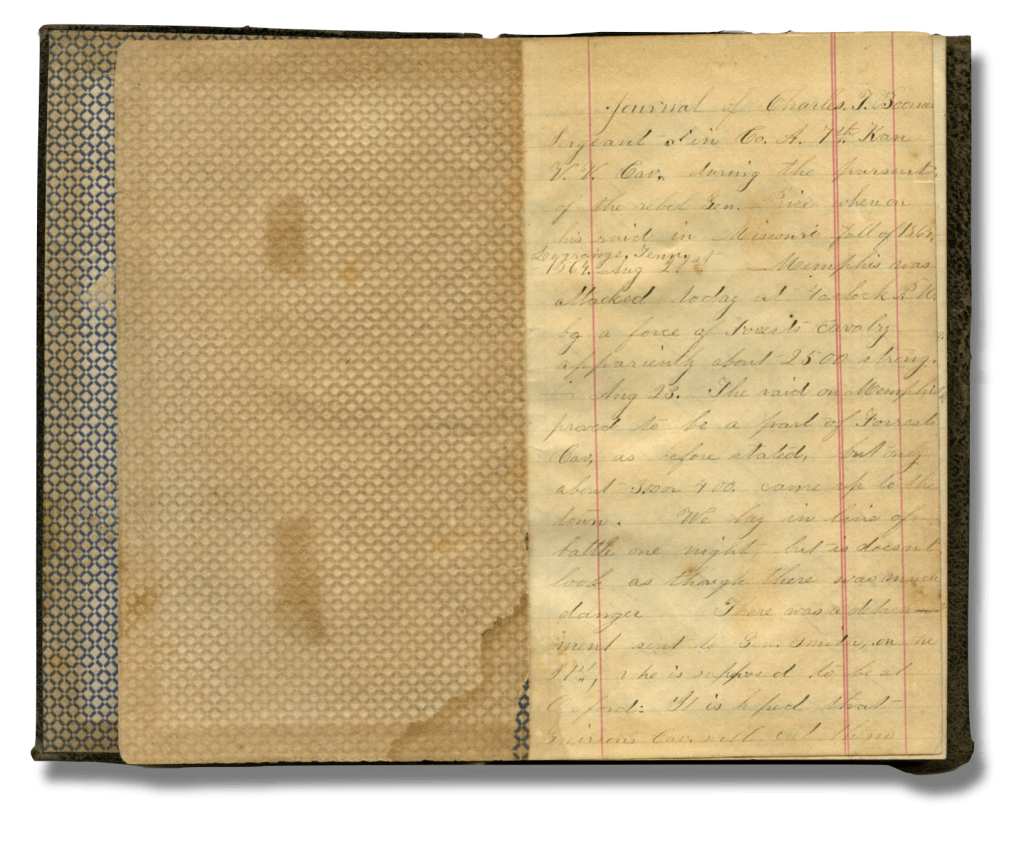
Journal of Charles T. Boomer, Sergeant in Co. A, 7th Kansas V. V. Cav., during the pursuit of the rebel Gen. Price when on his raid in Missouri fall of 1864.

21 August 1864—Lagrange, Tennessee. Memphis was attacked today at 4 o’clock p.m. by a force of Forrest’s cavalry, apparently about 2500 strong.

August 23. The raid on Memphis proved to be a part of Forrest’s Cavalry as before stated, but only about 300 or 400 came up to the town. We lay in line of battle one night but it doesn’t look as though there was much danger. There was a detachment sent to Gen. Smith on the 21st who is supposed to be at Oxford. It is hoped that Grierson’s Cavalry will cut them [off] before they can join their main command. All is quiet here. It is a very pleasant day.

September 12th—End of our Southern Campaign. We leave Memphis at 8 p.m.

September 15th—Arrived at Cairo just before six this morning. We lay on a sandbar all day yesterday. I have gone through this summer without seeing an armed rebel or hardly hearing a bullet whistle. Co. A has lost one man killed and 4 wounded. Bill Adams killed, Jennings, McIntosh, G____ , Rice wounded. The regiment has done good fighting, has been engaged some five or six times at or below Ripley, Pontotoc from Pontotoc to Tupelo, from Tupelo north to Salem and three or four times from the Tallahatchie to Hurricane Creek and to Oxford or battle Graham.

September 16th—Left Memphis on the 13th inst., arrived at Cairo the 15th on the John Rains. We got aground on the bar just below Island No. 10. Lay there all day and were helped off by the Darling. Today we ran aground about five miles above Cape Girardeau. We all got off and marched about three miles. The water is four feet scant on the worst bars between Cairo and St. Louis. Co. A, C, G, and I are onboard. Camp Gamble, St. Louis, Mo.

September 20th—Expect to be paid off today. About half the regiment were paid yesterday.

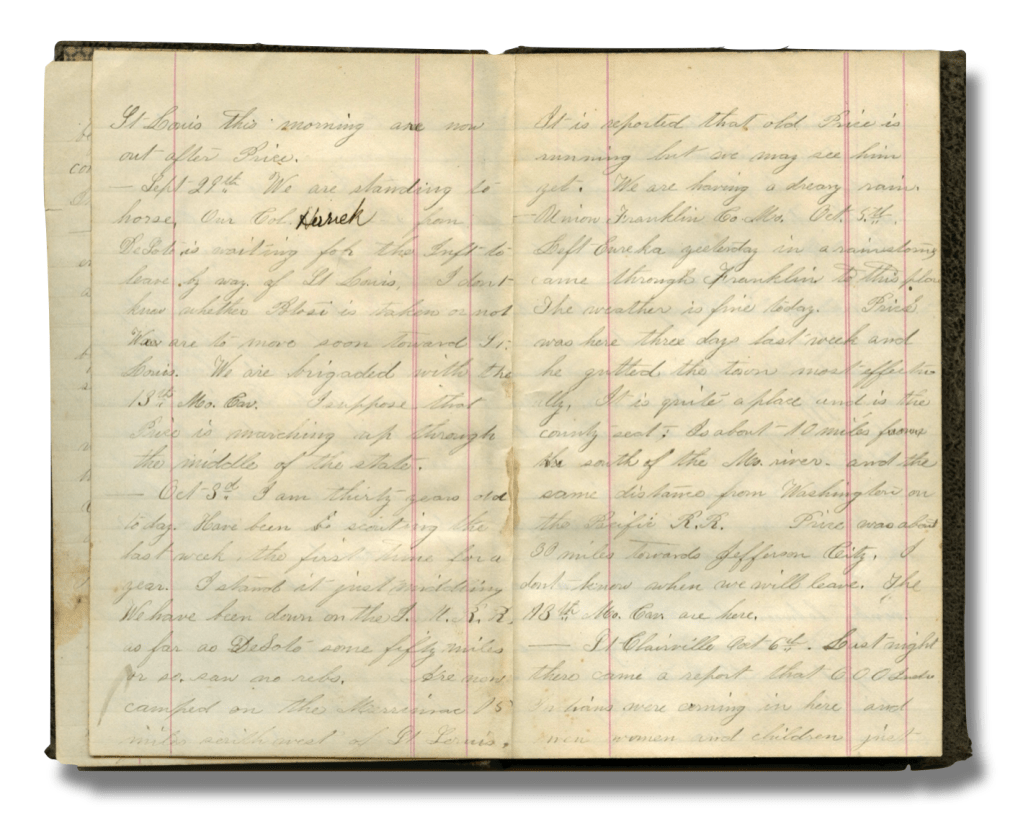
September 27th—Camp near Paris on the Iron Mountain Railroad. Left St. Louis this morning. Are now out after Price.

September 29th—We are standing to horse. Our Col. Herrick from DeSoto is waiting for the infantry to leave by way of St. Louis. I don’t know whether Potosi is taken or not. We are to move soon toward St. Louis. We are brigaded with the 13th Missouri Cavalry. I suppose that Price is marching up through the middle of the state.

October 3rd—I am thirty years old today. Have been scouting the last week, the first time for a year. I stand it just middling. We have been down on the Iron Mountain Railroad as far as DeSoto, some fifty miles or so. Saw no rebs. Are now camped on the Merrimac 15 miles southwest of St. Louis. It is reported that old Price is running but we may see him yet. We are having a dreary rain.

Union, Franklin county, Mo. October 5th—Left Eureka yesterday in a rainstorm. Came through Franklin to this place. The weather is fine today. Price was here three days last week and he gutted the town most effectively. It is quite a place and is the county seat. Is about 10 miles from south of the Missouri river and the same distance from Washington on the Pacific Railroad. Price was about 30 miles towards Jefferson City. I don’t know when we will leave. The 13th Missouri Cavalry are here.

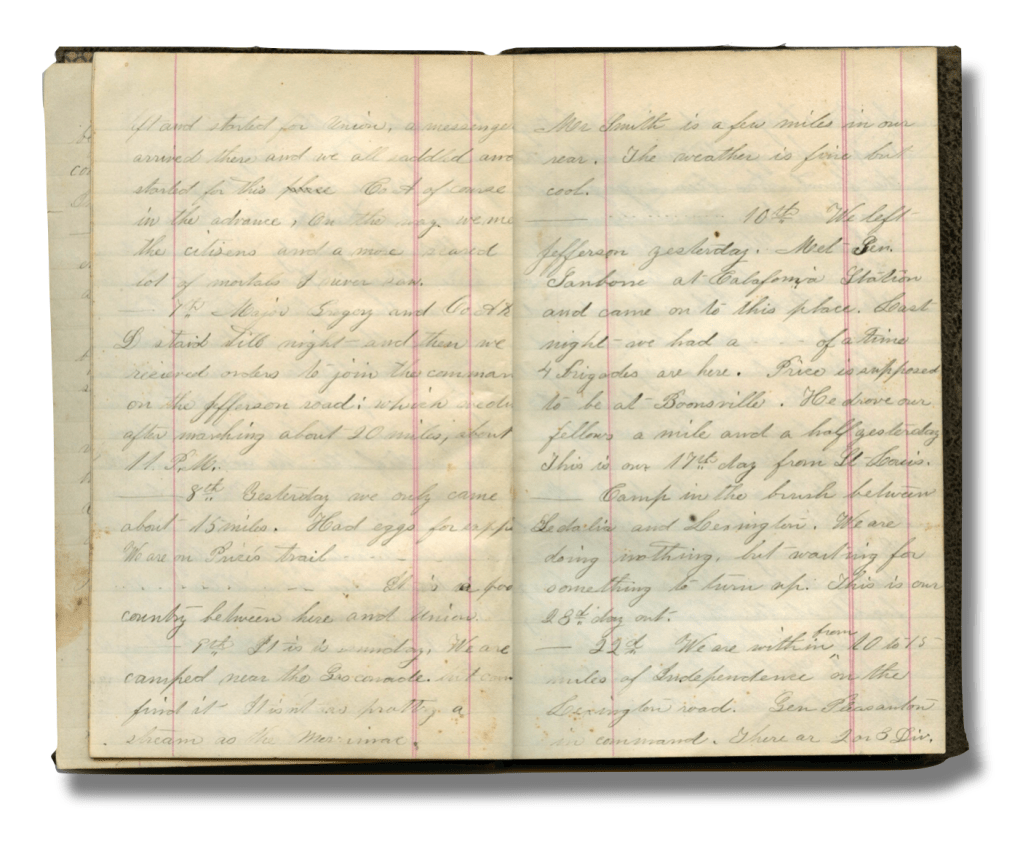
St. Clarksville, October 6th—Last night there came a report that 600 individuals in trains were coming in here and men, women, and children just left and started for Union. A messenger arrived there and we all saddled. We started for this place; Co. A, of course, in the advance. On the way we met the citizens and a more scared lot of mortals I never saw.

October 7th—Major [Charles H.] Gregory and Co. A & D staid till night and then we received orders to join the command on the Jefferson Road which we did after marching about 20 miles, about 11 p.m.

October 8th—Yesterday we only came about 15 miles. Had eggs for supper. We are on Price’s trail. It is a poor country between here and Union.

October 9th—It is Sunday. We are camped near the Gasconade but can’t find it. It is not as pretty a stream as the Merrimac. Mr. Smith is a few miles oil our rear. The weather is fine but cool.

October 10th—We left Jefferson yesterday. Met. Gen. [John B.] Sanborn at California Station and came on to this place. Last night we had a [hell] of a time. Four brigades are here. Price is supposed to be at Boonville. He drove our fellows a mile and a half yesterday. This is our 17th day from St. Louis. Camp in the brush between Sedalia and Lexington. We are doing nothing but waiting for something to turn up. This is the 23rd day out.

October 22nd—We are within from 10 to 15 miles of Independence on the Lexington road. Gen. Pleasanton in command. There are 2 or 3 divisions of cavalry along and three or four batteries. Firing has just commenced. The front has been engaged for nearly an hour. Independence. Afternoon. We came to this place. The 13th Missouri Vols. charged and took two brass field pieces and skirmished in going and yet this is the 26th day out. [Samuel] Curtis & [James G.] Blunt are at Kansas City fighting now.

October 24th—Near Santa Fe, Missouri. We didn’t make much off of Old Price yesterday but we got close shelling to horse. There was a heavy fight at the Big Blue yesterday. The 2nd Division, 16th Army Corps—Winslow’s—and at Westport by Blunt. Price had to burn 30 wagons.

October 25th—Near the Marais des Cygnes. We came within four miles of here last night. Came 40 miles or more. Blunt was in the advance. There has been another fight this morning at the river and I hear the 4th Iowa, 2nd Division, took two guns and 50 wagons. I have seen about 200 head of cattle. We are rather tired. Out of hard tack and sow belly. It rained a little this morning. Is cloudy yet but cooler. 29th day out.

The Battle of Mine Creek by Samuel J. Reader

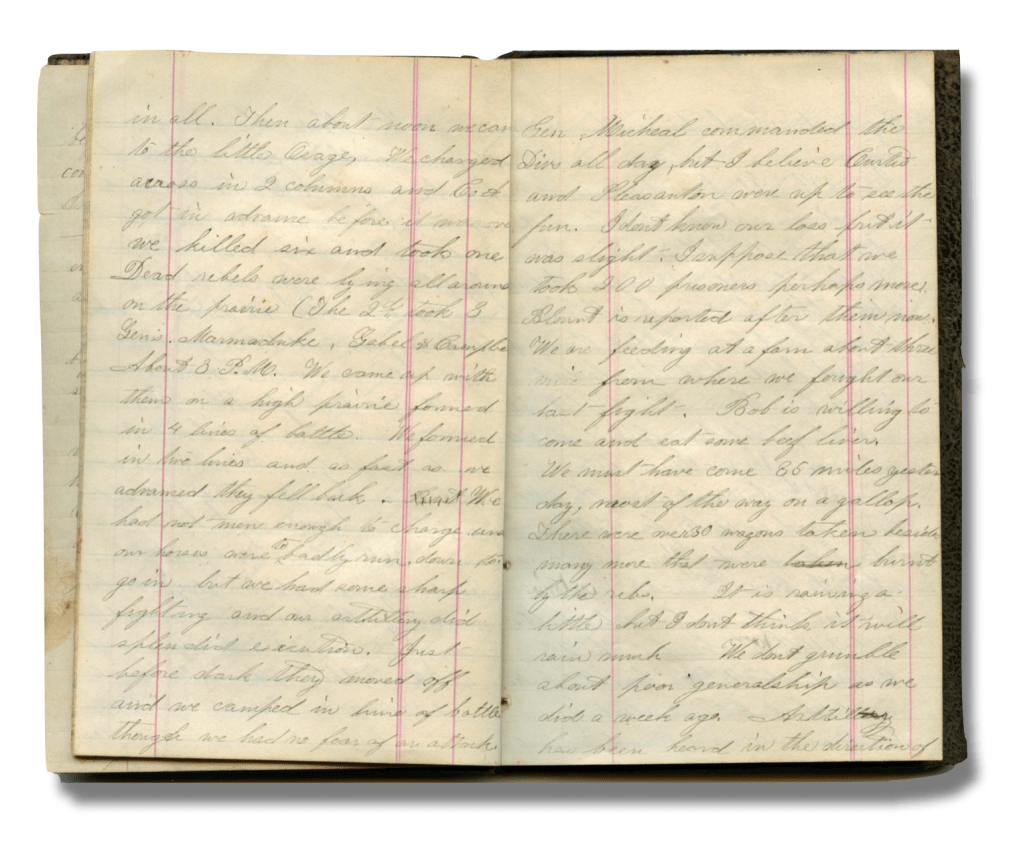
October 26th—Near Fort Scott, Kansas. Yesterday was a glorious day. In the morning the two divisions crossed the Marais des Cygnes and took four pieces of artillery. Then when about 6 miles out, the divisions charged in three columns and took 9 pieces more making 15 in all. Then about noon we came to the Little Osage. We charged across in two columns and Co. A got in advance. Before it was over, we killed six and took one. Dead rebels were lying all around on the prairie (The 2nd took 3 [two] generals—Marmaduke, [William] Cabell, and Campbell.

About three p.m. We came up with them on a high prairie, formed in 4 lines of battle. We formed in two lines and as fast as we advanced, they fell back. We had not men enough to charge and our horses were too badly run down to go in, but we had some sharp fighting and our artillery did splendid execution. Just before dark, they moved off and we camped in line of battle though we had no fear of an attack.

Gen. [John] McNeil commanded the divisions all day but I believe Curtis and Pleasanton were up to see the fun. I don’t know our loss but it was slight. I suppose that we took 200 prisoners, perhaps more. Blunt is reported after them now. We are feeding at a farm about three miles from where we fought our last fight. Bob is willing to come and eat some beef liver. We must have come 35 miles yesterday, most of the way on a gallop. There were 30 wagons taken besides many more that were burnt by the rebs. It is raining a little but I don’t think it will rain much. We don’t grumble about poor generalship as we did a week ago. Artillery has been heard in the direction of Dry Wood several times this morning.

October 27th—It proved true. We are in column about 40 miles south of Fort Scott, still in pursuit. We have passed 113 wagons the last 3 days. They had nearly all been burned, but we whipped them up so hard that they hadn’t time to burn them all. Old Price is hard up but I am afraid he will get away. The weather is fine.

October 30th—In camp near the Mt. Vernon road en route for Rolla. Day before yesterday Jennison came up with Price at Newtonia and got pretty badly used up. The 15th and 16th Kansas broke but the 2nd Colored stood. We lost 20 killed and about 60 wounded. Then [John] Sanborn came up and turned affairs slightly. We were about 7 miles back. The next morning we were ordered to Springfield. I don’t think there is anyone after him (Price). For the last week we have had hard times but we have enjoyed it. The horses have stood it well but nearly gave out. They are doing well now. I hope that Steele will give him (Price) a call. We came through a rather barren country yesterday. Last night was the first night that we have had a good sleep.

October 31st—Springfield. we arrived here a 2 o’clock p.m. It is quite a pretty place. We expect to go back soon, but of course don’t know.

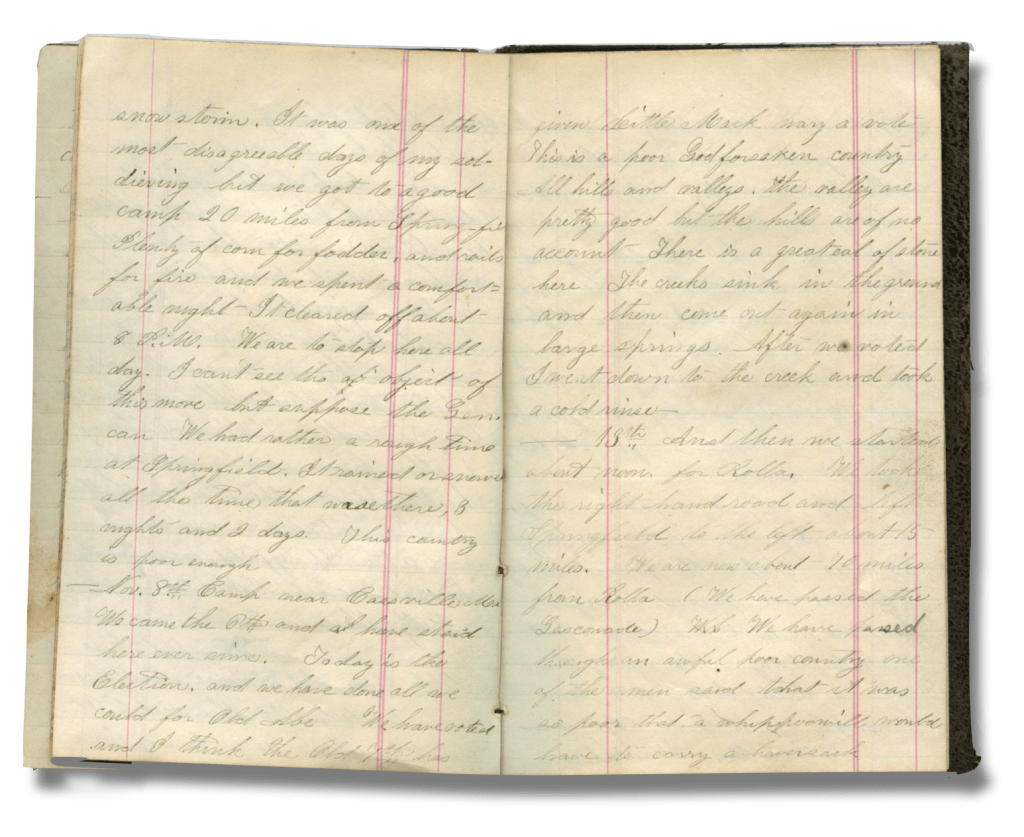
November 4th—On the road to Ft. Smith. We started yesterday in a snowstorm. It was one of the most disagreeable days of my soldiering but we got to a good camp 20 miles from Springfield. Plenty of corn for fodder, and rails for fire and we spent a comfortable night. It cleared off about 8 p.m. We are to stop here all day. I can’t see the object of this move but suppose the Gen. can. We had rather a rough time at Springfield. It rained or snowed all the time that we was there, three nights and two days. This country is poor enough.

November 8th—Camp near Cassville, Mo. we came the 6th and I have staid here ever since. Today is the Election and we have done all we could for Old Abe. We have voted and I think the Old 7th has given Little Mack nary a vote. This is a Godforsaken country—all hills and valleys. The valleys are pretty good but the hills are of no account. There is a great deal of stone here. The creeks sink in the ground and then come out again in large springs. After we voted, I went down to the creek and took a cold rinse.

November 13th—And then we started about noon for Rolla. We took the right hand road and left Springfield to the left about 15 miles. We are now about 70 miles from Rolla. (We have passed the Gasconade) We have passed through an awful country. One of the men said that it was so poor that a whippoorwill would have to carry a haversack.

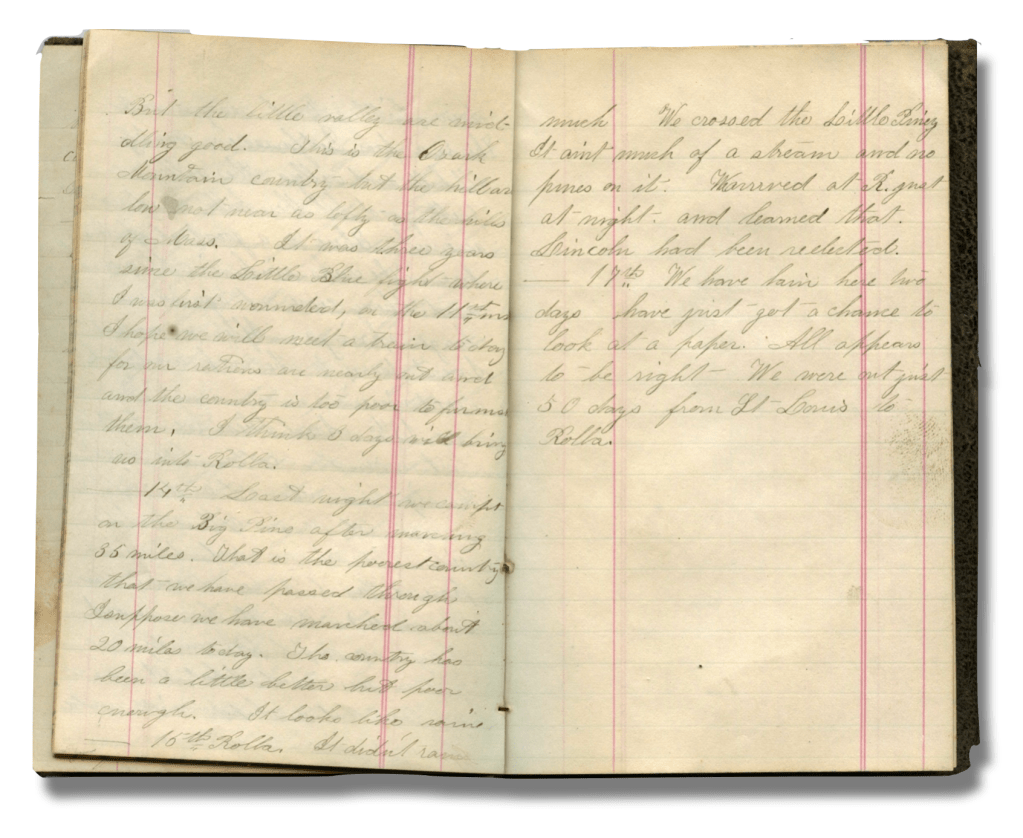
But the little valley are middling good. This is the Ozark Mountain country but the hills are low—not near as lofty as the hills of Massachusetts. It was three years since the Little Blue Fight where I was first wounded on the 11th inst. I hope we will meet a train today for our rations are nearly out and the country is too poor to furnish them. I think 3 days will bring us into Rolla.

November 14th—Last night we camped on the Big Pine after marching 35 miles. That is the poorest country that we have passed through. I suppose we have marched about 20 miles today. The country has been a little better but poor enough. It looks like rain.

November 15th—Rolla. It didn’t rain much. We crossed the Little Piney. It ain’t much of a stream and no pines on it. We arrived at Rolla just at night and learned that Lincoln had been reelected.

November 17th—We have lain here two days. Have just got a chance to look at a paper. All appears to be right. We were just 50 days from St. Louis to Rolla.

Confederate POW writes to Union Soldier

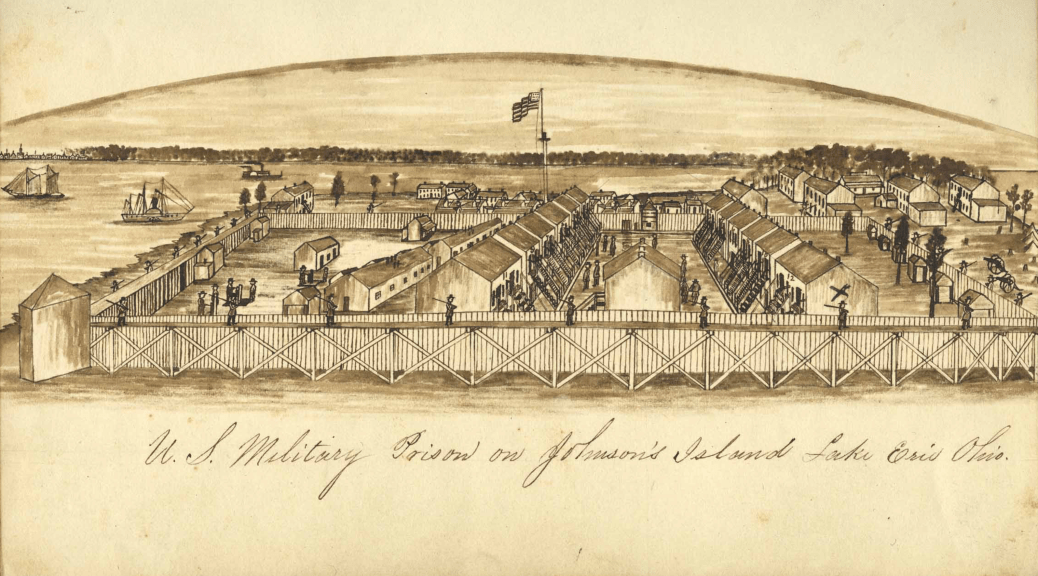
The following letter was written by Thomas Benjamin Fargason (1831-1918) of Co. D, 14th Alabama Regiment. Thomas mustered into the regiment as a sergeant in August 1861 but was commissioned a lieutenant prior to the Battle of Gettysburg when he was taken prisoner on 2 or 3 July 1863. He was first taken to Fort McHenry, then Fort Delaware, and later to Johnson Island where he wrote this letter in late May 1864 after almost eleven months of confinement.

The date of Lt. Fargason’s capture at Gettysburg varies and the regimental history informs us that they were engaged on both 2 July and 3 July. They did participate in Picket’s charge on the 3rd but the more likely opportunity for capture seems to have been on the evening of 2 July when they joined in the attempt to break through the Union lines at Plum Run and suffered severe losses before falling back.

Prisoner of War (POW) letters generally make for dull reading since the content was screened by censors who made certain nothing sensitive was revealed in them. This, combined with the fact that they were limited in length to a single page to make it easier on censors to do their job, usually resulted in a letter that served little purpose but to inform recipients the prisoner was still alive. Correspondence between Confederate officers held at Johnson’s Island and southern-sympathizing citizens living in the North are occasionally found but it’s very unusual to find a letter written by a Confederate POW to a Union Soldier. Unfortunately the Union soldier is not named in the letter.

Thomas was the son of John Fargason (1800-1866) and Elizabeth Mason (1797-1879). He was married in 1857 to Laura Walker Duncan (1836-1900) and had a young daughter named Ella, born in September 1860. When he was enumerated in Tallapoosa county, Alabama, in 1860, as a 29 year-old farmer and the owner of two slaves (40 y.o. female and 12 y. o. male). Later in life, he appears to have become a minister.

[Note: This letter is from the private collection of Jonathan Peace and was made available for transcription and publication on Spared & Shared by express consent.]

Transcription

Johnson’s Island, Ohio
May 26th 1864

My dear friend,

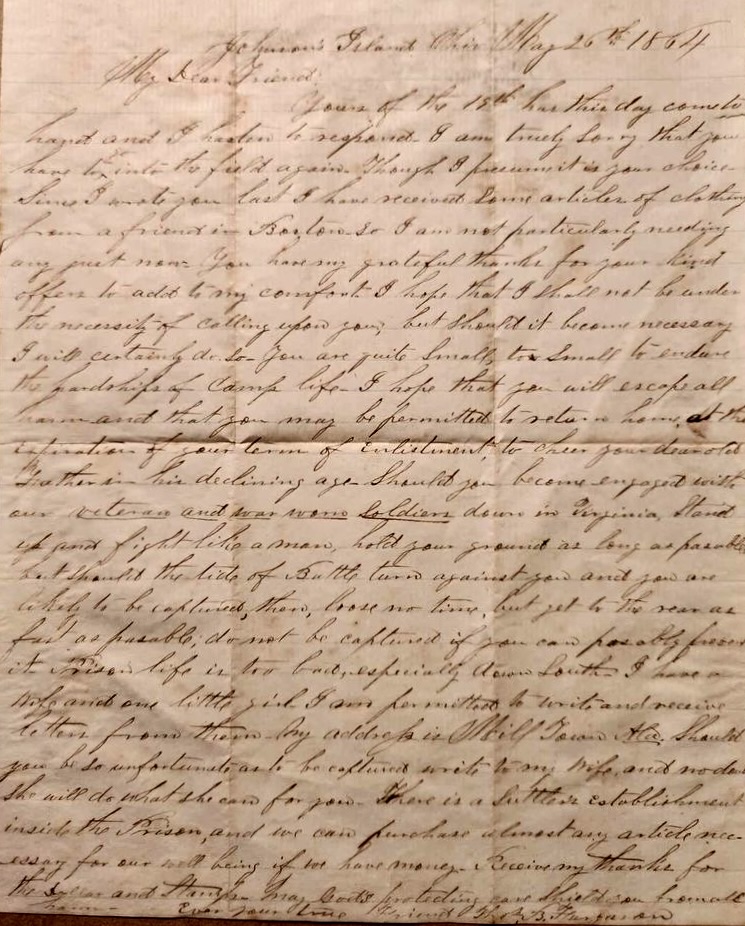
Yours of the 19th has this day come to hand and I hasten to respond. I am truly sorry that you have to go into the field again, though I presume it is your choice. Since I wrote you last, I have received some articles of clothing from a friend in Boston, so I am not particularly needing any just now. You have my grateful thanks for your kind offers to add to my comfort. I hope I shall not be under the necessity of calling upon you, but should it become necessary, I will certainly do so. I hope that you will escape all harm and that you may be permitted to return home at the expiration of your term of enlistment to cheer your dear old Father in his declining age. Should you become engaged with our veteran and war-worn soldiers down in Virginia, stand up and fight like a man. Hold your ground as long as possible, but should the tide of battle turn against you and you are likely to be captured, then lose no time, but get to the rear as fast as possible. Do not be captured if you can possibly prevent it. Prison life is too bad—especially down South. I have a wife and one little girl. I am permitted to write and receive letters from them. My address is Mill Town, Alabama. Should you be so unfortunate as to be captured, write to my wife and no doubt she will do what she can for you. There is a Sutler’s establishment inside the prison and we can purchase almost any article necessary for our well being if we have money. Receive my thanks for the dollar and stamps. May God’s protecting care shield you from all harm.

Ever your true friend, — Thos. B. Fargason

1861: William Dunlap Simpson to Jane (Young) Simpson

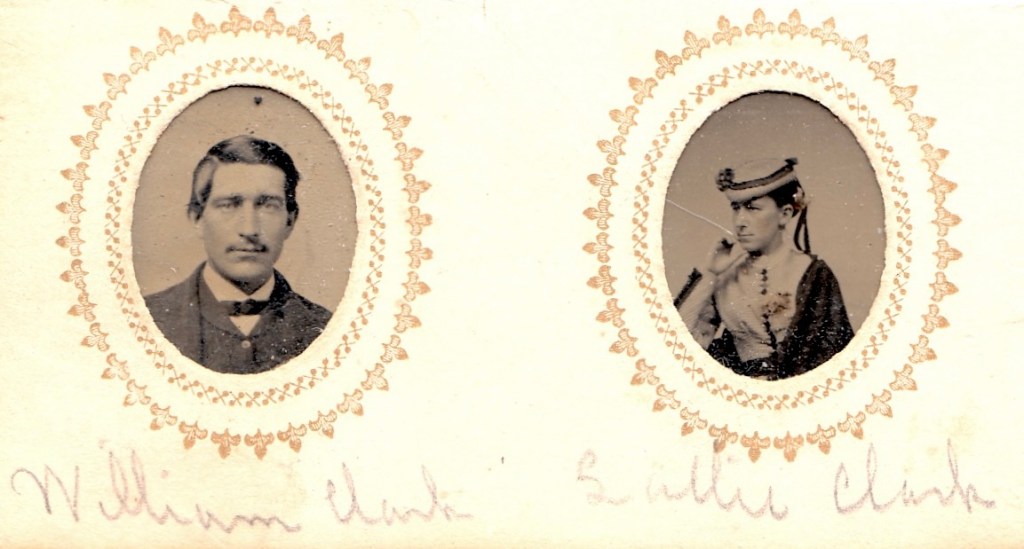
The following letter was written by William Dunlap Simpson (1823-1890), the son of John Wells Simpson (1796-1881) and Elizabeth Satterwhite (1803-1824). William was married to Jane Elisabeth Young (1829-1902) in the mid 1840s.

Capt. William D. Simpson, while serving as aide to Gen. Milledge L. Bonham, 1861 (The Horse Soldier)

William was educated at South Carolina College (later the University of South Carolina), completing his studies in 1843, and spent one term at Harvard Law School. He practiced law in Laurens with his partner (and father-in-law) Henry Clinton Young. He served in the South Carolina legislature in the 1850s and early 1860s, but at the outbreak of the Civil War, Simpson volunteered to served as an aide to General Milledge L. Bonham from the siege of Fort Sumter till after 1st Bull Run. He then returned home and helped to raise the 14th South Carolina Infantry and was made its lieutenant-colonel in November of 1861. He commanded the regiment at 2nd Bull Run, Chantilly, Antietam and Shepherdstown. He was also present for Fredericksburg but he resigned his commission when he was elected to represent South Carolina in the Confederate Congress, serving until the close of the war. He became Lieutenant Governor in 1876 and served until 1879 at which point he became Governor of South Carolina. He served in that office until 1880, when he was named to the South Carolina State Supreme Court. His tombstone reads “Elder in Presbyterian Church; Legislator; Soldier; Confederate Congressman; Governor; Chief Justice of SC.”

Transcription

Camp near Port Royal Ferry
[South Carolina Coast]
Late December 1861

My Dear Dear Wife,

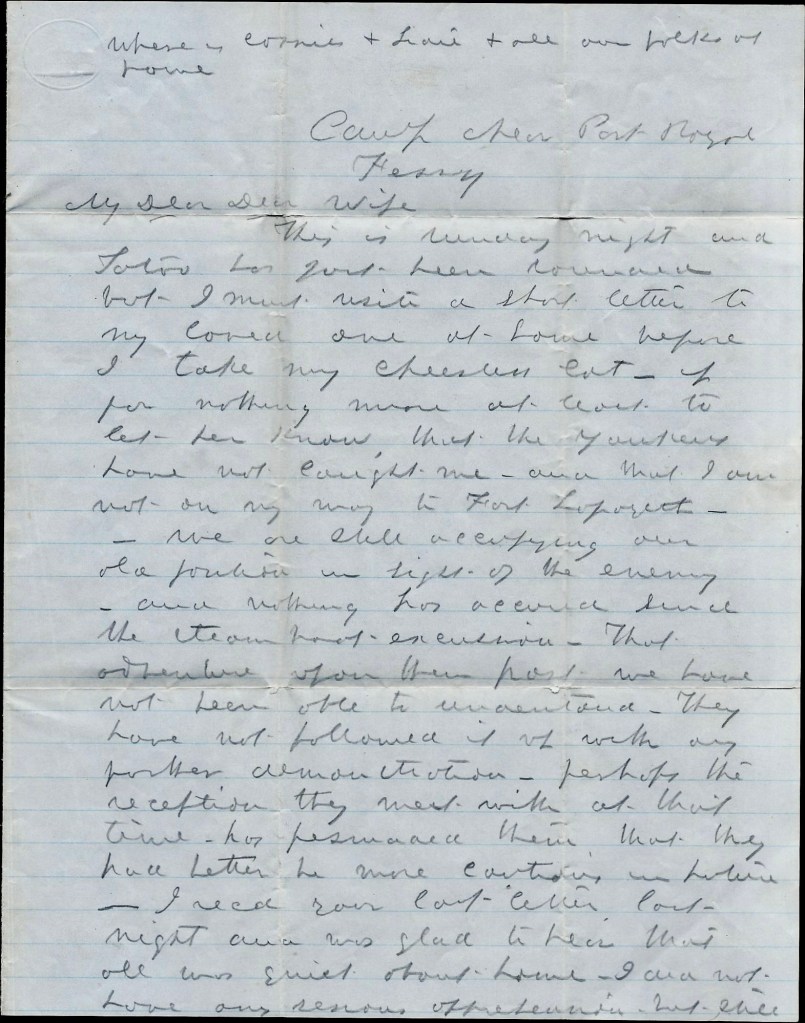
This is Sunday night and Tatoo has just been sounded but I must write a short letter to my loved one at home before I take my cheerless lot—if for nothing more at least to let her know that the Yankees have not caught me and that I am not on my way to Fort Lafayette. We are still occupying our old position in sight of the enemy and nothing has occurred since the steamboat excursion. That adventure upon this post we have not been able to understand. They have not followed it up with any further demonstration. Perhaps the reception they met with at that time has persuaded them that they had better be more cautious in future.

I received your last letter last night and was glad to hear that all was quiet about home. I did not have any serious apprehension, but still I was more or less uneasy and was anxious to hear from home.

Maxcy Gregg led the 1st S. C. Regiment until mid-December 1861 when he was promoted to Brig. General.

There is now no probability of our Colonel being appointed Brig. Gen’l. Col. [Maxcy] Gregg has received the opportunity and will have the command of this Department. His command will embrace our regiment, Col Dunnovant’s [12th S. C.] Regiment & Col. Edwards’ and some few artillery companies. Although we are advanced near the ferry, I don’t think it is the understanding that we are to attempt to hold this place against an overwhelming force should they succeed in crossing, but in all probability we will have to fall back. In other words play the same game we did at Fairfax Court House. I don’t like this course of things. Enough troops ought to be raised to resist them coming on the main land and to drive them back at all hazards. Col. Gregg has not assumed command as yet. Will be here by 1 January. He is now in Columbia attending convention.

How are our boys turning out? How much do they weigh now? I wish I was at home to get some spare ribs and sausages. I would work for a box of some of them but there is so much difficulty in getting a box through to this point, it would cost more than it ought, and more than this, some of our men. Capt. Hammond has been home recently and brought us a supply, and Col. [Samuel] McGowan received from Mr. Mc. through a friend who was already coming here—a supply of sausages &c. &c. so we have been living pretty bountifully on such things. Our Christmas dinner consisted of a fine big turkey on large cheese of [  ], some well-cooked sausages, spare ribs, potatoes, rice, butter, and a wild duck. First rate, was it not? Don’t expect you had much better. We live well enough. This is the finest country for poultry I ever saw. Some of the prettiest ducks may be seen on every place. If I had a good opportunity, I would like to send you a coop of them.

When you write to the boys, do tell them I have not forgotten them. I do hope they may get back up in April. Tell them not to volunteer in Virginia, but to come home and then if they want to go again, they will have a chance to rise from a private. I would write to them but it seems I never have the time to write to anyone but you. Tell the children I am glad they have not forgotten Pa and that Christmas don’t seem like Christmas without I was there. My dear wife, good night. May I dream of thee tonight. — W. D. S.

To Mrs. W. D. Simpson, Laurens Court House, South Carolina

1863: Tattnall Paulding to Hiram Paulding

Tattnall Paulding in later life

The following letter was written by Capt. Tattnall Paulding (1840-1907) of the 3rd US Cavalry while in captivity at Libby Prison in Richmond, Virginia.

Paulding received his commission as a 2nd Lieutenant on 14 May 1861 and was appointed to the 3rd US Cavalry. He “quickly adjusted to cavalry life, and was mentioned favorably on several occasions by his superiors in the regiment over the winter. When the unit saw its first action at Williamsburg the following May, he was mentioned in his commander’s report for his coolness and gallantry in action. He was selected to lead the regiment’s detachment assigned to the Army of the Potomac’s provost guard under Brigadier General Marsena Patrick following the engagement.

“He continued to distinguish himself through the campaigns of 1862, Stoneman’s Raid and the battle of Brandy Station. During the Gettysburg Campaign, though only a lieutenant and now serving in the 6th US Cavalry, Paulding found himself commanding a squadron of men when they encountered elements of a Confederate brigade commanded by “Grumble” Jones. His men “fought dismounted from the protection of a fenced ridgeline. They blunted a charge by the 7th Virginia Cavalry with deadly fire from the muzzles of their .52 caliber carbines. Then, the 6th’s major ordered Paulding’s squadron to pursue the defeated foe. As they saddled up, the balance of Jones’ brigade came up, drew sabers and attacked. Unable to reach their horses in time, Paulding’s men were overrun by saber-swinging rebels. “My men were scattered through the field, and being pursued by the mounted foe were soon captured,” Paulding reported.” 1 Although a disastrous defeat for his outnumbered regiment, Paulding received a brevet promotion to captain for ‘gallant and meritorious service’ during the battle.

“Following the battle of Fairfield, he was reported by Lieutenant Nicholas Nolan as ‘missing, and supposed to be in the hands of the enemy.’ This was quickly confirmed, and Paulding spent the next nine months confined in Libby Prison. He was a prolific correspondent with his family during his internment, and these letters are very good primary source accounts of both the battle of Fairfield and life in Libby Prison.

“August 1864 was a good month for Paulding. Not only was he finally released from Libby Prison, but he was also promoted to captain in the 6th U.S. Cavalry on August 20th. Upon his release, Captain Paulding was assigned to operate the Mounted Recruiting Service station in New York City. Although the station notionally recruited for the army as a whole, the overwhelming majority of these men were sent to bolster the dwindling number of veterans in the ranks of the regular cavalry regiments of the Army of the Potomac. Captain Paulding received brevet promotions to major and lieutenant colonel on November 11, 1865 for meritorious services during the war. He relinquished command of the recruiting station when he resigned his commission on July 1, 1866.” [Source: Regular Cavalry in the Civil War]

Tattnall was the son of Rear Admiral Hiram Paulding (1797-1878) and Ann Marie Kellogg (1807-1894). He wrote the letter to his younger brother, Hiram Paulding, Jr. (1846-1924).

[Note: This letter is from the collection of Sal Terregino and was made available for transcription and publication on Spared & Shared by express consent.]

Transcription

Addressed to Hiram Paulding, Esq. Jr., Care of Admiral Paulding, Navy Yard, New York

Libby Prison
November 28th 1863

My dear brother,

Yours of 13th inst. came to me yesterday bringing the latest news I have received from home and I need not tell you that it was a welcome visitor. With it came Becca’s of 12th and Father’s of the 7th. Although a letter sent and received as is necessary for one in my position is all that we usually look for, it cheers a dreary prison life, when it comes from those we love, and brings tidings of their health and welfare. I congratulate you upon your promotion of which Father told me some time ago. I think that by this time you are quite a man of business. Your writing shows practice and if I may compliment you, improvement. I hear too that you are studying Spanish. My letter would be in that lingo if consistent with the prison rules. I studied for some time & made considerable improvement but our teacher became ill and the class was broken up. Time often hangs heavily but by keeping employed in one way and another, nearly five months of captivity have passed, cheered by hope of better days. Thanksgiving day was like other days with a rice pudding being the principal feature. A box has just come for B. F. Mead which I will try to push forward to him. Please send me the Cavalry Tactics (double back formation), Shakespeare (cheap edition) and a welcome & especially so now as we can send surplus to our enlisted me. 200 of my men are here yet. I am very well. Exchange is again below par. With love to all, your affectionate brother, — T. Paulding

[to] H. Paulding, Esq. Jr.
Navy Yard, New York

I have just received the box shipped 16th with no letter. The letter & papers & some baking powder are desirable parts of the box. The cans are fine & I will grow fat and defy scurvy.


1 Three Days in July: Faces of Union and Confederate Soldiers at the Battle of Gettysburg, Edited by Charles Joyce, Military Images Digital, June 8, 2020

1865: William Clark to Sarah E. Clark

William and his sister Sarah (“Sallie”) Clark of Londonderry, New Hampshire

The following letter was written by William Clark (1844-1916), the son of Reed and Elizabeth (Perkins) Clark “After attending public schools, prepared for college at Pinkerton Academy,” William instead “enlisted 3 September 1864 as a private in Co. D, 1st New Hampshire Heavy Artillery” and was immediately promoted to corporal. The regiment was assigned to the defense of Washington D. C.

William was posted in Washington D. C. on the night of 14 April 1865, five days after the surrender of Lee to Grant at Appomattox, when President Abraham Lincoln was shot by John Wilkes Booth in Washington’s Ford Theater. Lincoln, of course, died early in the morning of April 15 and it was soon learned that his assassination was part of a larger plot to murder multiple key Union government officials. The assassination unleashed a torrent of mourning, anger, and retribution that was felt for years to come. After escaping from Washington, Booth was eventually cornered and killed in Virginia on 26 April, following a massive dragnet for him and his co-conspirators.

William wrote this letter on April 17th, two days after Lincoln’s death, to his sister in New Hampshire. It conveys a sense of the excitement that followed the assassination, but ends with a comment illustrating the joyous rebirth of Spring that managed to blossom in the midst of the madness, reminding us that life goes on.

Map showing location of Battery Cameron west of Georgetown overlooking the Potomac. Now the location of the German Embassy.

[Note: This letter is from the personal collection of Richard Weiner and was transcribed and published on Spared & Shared by express consent.]

Transcription

Addressed to Miss Sarah E. Clark, Derry, New Hampshire. As stated in the letter, this envelope once contained apple blossoms that are no longer present, but the fragrance lingers still.

Battery Cameron
District of Columbia
April 17th, 1865 

Dear Sister Sarah, 

I have not heard from home for nearly a week, nor received a letter or paper from anyone, but I thought I would write and let you know how we are situated. Our boys are all in picket except barely enough to guard the batteries. I am lucky enough not to be on quarter guard every other day, while the picket is not relieved at all. The picket posts are about 25 feet apart and extend around the city a distance of 145 miles. The authorities are searching all places of retreat within the lines. A great many are arrested. A man was caught by our boys last night while trying to pass the picket line on his hands and knees. He was armed with two revolvers heavily loaded. He was coming in. The guerrillas fired into the canal boat above Fort Sumner yesterday.

You cannot even imagine the state of affairs. Persons that are secession at heart have dressed their houses in mourning and people dare talk nothing but Union sentiments for fear of their lives. Several have been shot already for saying that they were glad that Lincoln was dead. I hear that Lincoln is to be buried Wednesday. I want to go to into the city but can’t go till Thursday—if I can then. We have an approved pass from Col. Long to get into the City with. There are so many guards now that a cat could scarcely pass them. I would send you a Washington paper if I could get one, but I cannot.

The boys that have been into the City say that every building on the street is draped in mourning. The Light Artillery was just in season to prevent the mob from breaking into the old Capitol Prison and murdering Gen. Lee’s son [who] is confined there. And Gen. Early is at Williard’s [Hotel] under guard, so I hear, but you must take that for what it is worth. I have just seen a column of cavalry come from Virginia across the river. I should think that there were two or more regiments of them. The New Hampshire cavalry is only 7 or 8 miles from here doing picket duty. 

The mail has just come in and I must stop writing till I see if I got a letter. No letter for me so I shall not hear from you until tomorrow at least. Can’t you or Marianna write about Wednesday so that I may have about Saturday or Sunday. I am almost sure of a letter from you on Wednesday. I get the letters you write on Sundays on Wednesday. Is Carrie Parsons at home? And Kate Dinsmore? I would write to them but am afraid to for I am so nervous that I cannot write a very plain hand. It is unnecessary to inform you that I am on guard for that is all the time I have to write. It takes me all the time that I am off guard to clean my gun and equipments. Please write soon. My very best to all. Tell them I am well. 

Your affectionate brother, — William Clark.

I never have the good luck to back (fold) a letter any other way then wrong side up, W.C.

Here are some apple blossoms; the orchards are in full bloom.

“At least sympathize with me in my grief,” Joseph Wyckoff to Abraham Lincoln

This amazing handwritten letter to President Abraham Lincoln was penned by a distraught father, Joseph Wyckoff (1805-1886), who lost his son as a result of confinement at Andersonville where he was starved to death. The letter was dated 12 April 1865—just three days after Appomattox and two days before Lincoln’s assassination. In his letter, Wyckoff pours out his grief to Lincoln, whom he admits he did not vote for, and, though he asks for the chance to judge those who caused his son’s death, we learn that what he really wants is a chance to vent some anger at—and gain some sympathy from—the Lincoln Administration.

Joseph’s son, Alexander Baldridge Wyckoff (1841-1865), was 21 when he enlisted 4 August 1862 at Varick, New York, as a Private. He was mustered into Co. C, 126th New York Infantry.  On 15 September 1862, just a month after enlisting and before they had hardly been equipped and drilled, Alexander and other members of his regiment were surrendered to Stonewall Jackson’s men at Harper’s Ferry, Virginia, during the Antietam campaign, earning them, through no fault of their own, the unfair sobriquet “Harpers Ferry Cowards.” After their release from a parole camp in Chicago, the regiment worked hard to gain back their reputation, especially at Gettysburg where they sustained 57% casualties in capturing five stands of colors. Alexander was wounded on 10 May 1864 at Po River, Virginia, and on 25 August 1864 he was again captured, this time at Reams’ Station, Virginia. He was sent to Andersonville prison in Georgia, from which he was eventually paroled but died on 2 April 1865 at Baltimore, MD, according to his father, from illness sustained during his imprisonment.

From the timing, it is unlikely that the letter ever got to Lincoln, but rather was processed by the President’s staff in the days following the assassination. The letter does, however, appear to have been read by the Secretary of War, Stanton, who Wyckoff, in his letter, implies might have been soft on corruption, though facts do not bear this out. Docketing at the end of the letter reads “W1043 April/65”  (the President’s staff may have recorded correspondence alphabetically according to the last name of the writer). The letter also comes with a folded piece of ledger paper that reads “Romulusville, NY/ April 12, 1865/ Joseph Wyckoff/ Writes with regard to his son, Alex. B. Wyckoff late of Co. C. 126 NY Vol. Held as a Prisoner of War at Andersonville, Ga and offers his services as judge, etc.”  On the back of the ledger paper it reads “Respectfully referred to the Commissioner for the Exchange of Prisoners By order of the Secy of War, War Dept. April 21/65 – L[ewis] H Pelouze/A.A.G.” 

[Note: This letter is from the private collection of Richard Weiner and was made available for transcription and publication on Spared & Shared by express consent.]

Transcription

State of New York
County of Seneca, Romulusville
April 12th 1865

To Abraham Lincoln, President of the United States,

Dear Sir, I feel sore just now. I can’t help but express my feelings to you. I buried my son Alexander B. Wyckoff (9th inst). He was a member of Co. C ,126 Regt. U. S. Volunteers from the State of New York. The day before he enlisted, at night, he said, Father, what shall I do? I hate to be drafted. I said, Alexander, you are of full age (he was 21 years old in March before). That was under the call for 500,000 men. Our country is good for nothing so, should you go and help save it and live through it, you according to the course of nature will enjoy it longer than me. Should you fall, what is your blood worth more than thousands of others. Could I of got there I would have been there six months before now. That is just what I told him.

Now I wish to say at the time I told him this about six months before I addressed a letter to the Secretary of War. I there gave him my military experience (which was about 12 years) and said, have you any place in any of your camps of instruction, in any of your hospitals, where I can make a man? I am at your service. I also gave him my age which is now 59 last Sept. I could then of took charge of a Company or Regiment as well as many others that never drew a sword but he by silent consent passed by – by a silent nothing. Well, what is the consequence? We are taxed here to pay millions of dollars for some contemptible rouges that was well recommended which he nor you knew nothing of—only the recommend[ation] that accompanied their application.

Now my boy enlisted in the service, t’will be 3 years next August. He was captured in August last 25th. He was starved to death at Andersonville but he got a parole and died at Baltimore, April 2nd instant. His Mother was with him when he died. Now, could I of stooped so low as to ask for any position during the war, I know I could of got all the principle men in our county to of signed a recommend[ation] for me as a suitable person for the position—tis no matter what [position]. But I could not—I would not—and neither would I [even if it] was it to gain the Chief Justiceship of the U. S. But I now say one thing to you, if I had the Judgeship to investigate and try those who starved those poor prisoners to death, if found guilty by evidence, I would hang every soul of them. But to stoop so low as to ask any man or any set of men to recommend me, I will never do it. But I say cursed be the man, or any set of men, that will not hang every soul that had anything to do with starving thousands of our poor boys as they have been.

Now I say further, I ask for nothing myself, but should you want anyone from the little Copperhead County of Seneca to judge those rebels, call on me. I am at your service. But I will not ask no soul to recommend me. I do all on my own hooks. I have been Justice of the Peace here for about 12 years past, am now elected for 4 years more, from 1st of Jan next. I am the oldest voter in the town—born here—everybody knows me in the county that has lived here anytime. Call upon who you please. I only wish to try those who starved the poor boys to death. My boy lived to the day the last decisive battle was fought to decide this cursed rebellion, but the poor boy was unconscious at the time, or he—like me, would of said, Amen.

Now, what I want and ask of you is to answer me and at least sympathize with me in my grief and not say I am a poor cur not worthy of notice as Secretary Stanton did when I tried, through him, to get some place where he has placed thousands of dishonest creatures which cost the laboring class of the country millions of dollars needlessly on account of dishonesty, for you know and I know that this war has cost us many millions more than it ought to if everyone had of been honest. Now I am a humble farmer here. I helped to clear the soil of heavy timber for a mile south of where I now live & over half of my own farm which is about 164 acres in the heart of Seneca County & about the center of our state.

Now, Abraham, I wish to say to you, I have voted against you both times because I supported the other ticket, but there is not a man in the U. S. that have did more according to my means to uphold the President than me because you was elected agreeable to the constitution of the U. S. Now, call me what you please, do with me as you please, but if you have any sympathy for a bereaved Father, I beg of you answer me. I can then say I have a letter from the President of the U. S. I can say no more. I have only wrote you my feelings and do not curse me for it.

Respectfully yours, — Joseph Wyckoff