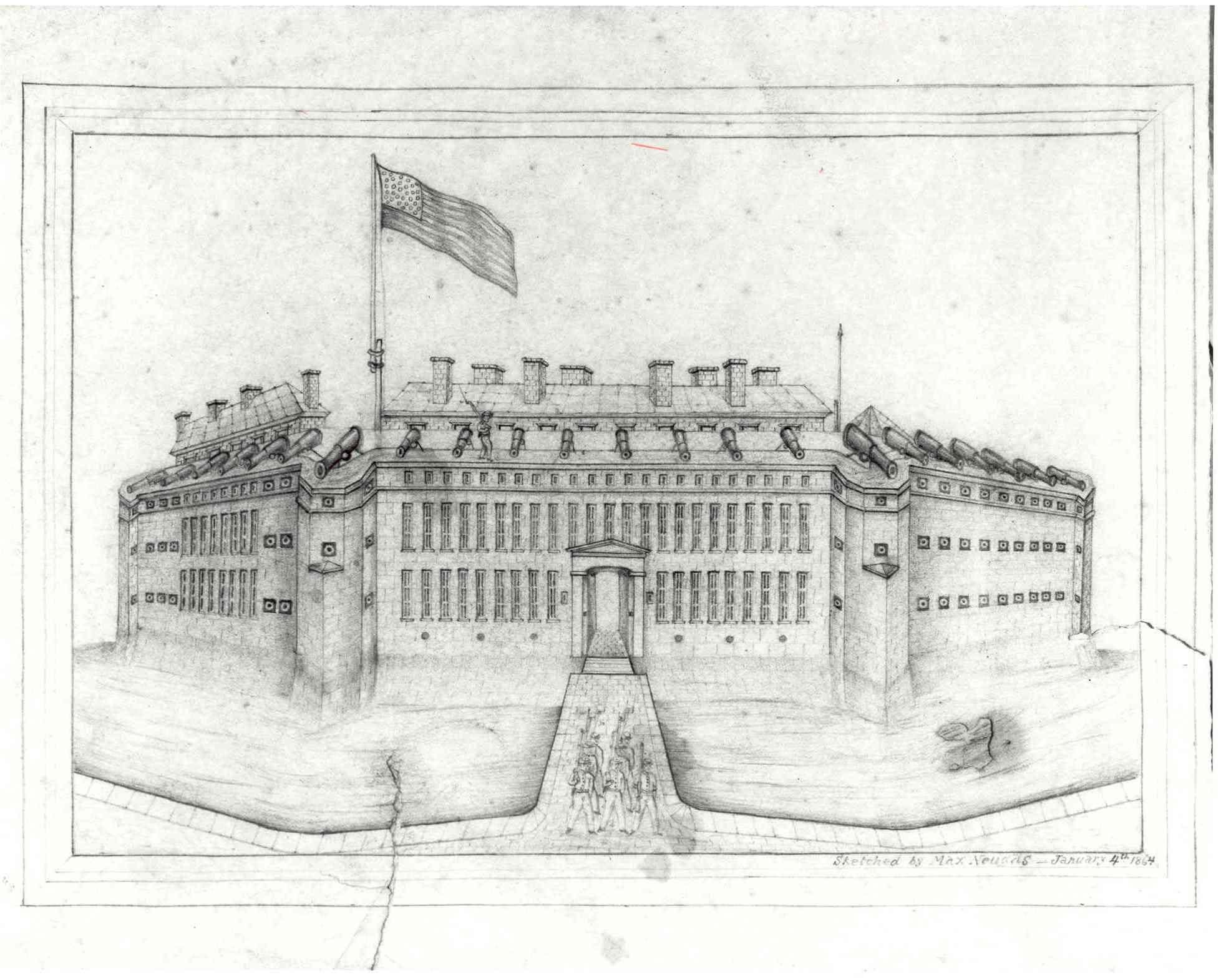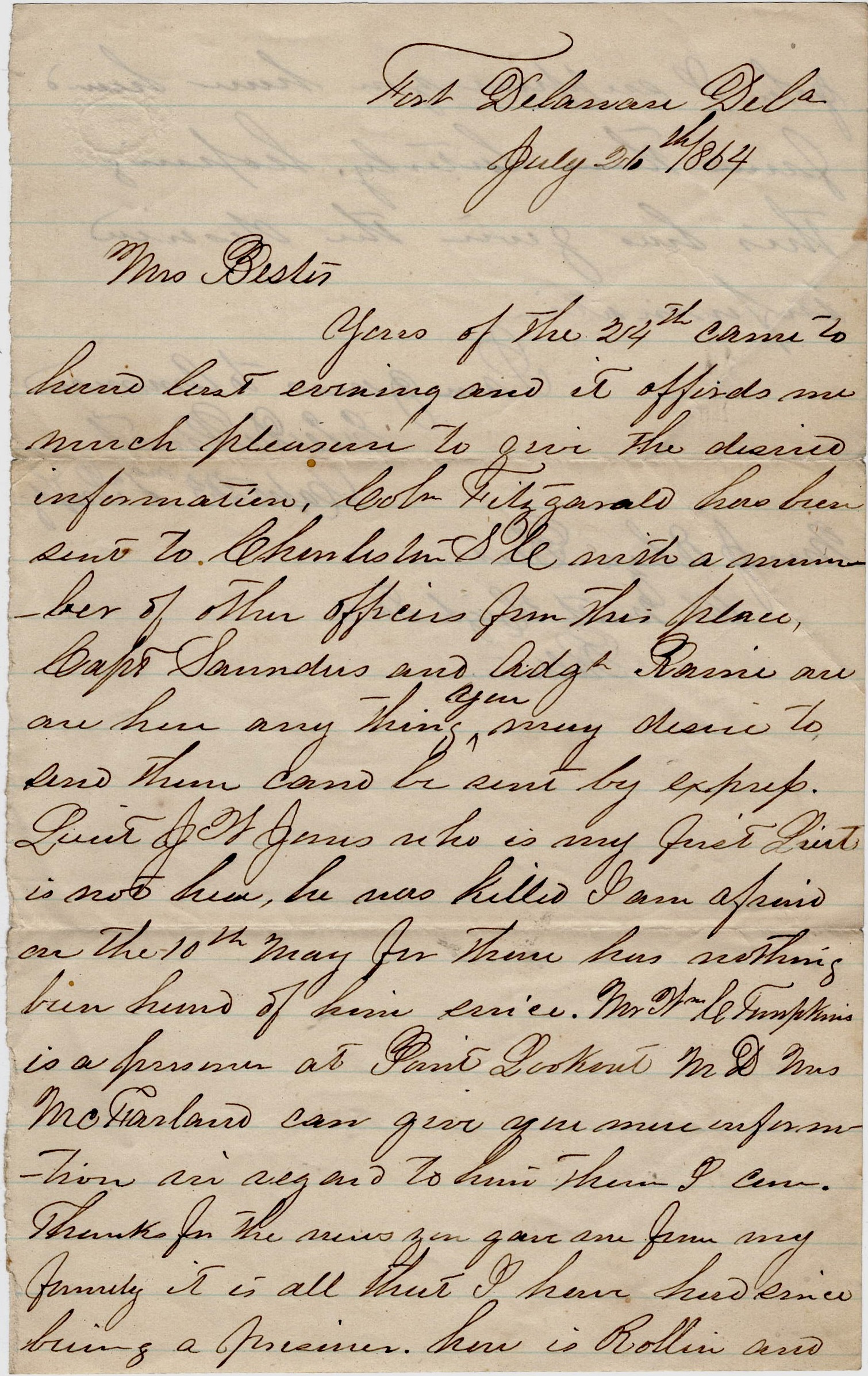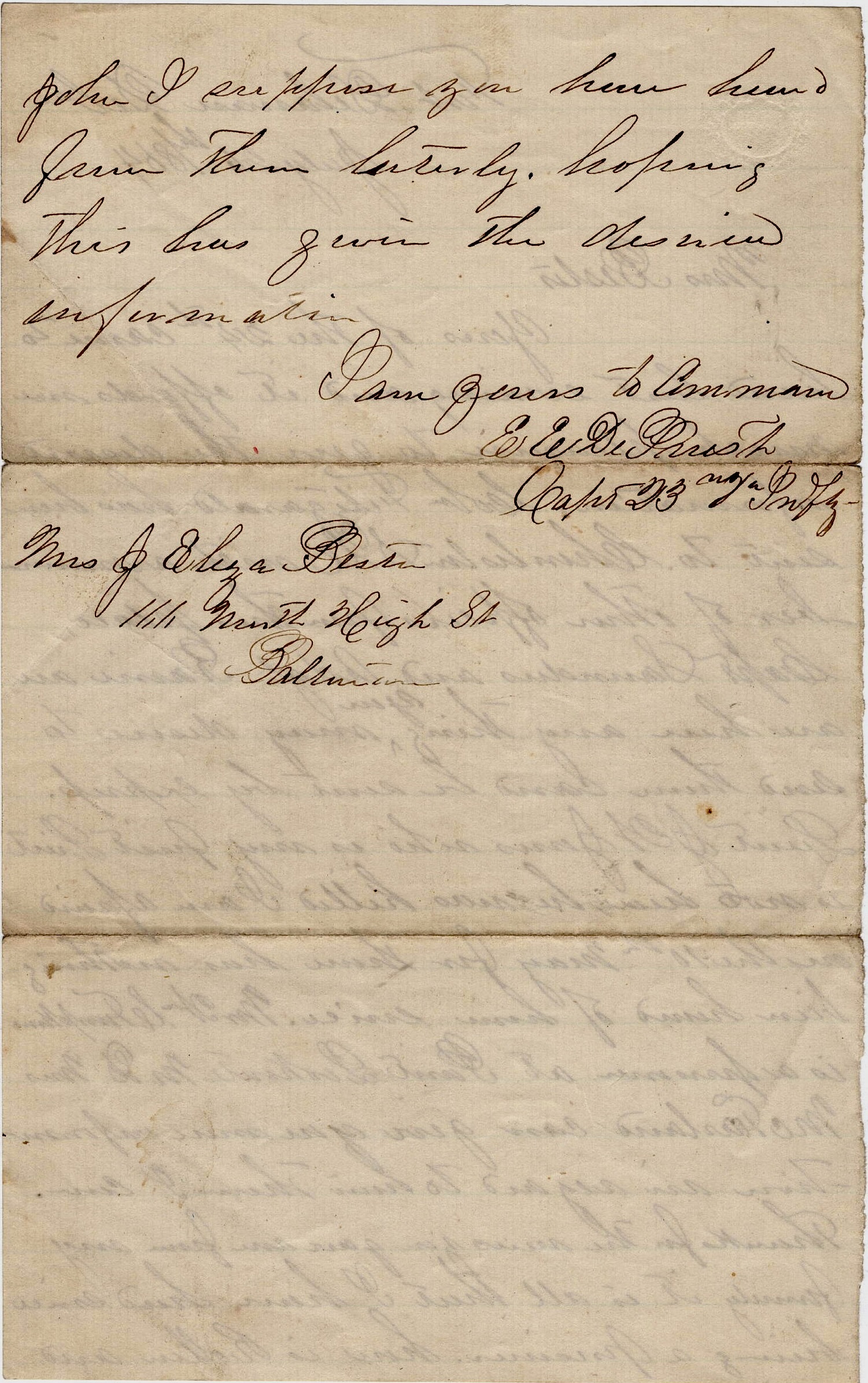

Charles Anderson Raine (1841–1902) was a Confederate soldier from Virginia who was captured during the American Civil War and held as a prisoner of war at Fort Delaware on Pea Patch Island. The diary he kept while a prisoner is housed at Washington & Lee University Special Collections and Archives (Identifier WLU-Coll-0574). The description of that diary reads as follows:
“According to Raine’s opening inscription, this leather bound pocket diary was a gift to Charles A. Raine from fellow Fort Delaware prisoner Lt. Henry C. Cromwell of the 10th Kentucky Cavalry on August 4, 1864. Raine had just arrived at Fort Delaware as a Confederate prison of war. The diary is written in both pencil and ink. The first twenty pages are Raine’s notes on various subjects of English history. After a gap of blank pages, Raine’s diary entries begin on January 1, 1865 and continue until his release on June 17, 1865. The final paragraph of the diary section details his journey home to Virginia. Entries vary in length, averaging a few lines per day, and detail the weather, Raine’s physical and emotional state and the miseries of prison life, news of fellow prisoners, preaching and religious exercises in the barracks, letters written and received, parcels and money received, news concerning the war and prisoner exchanges, and thoughts on his imprisonment and the future. Notable entries include the news of General Robert E. Lee’s surrender and his entries mentioning debate topics and results by a debating club formed among prisoners. The next section of the book includes a letter draft to a friend, a number of pages of poetry, miscellaneous literary excerpts including a page of notable lines of Shakespeare, and some accounting records that may be post-war. The final section of the book includes autographs, addresses, and some personal notes from sixty-three fellow prisoners. The diary also had within it a number of loose items including letters received, poems, notes, etc… written by him and other authors during his imprisonment and in the post-war years.”
When Raines was 55 years old (in 1897), he wrote a brief autobiography at his children’s request. In it he described his war years as a member of Co. E, 23rd Virginia Infantry—part of Stonewall Jackson’s foot soldiers. In describing his capture in May 1864, Raines wrote that he with other prisoners were marched to Fredericksburg, then to Acquia Creek, then to Point Lookout, Maryland, for 6 weeks, “undergoing all sorts of indignities…by the Negro troops (ex-slaves) who guarded us.” Finally they were moved to Fort Delaware, reaching there in late June 1864.
Of his experience at Fort Delaware he wrote: “Recollections of prison life at Ft. Delaware can never be blotted from my memory. To the kindness of Southern sympathizers in Baltimore and elsewhere within the Federal lines are many of us indebted for the only comforts we had. We were both clothed and fed by these good people. The scanty and unwholesome allowances of rations – wormeaten beans, tough beef and half risen hard bread – were barely sufficient to sustain life. I feel and hope that all of my children will ever feel a debt of deepest gratitude to Mrs. Ann [should be Jane] Eliza Bestor and Miss Alice Kay Howard of Baltimore for their kindness to me in furnishing clothing, books and writing material, without which I could not have lived.”
Raines remained in Fort Delaware until after Lee’s surrender of the Army of Northern Virginia when he took the oath of allegiance and was released. [See C. A. Raine’s Autobiography]
Raine wrote the letters to Jane Eliza (Brown) Bestor (1820-1885), the wife of John Rollin Bestor, Sr. (1813-1867). This Baltimore couple had twin sons who served in the Maryland Guard that became Co. B, 21st Virginia Infantry. Eliza seems to have corresponded with numerous Confederate soldiers seeking information about her sons. The Bestor brothers’ letters have been transcribed and may be found at 1861-65: The Bestor Brothers of Baltimore.
Letter 1
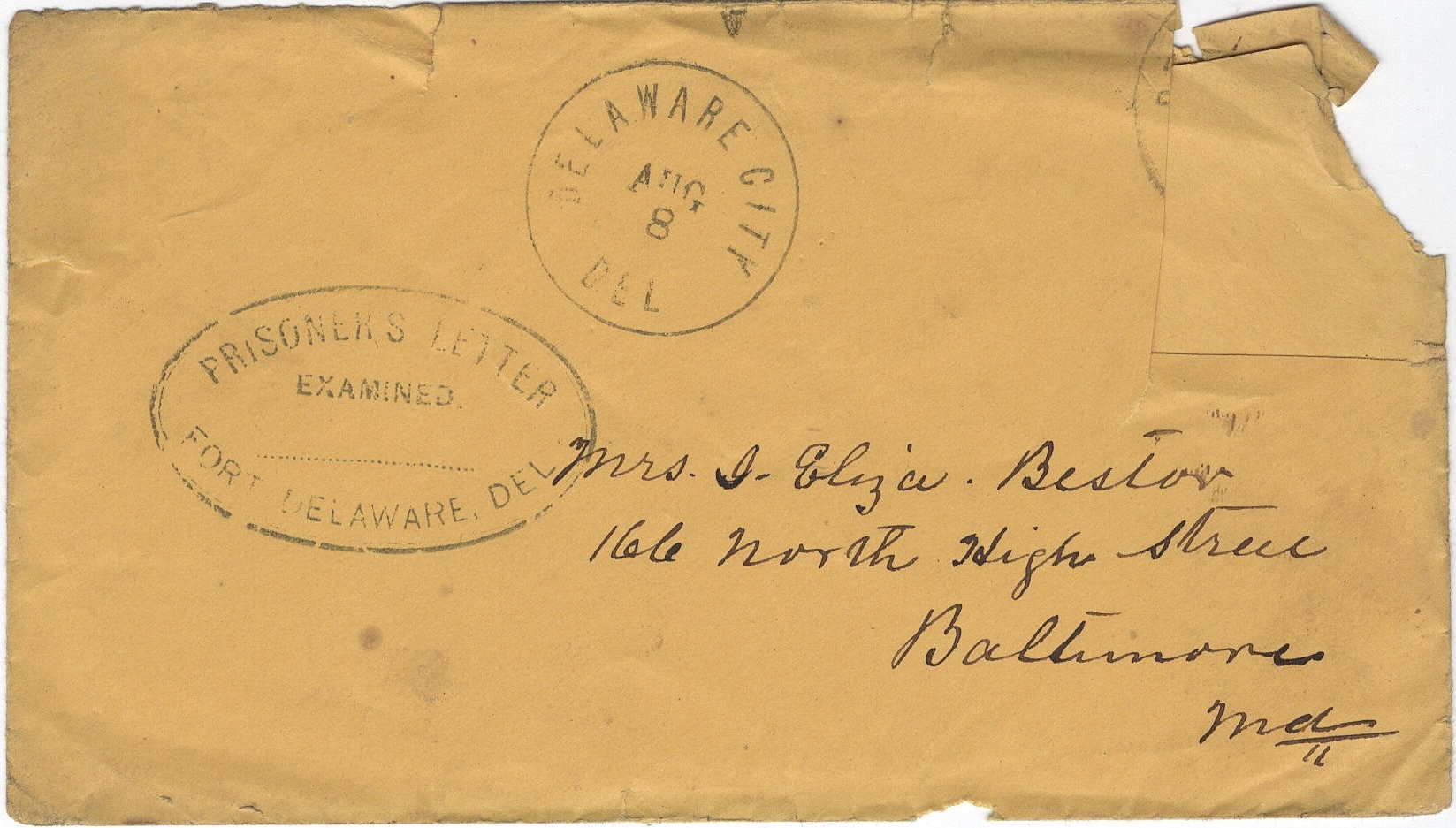
Fort Delaware, Del.
Aug. 3, 1864
Mrs. J. Eliza Bestor
My dear friend, it gives me pleasure to acknowledge yours of the 29th ulto. which reached me yesterday evening. Please allow me to express my deepest gratitude for your proffered kindness. I shall ever feel under obligations to you, and should it be the will of our Divine Master to permit me to return to Dixie again, it shall be my most pleasant duty to make the acquaintance of your sons, and extend to them the use of my purse, and hospitalities of my home.
I am in need only of a few articles of underclothing at this time, and will in obedience to your request ask to be supplied. Please send two grass linen shirts and two pair drawers of the same material. Also colored socks and handkerchiefs. At the same time, please send a small reference Bible and a Presbyterian Prayer Book. It may be necessary to state that you may have something to guide you in selecting some of these articles that I am very tall (6 feet 2 inches).
Prison life is by no means pleasant, yet there are many things to render us comfortable and happy. We feel that our walk with God is closer and that we enjoy a sweeter communion with our blessed Redeemer. We are organized into a Christian Association and enjoy many sweet privileges. Only one page is allowed me at a time. Hoping you will let me hear from you again, permit me to subscribe, dear Madam, your friend & humble servant, — C. A. Raine
Please allow me to add another article of which I am greatly in need and for the want of which I really suffer—that is chewing tobacco.
Letter 2
Fort Delaware, Del.
Sept. 21st 1864
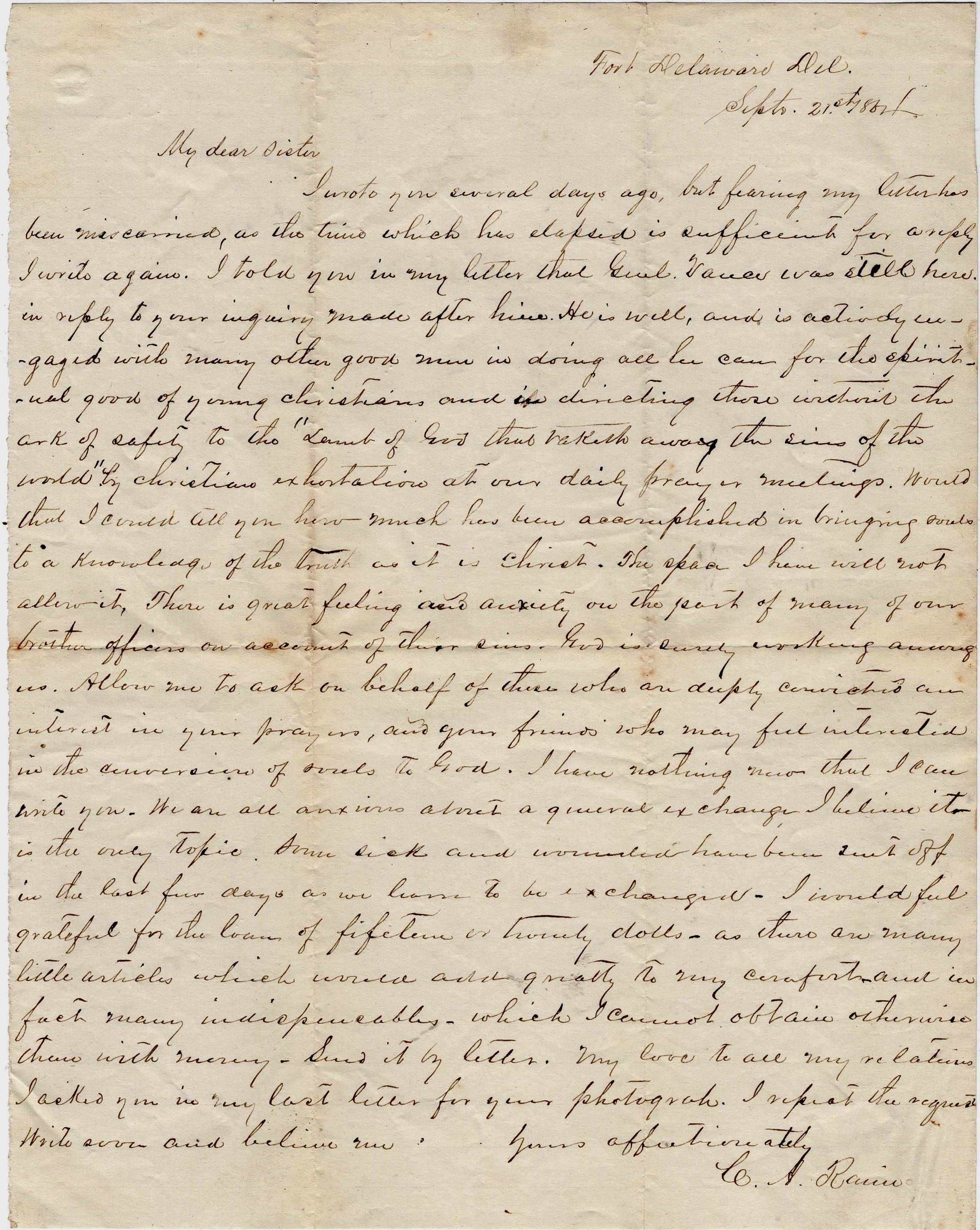
My dear sister,
I wrote you several days ago, but fearing my letter has been miscarried, as the time which has elapsed is sufficient for a reply, I write again. I told you in my letter that Gen. Vance was still here in reply to your inquiry made after him. He is well, and is actively engaged with many other good men in doing all he can for the spiritual good of young Christians and in directing those without the ark of safety to the “Lamb of God that taketh away the sins of the world” by christian exhortation at our daily prayer meetings. Would that I could tell you how much has been accomplished in bringing souls to a knowledge of the truth as it is Christ [but] the space I have will not allow it. There is great feeling and anxiety on the part of many of our brother officers on account of their sins. God is surely working among us. Allow me to ask on behalf of those who are deeply convicted an interest in your prayers, and your friends who may feel interested in the conversion of souls to God.
I have nothing new that I can write you. We are all anxious about a general exchange. I believe it is the only topic. Some sick and wounded have been sent off in the last few days, as we learn, to be exchanged. I would feel grateful for the loan of fifteen or twenty dollars as there are many little articles which would add greatly to my comforts and in fact many indispensables which I cannot obtain otherwise than with money. Send it by letter. My love to all of my relations. I asked you in my last letter for your photograph. I repeat the request. Write soon and believe me. Yours affectionately, — C. A. Raine