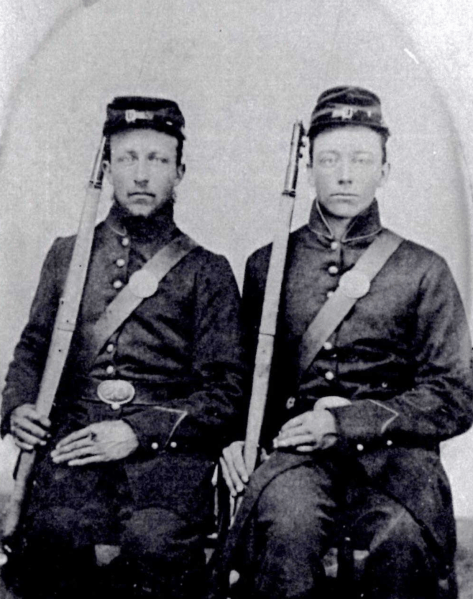
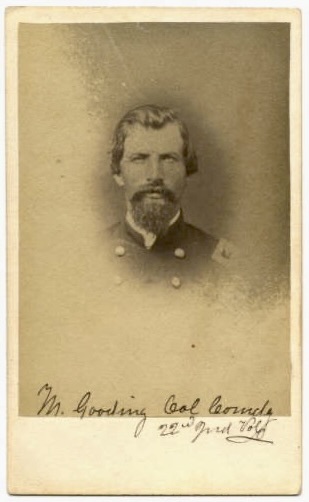
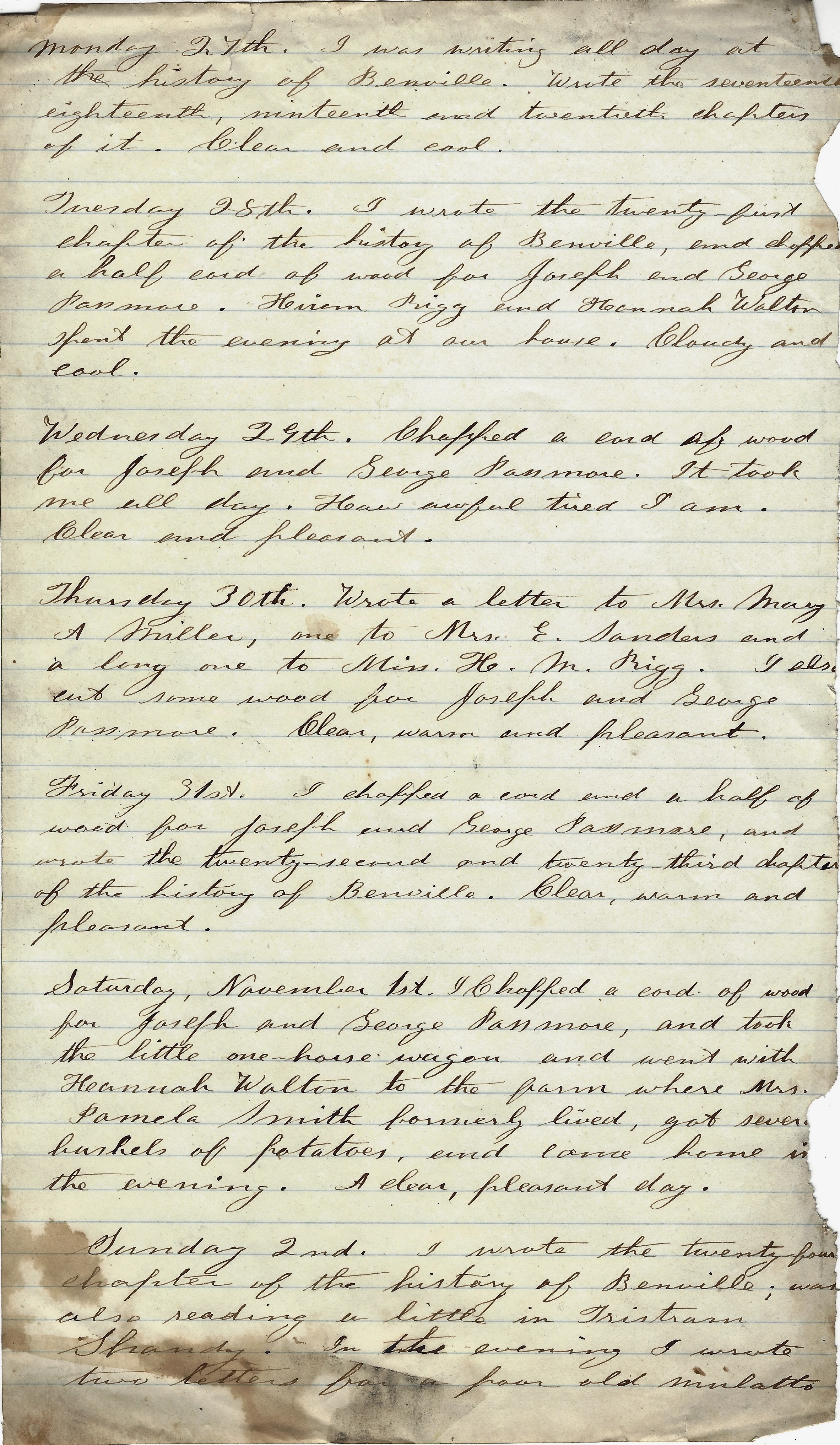
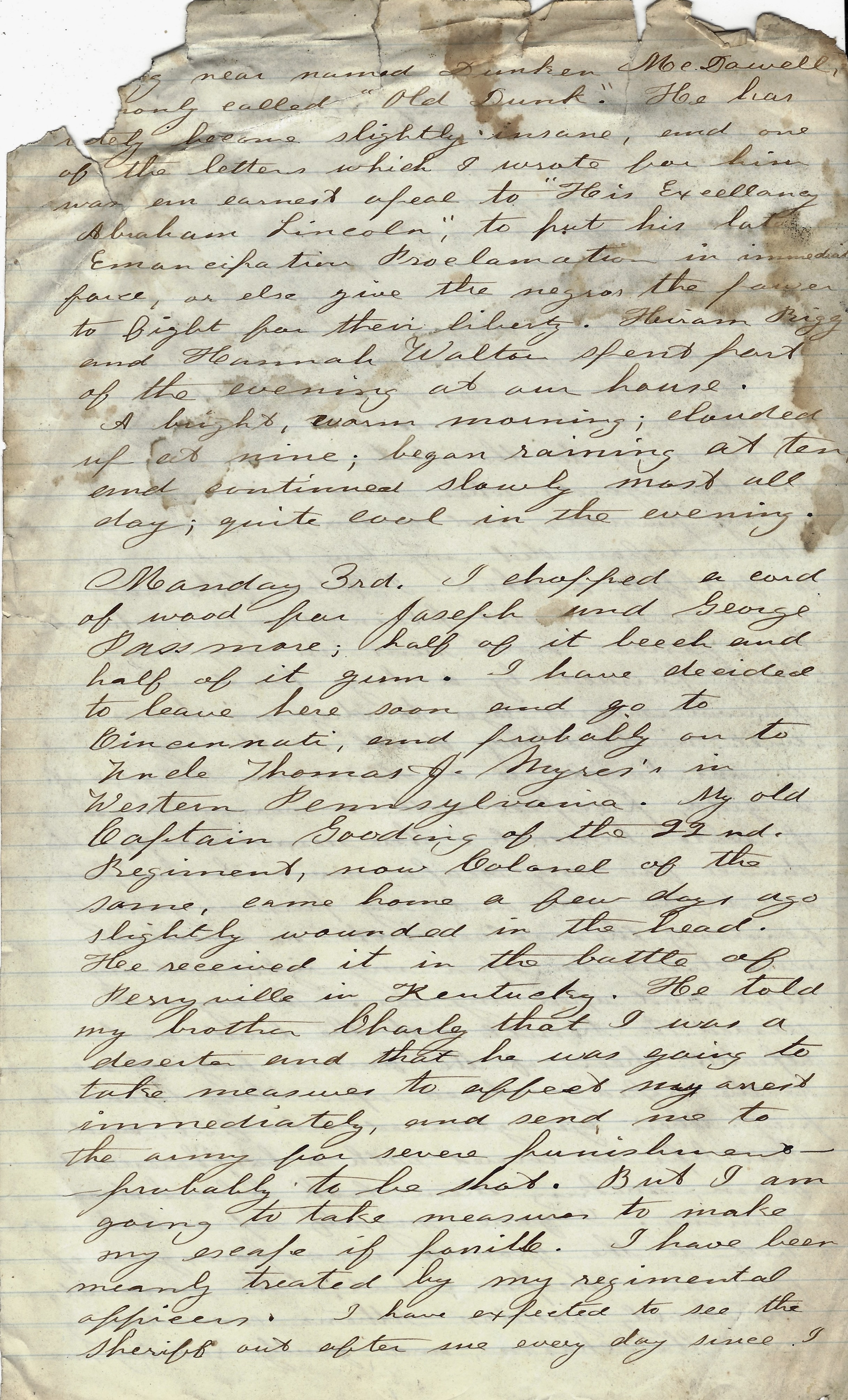
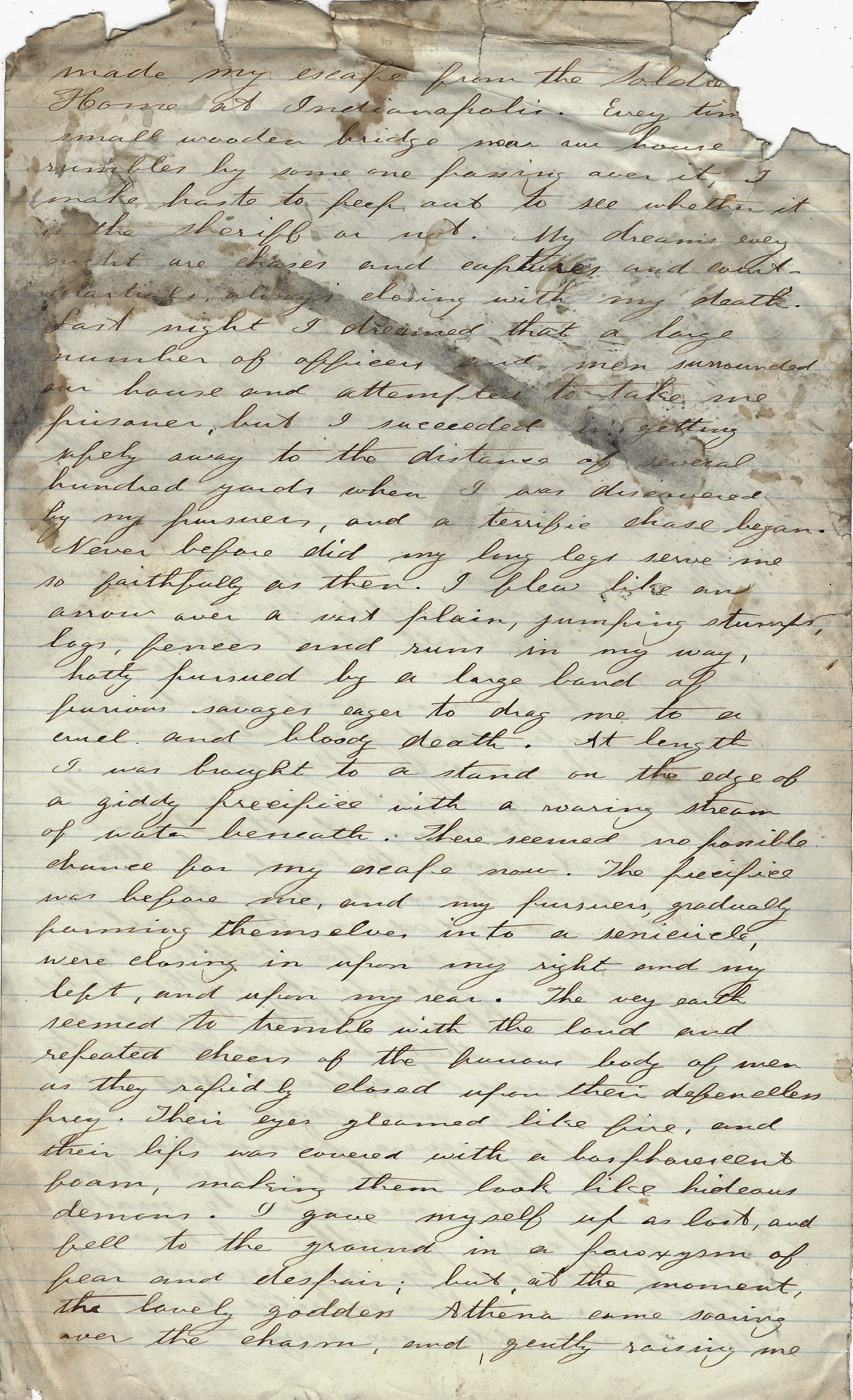
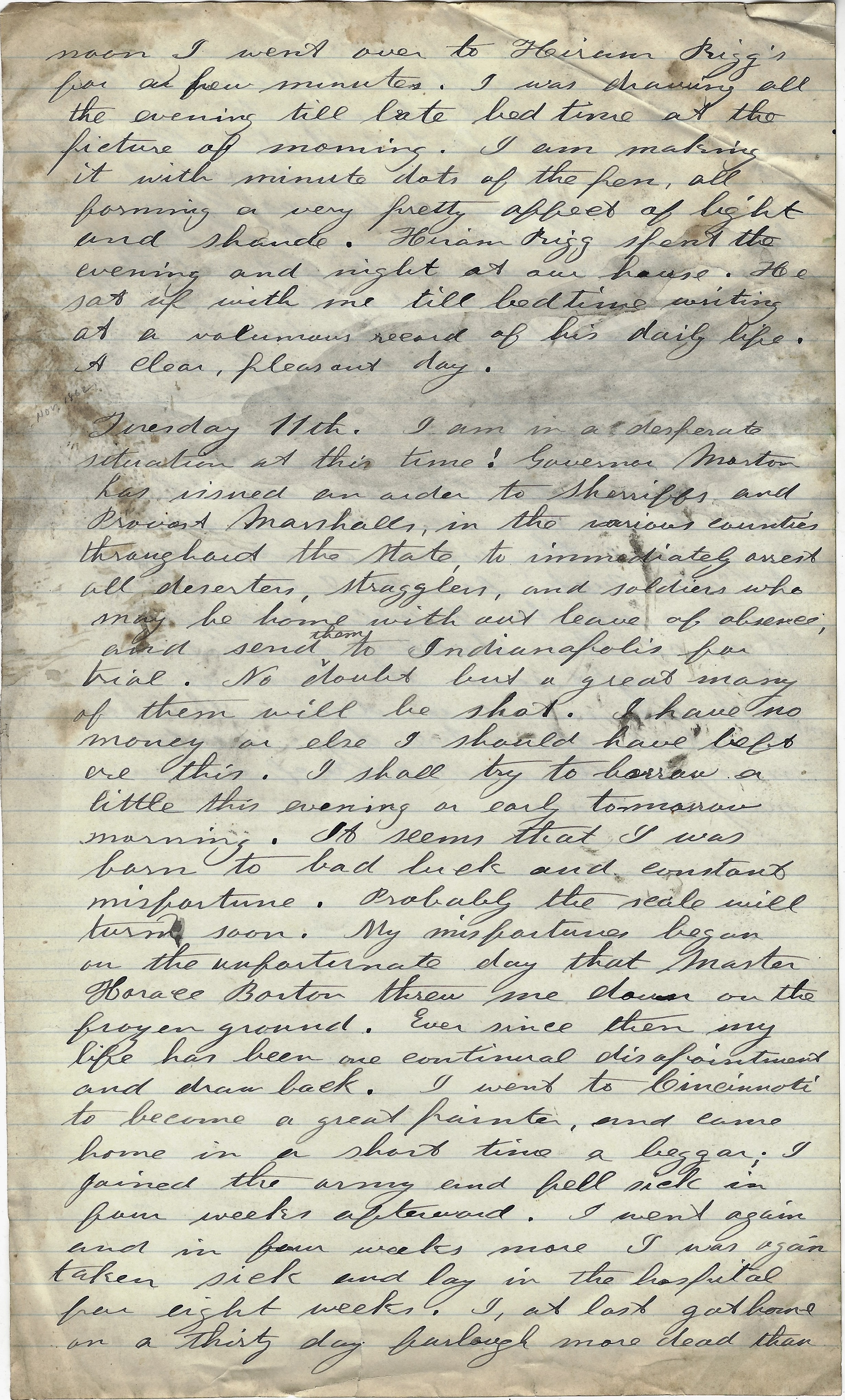
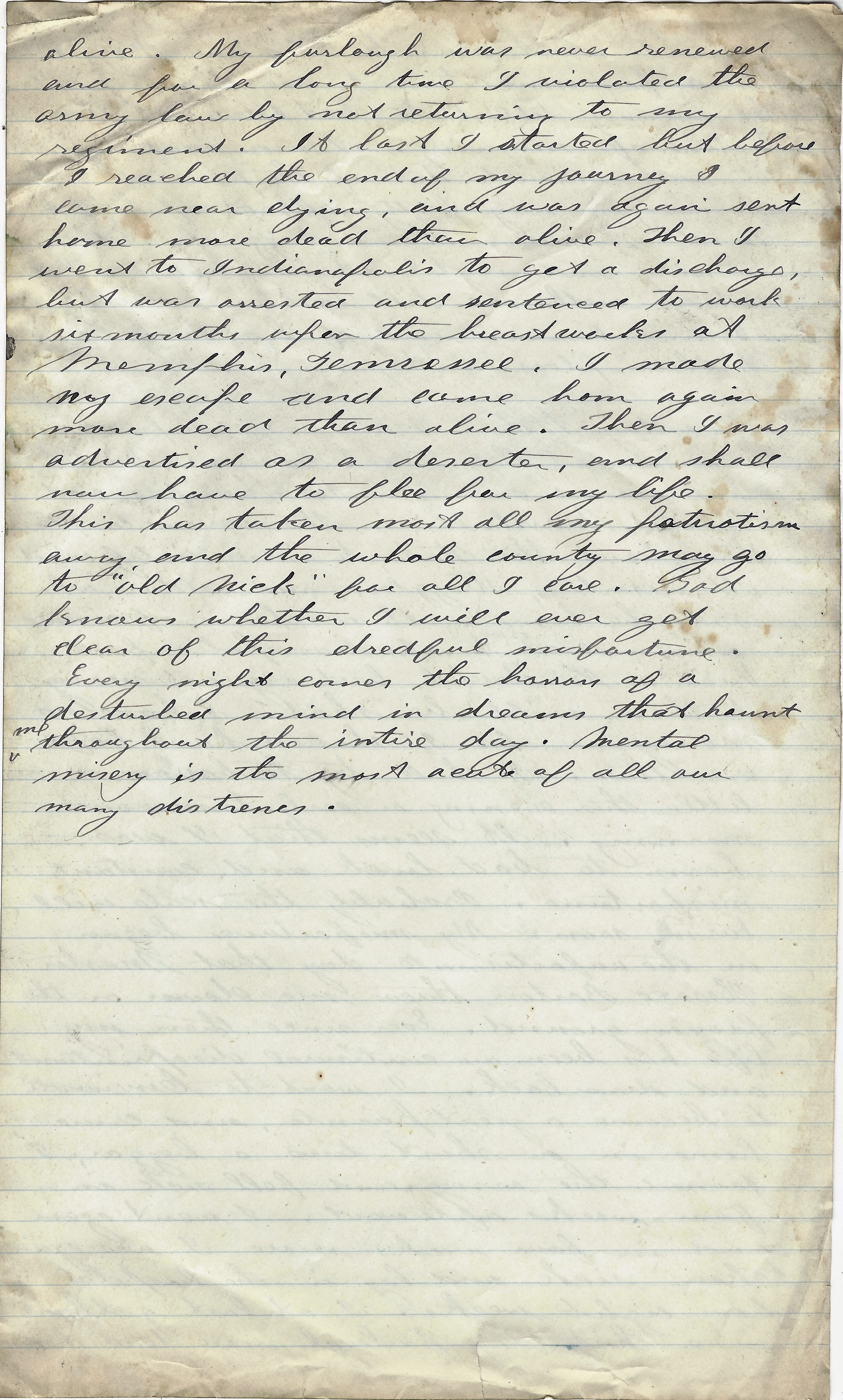
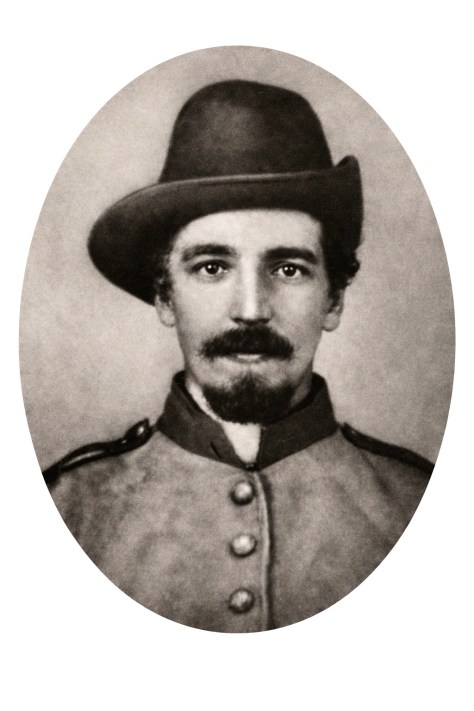
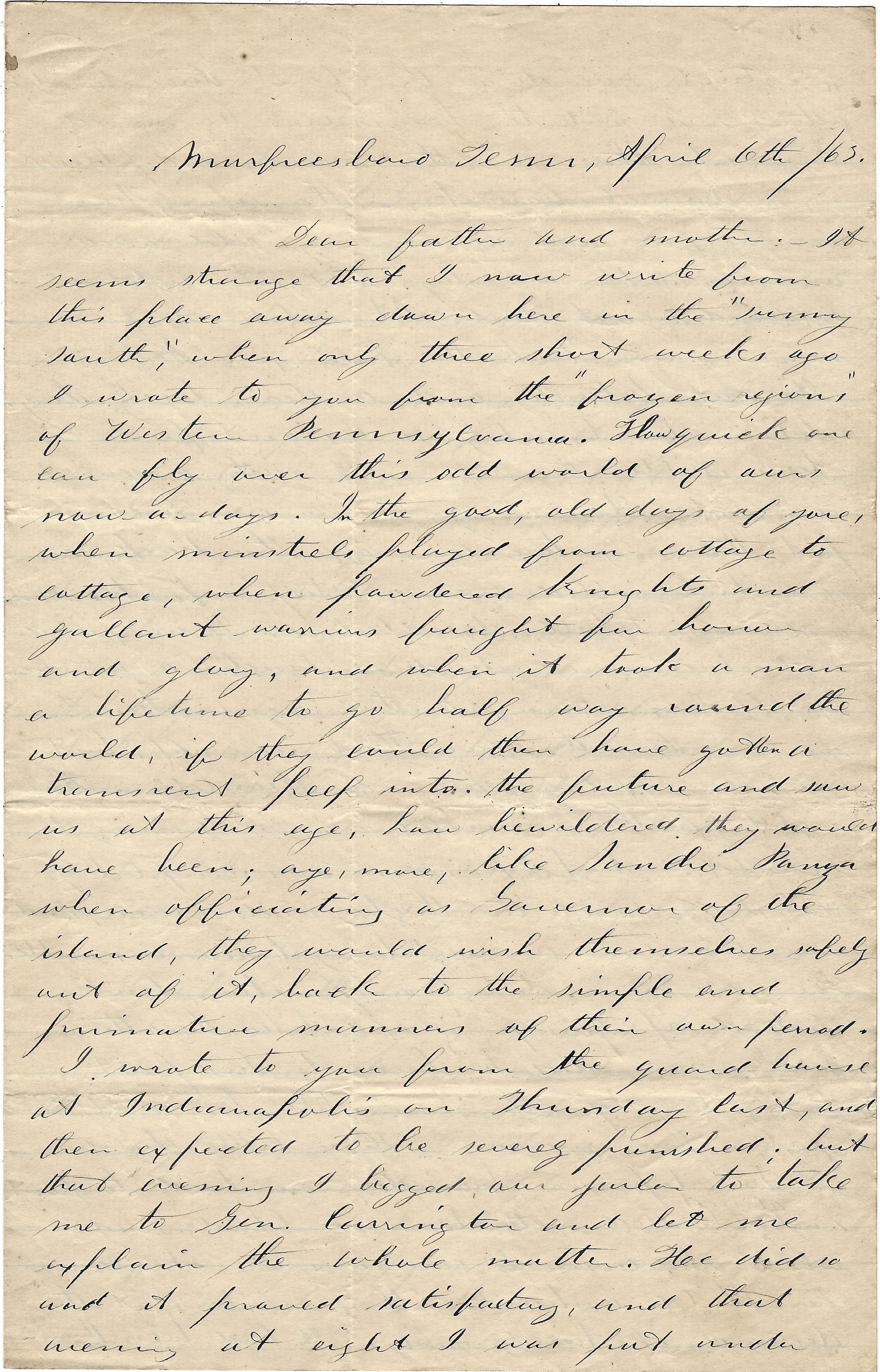
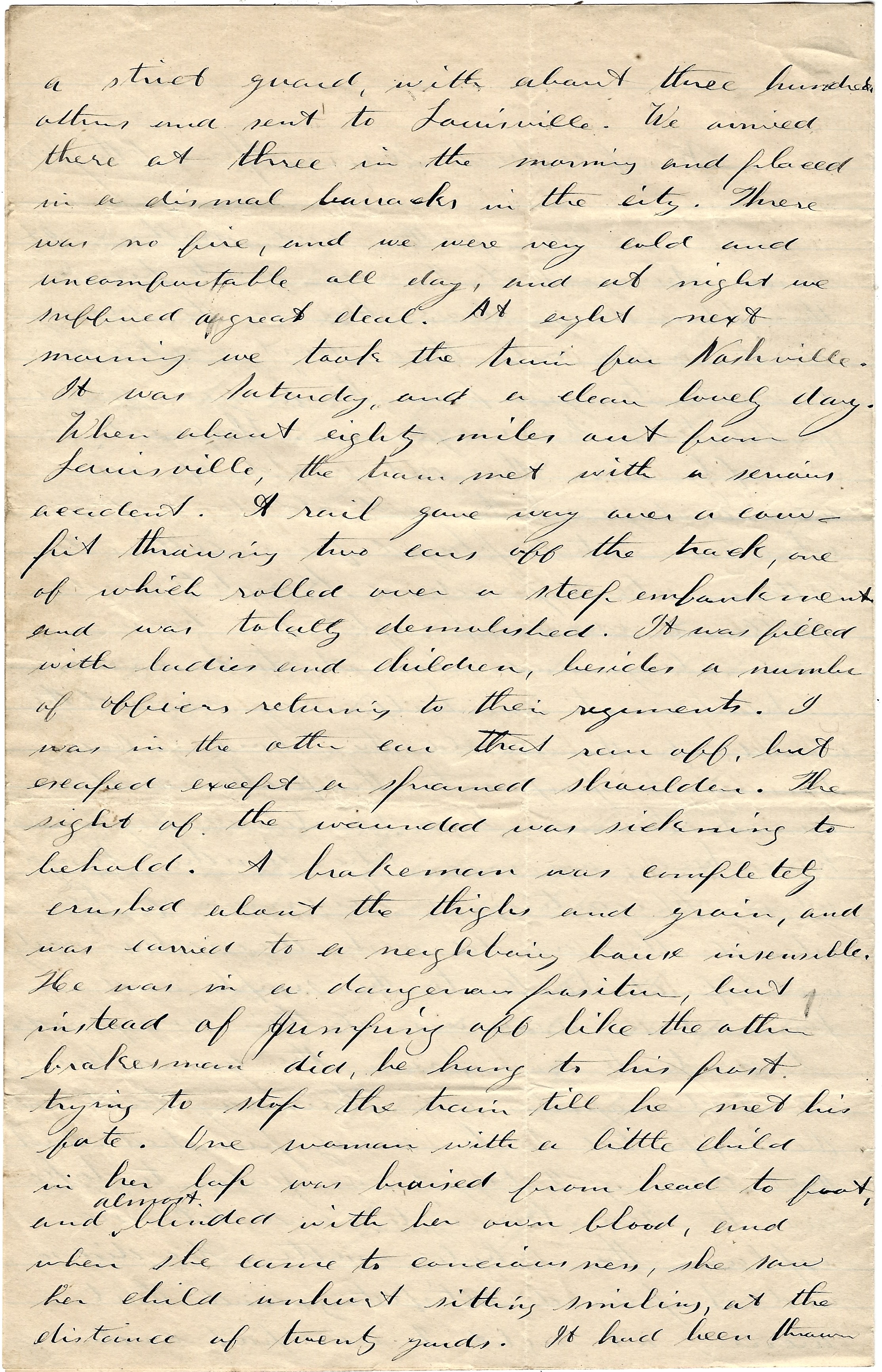
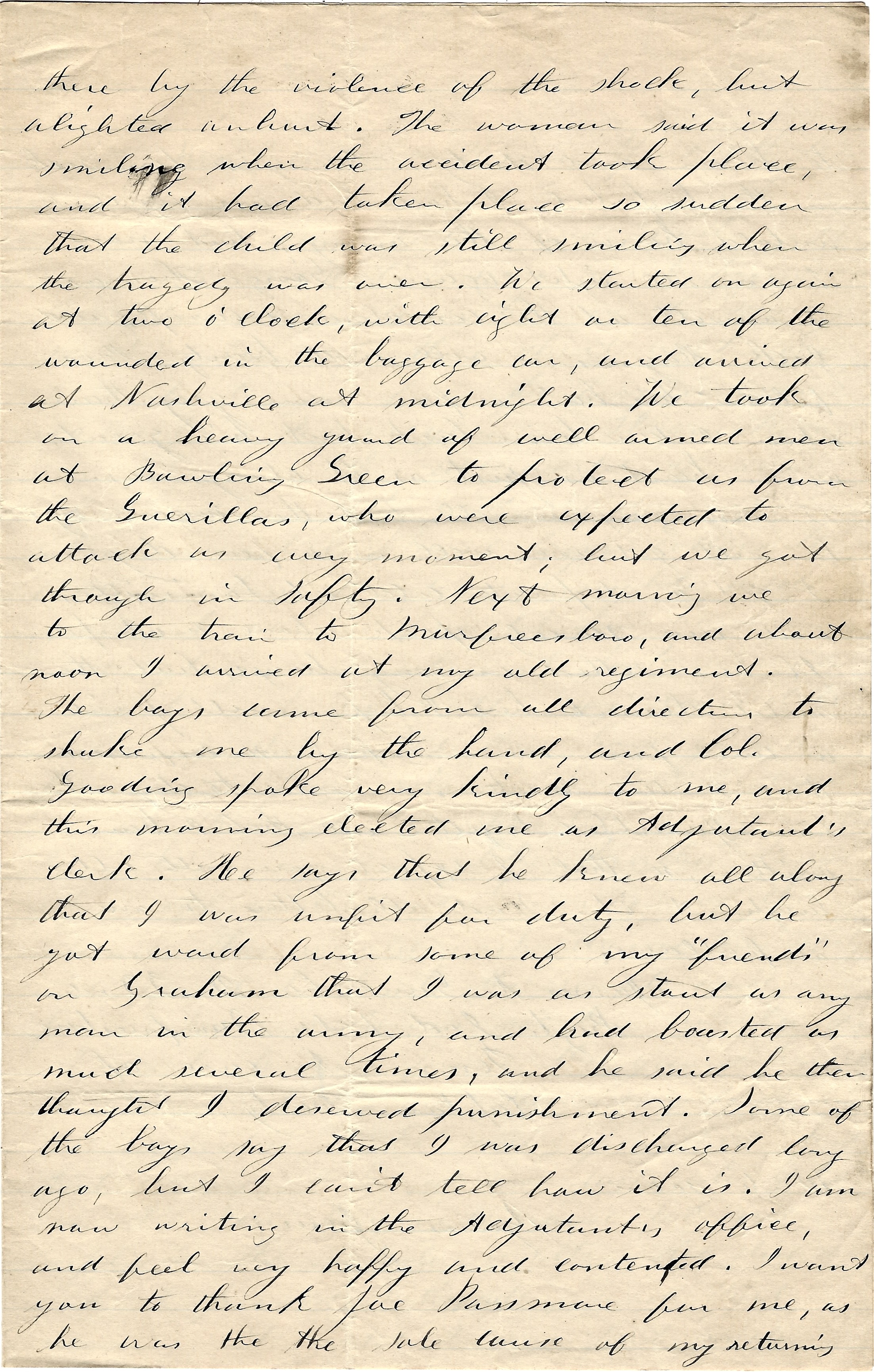
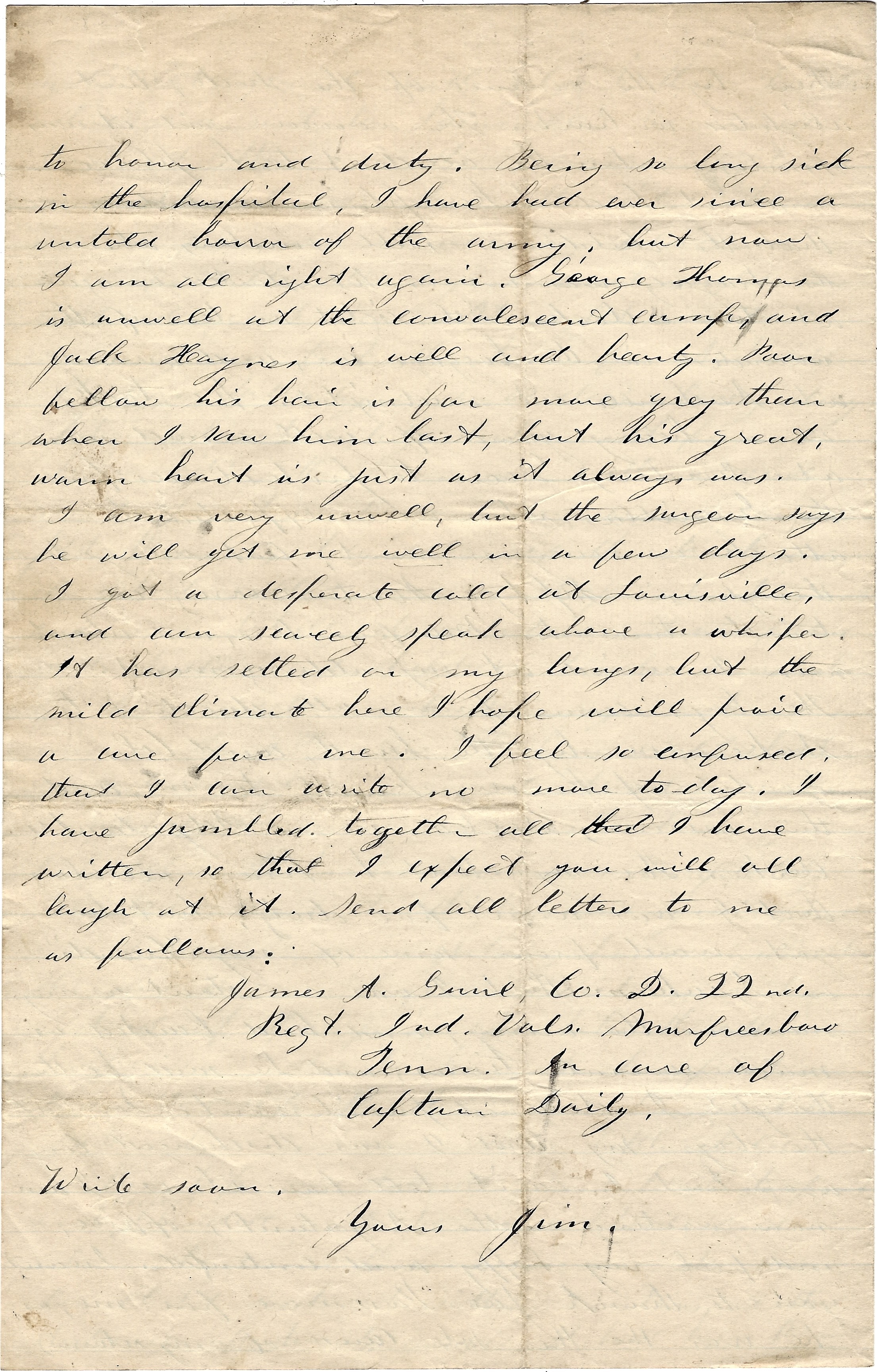
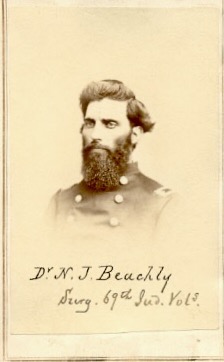
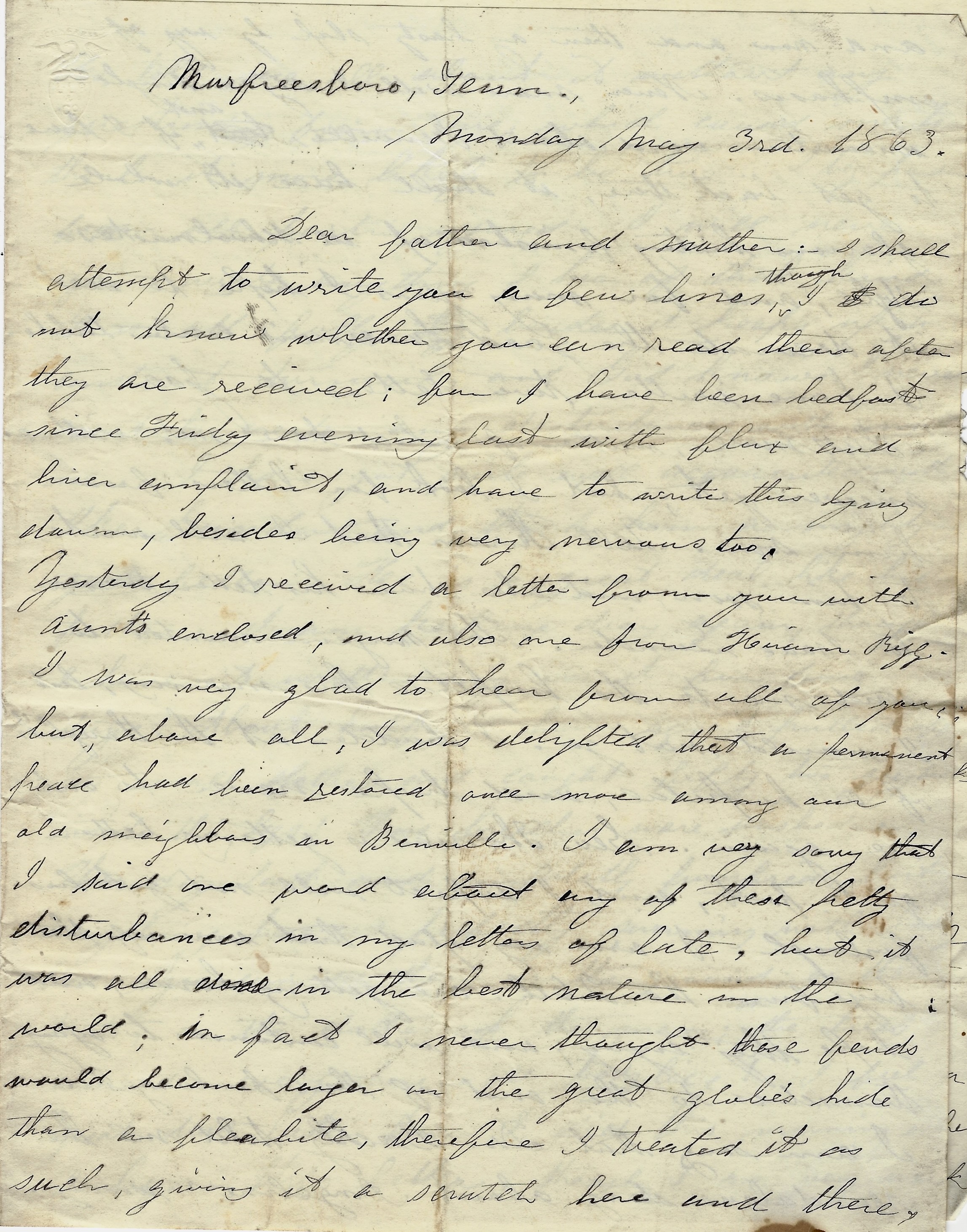
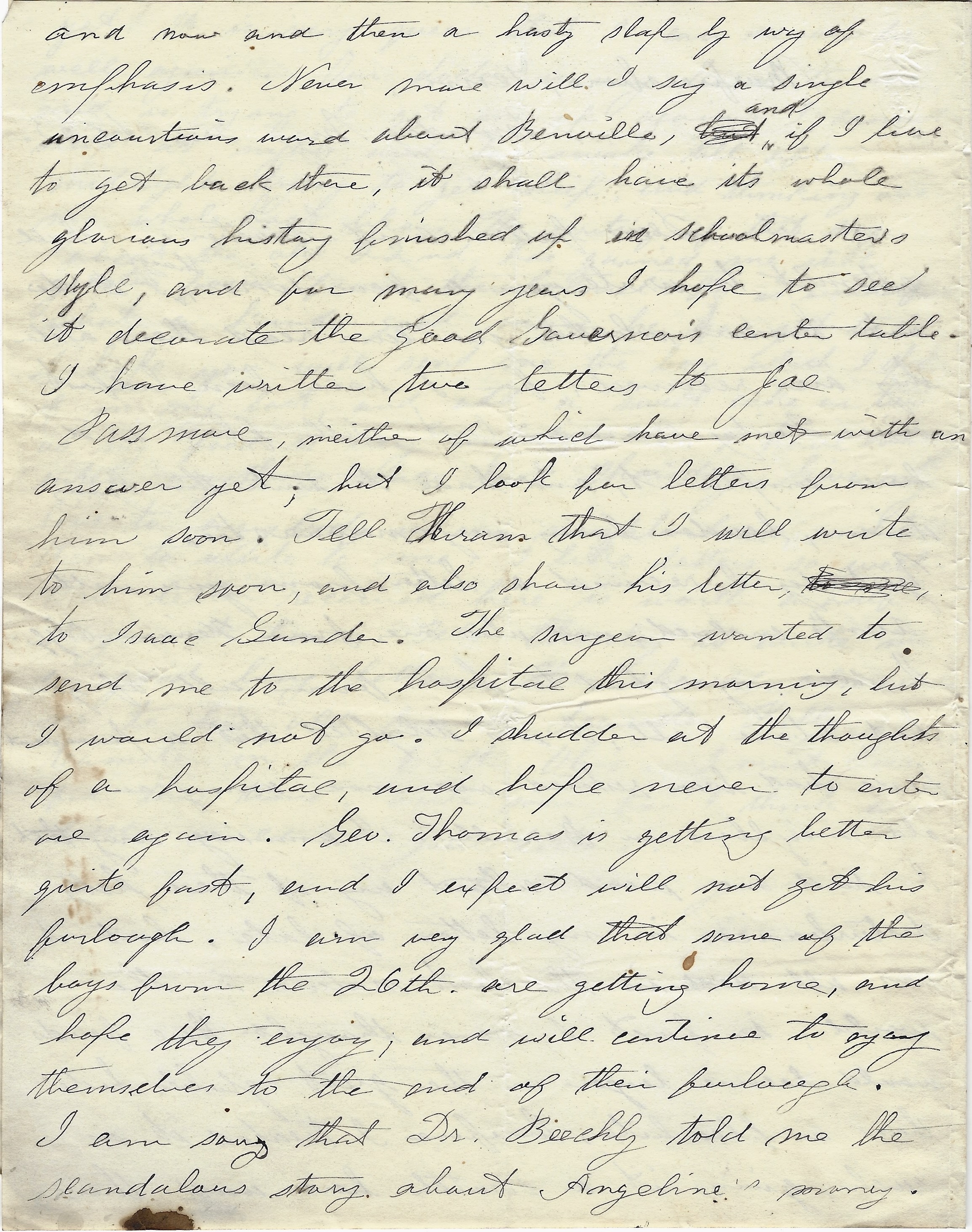
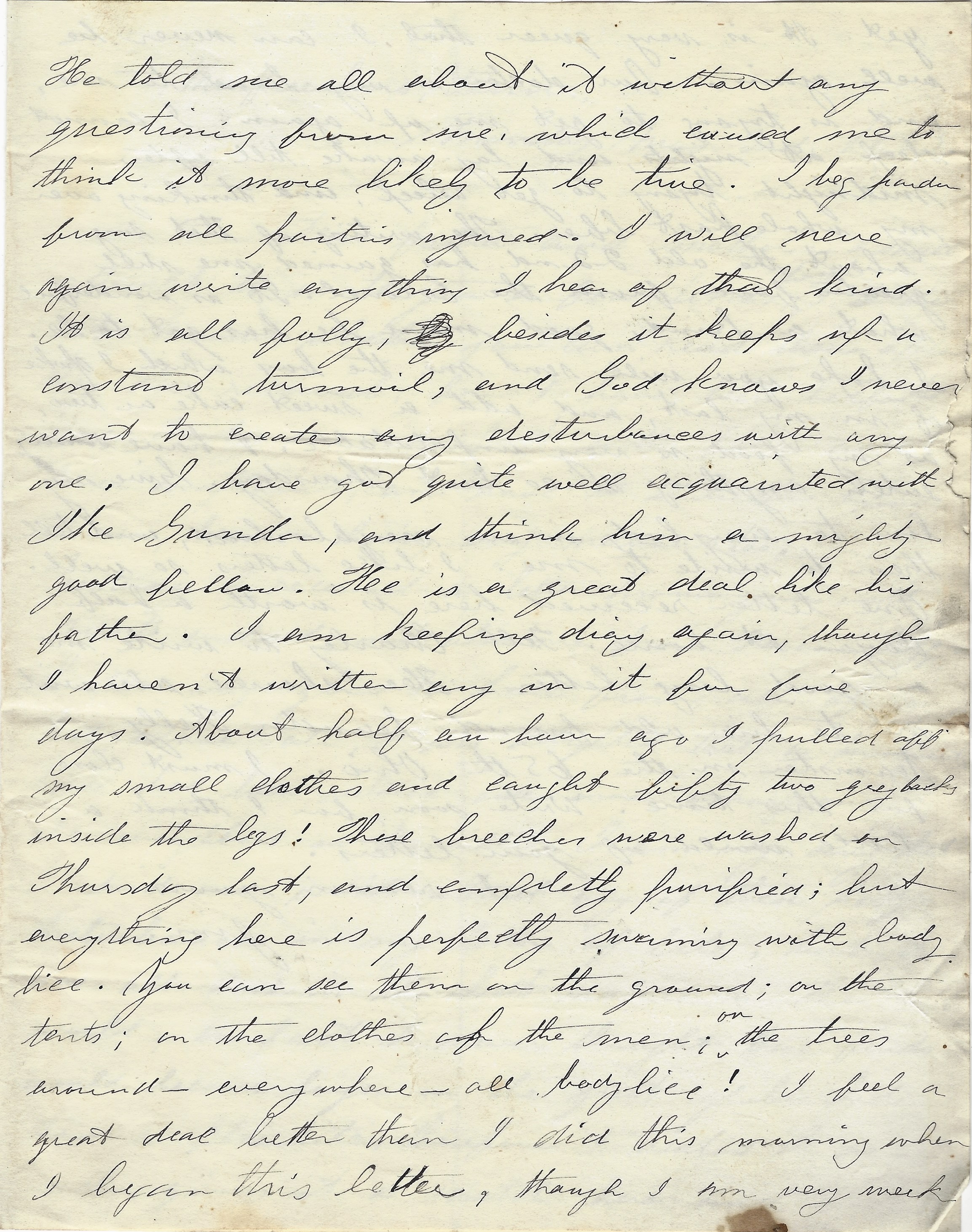
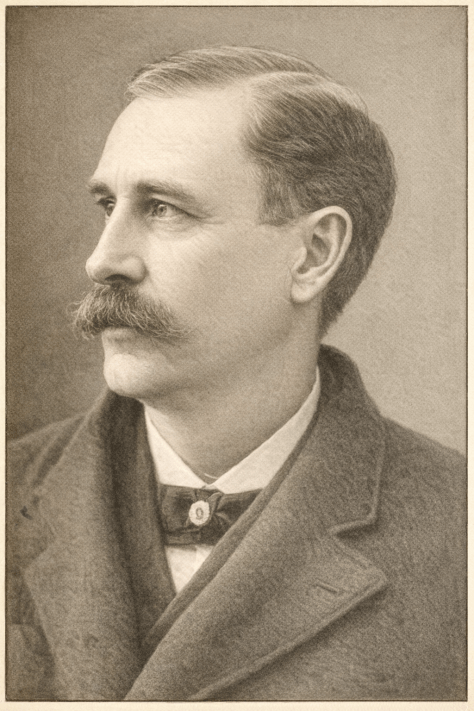
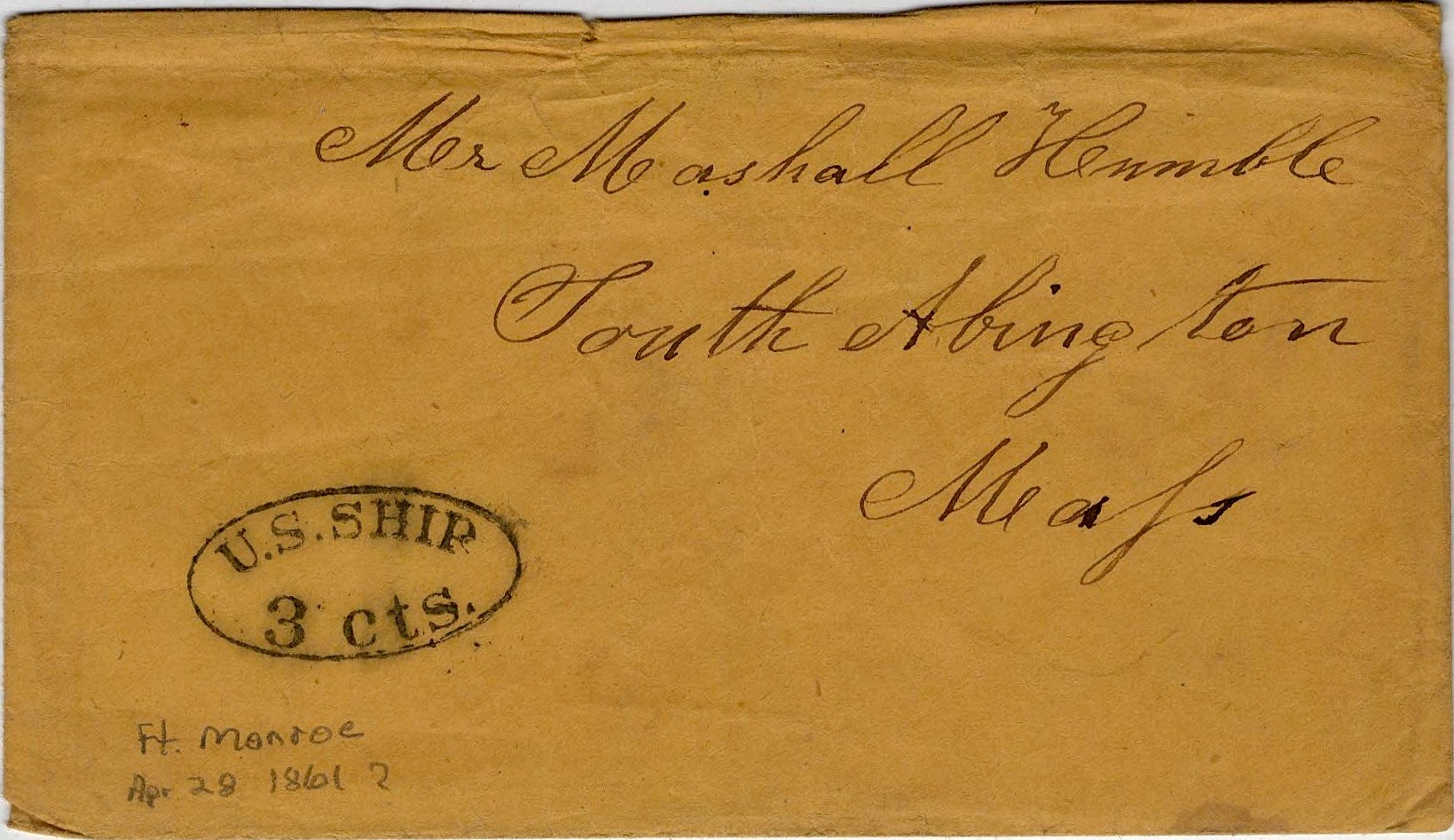
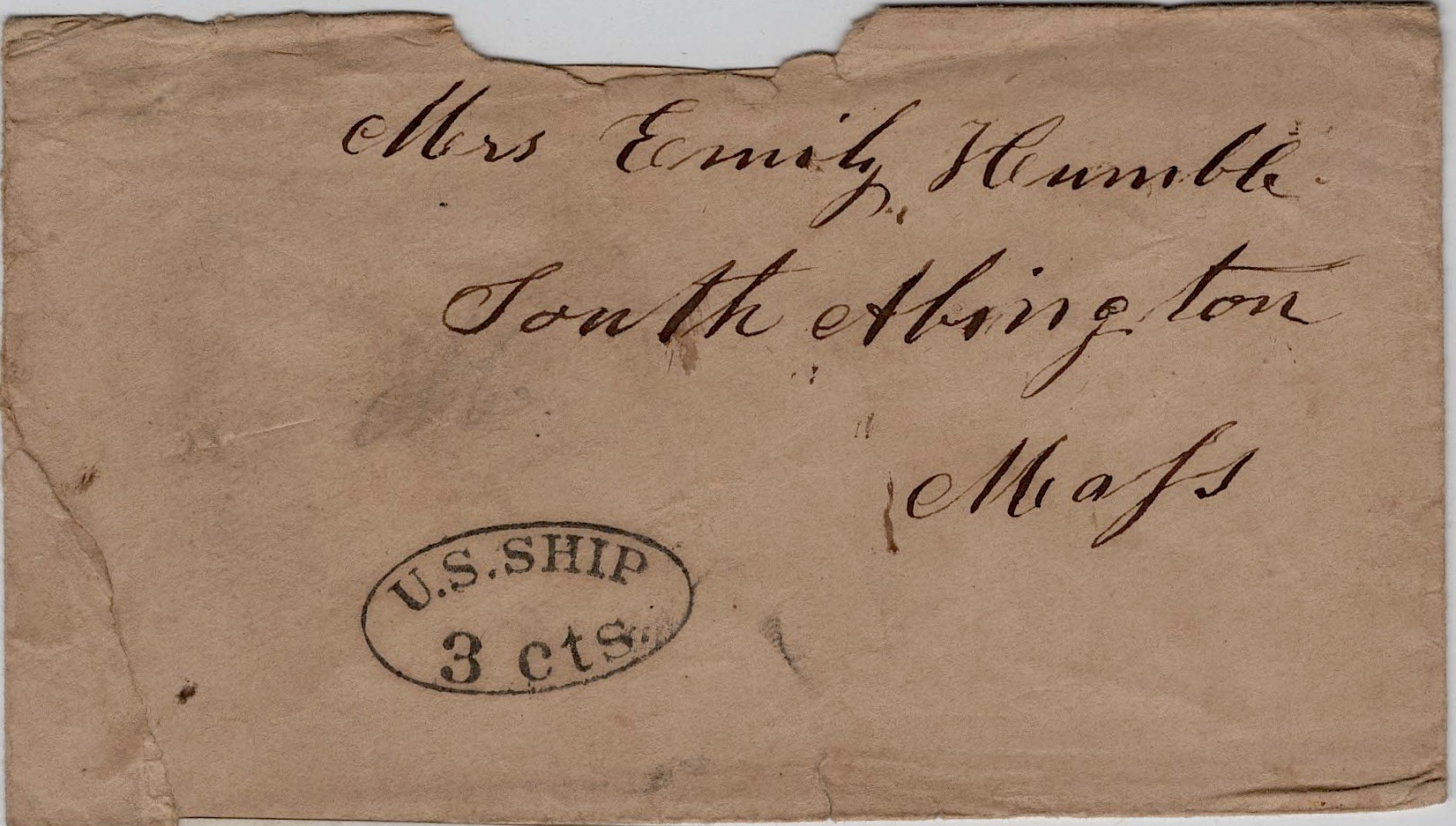
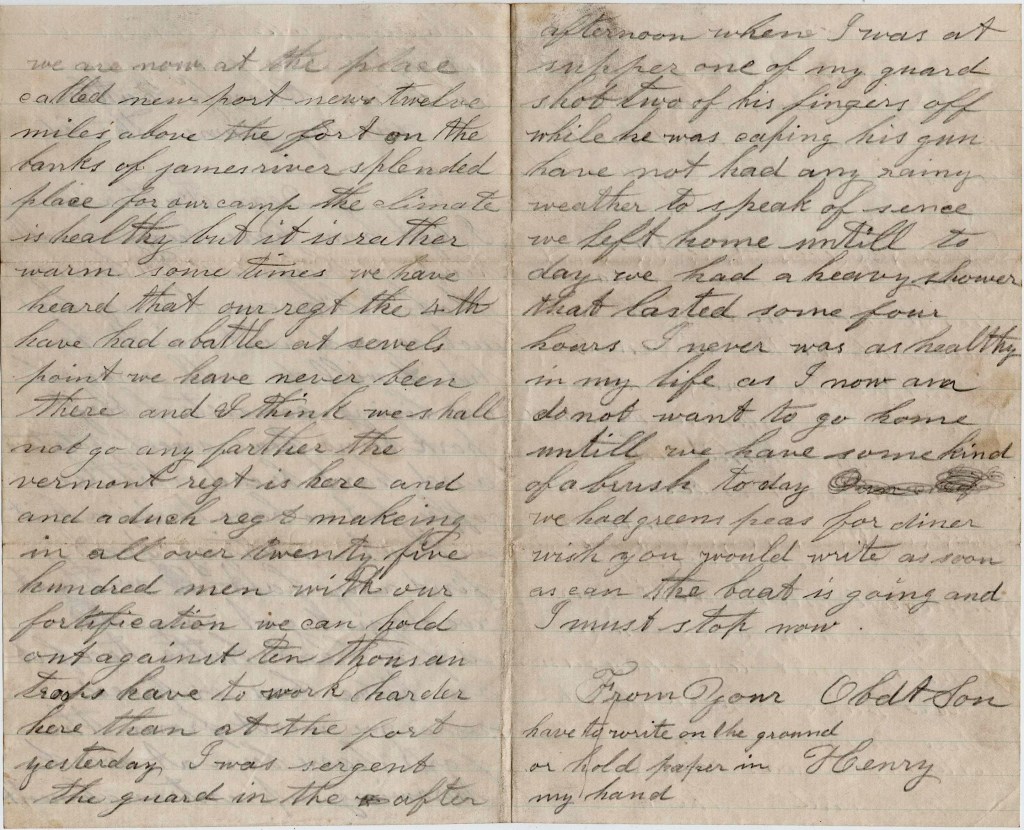
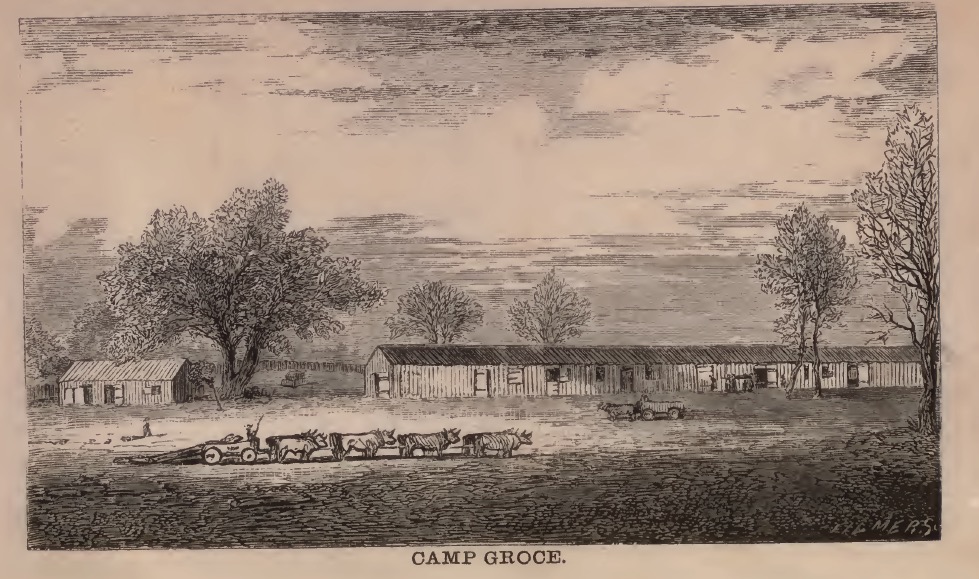
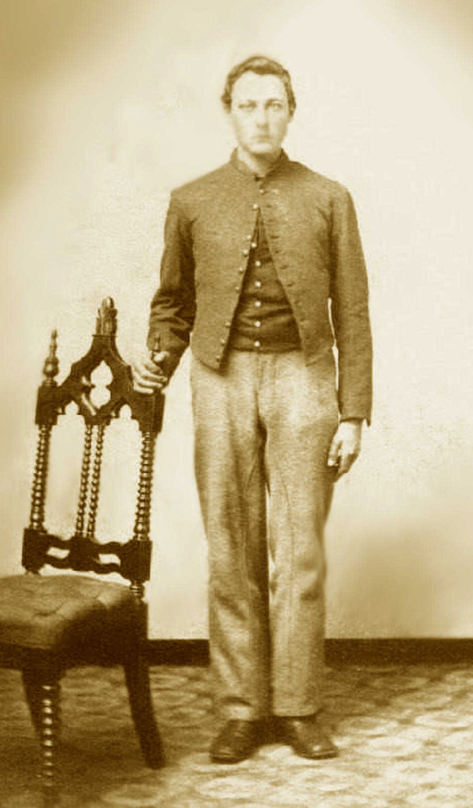
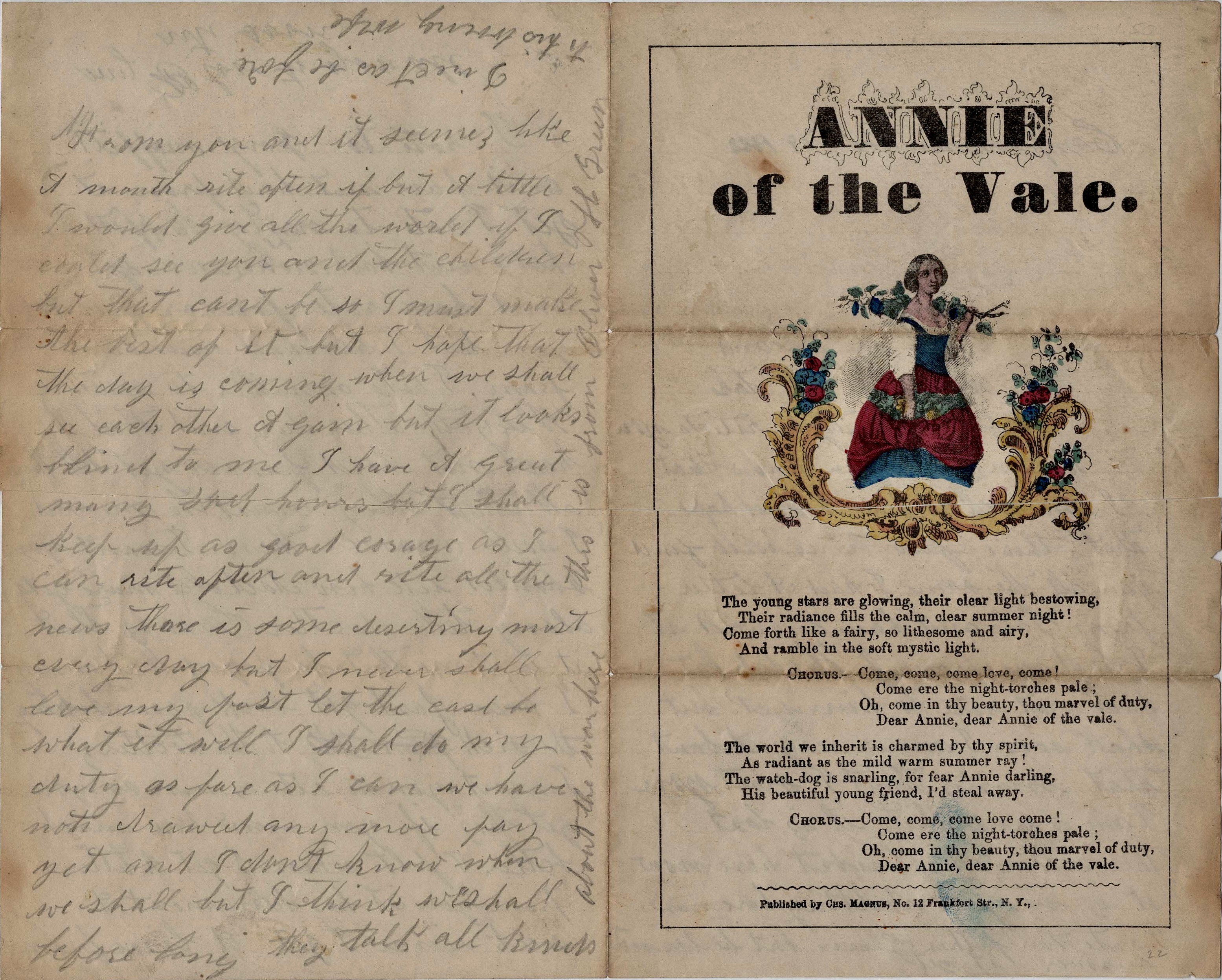
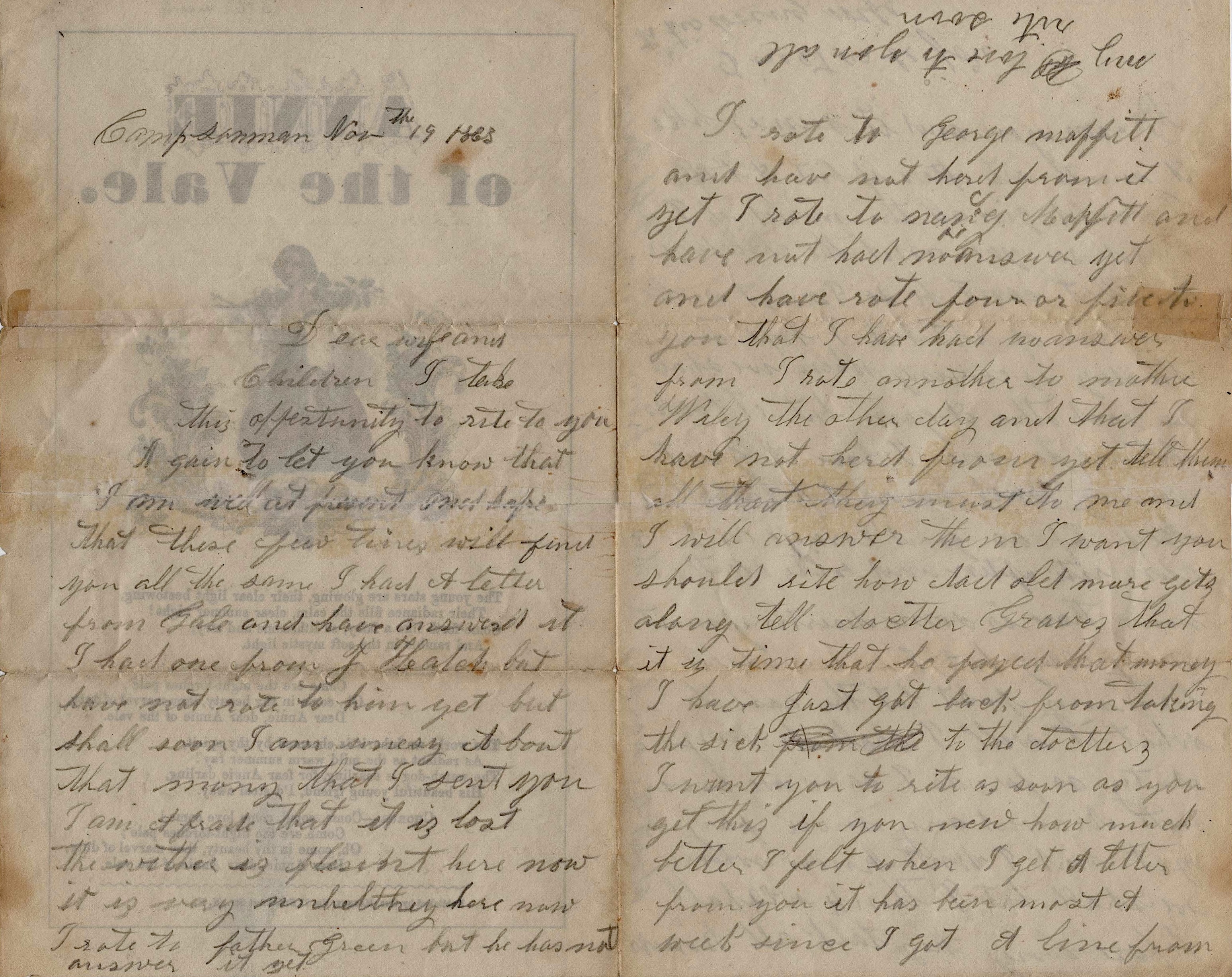
Orville and his brother John Thomas also served in Co. F, 74th Illinois Infantry (Ancestry.com)
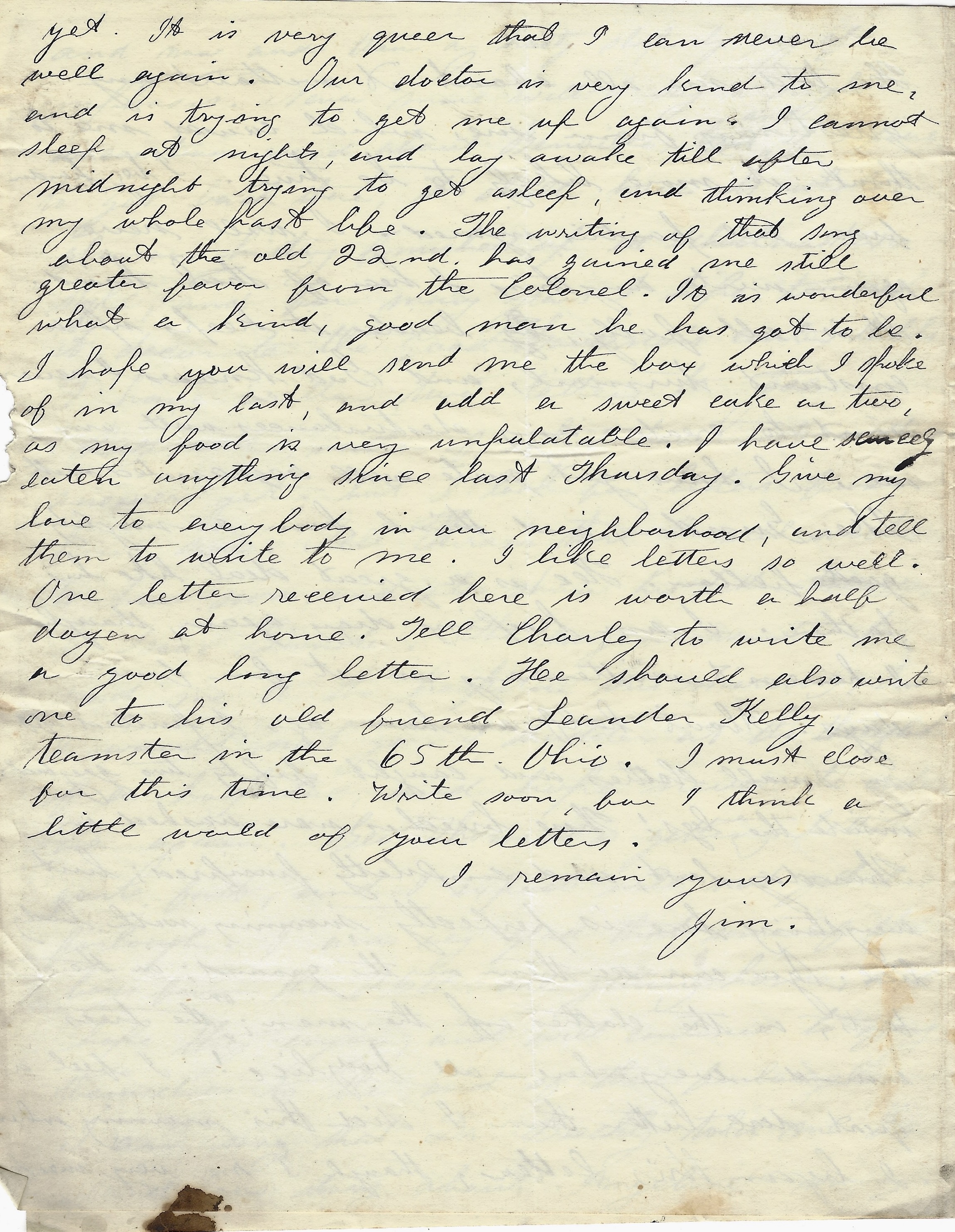
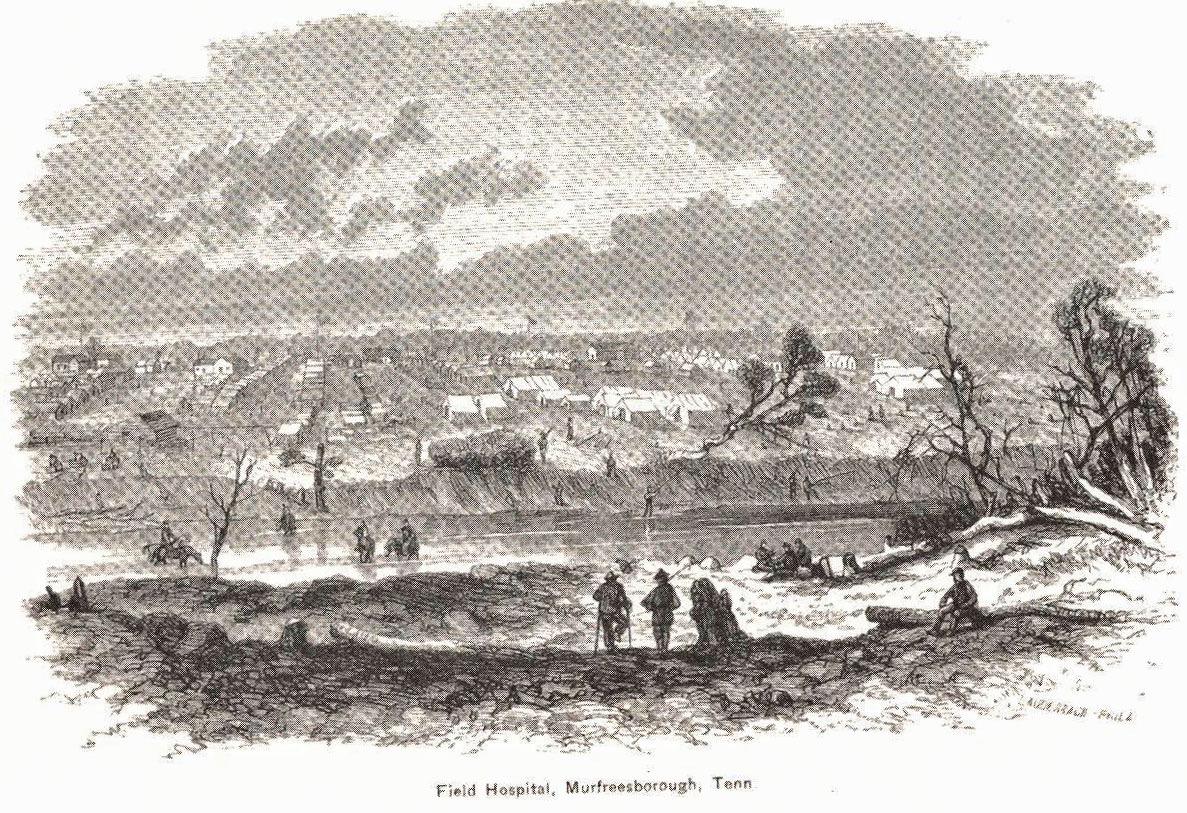
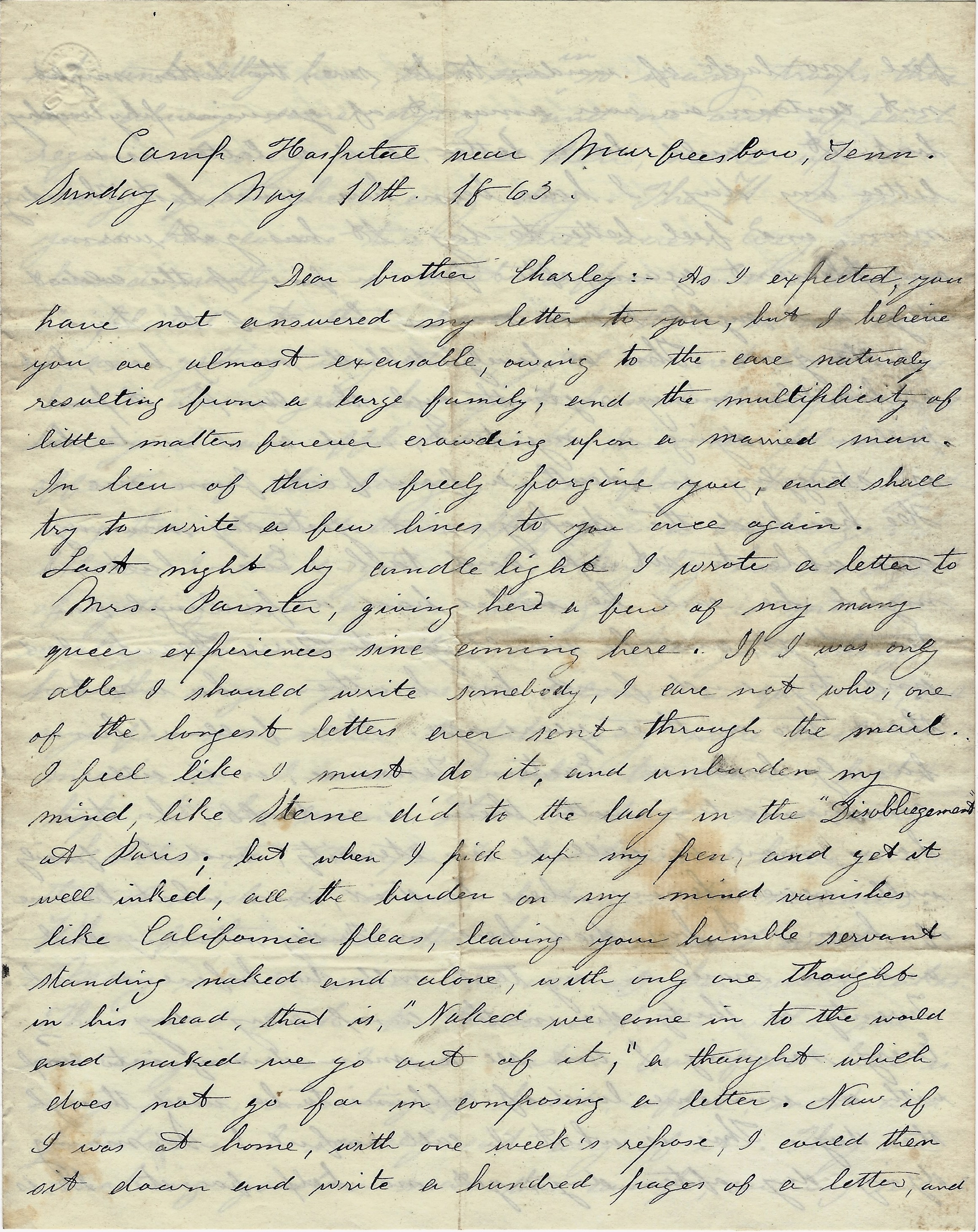
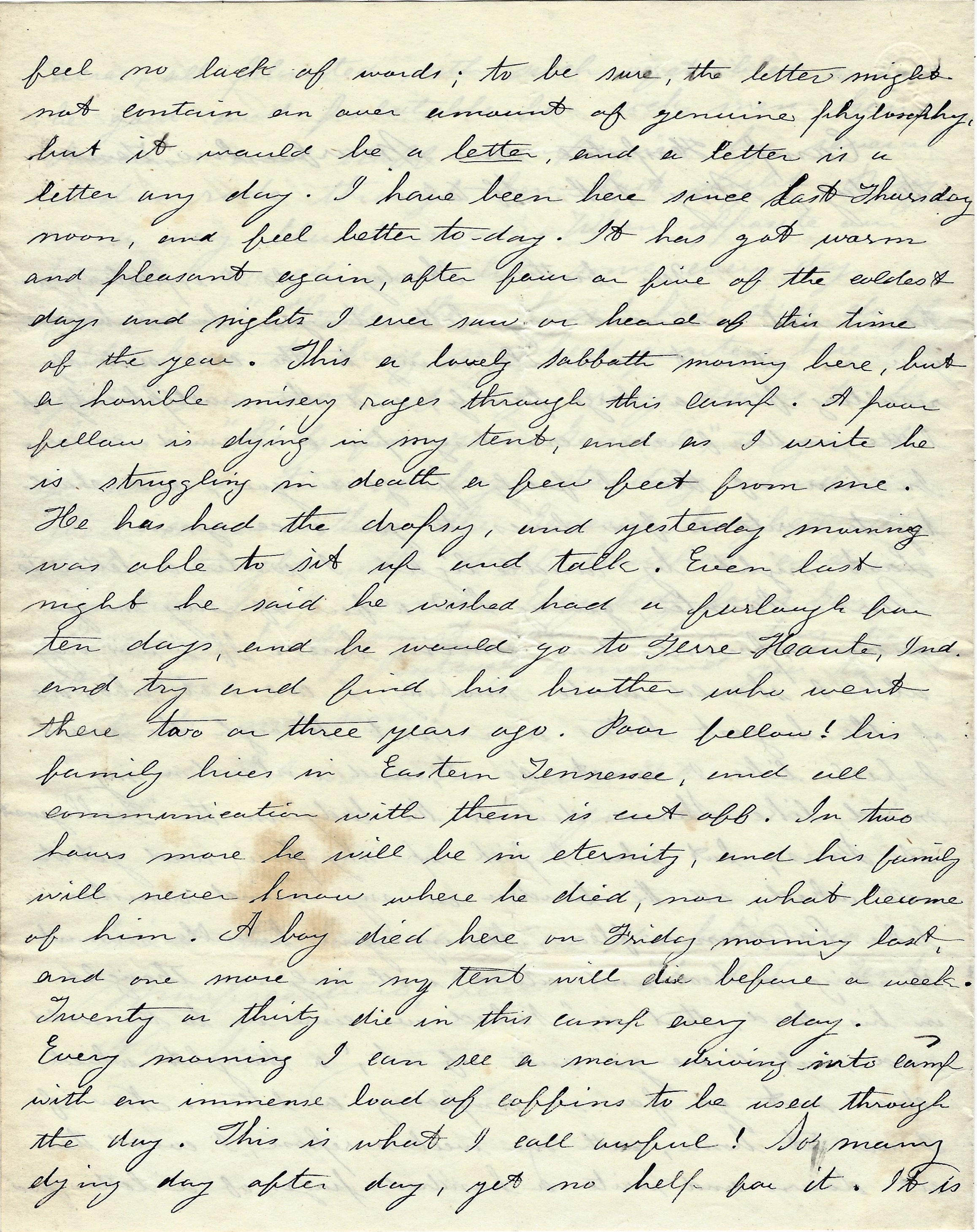
Lemuel Fuller (1832-1913) was a 30 year old farmer when he enlisted at Rockford on 8/9/1862 as a Private in Co. F, 74th Illinois Infantry and was mustered out on 6/10/1865 at Nashville, Tennessee. Of his war experience, an obituary in the Rockford Daily Register-Gazette (20 August 1913) states that though he was never wounded, he was in several severe engagements. He spent about 18 months in a hospital suffering from smallpox and was a prisoner of war as well. He was captured at Jonesboro and was then sent to Andersonville, where his comrade Roger Brown was a prisoner at the same time. After leaving Andersonville, he was taken to Savannah, then to Florence, South Carolina and was exchanged at Charleston. He fell ill shortly after the Battle of Stones River.
Lemuel was the son of John Fuller (1800-1858) and Lucy Wilder (1808-1895) of Rockford, Winnebago county, Illinois. He never married and carried on the farm that his father started in 1839.
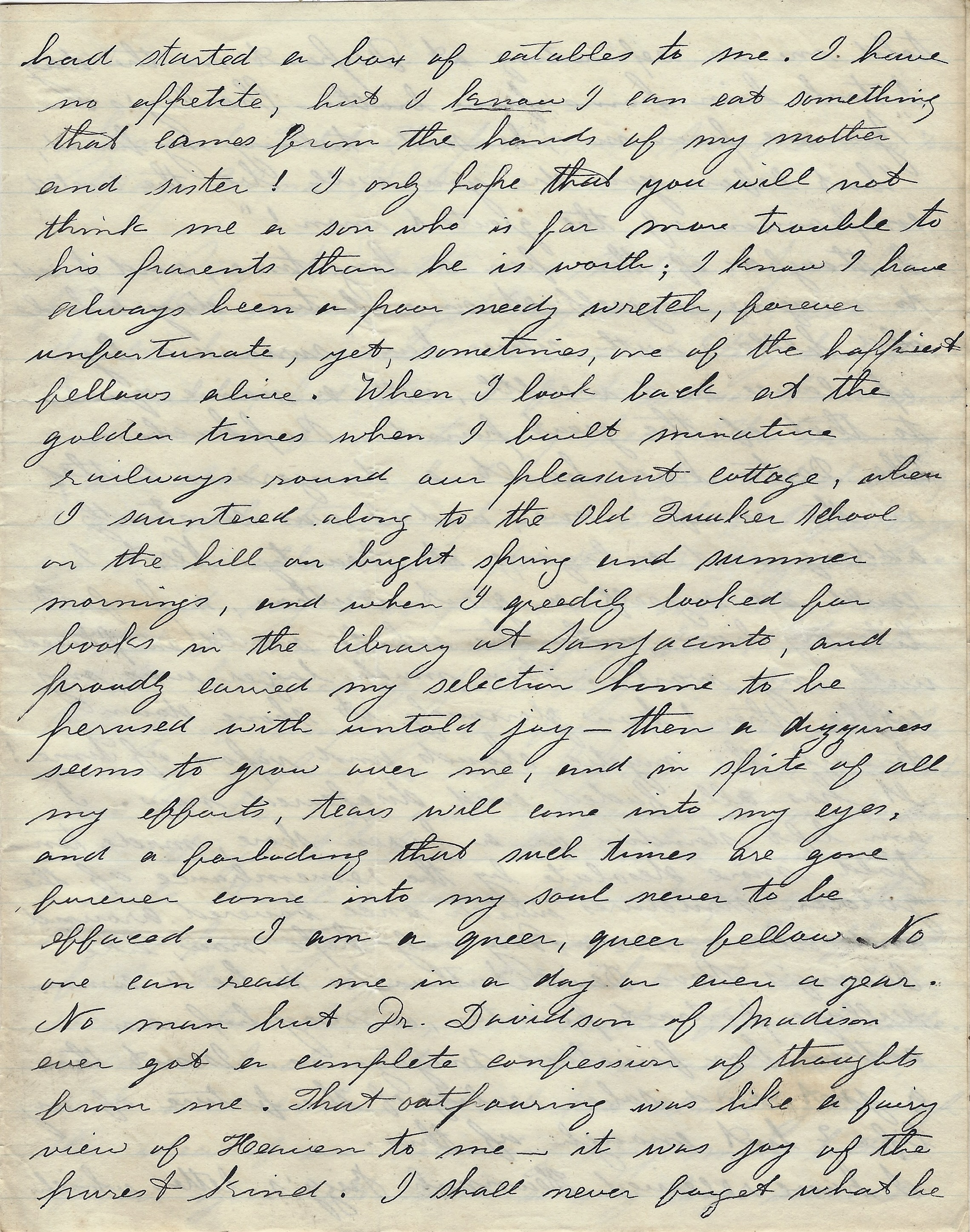
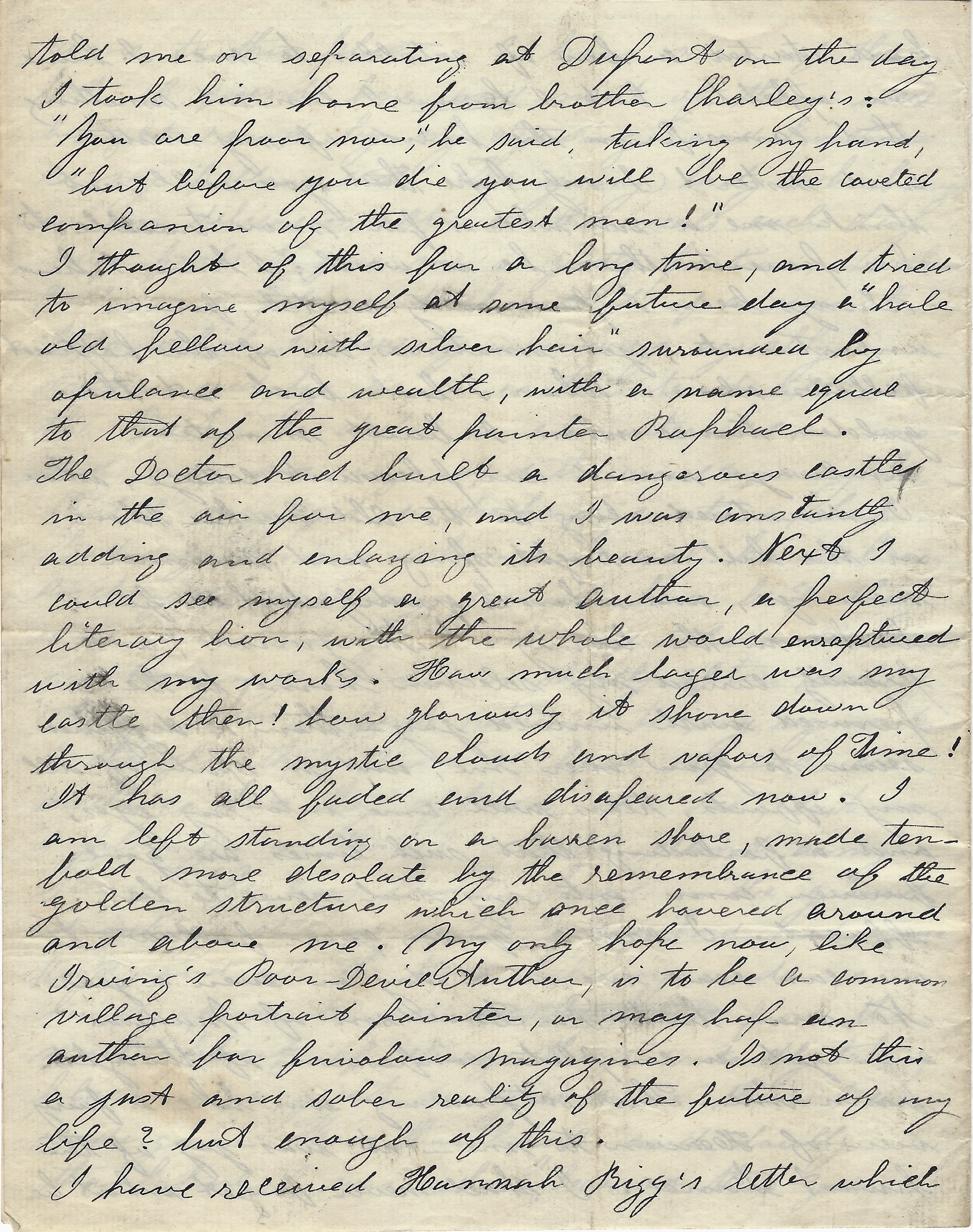
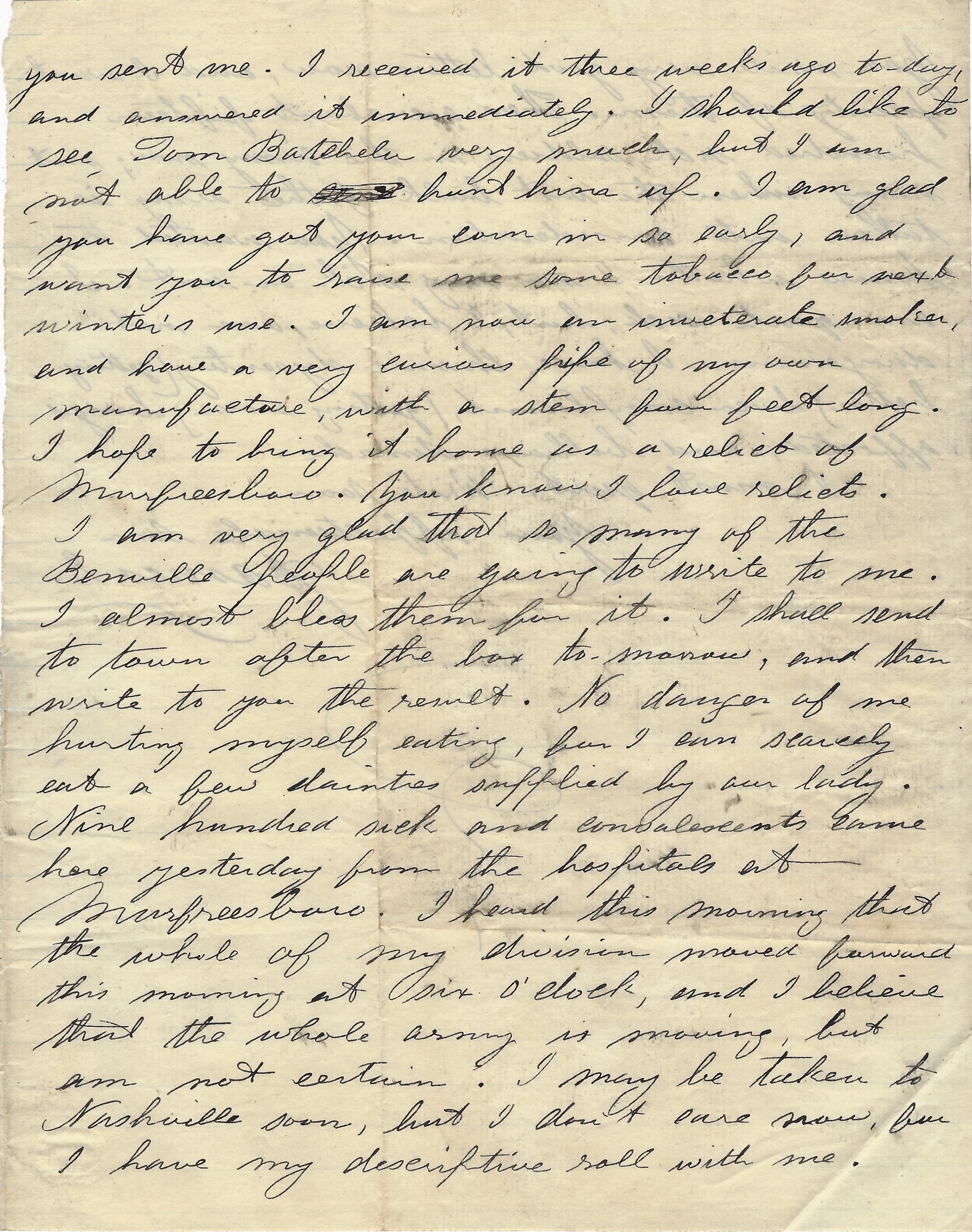
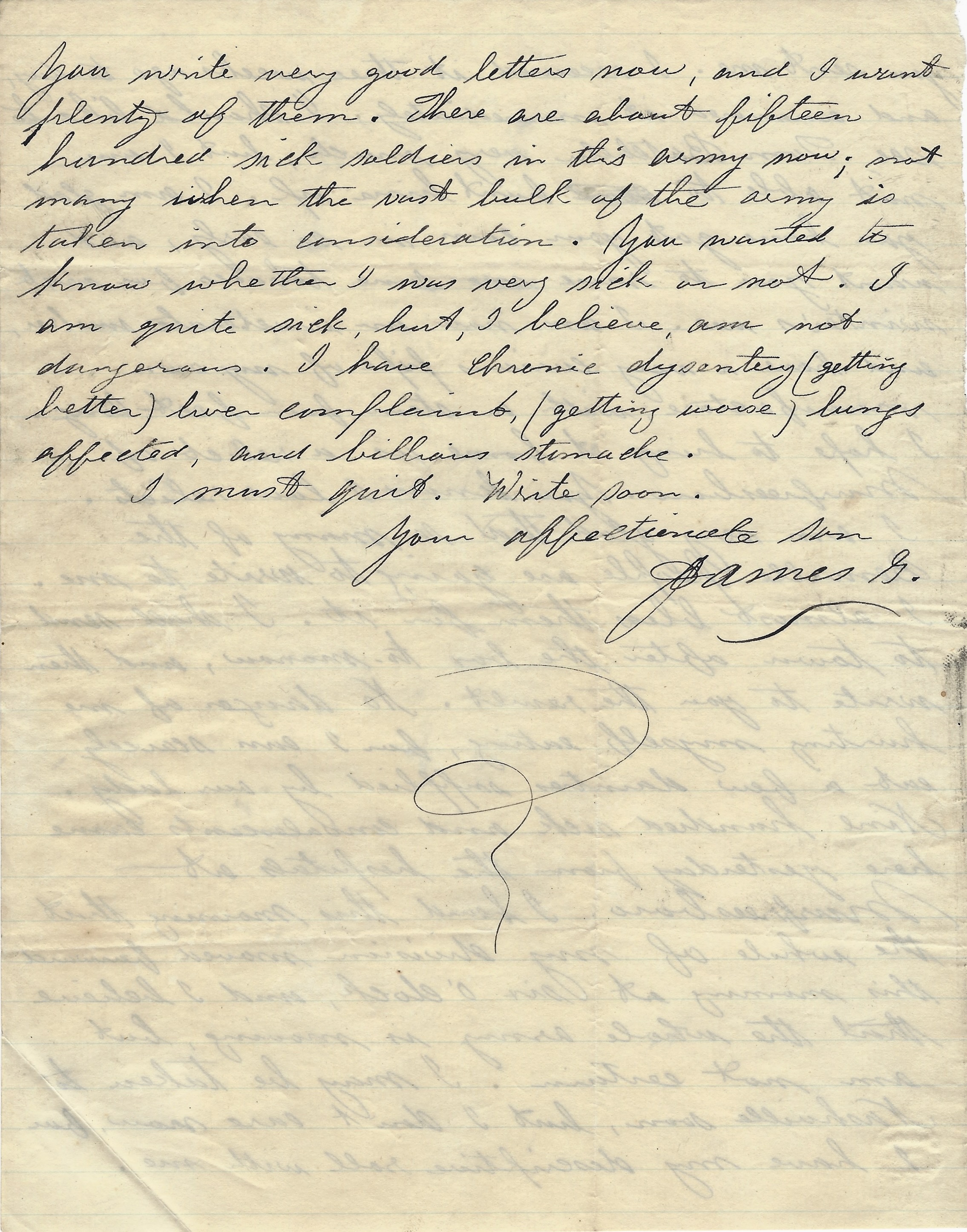
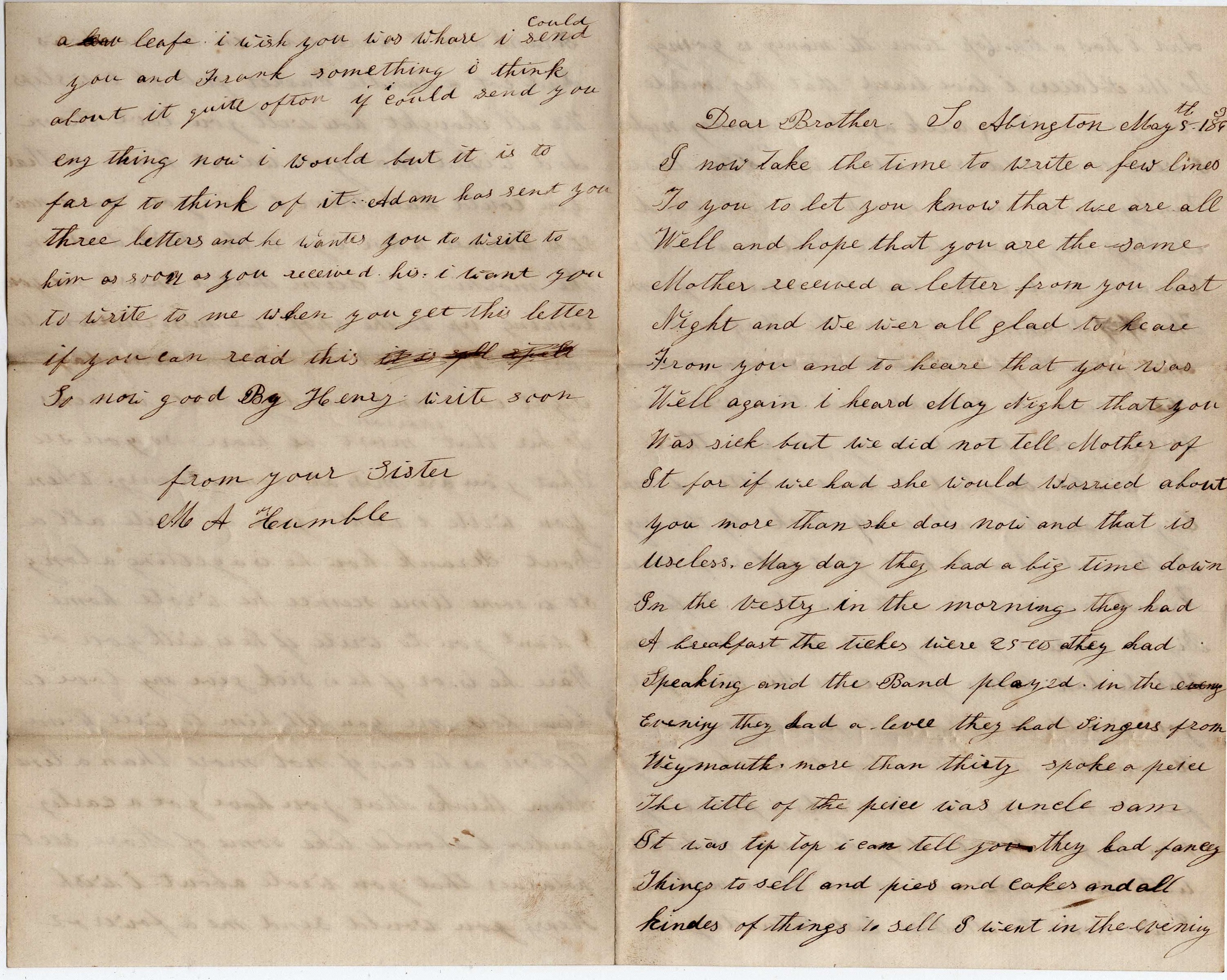
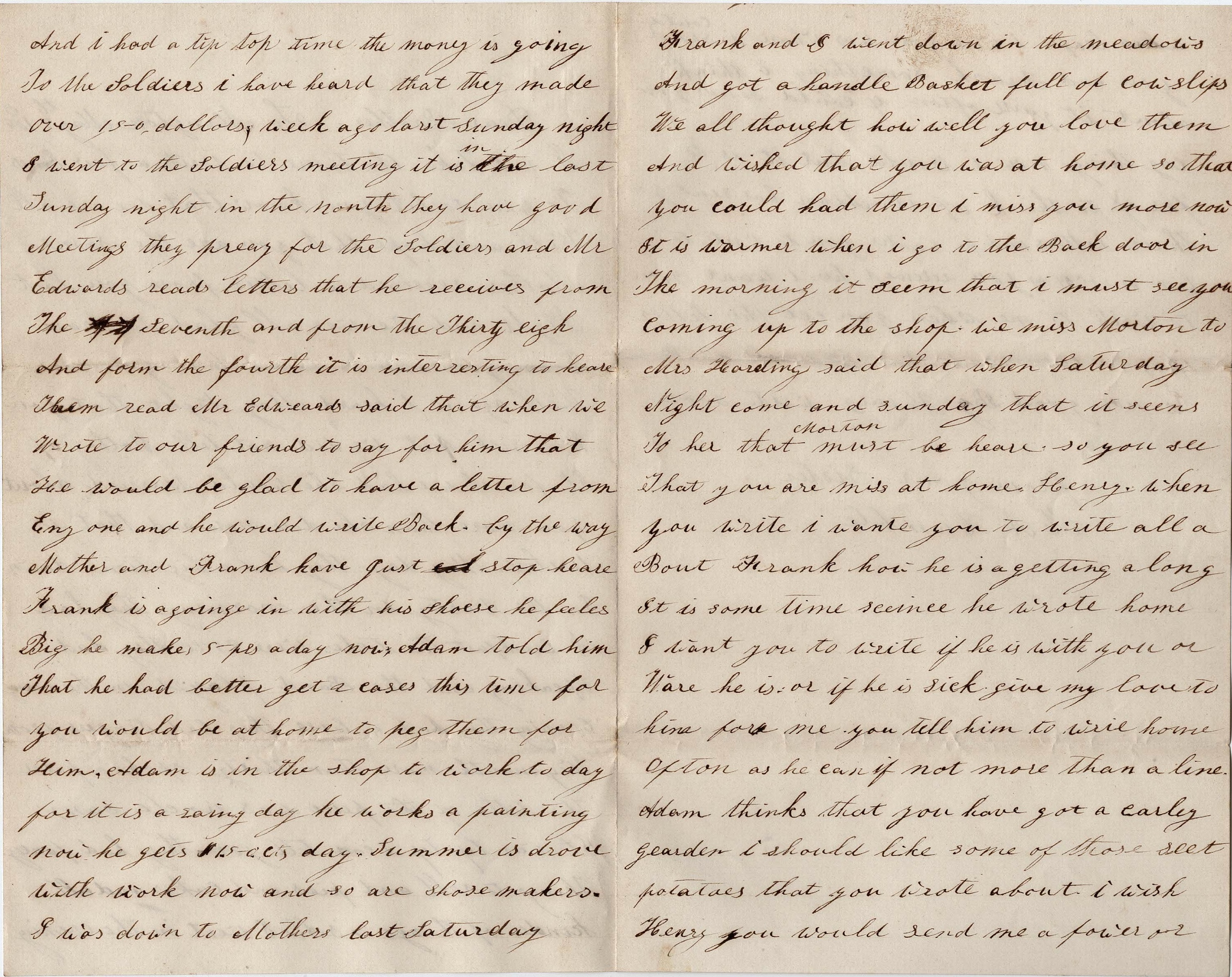
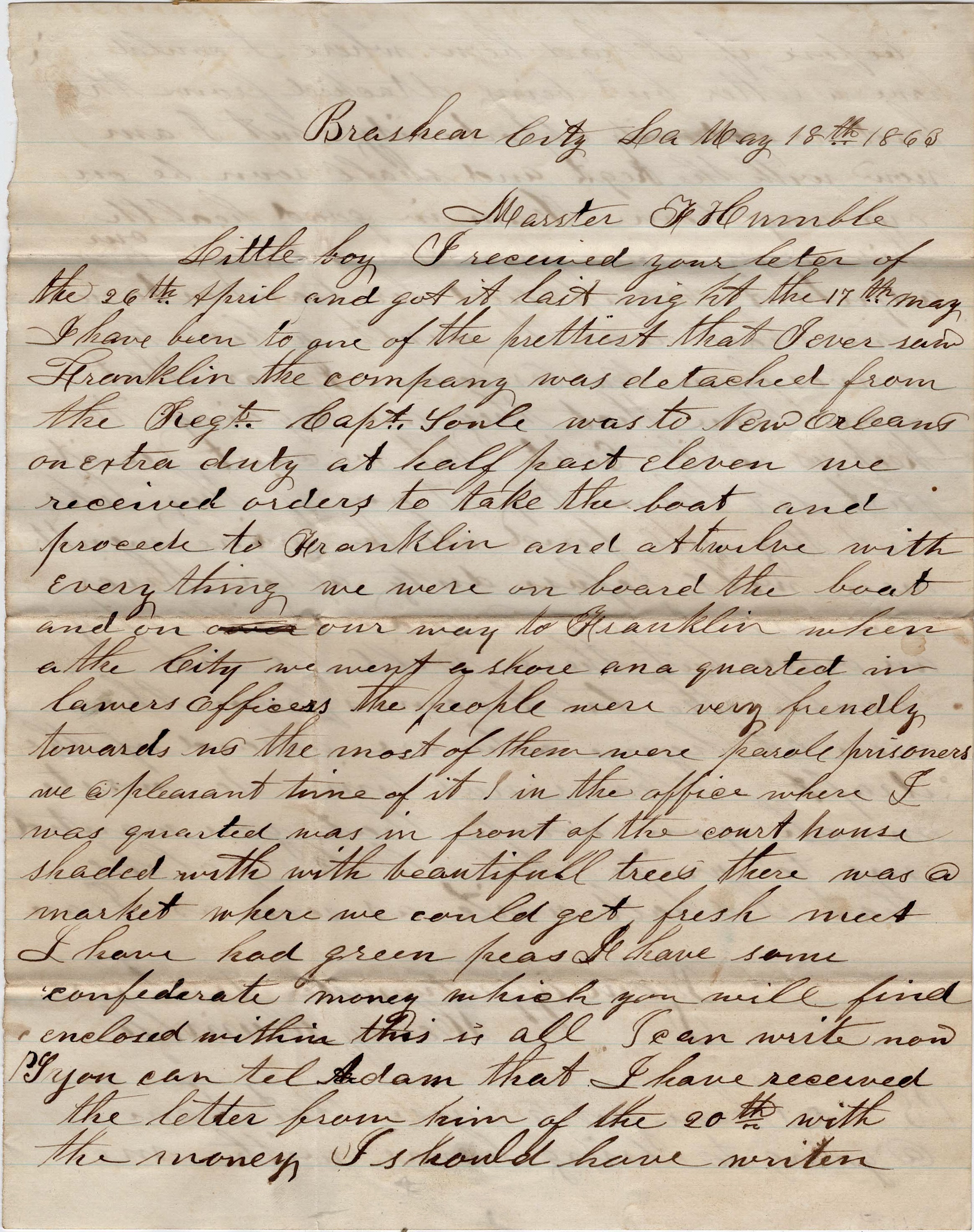
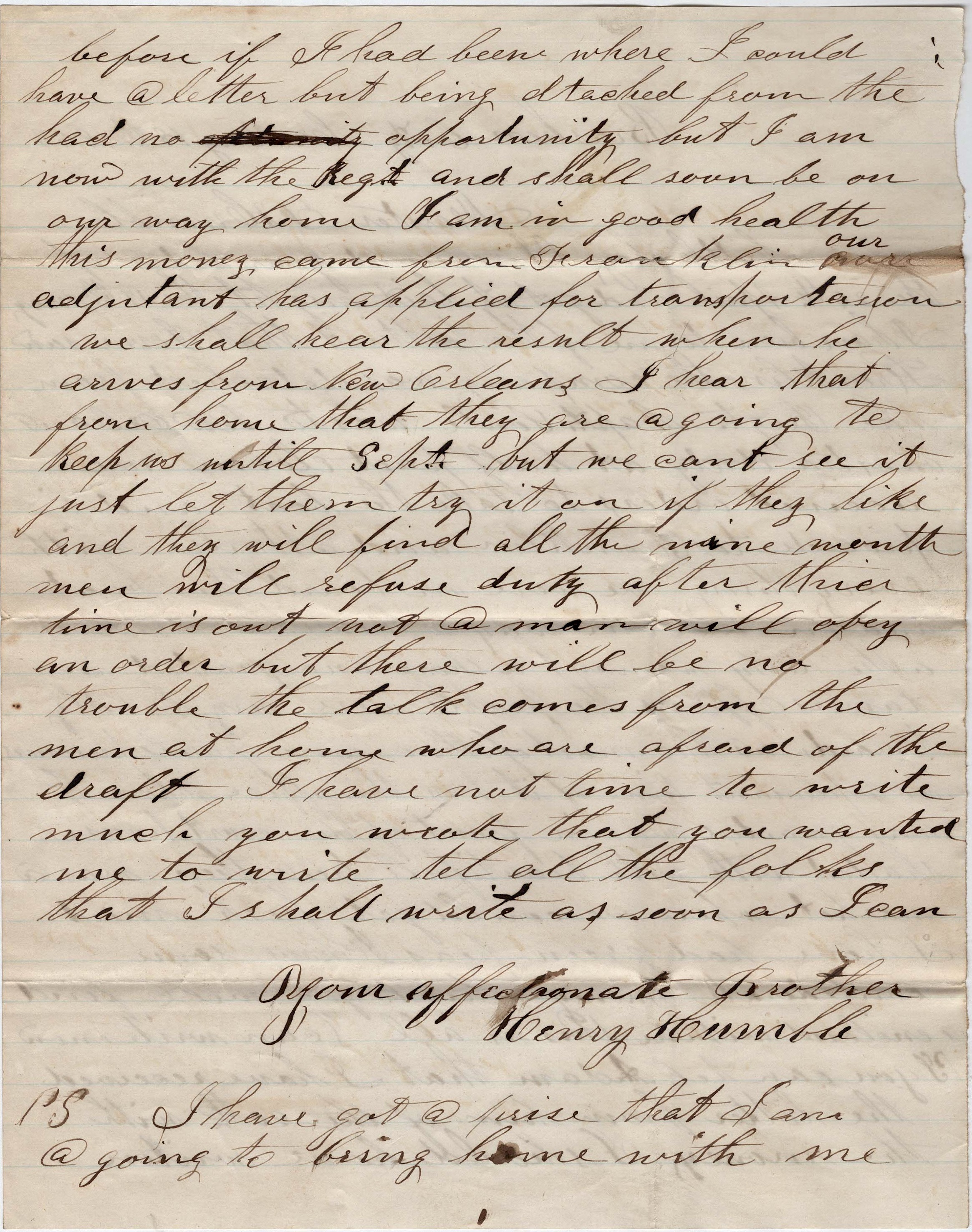
T R A N S C R I P T I O N
“On Saturday, October 25, 1862, the Regiment camped at Danville, Ky.; and on the following night snow fell to the depth of three inches. On November 5, at 4 o’clock P.M., the Regiment crossed the line between Kentucky and Tennessee. The fact that the Regiment was, at last, in Dixie, was announced by loyal yells, hurrahs, and shouts infinite in number and variety of tone.”
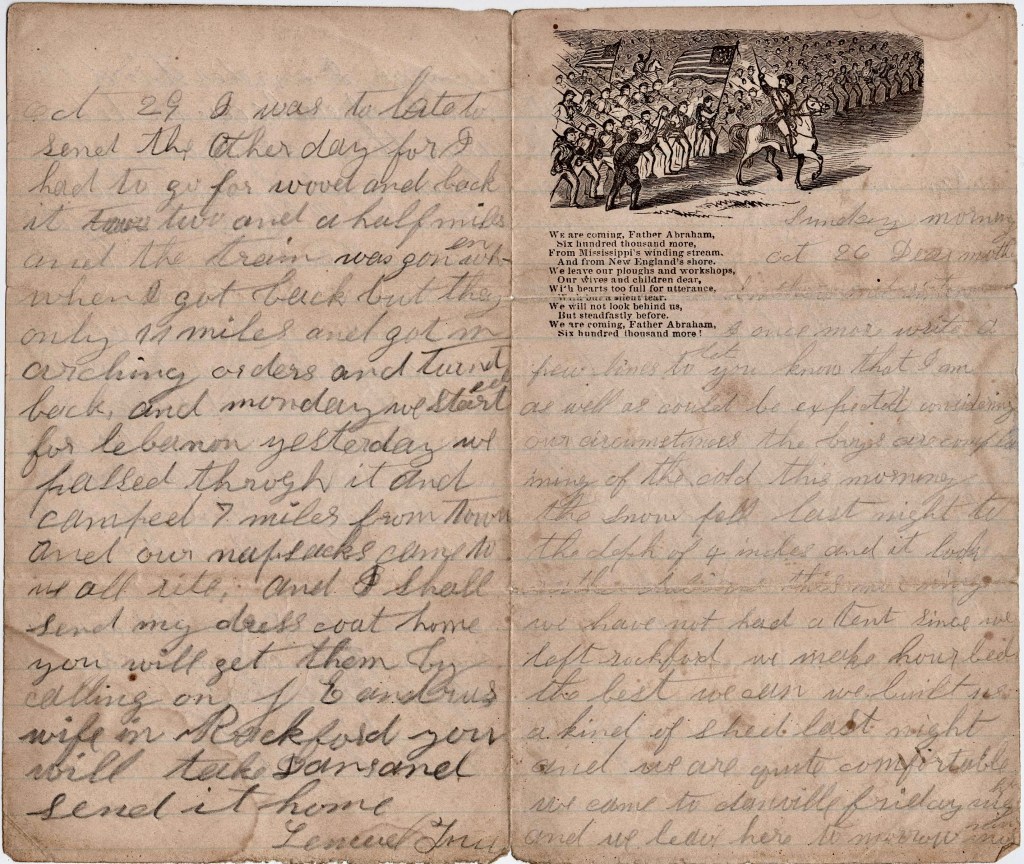
[Danville, Kentucky] Sunday morning October 26 [1862]
Dear mother,
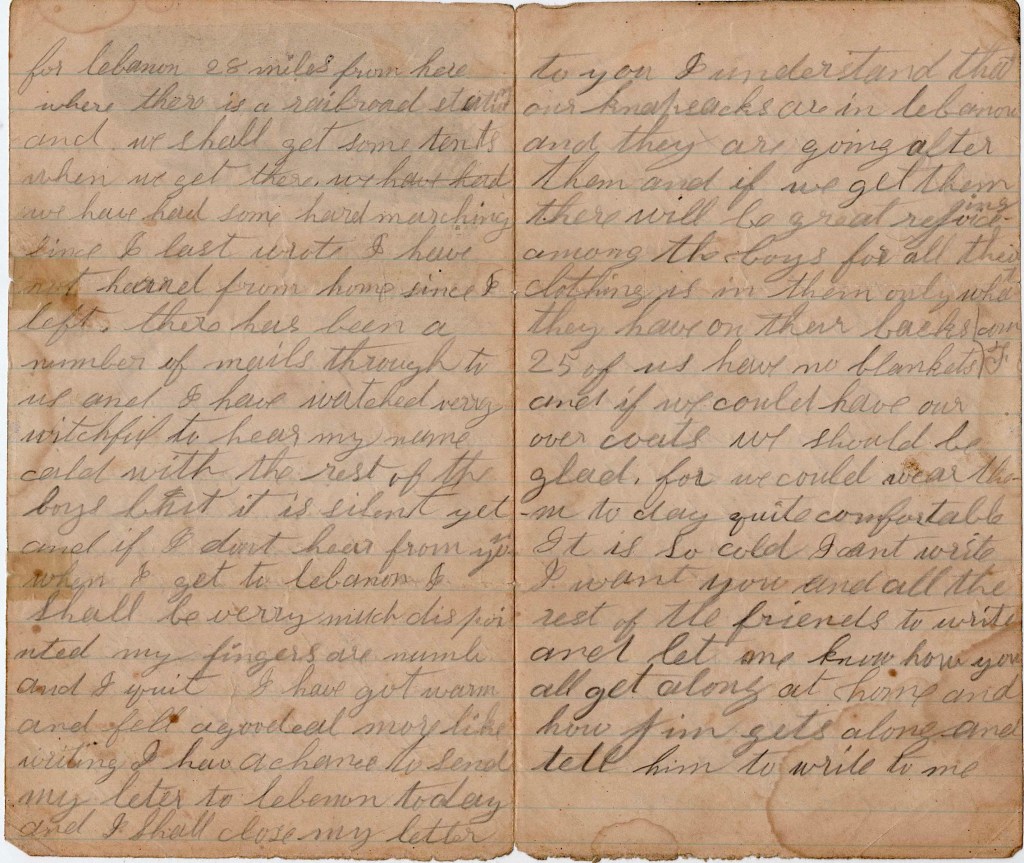
I once more write a few lines to let you know that I am as well as could be expected considering our circumstances. The boys are complaining of the cold this morning. The snow fell last night to the depth of 4 inches and it looks rather dubious this morning. We have not had a tent since we left Rockford. We make our bed the best we can. We built us a kind of shed last night and we are quite comfortable. We came to Danville Friday night and we leave here tomorrow morning for Lebanon 28 miles from here where there is a railroad station and we shall get some tents when we get there.
We have had some hard marching since I last wrote. I have not heard from home since I left. There has been a number of mails through to us and I have watched very watchful to hear my name called with the rest of the boys but it is silent yet and if I don’t hear from you when I get to Lebanon, I shall be very much disappointed. My fingers are numb and I quit.
I have got warm and feel a good deal more like writing. I have a chance to send my letter to Lebanon today and I shall close my letter to you. I understand that our knapsacks are in Lebanon and they are going after them and if we get them there will be great rejoicing among the boys for all their clothing is in them—only what they have on their backs. There are 25 of us have no blankets and if we could have our overcoats we should be glad for we could wear them today quite comfortable. It is so cold I can’t write.
I want you and all the rest of the friends to write and let me know how you all get along at home and how Jim gets along and tell him to write to me.
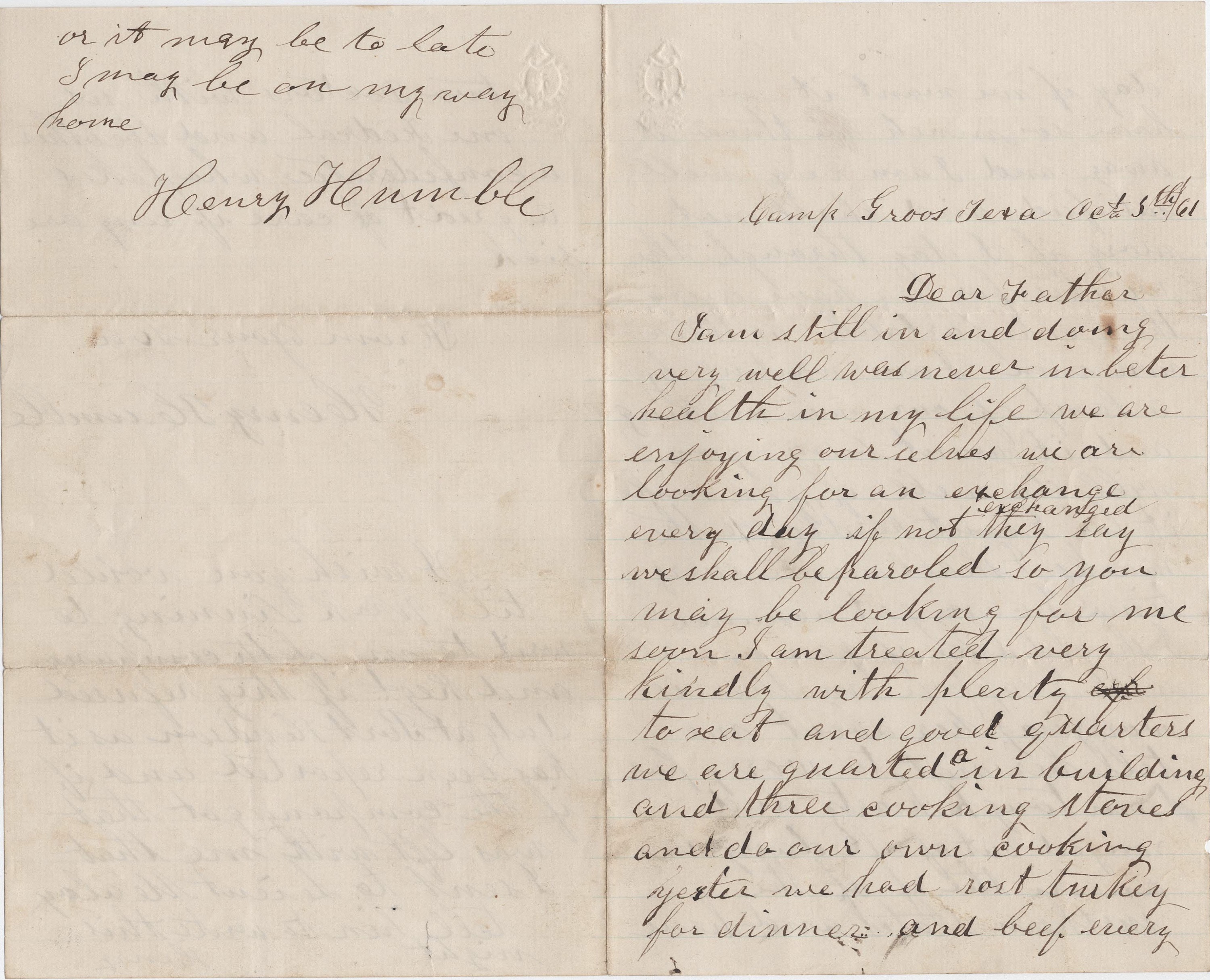
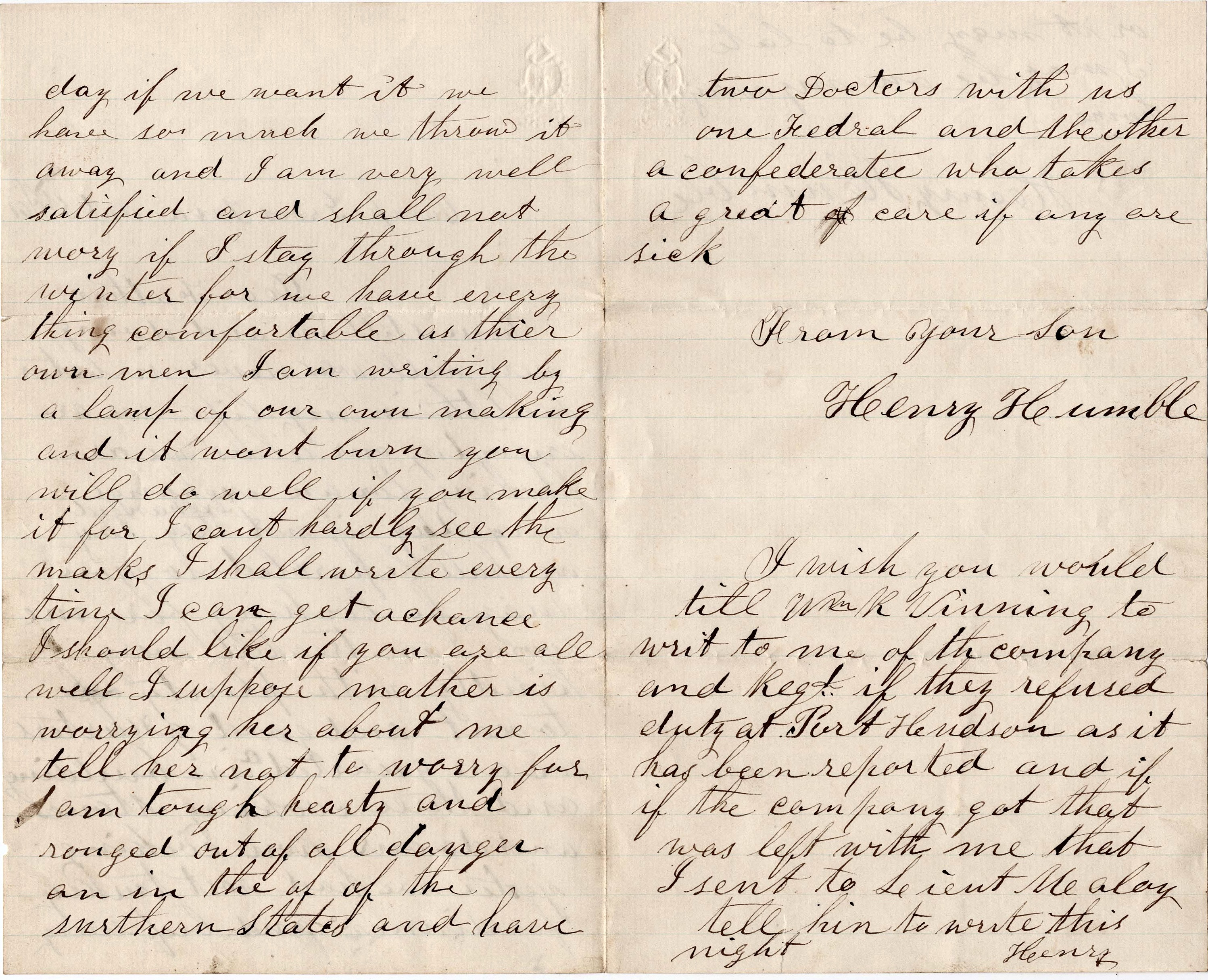
October 29. I was too late to send the other day for I had to go for wood and back. It was two and a half miles and the train was gone when I got back. But they only 11 miles and got marching orders and turned back and Monday we start for Lebanon. Yesterday we passed through it and camped 7 miles from town and our knapsacks came to us all right and I shall send my dress coat home. You will get them by calling on J. E. Andrew’s wife in Rockford. You will tell Dan and send it home. — Lemuel
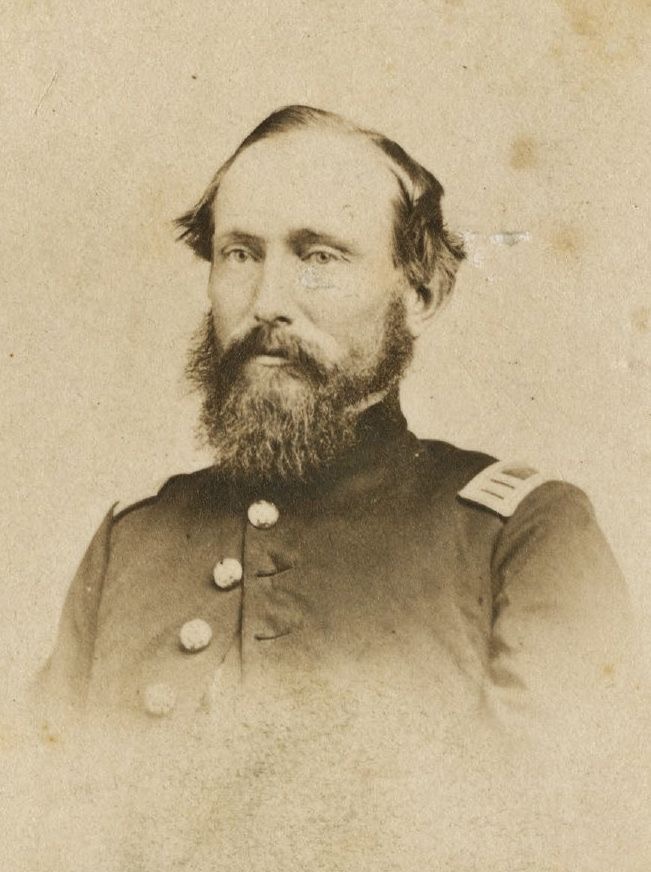
A GAR carte-de-visite of Chester H. Ballard (Chris Maldonado Collection)
Chester Hamilton Ballard (1843-1916) enlisted in Co. A of the 37th Massachusetts Infantry in August 1862. “Organized at Camp Briggs, and comprised mainly of men recruited in the four western counties of the state, the 37th Massachusetts was sent to the vicinity of Washington, D.C., via Fort Hamilton, N.Y., but it was some time before they found a definite corps assignment. Once attached to the 6th Corps of the Army of the Potomac, however, they soon found themselves involved in the thick of the war. Joining the main body of the army in the Blue Ridge in November, they participated in the Battle of Fredericksburg, helping to lead the crossing of the Rappahannock on December 11th, and covering the retreat on the 15th.
After overwintering near White Oak Church, the 37th participated in the assault on Marye’s Heights (2nd Fredericksburg) on May 3rd, and were engaged on the following day at the Battle of Salem Church. Later in the summer, they were rushed into action at Gettysburg, arriving to participate in the action on July 3rd, and were then ordered to New York City to quell the draft riots.
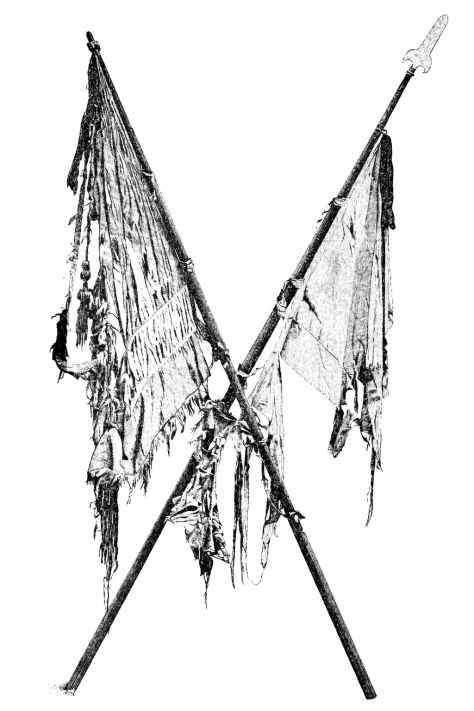
Battle flags of the 37th Massachusetts Infantry at Boston State House
Their most memorable action, however, may have been during the Wilderness-Spotsylvania campaigns in May 1864. Thrown into confusion at the Battle of the Wilderness, the regiment lost 54 men, and a few days later that lost another 32 at the Bloody Angle in Spotsylvania. The 37th Infantry remained in the vicinity of Petersburg, suffering continual losses in both men and morale, until ordered to help repel Jubal Early’s raid on Washington late in the summer. Newly equipped with Spencer seven-shot repeating rifles, the regiment pursued Early into the Shenandoah Valley and was placed under Philip Sheridan’s command during the fall campaign of 1864. They were engaged at Charles Town and the 3rd Battle of Winchester, before being returned to the Petersburg front in December. Though their ranks were greatly reduced, the 37th remained active until the final battles of the war in the east, including the final assault on Petersburg, Sailor’s Creek, and Appomattox Court House.”
Chester was born in Brookline, Vermont, the son of Alexander H. Ballard. He spent his early life in Brookline and in Ludlow, Massachusetts. When the war began, Chester was engaged n the grocery and meat business in Springfield and ten days before his 19th birthday he mustered into the 37th Massachusetts. He was promoted to Orderly Sergeant before the close of the war. After he mustered out of the service at war’s end, he went to Chicopee and entered the grocery business again.
Fourteen of Chester’s letters can be found in the University of Michigan’s William L. Clements Library. See Chester H. Ballard papers, 1862-1864.
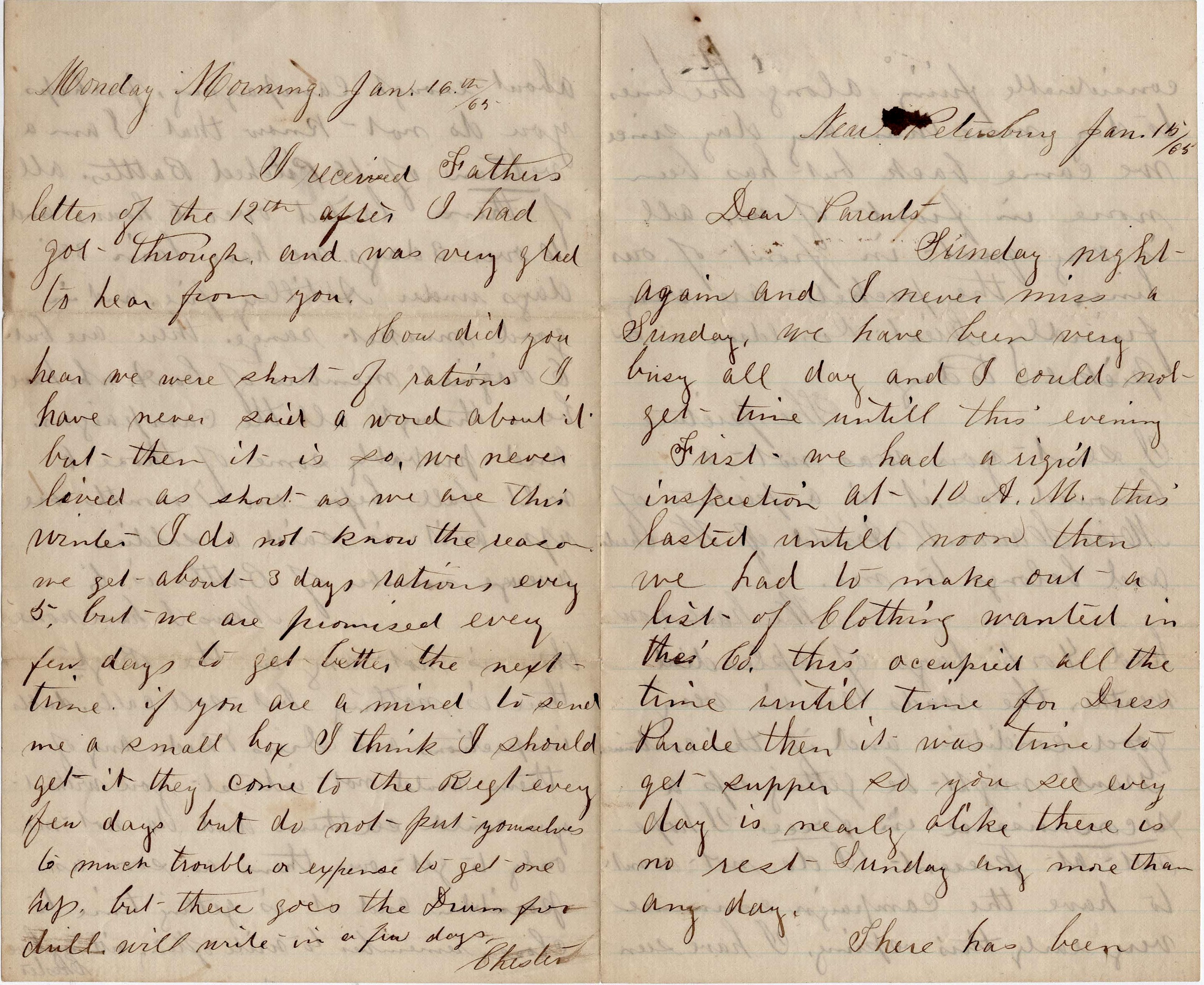
T R A N S C R I P T I O N
Near Petersburg [in camp near Warren Station] January 15, 1865
Dear Parents,
Sunday night again and I never miss a Sunday. We have been very busy all day and I could not get time until this evening. First we had a rigid inspection at 10 a.m. This lasted until noon. Then we had to make out a list of clothing wanted in this company. This occupied all the time until time for dress parade. Then it was time to get supper so you see every day is nearly alike. There is no rest Sunday any more than any day.
There has been considerable firing along the lines today—more than any day since we came back, but has been none in front of us. All is very quiet in front of our lines. The pickets are very friendly. Lieut. [David M.] Donaldson is on picket today.
The picture I sent you was not a borrowed one. It is a picture of Miss Laura V. Arnold of Winchester and belongs to me.
We have now had four or five days of splendid weather. The roads are in very good condition and if this continues, Grant might be getting up a reconnoissance in force. I hope not at present. I do not want to have the campaign commence very early this spring. I have seen about enough campaigning. Perhaps you do not know that I am a veteran of 16 pitched battles. All of them lasted over 6 hours and 10 over 3 days. We have lain 38 days under artillery fire and in good musket range. There are but six original members of Co. A who have been through all the campaigns, and probably some of those six will fall before our 7 months are up as it is said a soldier’s average number of battles is five.
News? I have none. There is not any in the regiment. There is nothing but roll calls, drills, inspections and dress parade. Any of them would not interest you without you could see them and do not me only to get over them as soon as possible and it is getting time to close. Remember to write often. With my love, — Chester
Monday morning, January 16th
I received Father’s letter of the 12th after I had got through and was very glad to hear from you.
How did you hear we were short of rations? I have never said a word about it but then it is so. We never lived as short as we are this winter. I do not know the reason. We get about 3 days rations every five, but we are promised every few days to get better the next time. If you are a mind to send me a small box, I think I should get it. They come to the regiment every few days but do not put yourselves to much trouble or expense to get one up. But there goes the drum for drill. Will write in a few days. — Chester
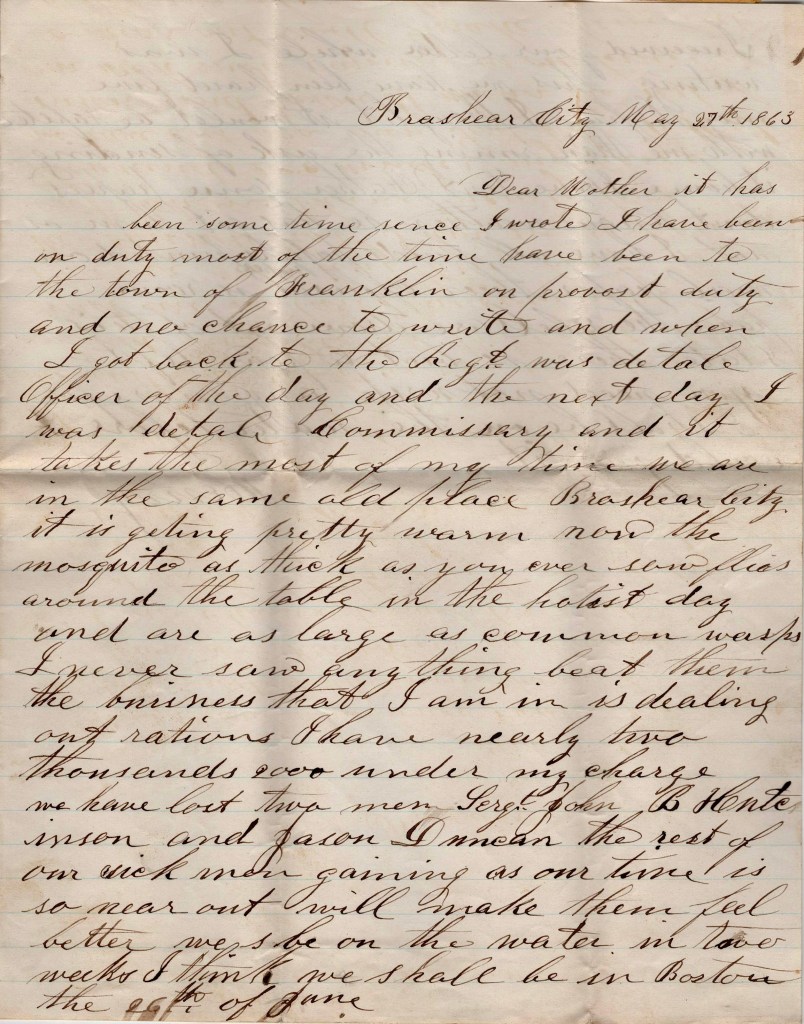
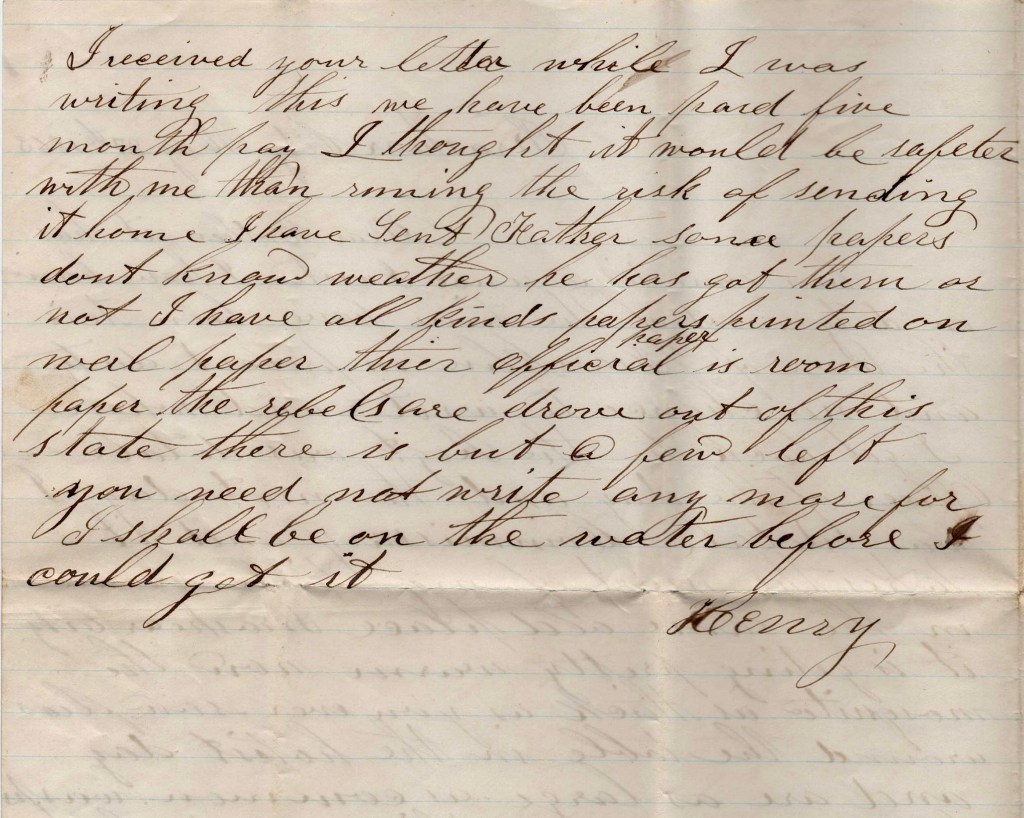
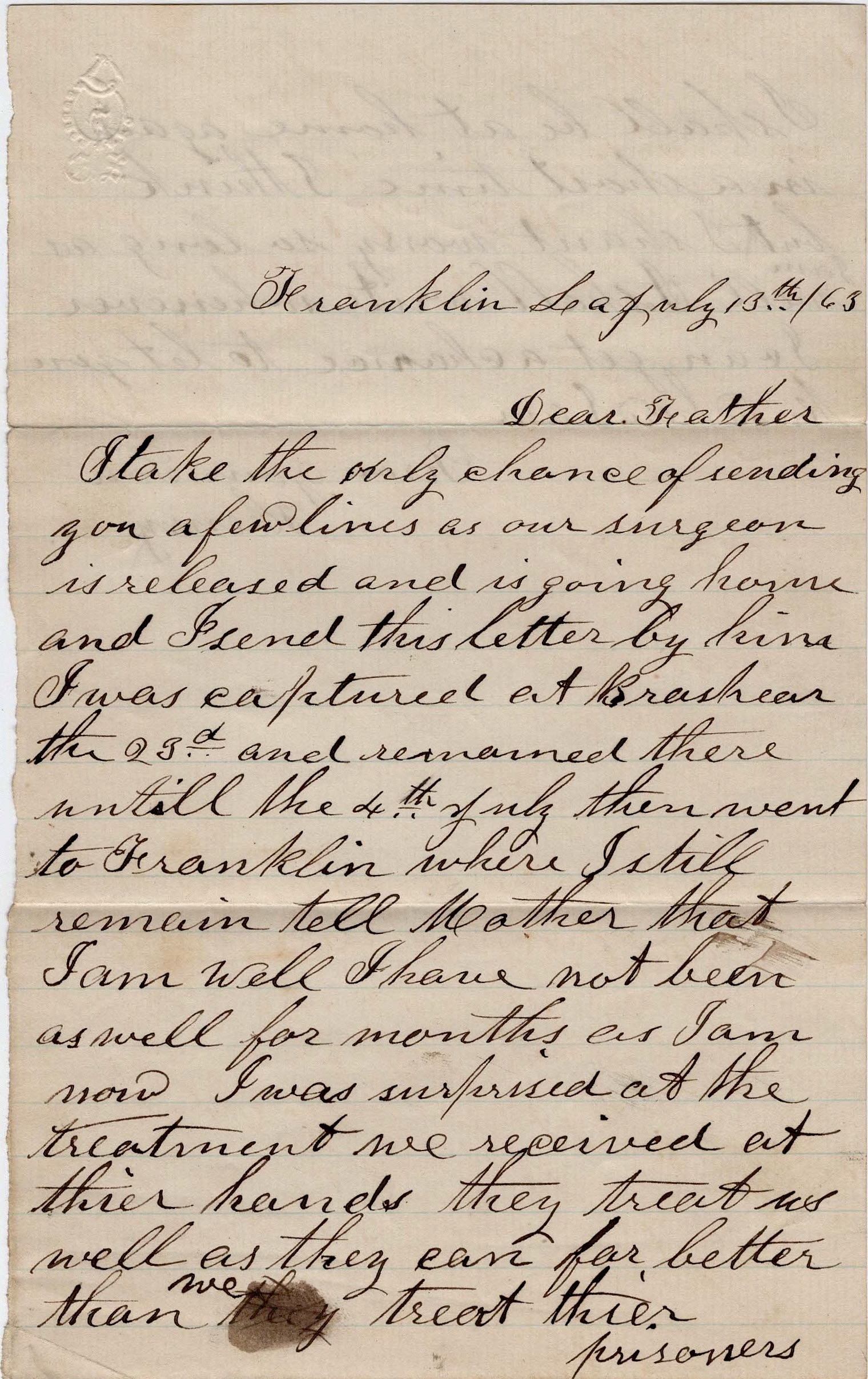
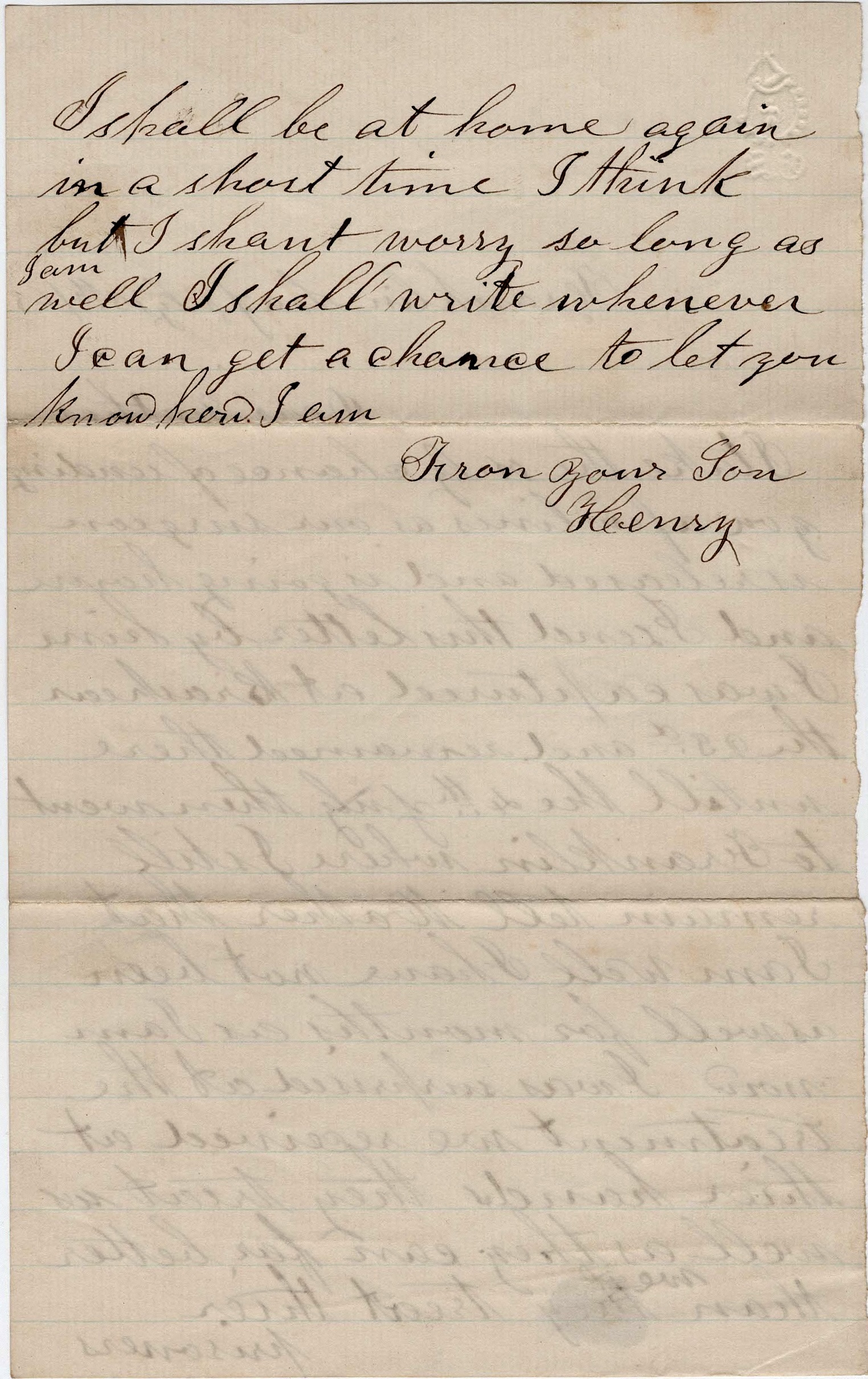
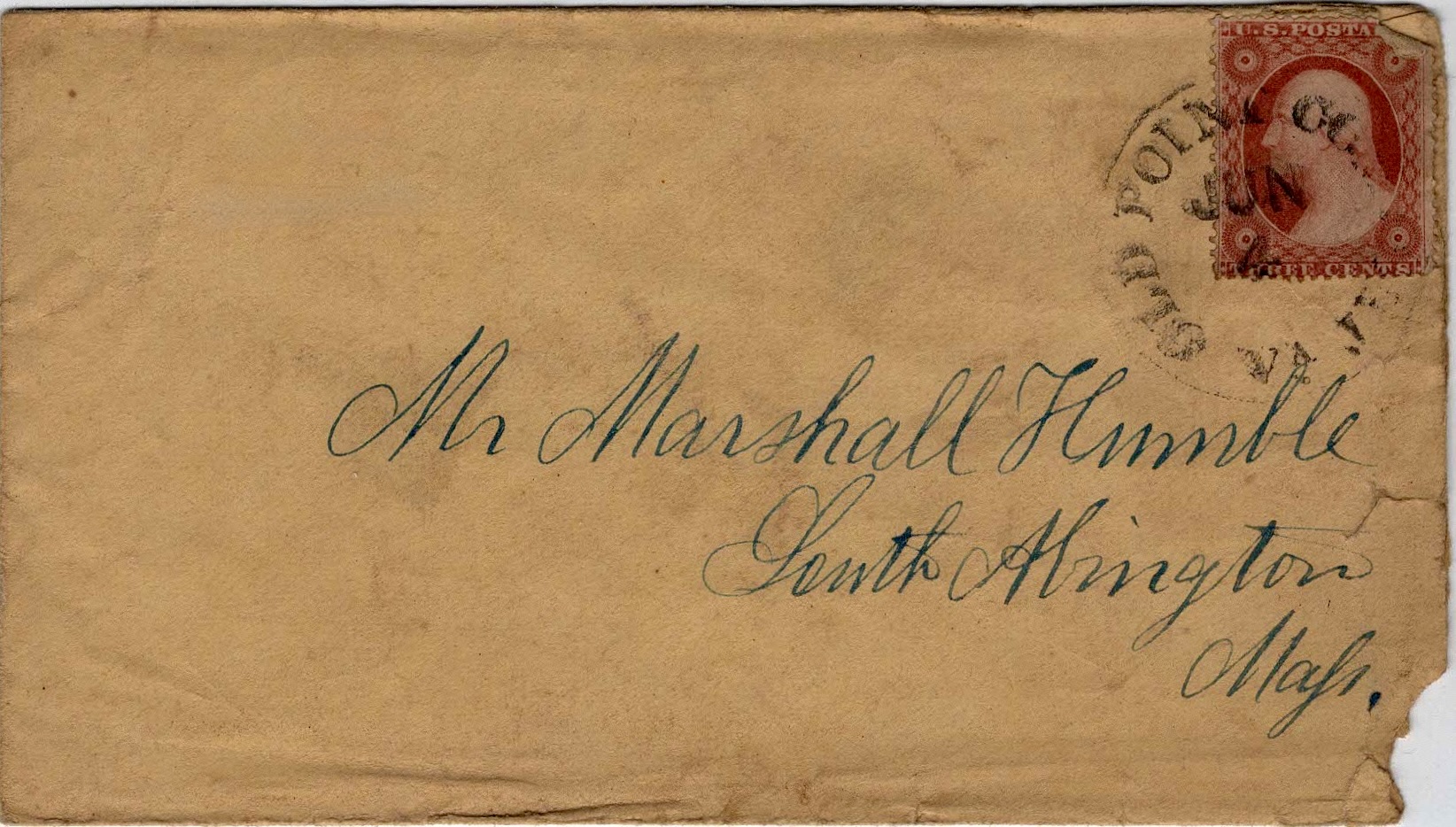
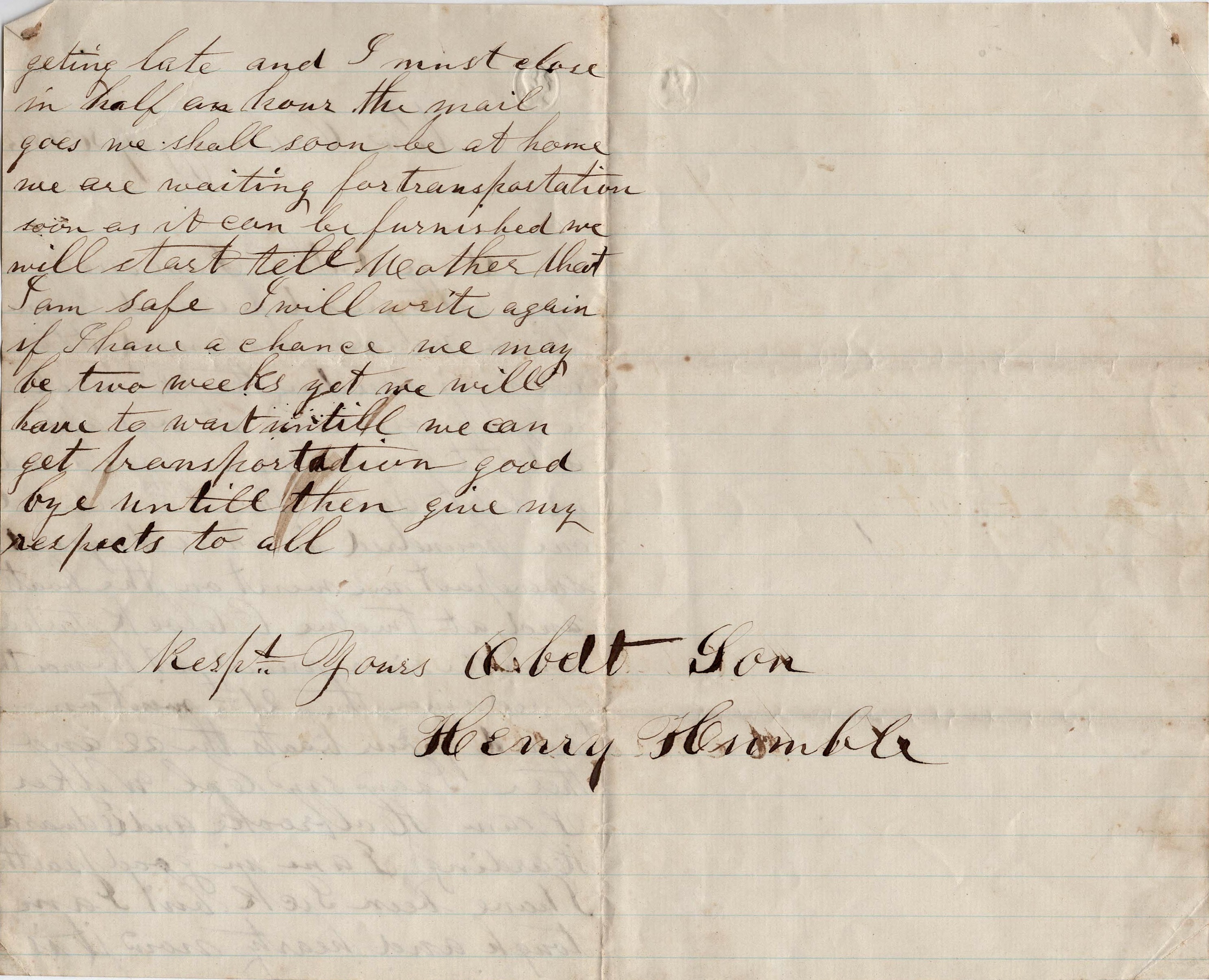
The following letter was written by Henry E. Stiles of Stevens Point, Portage county, Wisconsin, who enlisted in the 8th Wisconsin Battery (Light Artillery) on 8 October 1861 and was made Jr. 1st Lieutenant on 7 December 1861. When his captain, Stephen J. Carpenter—also of Stevens Point—was killed on 31 December 1862 at the Battle of Stones River, Henry was promoted to Captain of the Battery and remained in command of it until he mustered out of the service on 10 August 1865.
Henry and his sister Hannah Dean Stiles were enumerated in Stevens Point at the time of the 1860 US Census. Henry was employed as an Expressman. Their parents were Abial Stiles (1772-1857) and Azubah Hawley (17xx-1858). Henry’s parents were from the northeastern U. S. but lived in Canada for a while where Henry was born.
A newspaper clipping described the service of the battery as follows: “The men left here on the morning of December 26, 1861. Although it was late in the season there was no sleighing, and the men were loaded into wagons on the public square. It was & cold, stormy morning, and there were only a few people standing around on the square. From here the men drove to Wautoma, where they spent their first night. On the 27th they drove to Berlin, and the next morning took the cars for Racine. A few days later they were mustered into the service of the United States for three years. But it was not until March that their active campaigning commenced.
We have not time nor data to follow this first Stevens Point organization through to its final muster out. But they went to St. Louis, to Fort Leavenworth, out on the plains, finally tramped through and portions of Missouri, Kansas. Kentucky, Tennessee, Alabama, Mississippi, and Georgia, some of the men marching with Sherman and Kilpatrick from Atlanta to the sea, and finally come home by way of New York city. During this time the battery marched thousands of miles and was in some of the bloodiest battles of the war. Only about 90 men left Stevens Point on that cold December morning more than thirty-six years ago, but before its term of three years service had been concluded the battery had a total membership of 289 men.”
Henry’s biographical sketch on Find-A-Grave claims he was born in Montreal, Canada in 1825. “When he was fifteen years old, the family removed to New York (1840), where Henry grew to manhood. In 1849 he came to Wisconsin and after resided in Beloit for three years, went to California and remained for four years and a half. He then returned to New York, and thence again to Beloit, but after one year’s stay, went to Stevens Point where he remained until 1861. On breaking out of the war he raised the Eighth Wisconsin Light Artillery; was commissioned First Lieutenant, and afterwards promoted to Captain. His Battery was the last to leave Murfreesborough, (Murfreesboro) in August,1865. Was mustered out at Milwaukee, Wisconsin, and remained in that city until 1873, when he came to Minnesota and settled on section thirty-three, Becker Township. While in Milwaukee he was Vice-President and business manager of the “Daily News” for three years, two years in the grocery trade and the balance of the time was dealing in real estate and building. Mr. Stiles has been twice married; first to Jennie Joy, of Racine, Wisconsin, in 1863, who died the following year. His second wife was Harriet Paul, of Washington District of Columbia (D.C.), to whom he was married in 1867; she also departed this life in 1870, leaving two children, Winnifred H. and Georgiana P., both residing with their father. Per History of the Upper Mississippi Valley, Page 314, copy in my records (Kenneth C. Stiles – July 15, 1998).”
[Note: This letter is from the private collection of Greg Herr and was transcribed and published on Spared & Shared by express consent.]
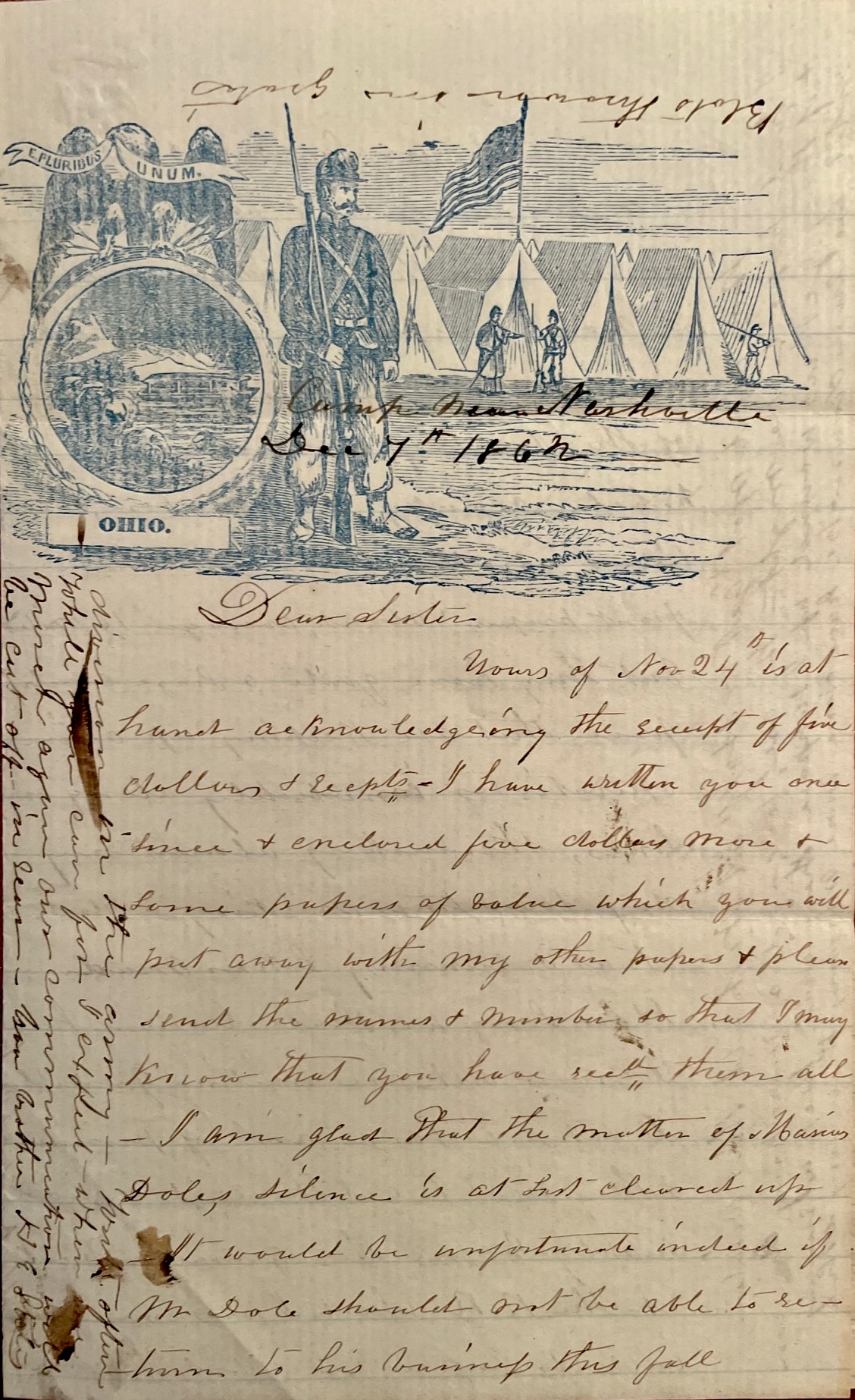
T R A N S C R I P T I ON
Camp near Nashville December 7th 1862
Dear Sister,
Yours of the 24th is at hand acknowledging the receipt of five dollars and receipts. I have written you once since & enclosed five dollars more & some papers of value which you will put away with my other papers and please send the names and numbers so that I may know that you have received them all. I am glad that the matter of Masius Doles silence is at last cleared up. It would be unfortunate indeed if Mr. Dole should not be able to return to his business this fall.
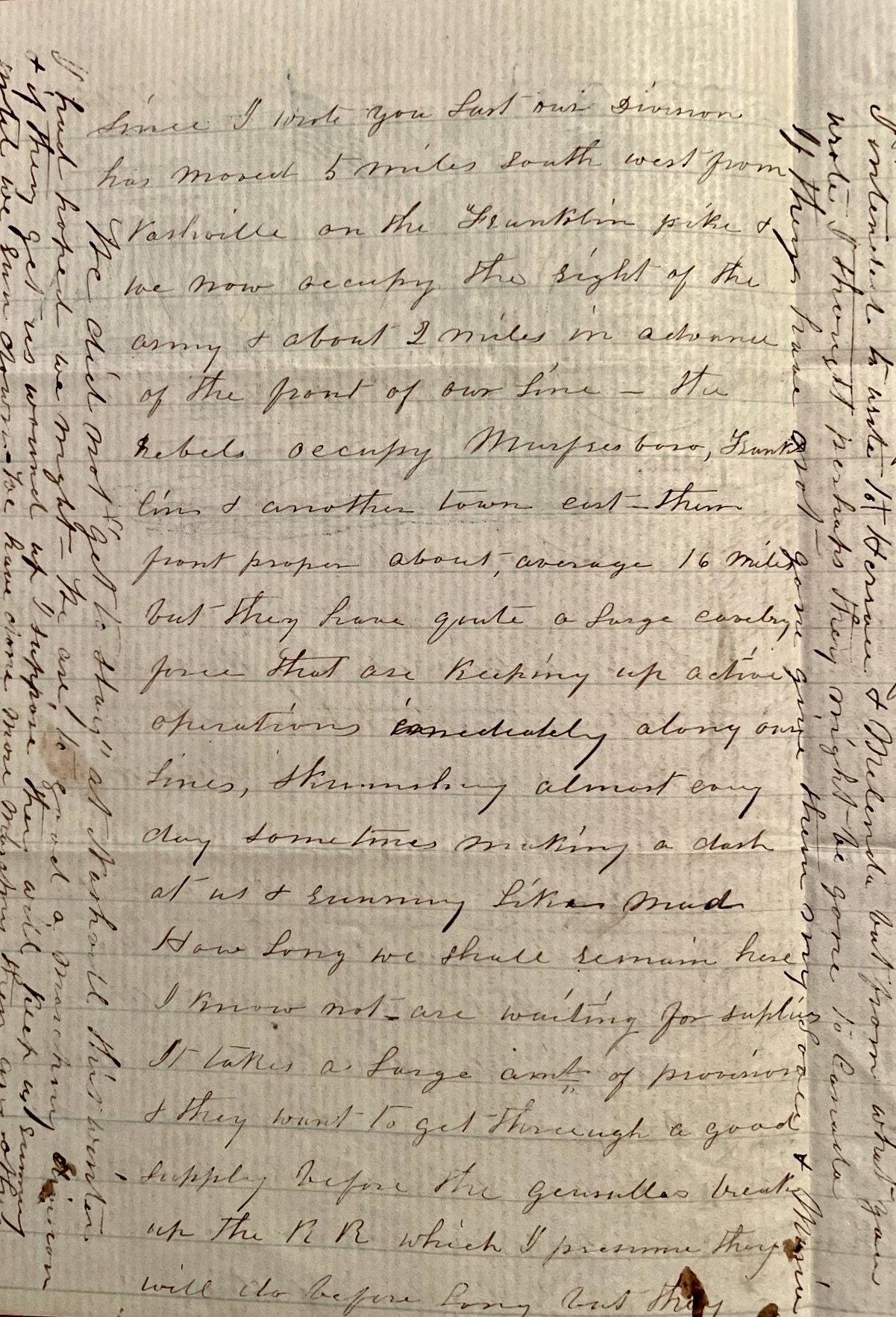
Since I wrote you last, our Division has moved 5 miles southwest from Nashville on the Franklin Pike & we now occupy the right of the army and about 2 miles in advance of the front of our line. The rebels occupy Murfreesboro, Franklin, and another town east. Their front proper about, average 16 miles but they have quite a large cavalry force that are keeping up active operations immediately along our lines, skirmishing almost every day, sometimes making a dash at us and running like mad.
How long we shall remain here I know not. Are waiting for supplies. It takes a large amount of provisions & they want to get through a good supply before the guerrillas breakup the railroad which I presume they will do before long but they are quiet now.
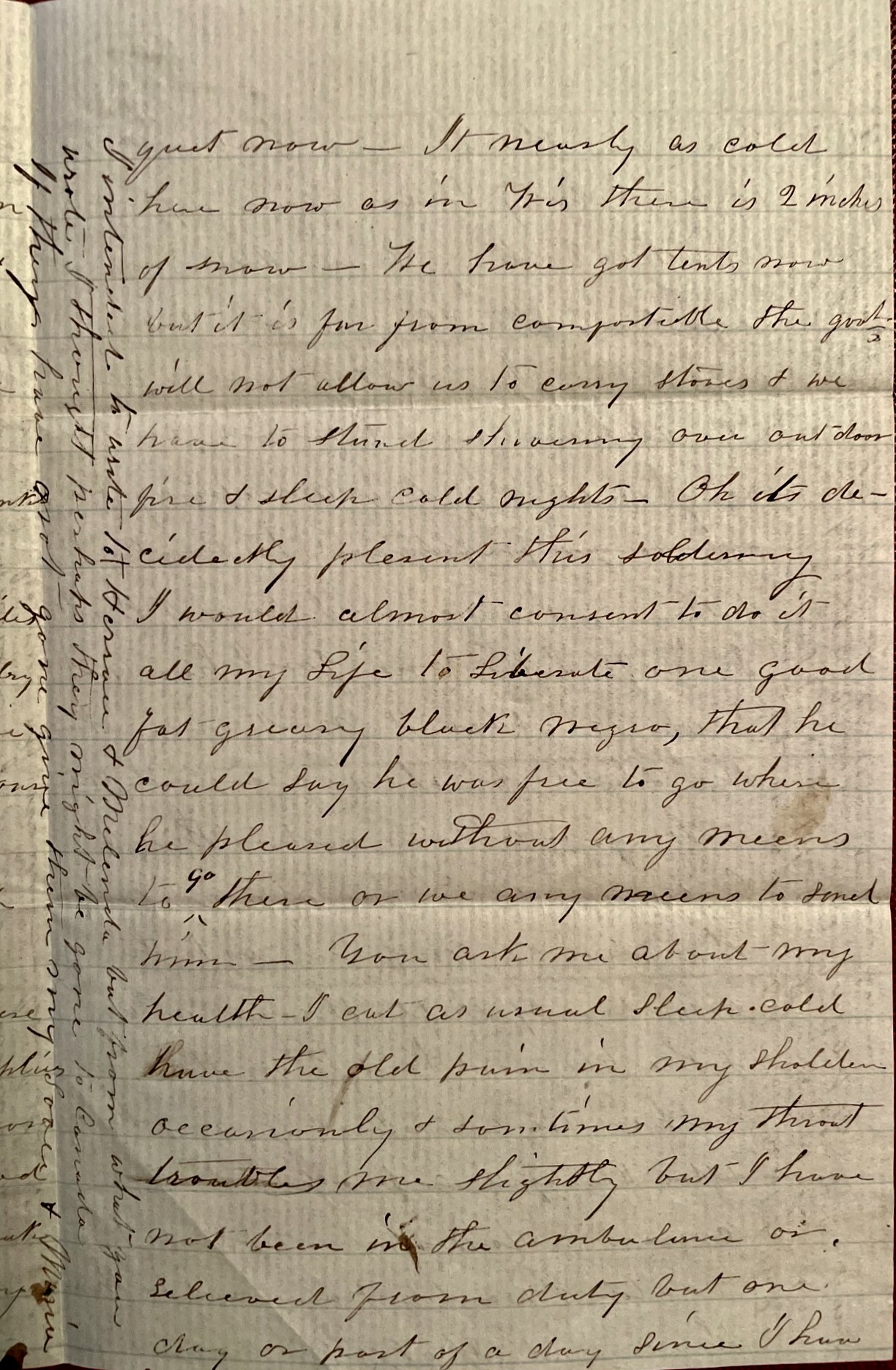
It’s nearly as cold here now as in Wisconsin. There is two inches of snow. We have got tents now but it is far from comfortable. The government will not allow us to carry stoves & we have to stand shivering over outdoor fire and sleep cold nights. Oh, it’s decidedly pleasant this soldiering. I would almost consent to do it all my life to liberate one good, fat, greasy black negro, that hecould say he was free to go where he pleased without any means to go there or we any means to send him.
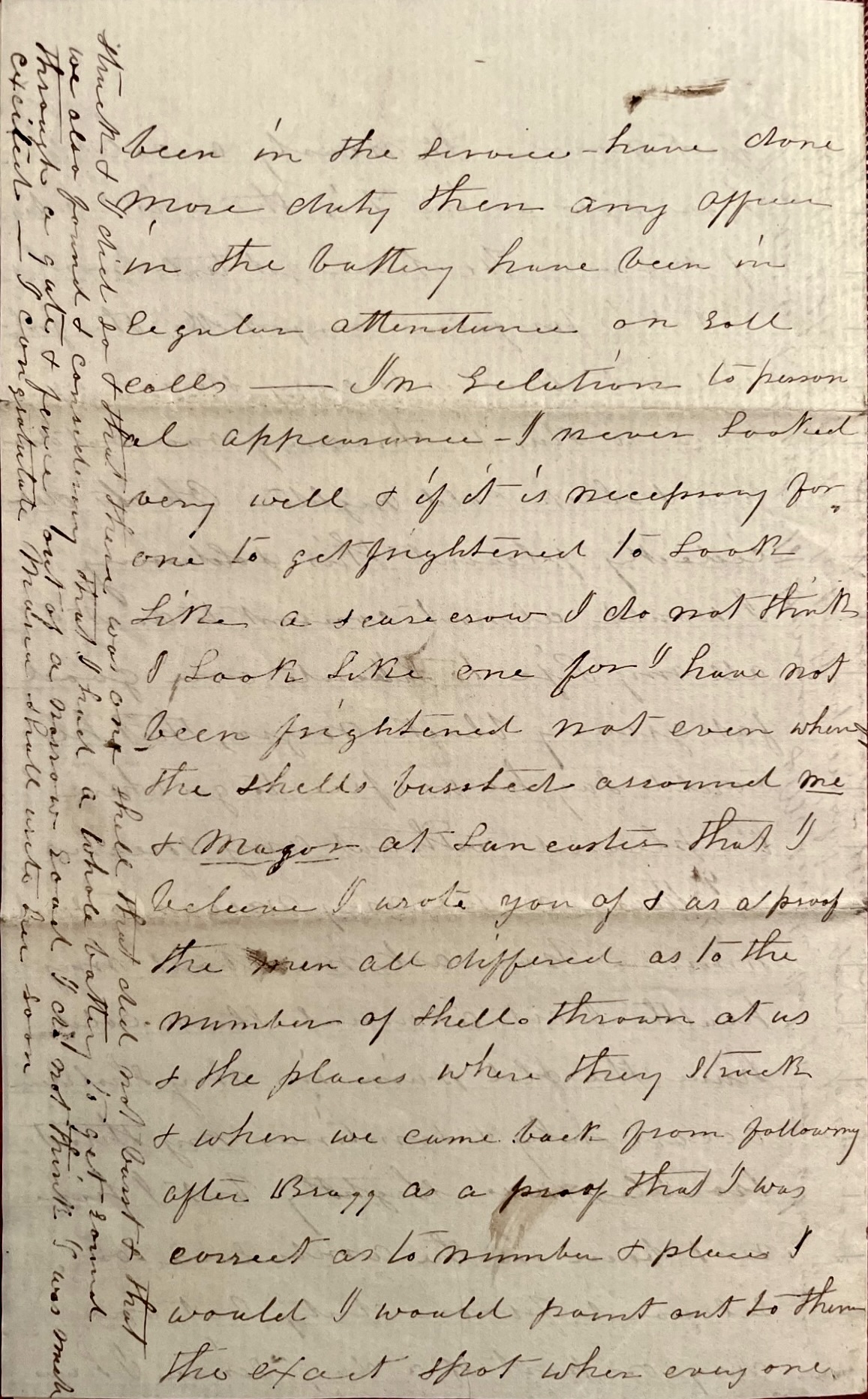
You ask me about my health. I eat as usual, sleep cold, have the old pain in my shoulder occasionally, and sometimes my throat troubles me slightly. But I have not been in the ambulance or relieved from duty but one day or part of a day since I have been in the service. Have done more duty than any officer in the battery. Have been in regular attendance. I never looked very well & if it is necessary for one to get frightened to look like a scarecrow, I do not think I look like one for I have not been frightened—not even when the shells bursted around me and Major at Lancaster [Kentucky]. That I believe I wrote you of, and as a proof, the men all differed as to the number of shells thrown at us & the places where they struck & when we came back from following after Bragg, as a proof that I was correct as to the number and places, I would point out to them the exact spot where every one struck & I did so & that there was one shell that did not burst & that we also found. And considering that I had a whole battery to get round through a gate and fence out of a narrow road, I do not think I was much excited.
I congratulate Mann. Shall write her soon. I intended to write to Herron & Melinda but from what you wrote, I thought perhaps they might be gone to Canada. If they have not gone, give them my love, and Maria.
We did not “get to stay” at Nashville this winter. I had hoped we might. We are too good a marching Division and if they get us wound up, I suppose they will keep us going until we run down. We have done more marching than any other division in the army. Write often while you can for I expect when we march again, our communication will be cut off in rear. Your brother, — H. E. Staley
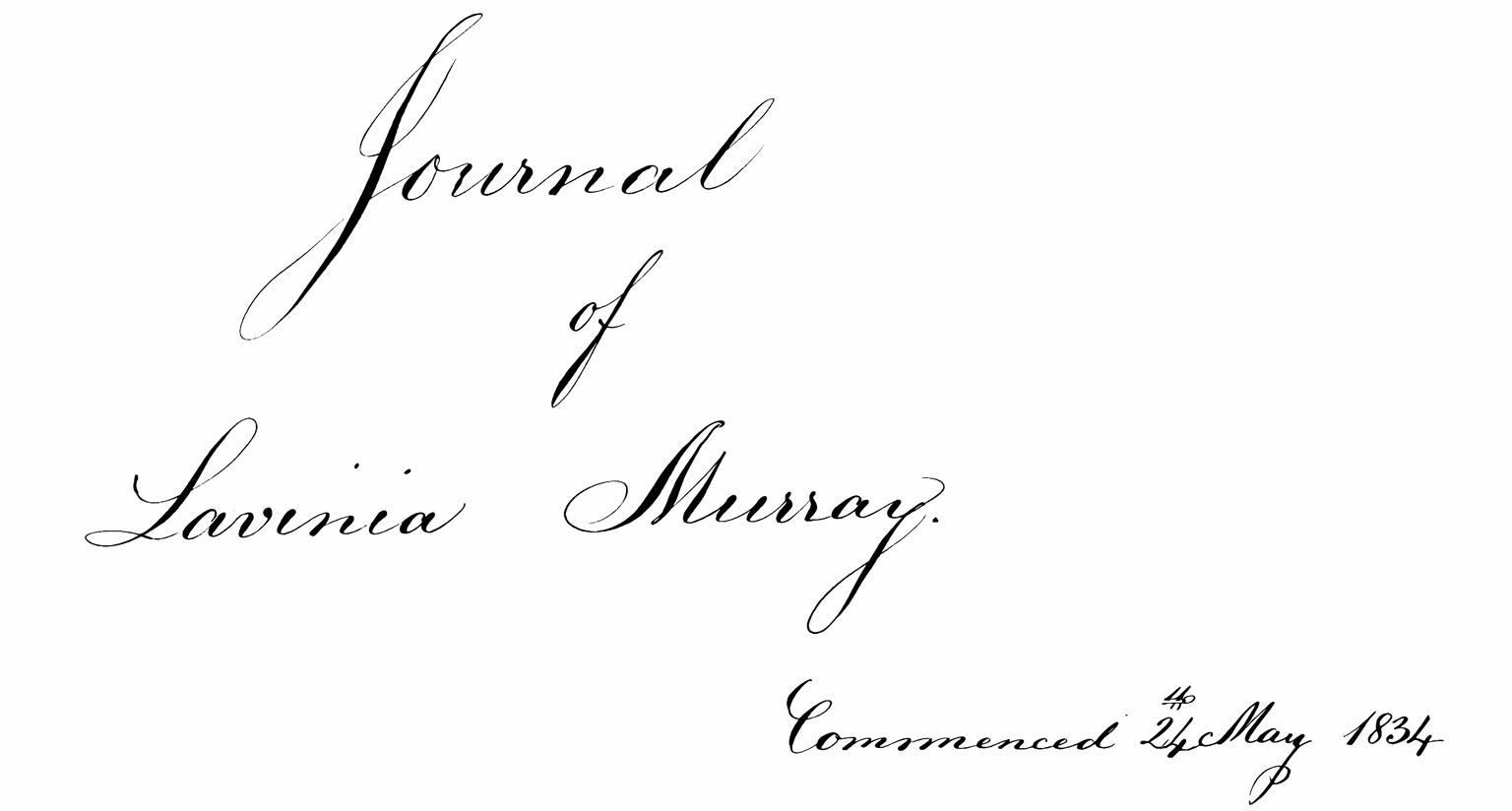
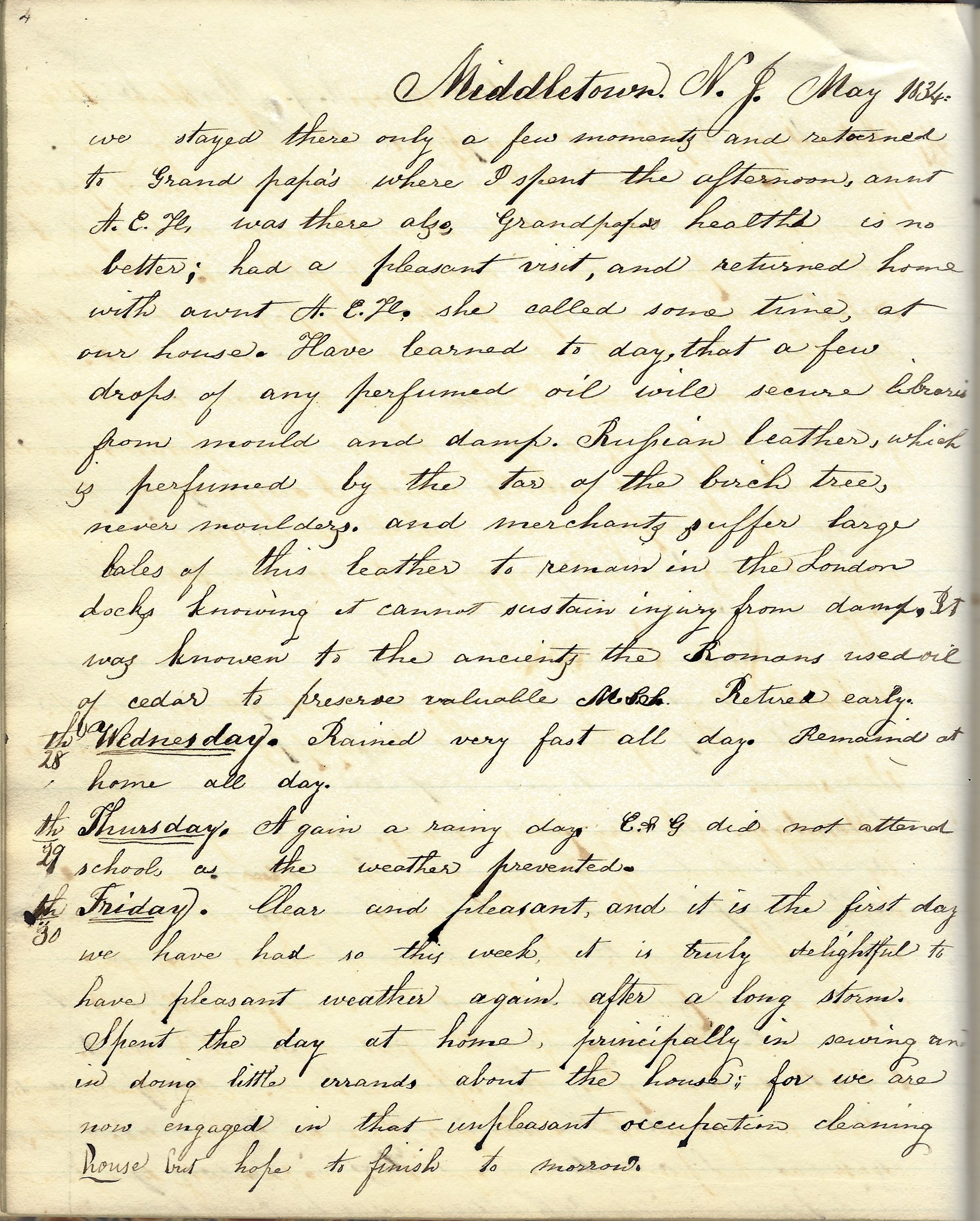
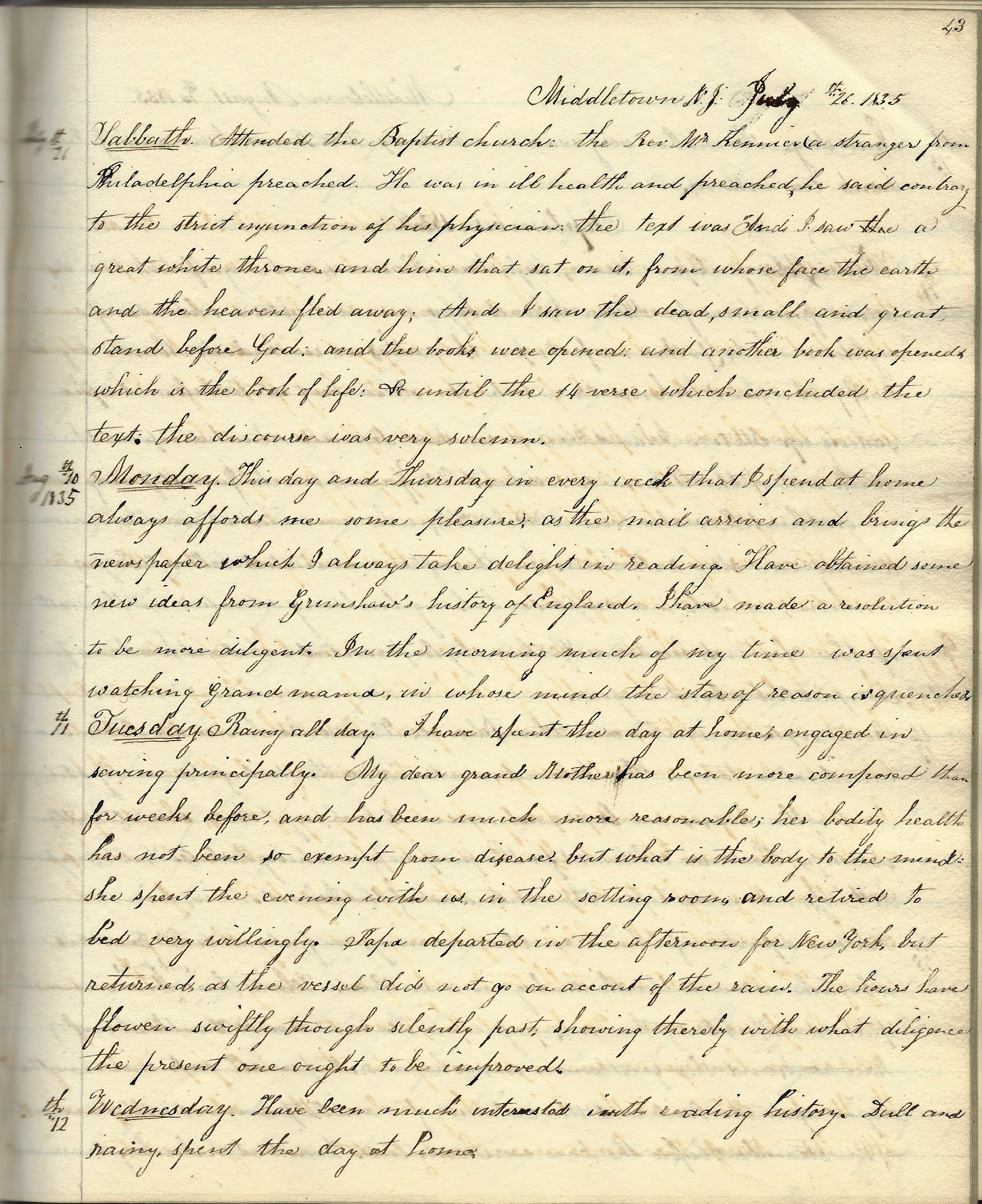
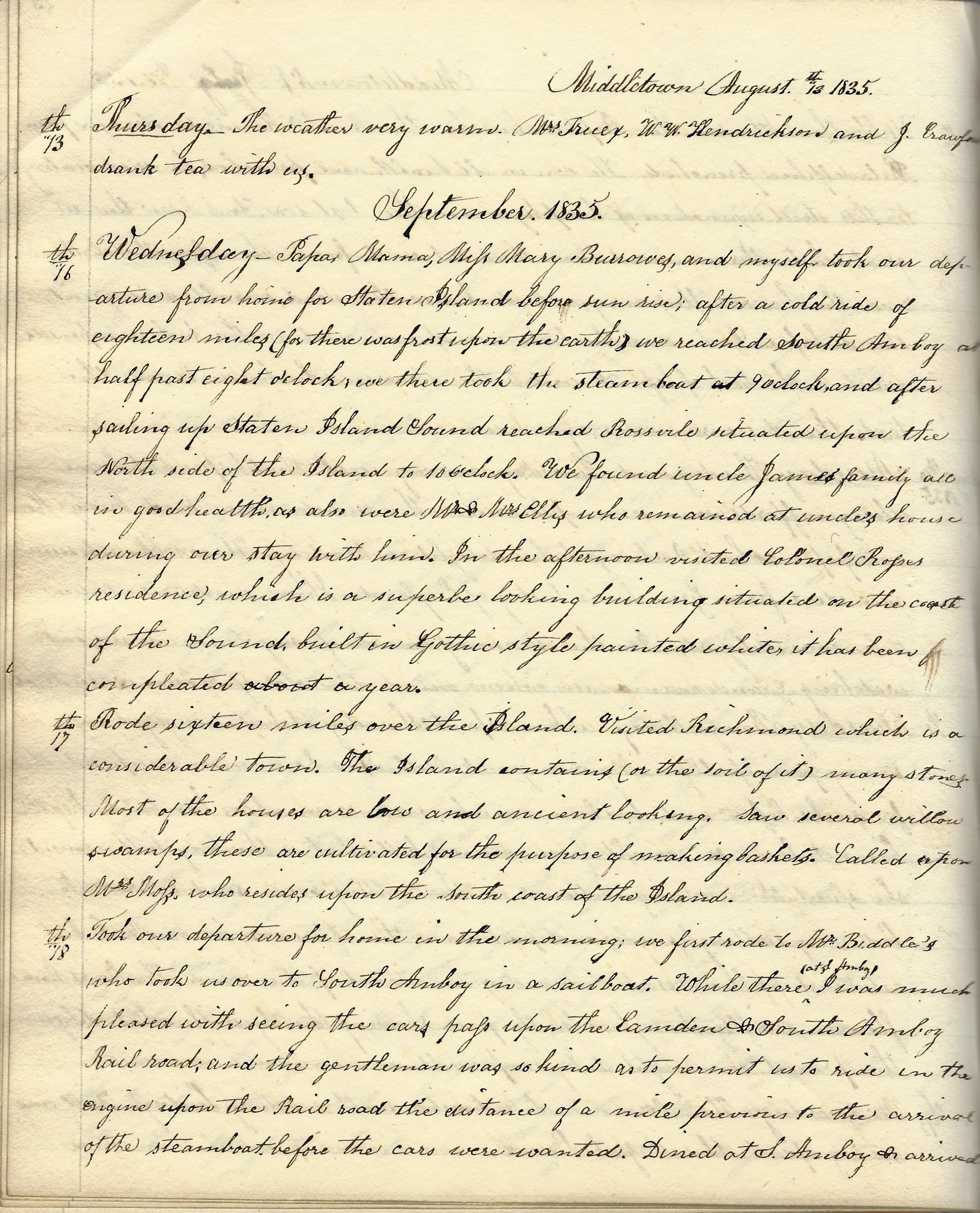
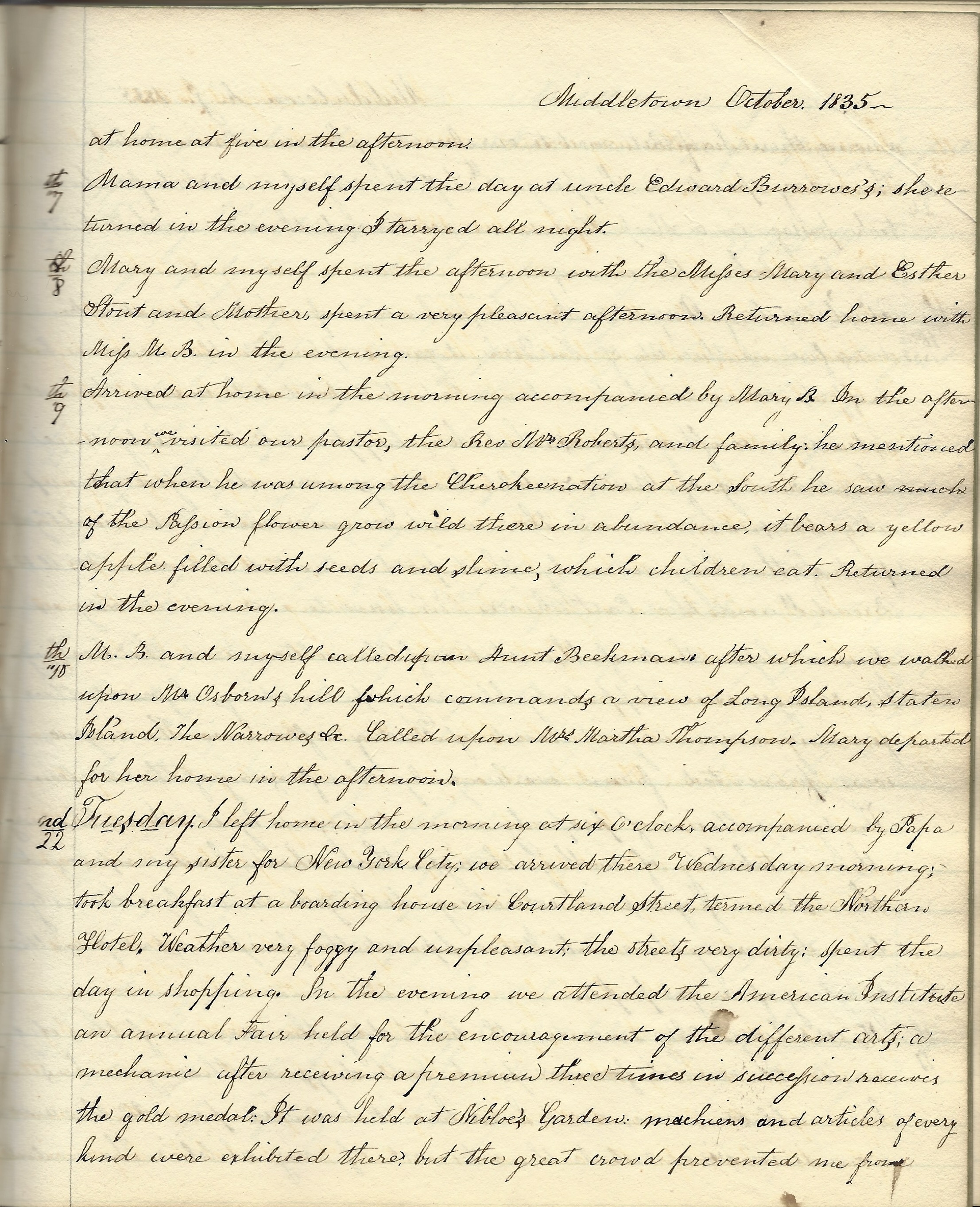
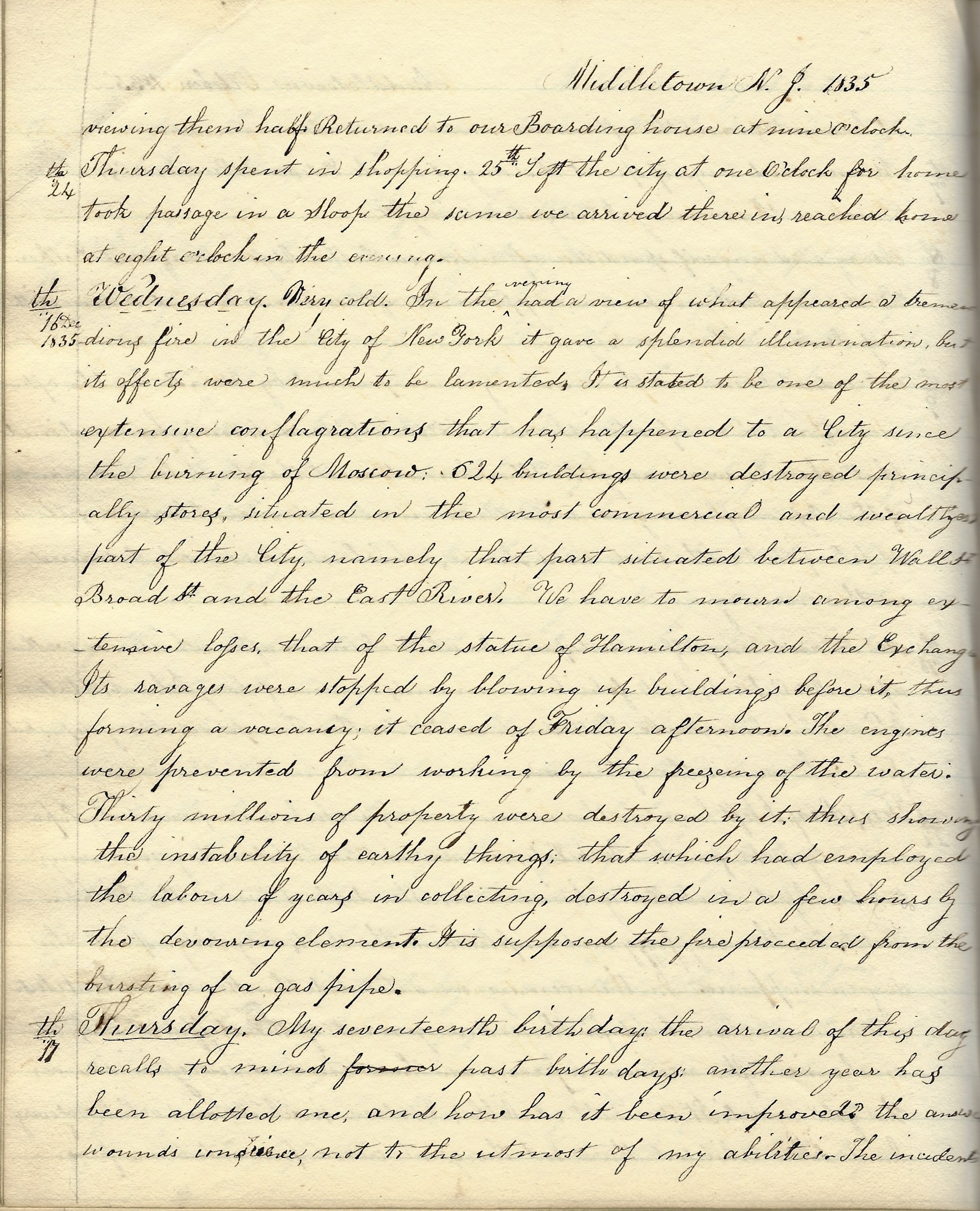
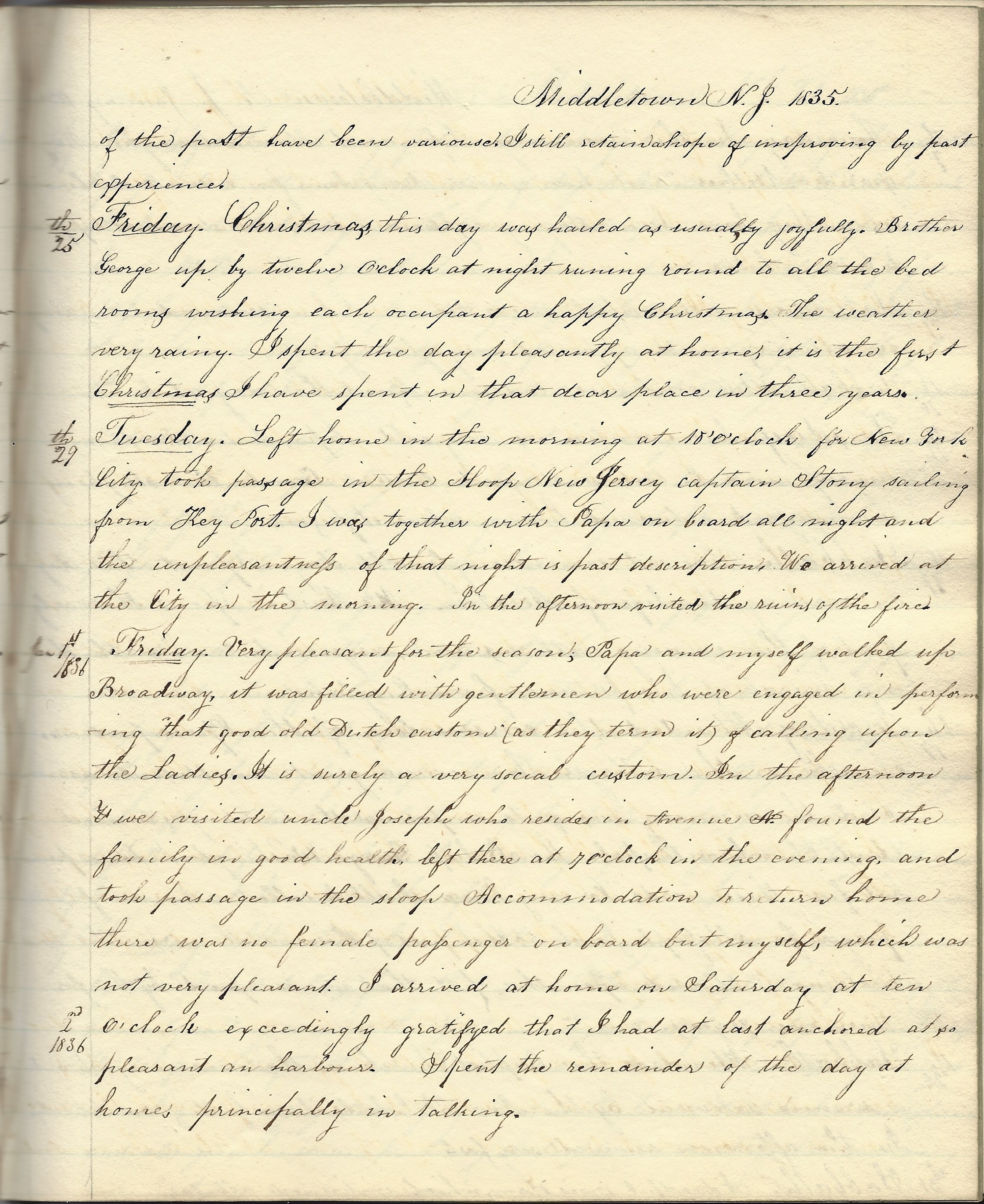
This journal was kept by Lavinia Murray (1818-1896), the daughter of William W. Murray (1784-1865) and Mary Crawford (1800-1853) of Middletown, Monmouth county, New Jersey. Lavinia commenced her journal on 24 May 1834 when she was 15 years old. Her last entry, on the last page of the journal, was dated in 1842 when she 23. She married James M. Hoagland (1818-1857), a New York Merchant, on 26 August 1847 and resided in New Jersey or New York City the remainder of her life, leaving no children. She died in 1896.
Lavinia was the oldest of three children. Her siblings were Eleanor Crawford Murray (1821-1858) and George Crawford Murray (1827-1884). George graduated from Yale in 1845, studied law in New York City and was admitted to the bar in 1849 but gave up law to manage two family farms. [Source: The Scott Family of Shrewsbury, page 20]
The following biographical sketch of the Murray family, most of it devoted to Lavinia’s younger brother, George, appears in Monmouth County Archives, published in 1917.
Lavinia’s father, “William W. Murray, son of William and Anna (Schenck) Murray, was born November 30, 1794, and died June 1, 1865. His education was the ordinary one of a country school, but he early displayed especial ability as a penman, bookkeeper and accountant. He became associated in business with his father in 1815, the firm name being William Murray & Son, and upon the death of the latter, continued the farming and mercantile interests alone. When the towns of Keyport and Red Bank were developed, all business was taken from Middletown, and the farm was rented to successive tenants, who allowed it to fall into bad condition. For many years Mr. Murray was postmaster of Middletown, and a trustee of the Baptist church, holding this office until his death. He and his wife greatly appreciated the value of a good education, and gave their children the best advantages that lay in their power.
Mr. William W. Murray married, November 20, 1817, Mary Crawford, born January 12, 1800, a daughter of George and Eleanor Crawford; great-great-granddaughter of the first John Crawford, of Middletown; and a descendant of Roelif Martinse Schenck, of Long Island; also of the Rev. Obadiah Holmes, of Rhode Island; and of Sheriff Daniel Hendrickson. Children: Lavinia, married James M. Hoagland, of the Dutch family of that name in Somerset county, New Jersey; Eleanor Crawford, married Henry G. Scudder, of Huntington, Long Island, a descendant of Thomas Scudder, the first emigrant of that name in Salem in 1635; George Crawford Murray, only son and youngest child of William W. and Mary (Crawford) Murray, was born in Middletown, Monmouth county, New Jersey, January 3, 1827, and died there, November 24, 1884. He was but three years of age when his education was commenced in the school conducted by Mr. Austin, in a small building located in Dr. Edward Taylor’s garden, opposite the east side of the Episcopal church, in Middletown. He also studied under Mr. Austin, in the old Franklin Academy. At the age of thirteen years he became a student at the Washington Institute, in New York City, and was there prepared for entrance to Yale College, now Yale University, under the preceptorship of Timothy Dwight Porter. He felt that his especial weakness was mathematics, and with the energy and ambition so characteristic of him from his earliest years, determined to pursue this study by himself. So successful was he in his efforts in this direction that, one year later (1841), he passed his entrance examination to Yale in this branch successfully. September 30, 1843, he received “Professor Playfair’s Works” from the President and Fellows of Yale to George C. Murray, for excelling in the Solution of Mathematical Problems.” In 1845 he was graduated as the youngest member of his class.
By means of living plainly and economically upon the competent allowance he received from his father during his college years, he was enabled to put aside a handsome sum of money which he devoted to the purchase of standard works for a well chosen library. Science and engineering would have been the branches chosen by Mr. Murray had he followed his own inclinations, and he was eminently fitted to achieve success in these fields. But the wishes of his parents were ever a paramount consideration with him, and it was their desire that he fit himself for either a legal or medical profession. Having decided upon law, he studied for almost a year with Peter D. Vroom, of Trenton, New Jersey, and then with the Hon. George Wood, of New York City, and was admitted to practice in the latter State, January 8, 1849. He then returned to Yale College, and there took a post-graduate course in analytical chemistry, in the new scientific department of the college.
Returning to his home in August, 1850, he again yielded to the solicitations of his parents, who desired him to abandon professional work of any kind, and devote himself to agricultural pursuits. Repugnant as the idea was to his finely trained and developed mind, his filial devotion gained the day and he became a farmer. The energy and earnestness which had characterized his years of study did not fail him in this new field of industry, and he pursued all the distasteful details of farm life with thoroughness and a careful attention to detail, and applied to them original ideas, developed in his scientifically trained mind. Many of these ideas were adopted by others, and some of them changed slightly to meet altered conditions, are in use at the present time. While superintending some work in a marl pit, at Groom’s Hill, on his farm, Mr. Murray, in February, 1858, had one of his feet crushed by the caving in of a mass of frozen earth, and, as Dr. Willard Parker, the eminent surgeon of New York who was called in consultation, said: “Young man, your clean, temperate life will save you and prevent the loss of that foot.” The accident, however, caused a permanent lameness which necessitated the use of crutches for some time, and he was never able to walk without the aid of a strong cane. The larger part of his work on the farm was accomplished, thereafter, on horseback. Throughout his life he was an intense sufferer as a result of this accident, but bore his sufferings with admirable patience, and was always cheerful and uncomplaining.
Mr. Murray was a keen observer of current events, and for some years prior to the outbreak of the Civil War he compiled several volumes of notes of speeches made by himself and others, having a bearing on the subject, and these are of great local interest to Monmouth county. He was frequently the orator of the day on public occasions, one of these, on which he delivered a particularly stirring and patriotic address, being May 26, 1861, when the people of Middletown erected a huge flagpole and raised a handsome flag. At the celebration, July 4, 1861, Mr. Murray made an eloquent and impassioned speech in favor of an undivided Union. On numerous other occasions he was equally convincing and patriotic.
While a strong supporter of Democratic principles, Mr. Murray never allowed himself to be bound by party ties, but had the courage of his convictions, and did not hesitate to voice them, even at the expense of personal disadvantage. He was elected to the Legislature of New Jersey in the fall of 1861 and took an active part in the sessions. He served as a member of the committee on education, and the committee on the State Library. During this session the railroad companies were active in their efforts to obtain legislation which should be to their advantage, and in pursuance of this idea many fine dinners were given, to which Mr. Murray was also invited. After repeated and constant refusals on his part he was notified that if he did not come of his own accord, he would be compelled to attend by means of force. His reply was “that he would not accept the invitation; that he would be in his room at the appointed hour, but he wished to inform them that the first man who attempted to lay his hands upon him would do so at his own peril.” He remained unmolested until the close of the term of office. While he was debarred from active service in the army or navy by reason of his lameness, Mr. Murray was nevertheless an active worker in the cause of the Union. By means of public addresses, by public debate, in which he never lost his self control, his influence was wide spread and a beneficial one.
When the severity of the Draft Act of 1863 fell upon the poor men of his community, mostly upon the poor fishermen and the naturalized Irishmen, they appealed to him, their friend, for aid, knowing well that if there was help for them it would be found. In February, 1864, he obtained the endorsement of several prominent men of the town, and was thus enabled to draw a large sum of money from the Middletown Bank to be used for the purchase of substitutes for the poor men of the town who had been drafted, and whose families would be threatened with starvation were the only provider for the family taken from them. Mr. Murray strapped this “bounty money” securely about his body and set out for Washington, February 27, 1864. During this trip of nearly two weeks he was almost afraid to snatch a few moments for much needed rest, owing to the desperate character of men who followed him constantly, in the hope of securing this money. In spite of all his efforts, Mr. Murray was not able to secure the exemption of all the men for whom he pleaded, and upon his return to his home he made immense sacrifices in his endeavor to support the families who were left destitute. A large share of his crops was bestowed in charity of this nature, and upon him was bestowed the well earned and well deserved title of the “Poor man’s friend.” As a judge of election after the war, Mr. Murray accepted those voters who were eligible according to the laws then in force. This was against the ideas of some of the politicians and he was advised to leave his home, as his enemies would have him indicted for accepting illegal votes. He answered: “I will be right here on my place. If there is a grand jury in Monmouth county that will indict me for doing my duty, I am willing to stand my trial.” And he remained at home until notified that the grand jury had refused to listen to the complaint against him.
During his absence in Washington he had been elected assessor for the township of Middletown, an office he filled with ability for a number of years. When land became valuable along the Shrewsbury river for summer residences, Mr. Murray with his usual interest in behalf of the poorer classes, found that the small owners were bearing the larger share of the taxation, and he determined to rectify this matter. This resulted, as might have been foreseen, in the making of many enemies among the richer owners, but this did not deter Mr. Murray from carrying out his intention, which he did successfully.
Upon the death of his father in 1865, Mr. Murray succeeded him as trustee of the Middletown Baptist Church, being the third generation in a direct line to hold this office, and in 1872, he was elected clerk of the board of trustees. In order to carry out the provisions of the will of his father, Mr. Murray was obliged to mortgage the farm, and his fortune was further decreased by the development of farming interests in the south and west. He abandoned conservative farming as being unproductive of pecuniary results, and commenced raising products easy of culture and requiring the least amount of labor. In many instances he supplanted the labor of human hands by machinery of his own invention, and during the period of ten years following the Civil War he made many experiments along the lines of increasing the commercial value of the products of his farm. A number of the experiments which he then made have since that time been taken into practical use, and have been productive of excellent results. He was neither extravagant nor a speculator, but in the scope of his work he was too far in advance of the times. He foresaw the fact that New Jersey would become a residential and commercial State rather than an agricultural one, but the time was not ripe for the successful carrying out of his ideas. When Monmouth county suffered heavy losses by the embezzlement of some tax collectors, Mr. Murray was active in the prosecution of George W. Patterson and Alvan B. Hallenbeck, tax collectors of Freehold and Middletown townships. In this matter he was acting deliberately against his private interests, as he was one of the bondsmen of Mr. Hallenbeck, but it was one of his fixed principles to place the public welfare above his private affairs, no matter at what cost to himself. Few believed that he was honest in his conduct of this matter, but he was upheld by the courage of his convictions. Having sustained other losses about the same time, Mr. Murray was unable to pay off the mortgage on his farm, and this was foreclosed in 1880. Bereft of all but his household goods, he again bravely took up the struggle for an existence, handicapped as he was of lameness and approaching old age. This struggle, brave as it was, lasted but a few years, as he died on Thanksgiving Day, 1884.
Mr. Murray married, February 27, 1855, Mary Catherine Cooper, born Mary 20, 1833, a daughter of James and Rebecca (Patterson) Cooper; granddaughter of George and Abigail (Oakley) Cooper, of Westchester county, New York…”
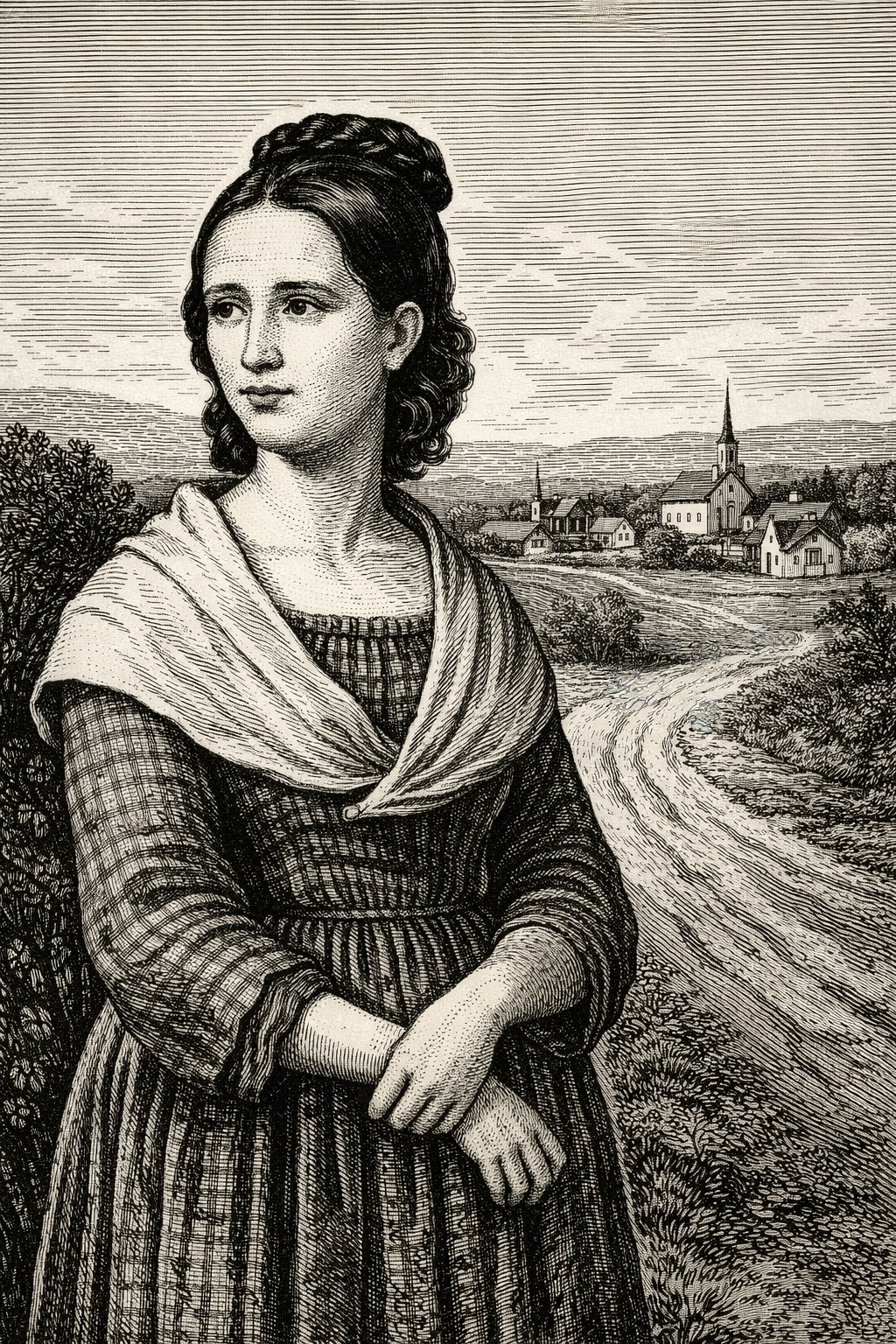
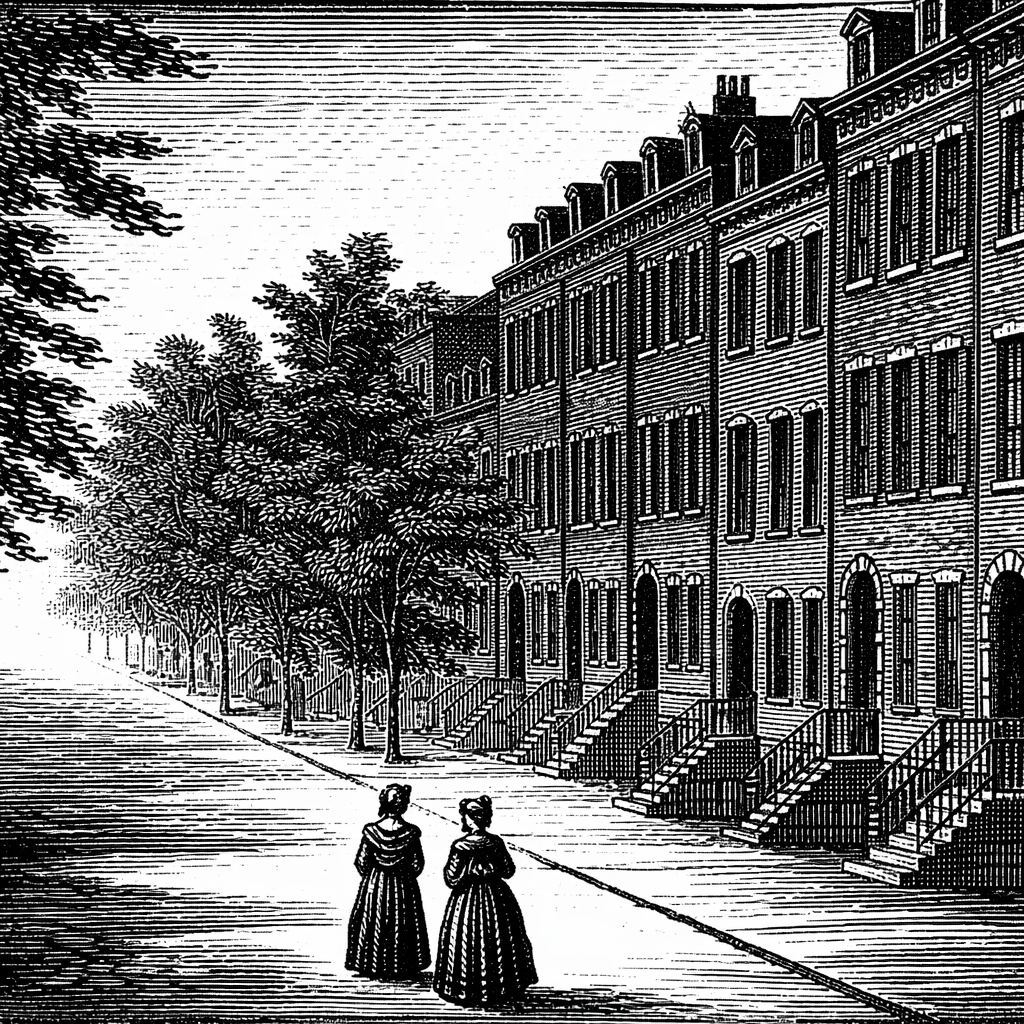
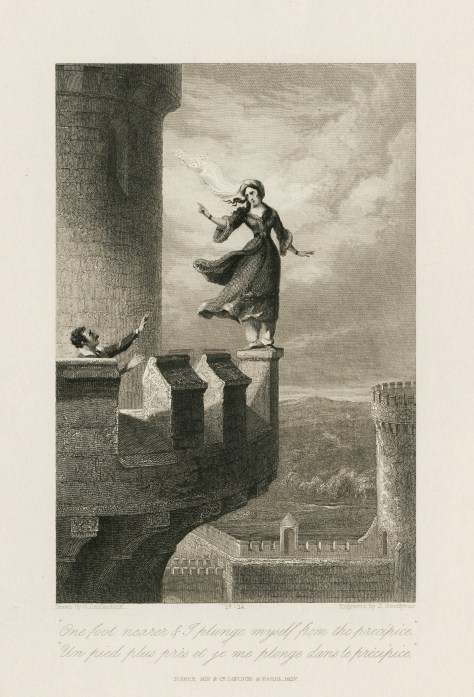
I could find no images of Lavinia; the woodcut depiction of a young woman standing on the outskirts of Middleton, New Jersey, in the 1830s is purely conjectural.
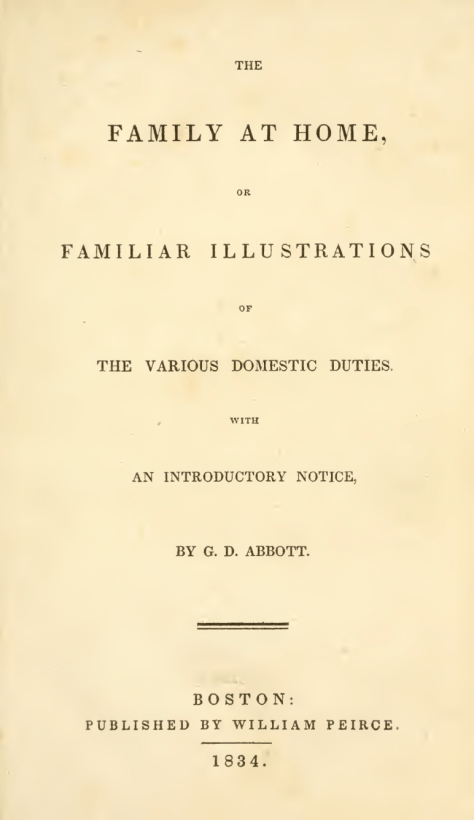
The Family at Home, by G. D. Abbott, published in 1834
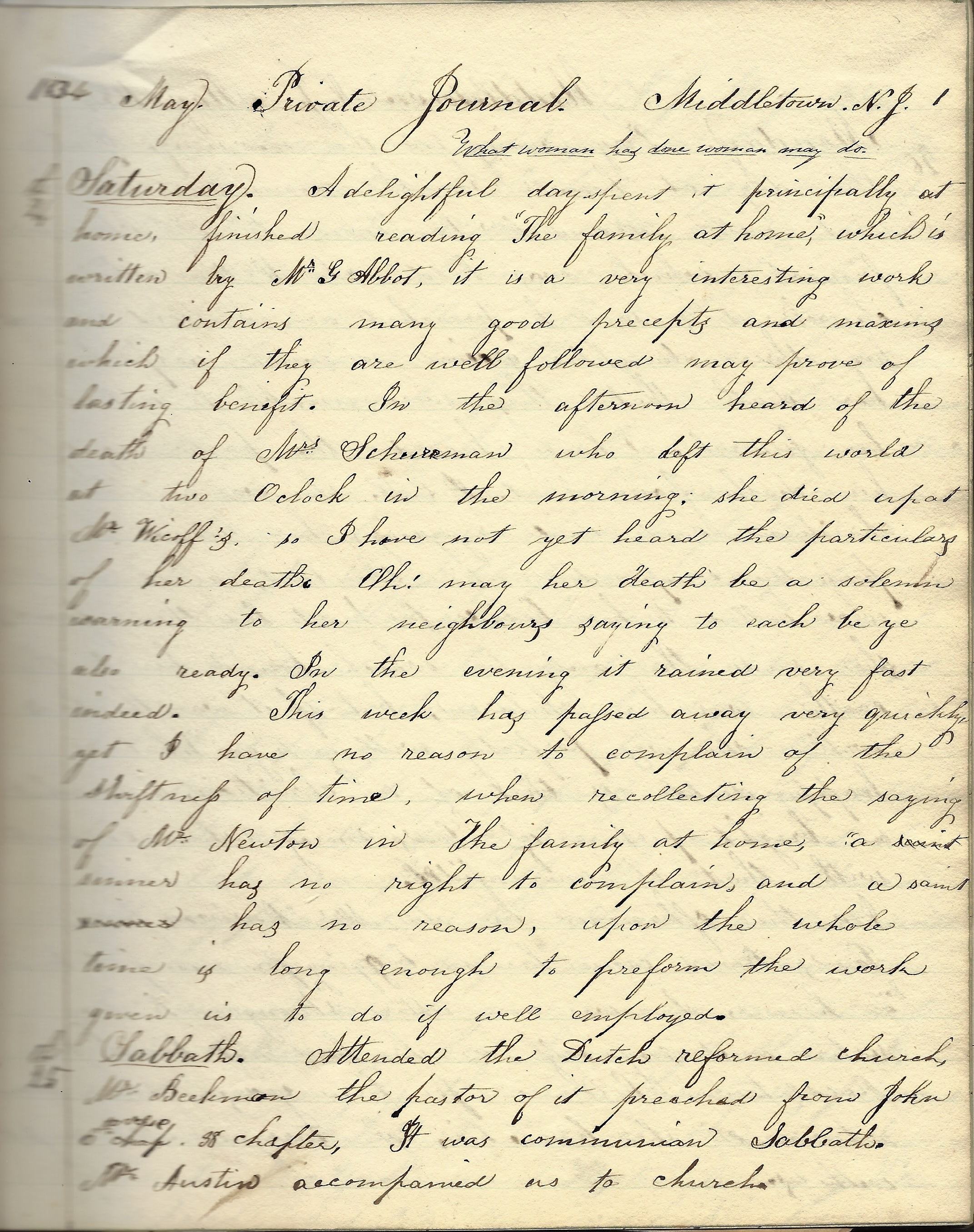
24th Saturday. A delightful day. Spent it principally at home. Finished reading “The Family at Home” which is written by Mr. G[orham D.] Abbott. It is a very interesting work and contains many good precepts and maxims which if they are well followed may prove of lasting benefit. In the afternoon heard of the death of Mrs. [Julia Anne Conover] Schureman who left this world at two o’clock in the morning. She died up at Mr. [Nathaniel S.] Wyckoff’s [in Freehold, N. J.] so I have not yet heard the particulars of her death. Oh! may her death be a solemn warning to her neighbors saying to each be ye also ready. In the evening it rained very fast indeed. This week has passed away very quickly yet I have no reason to complain of the shriftness of time, when recollecting the saying of Mr. [Mr. John] Newton in The Family at Home, “A sinner has no right to complain and a saint has no reason.” Upon the whole, time is long enough to perform the work given us to do if well employed.
25th Sabbath. Attended the Dutch Reformed Church. Mr. Beekman, the pastor of it preached from John, 6th Verse, 38th Chapter. It was communion Sabbath. Mr. Austin accompanied us to church.
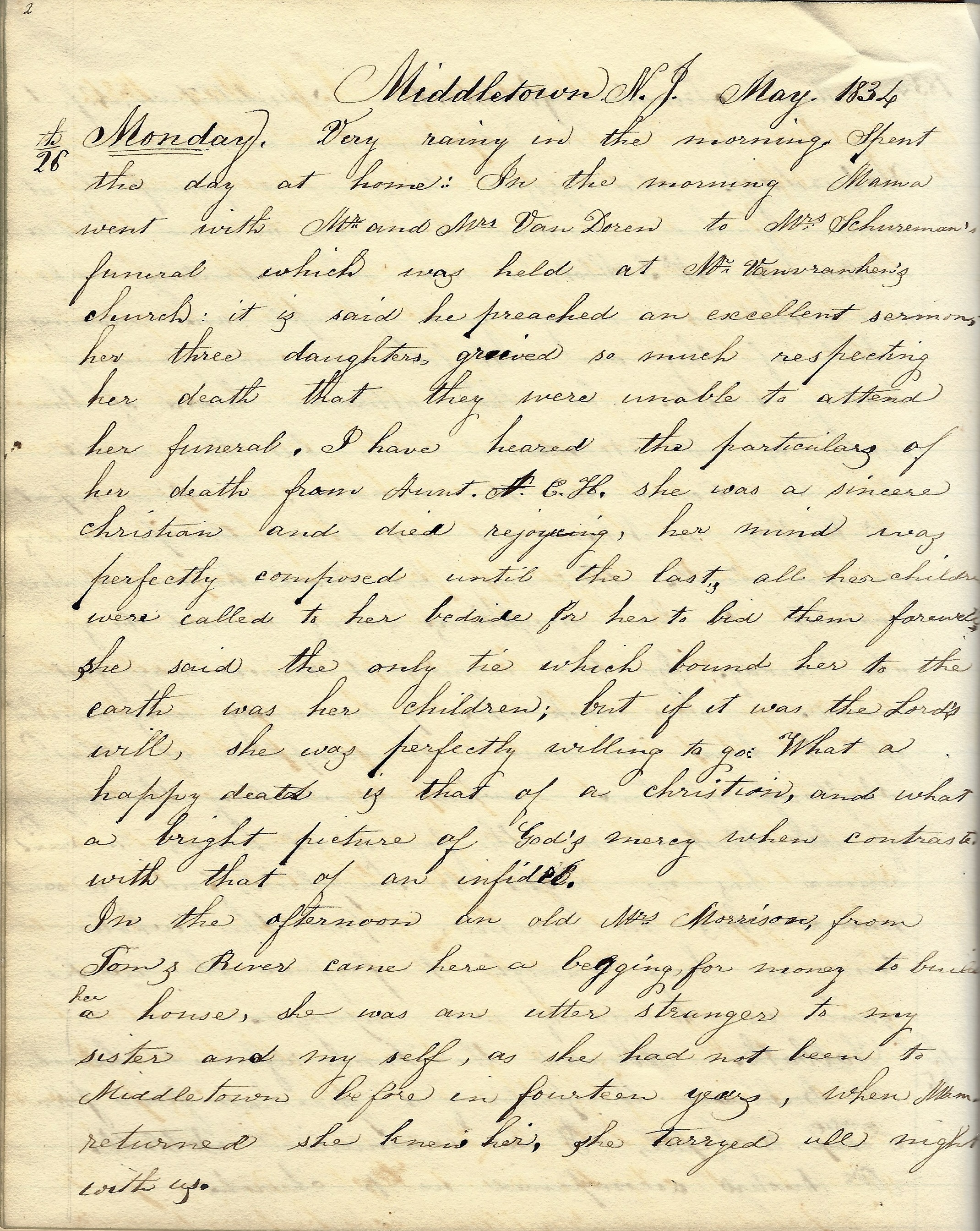
Middletown, N. J. May 26, 1845, Monday. Very rainy in the morning. Spent the day at home. In the morning, Mama went with Mr. and Mrs. Van Doren to Mrs. Schureman’s funeral which was held at Mr. Vanvranken’s church. It is said he preached an excellent sermon. Her three daughters grieved so much respecting her death that they were unable to attend her funeral. I have heard the particulars of her death from Aunt A. C. H. She was a sincere christian and died rejoicing, her mind was perfectly composed until the last. All her children were called to her bedside for her to bid them farewell. She said the only tie which bound her to the earth was her children, but if it was the Lord’s will, she was perfectly willing to go. What a happy death is that of a christian, and what a bright picture of God’s mercy when contrasted with that of an infidel.
In the afternoon an old Mrs. Morrison from Tom’s River came here a begging for money to build her a house. She was an utter stranger to my sister and myself as she had not been to Middletown before in fourteen years, When Mama returned, she knew her. She tarried all night with us.
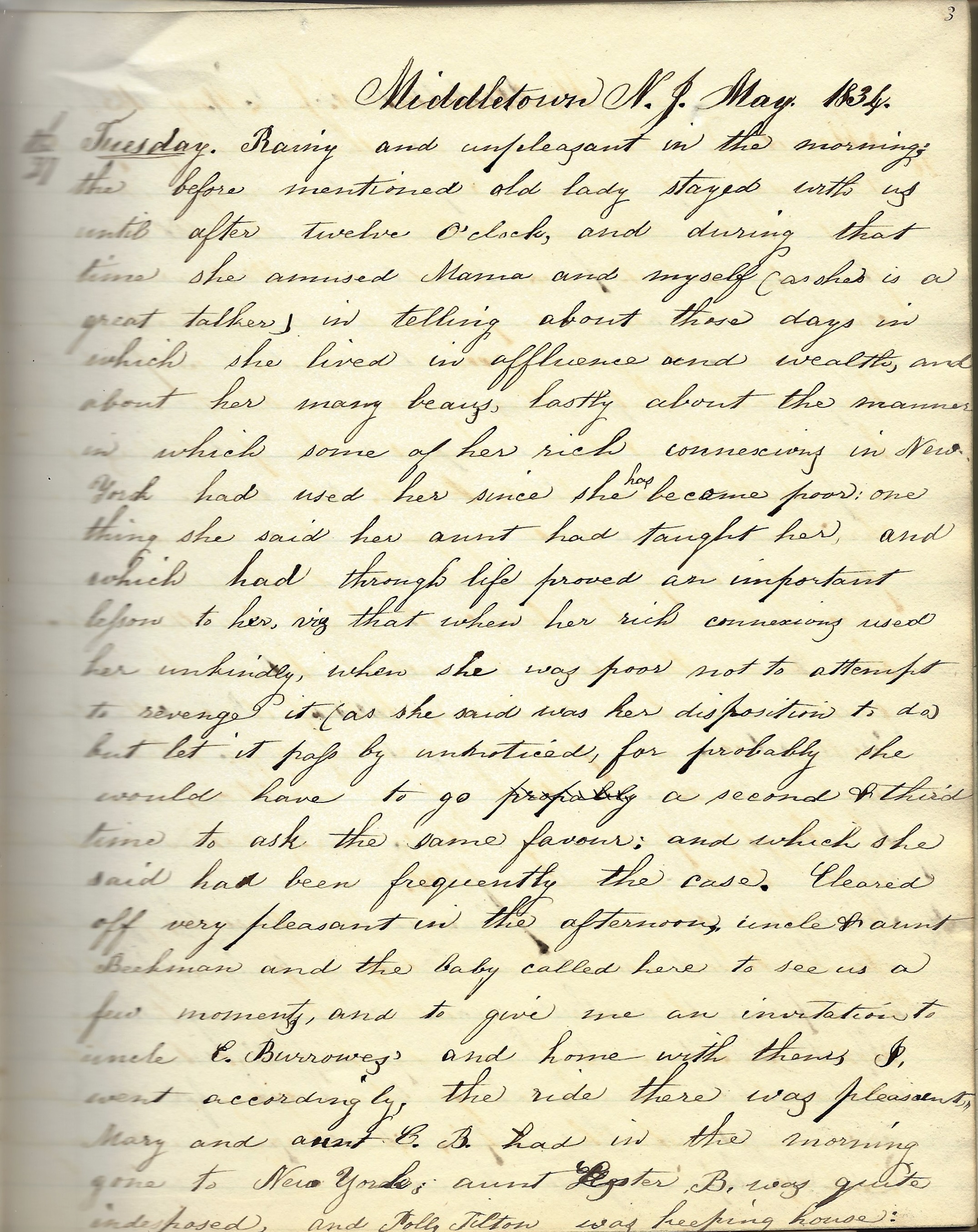
Middletown, N. J. May 27, 1834, Tuesday. Rainy and unpleasant in the morning. The before mentioned lady stayed with us until after twelve o’clock and during that time she amused Mama and myself (as she’s a great talker) in telling about those days in which she lived in affluence and wealth, and about her many beaus. Lastly about the manner is which some of her rich connections in New York had used her since she became poor. One thing she said her aunt had taught her, and which had through life proved and important lesson to her—viz. that when her rich connections used her unkindly when she was poor, not to attempt revenge. It (as she said was her disposition to do), but let it pass unnoticed, for probably she would have to go a second or third time to ask the same favor, and which she said had been frequently the case. Cleared off very pleasant in the afternoon. Uncle and aunt Beekman and the baby called here to see us a few moments and to give me an invitation to Uncle C. Burrowes’ and home with them. I went accordingly. The ride there was pleasant. Mary and aunt E. B. had in the morning gone to New York; aunt Ester B. was quite indisposed and Pollo Tilton was keeping house. We stayed there only a few moments and returned to Grand papa’s where I spent the afternoon. Aunt A. E. H. was there also. Grandpapa’s health is no better. Had a pleasant visit and returned home with aunt A. E. H. Shecalled sometime at our house.
Have learned today that a few drops of any perfumed oil will secure [ ] from mould and damp. Russian leather, which is perfumed by the tar of the birch tree, never moulders, and merchants suffer large bales of this leather to remain in the London docks knowing it cannot sustain injury from damp. It was known to the ancients the Romans used oil of cedar to preserve valuable M. C. L. Retured early.
Wednesday 28th. Rained very fast all day. Remained at home all day.
Thursday 29th. Again a rainy day. E & G. [Eleanor & George] did not attend school as the weather prevented.
Friday 30th. Clear and pleasant, and it is the first day we have had so this week. It is truly delightful to have pleasant weather again after a long storm. Spent the day at home, principally in sewing and doing little errands about the house for we are now engaged in that unpleasant occupation cleaning house, but hope to finish tomorrow.
Middletown, N. J. May 31, 1834, Saturday. A pleasant day. Spent the morning in practicing my music. I have made a resolution to practice it much more that I have done formerly and hope I will have perseverance enough to follow it. At ten o’clock, Mama went up to Grand Papa’s and spent the day there. His health does not continue to amend. In the afternoon, Aunt E. Laten and her son called here for the purpose of carrying home some potatoes and a variety of old articles which I designate by the name of trumpery and which came from the other house, I was much rejoiced to see her take them away.
Sabbath, June 1st 1834. Very rainy all day. Did not attend church. Heard in the afternoon that grandpapa’s health remains the same.
Monday 2nd. A very pleasant day. This day is designated by the name of Training Day. The soldiers marched down as far as here followed by nearly all the small boys of the village. The number of soldiers were few compared to what it has been formally. I have eaten some strawberries for the first time this year. E. P. A. Hendrickson spent the afternoon here. Mr. Austin also called to inform the little girls there would be no school this week as his presence was requisite in New York City to sign a paper respecting his expected fortune which is coming from England. Walked nearly home with E. & A.H. Retired early.
Tuesday 3rd. A warm and pleasant day. The weather now really beginning to feel like summer. Mrs. [Rachel Bowne] Winter who died on Sabbath last was buried today.
Wednesday 4th. Received in the afternoon calls from Uncle Timothy and Aunt H. White, Catharine, Morford, and Aunt A. C. Hendrickson. Just at evening there fell a delightful shower of rain.
Thursday 5th. Rainy all day.
Friday 6th. Spent the morning in reading. Uncle Beekman and Miss C. D. spent the afternoon here.
Saturday 7th. Very warm. Have read today a description of Mr. Wort’s [?] death written in two long letters by his third daughter. They were very beautifully written. Mr. Austin who has returned from New York spent part of the afternoon here.
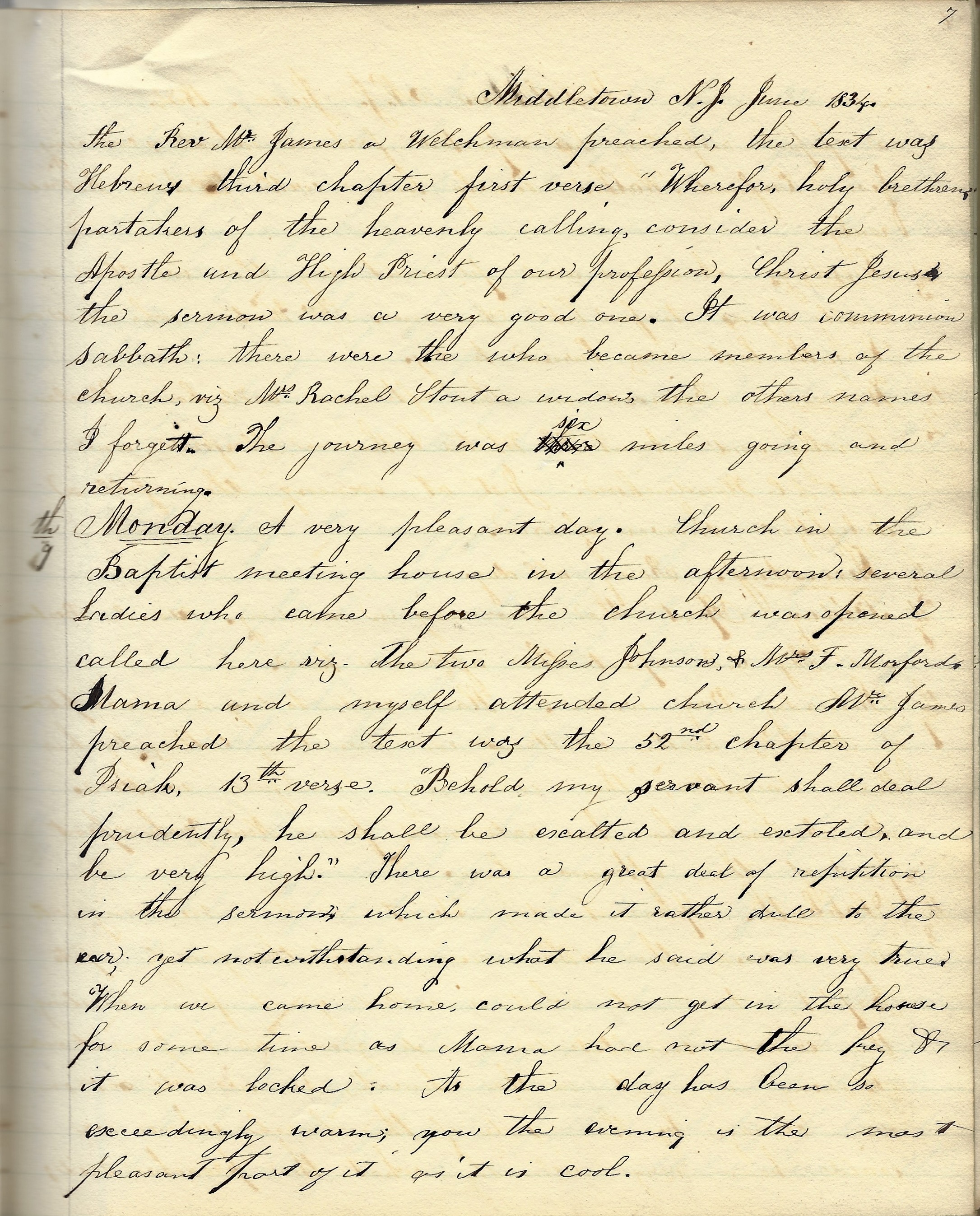
Sabbath 8th. A pleasant day. Went in the morning with Papa and the other members of the family up to Baptisttown [Later called Holmdel Village] to what is called Great June Meeting. The multitude was so great as to prevent our obtaining a seat in the church [the Upper Meeting House of the Baptist Church], so we all sat in our carriage by the side of the church where we could hear very distinctly what the preacher said. The Rev. Mr. James, a Welshman, preached. The text was Hebrews, third chapter, first verse. “Wherefore, holy brethren, partakers of the heavenly calling, consider the Apostle and High Priest of our profession, Christ Jesus. The sermon was a very good one. It was communion Sabbath: there were three who became members of the church, viz—Rachel Stout, a widow; the others’ names I forget. The journey was six miles going and returning.
Monday 9th. A very pleasant day. Church in the Baptist Meeting House in the afternoon. Several ladies who came before the church was opened called here, viz—the two Miss Johnsons and Mrs. F. Morford. Mama and myself attended church. Mr. James preached. The text was the 52nd Chapter of Isiah, 13th Verse. “Behold my servant shall deal prudently. He shall be exalted and extolled, and be very high.” There was a great deal of repetition in the sermon which made it rather dull to the ear, yet notwithstanding what he said was very true. When we came home, could not get in the house for some time as Mama had not the key & it was locked. As the day has been so exceedingly warm, you [know] the evening is the most pleasant part of it as it is cool.
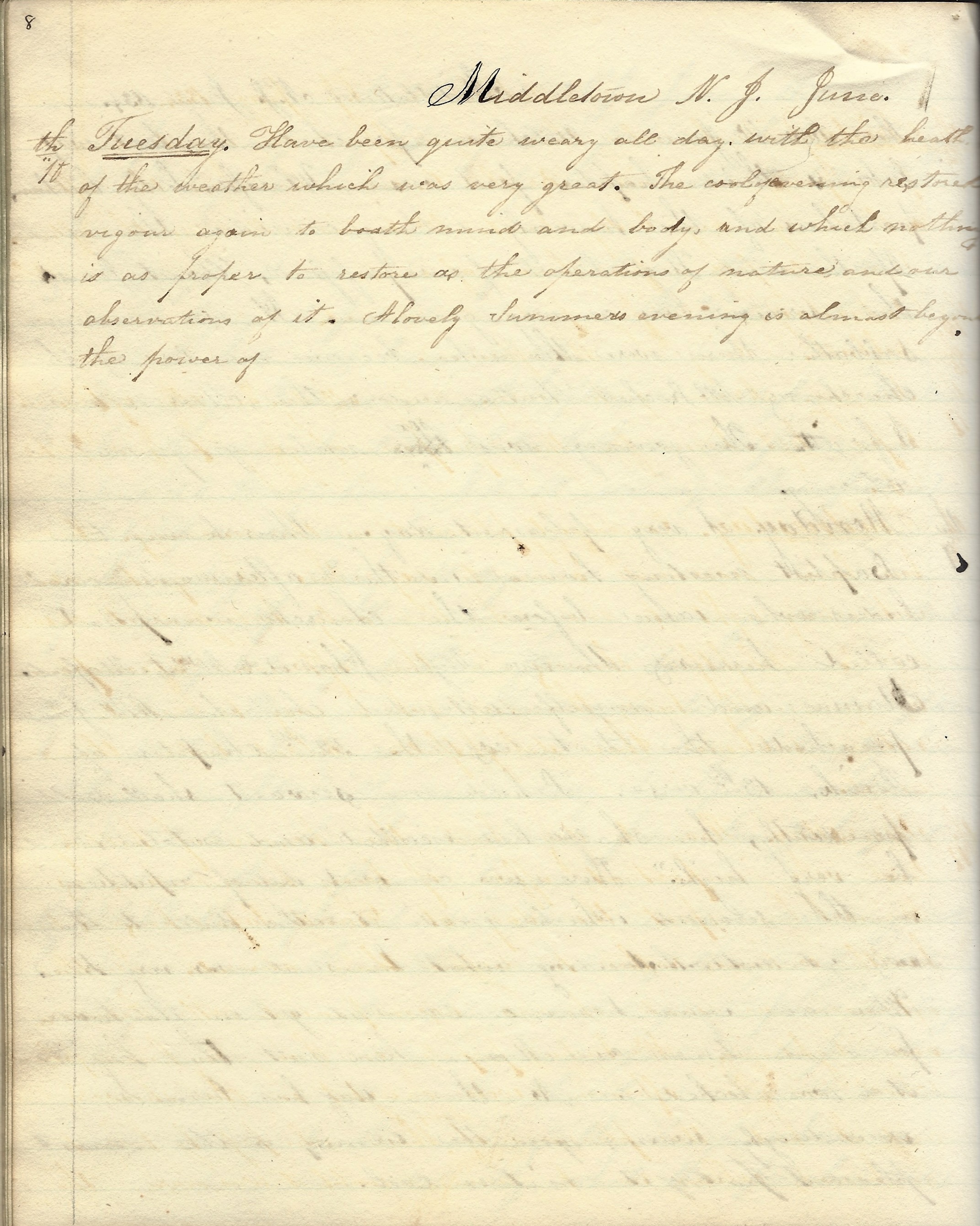
Tuesday 10th. Have been quite weary all day with the heat of the weather which was very great. The cool of evening restored vigor again to boost mind and body, and which nothing is as proper to restore as the operation of nature and our observations of it. A lovely summer’s evening is almost beyond the power of [unfinished thought; remainder of page blank]
Friday 13th. Much cooler than usual. Spent the day at home principally in sewing. Brother George came home in the afternoon with his eye very badly hurt. Mr. Austin called in the afternoon. There also fell a fine shower of rain.
Saturday 14th. Nothing particular occurred.
Sabbath 15th. Rainy in the afternoon.
Tuesday 17th. Arose quite early, Rainy all day. In the afternoon, Papa left home for the purpose of going to New York City.
Wednesday 18th. Exceedingly pleasant in the morning. The bees have swarmed again today. This was quite an interesting sight to me who had only witnessed it once before. Delightful showers in the afternoon accompanied by unusually heavy thunder which may be called rather sublime than delightful. Retired later than usual.
Thursday 19th. Have today had the honor of holding that very important office of being housekeeper as Mama has spent the day at Grand Papa’s house. His health continues rather to decline than amend. In the afternoon as usual, showers accompanied with thunder and lightning. Mr. Austin’s pupils on their way home from school in the afternoon were caught in the shower and I had the pleasure of having those who pass by hereto go home, calling in to remain until it was over. The following is the names of those who called—viz. E. A. & G. Hendrickson, M. and D. Willet, C. Truex who is Mr. Austin’s assistant in teaching the young idea how to shoot, and Edgar Henrickson. I was quite amused with their conversation. I have learnt that a bee hive should be rubbed with cream and sugar, or with molasses, salt, & peach tree leaves before the bees are put in it.
Friday 20th. As usual, showers accompanied with thunder and lightning. the bees swarmed again which makes four swarms we have had from the hive that came from the other house. In the afternoon papa returned home from New York. Learnt the melancholy news of the death of the illustrious General Lafayette, which news was received at the city on yesterday. He died at a quarter of five o’clock on the morning of May 20th 1834. The venerable general was born September 1st 1757 and was nearly 77 years old when he died. In him America loses an early, faithful, and disinterested friend and champion of her independence, and her children may well weep for a great man is departed.
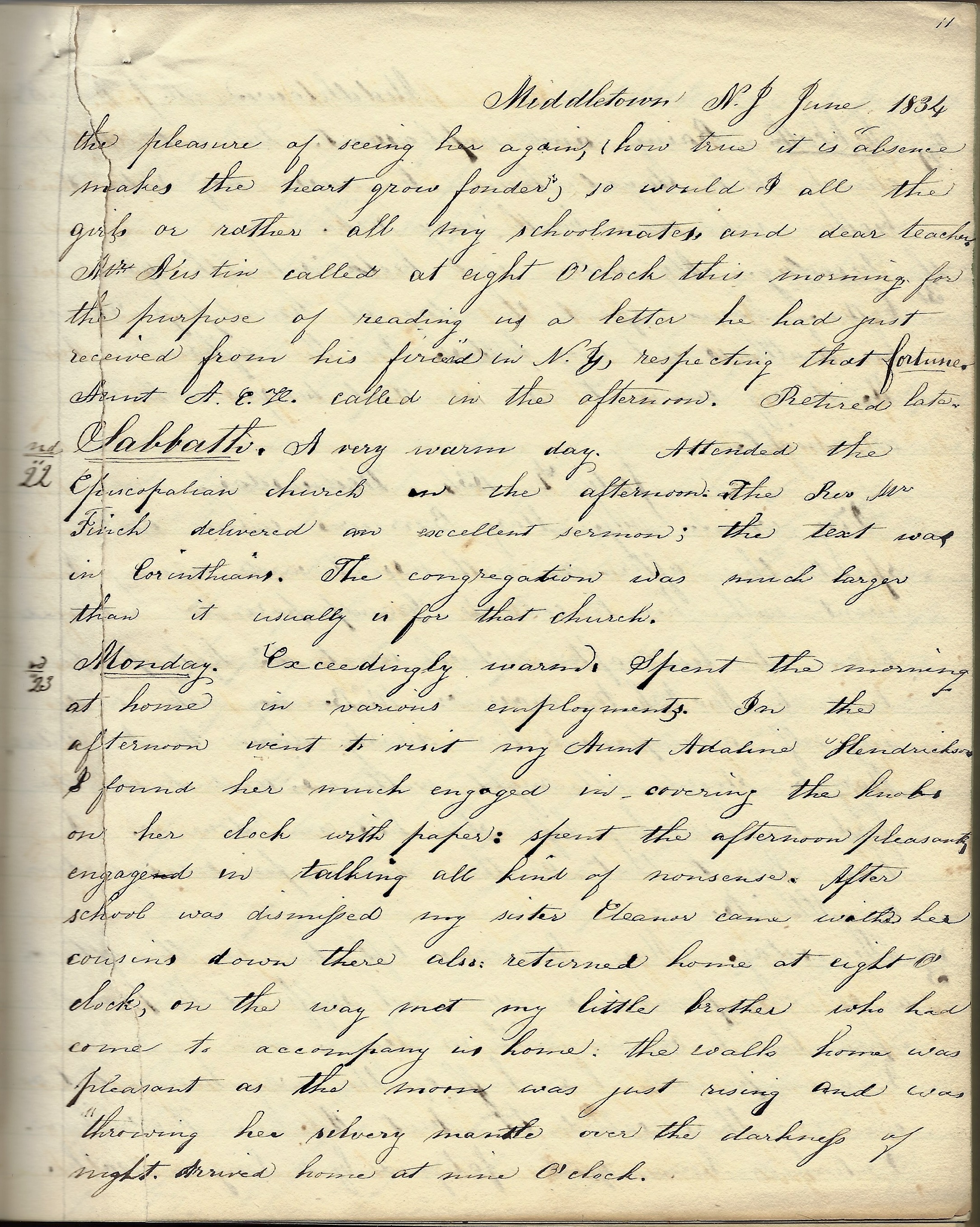
Saturday 21st. The first perfectly clear day we have had this week. Papa had his new articles carted up from the sloop. To mu great joy he brought me a note from my dear friend Amelia. She enjoys very good health. I would like very much to have the pleasure of seeing her again. How true it is—“absence makes the heart grow fonder.” So would I all the girls, or rather all my schoolmates and dear teachers. Mr. Austin called at eight o’clock this morning for the purpose of reading us a letter he had just received from his friend in New York respecting that fortune. Aunt A. E. H. called in the afternoon. Retired late.
Sabbath 22nd. A very warm day. Attended the Episcopalian church in the afternoon. The Rev. Mr. Finch delivered an excellent sermon. The text was in Corinthians. The congregation was much larger than it usually is for that church.
Monday 23rd. Exceedingly warm. Spent the morning at home in various employments. In the afternoon went to visit my Aunt Adaline Hendrickson. I found her much engaged in covering the knobs on her clock with paper. Spent the afternoon pleasantly engaged in talking all kind of nonsense. After school was dismissed, my sister Eleanor came with her cousins down there also. Returned home at eight o’clock. On the way met my little brother [George] who had come to accompany us home. The walk home was pleasant as the moon was just rising and was “throwing her silvery mantle over the darkness of night. Arrived home at nine o’clock.
Sabbath 29th. Rainy and unpleasant. Did not attend church but stayed home to nurse my sister and brother who were both very sick.
Tuesday 31st. My sister and brother’s health grew better. Mama spent the day at Grandpapa’s house. His health is not any better. In the afternoon Aunt M. Murray came to see us and tarried with us all night.
Wednesday, July 2nd 1834. Very warm. Miss Mary Burrowes came and spent the afternoon with us. Towards evening I went with her to call to Grandpapa’s. We returned home to tea, after which Aunt M. left purposing to go to New York tomorrow. Mary Burrowes, my sister, and myself accompanied her nearly down to Mr. Willet’s. Mary B. stayed all night with us and it is the first time in her life she has ever done so. I have learnt that another name for Roses of Sharon is Althea.
Thursday 3rd. Mary Burrowes left here in the afternoon as all our persuasions were not sufficient to prevail upon her to remain with us longer. I accompanied her half of the way home, but on our way there called upon Aunt Adaline Hendrickson. I returned home quite fatigued by so long a walk.
Friday 4th [of July 1834]. I am again permitted to see this great day on which 58 years past our forefathers declared themselves independent. What happy emotions rise in our breasts by taking a retrospective view of such a noble action, and also by keeping this day in remembrance of the fourth of July 1776. In the afternoon attended a Temperance Meeting held at the Baptist church. It was a meeting of the different societies meet together, which belong to our township of Middletown. There was an address delivered by J. Patterson, Esq., Rev. Mr Woodhull, and Mr. Goble. The latter was from Chesapeakes. He delivered a very good address. It was proposed by our pastor, the Rev. Mr. [Thomas] Roberts [pastor of the Lower Congregation Baptist Church in Middletown, N. J.], that every person belonging to the society would endeavor to induce one person at least to join between this and the first of January next, and bring an account of it to the Temperance Meeting which is held on that day. I think this is an very good proposition and hope every member will use their utmost influence in complying with it. It was also proposed there would be another meeting held on the 3rd Tuesday in August for the purpose of forming out of the different societies of the townships, a township society. There are 446 persons belonging to the different societies of the township. I hope the Temperance cause will continue to succeed.
Saturday 12th. Attended the funeral of my dear Grandfather who immortal soul left its earthly habitation on yesterday to land, we hope, on that fair shore where tempests never beat, nor billows roar. During his last sickness his bodily sufferings were very excruciating, but they were ended by death. Oh! what a destroying Angel he is, but we ought all to feel the “Lord gave and the Lord hath taken away. Blessed be His name.” Our dear departed had been a resident with us eighty years and we feel it is hard—very hard, to part. But may we from it take warning and be ready. The Rev. Mr. Roberts preached from Job, “If I am wicked, woe unto me. If I am righteous, I shall not hold up my head.”
Wednesday 17th [16th]. Received an account by our New York paper of a dreadful riot occasioned by a mob who have risen in that city to put down the doctrine of amalgamation which is supported by the Rev. Dr. [Samuel Hanson] Cox, Rev. Mr. [Henry Gilbert] Ludlow, the Tappans [Arthur & Lewis Tappan] and others. The two first mentioned persons have had their churches demolished by the mob and have been obliged to leave the city. They have also demolished many of the African churches. The idea of a mob is dreadful yet I think they act from right motives. It is hoped the above mentioned opinions will soon be abolished in our country.
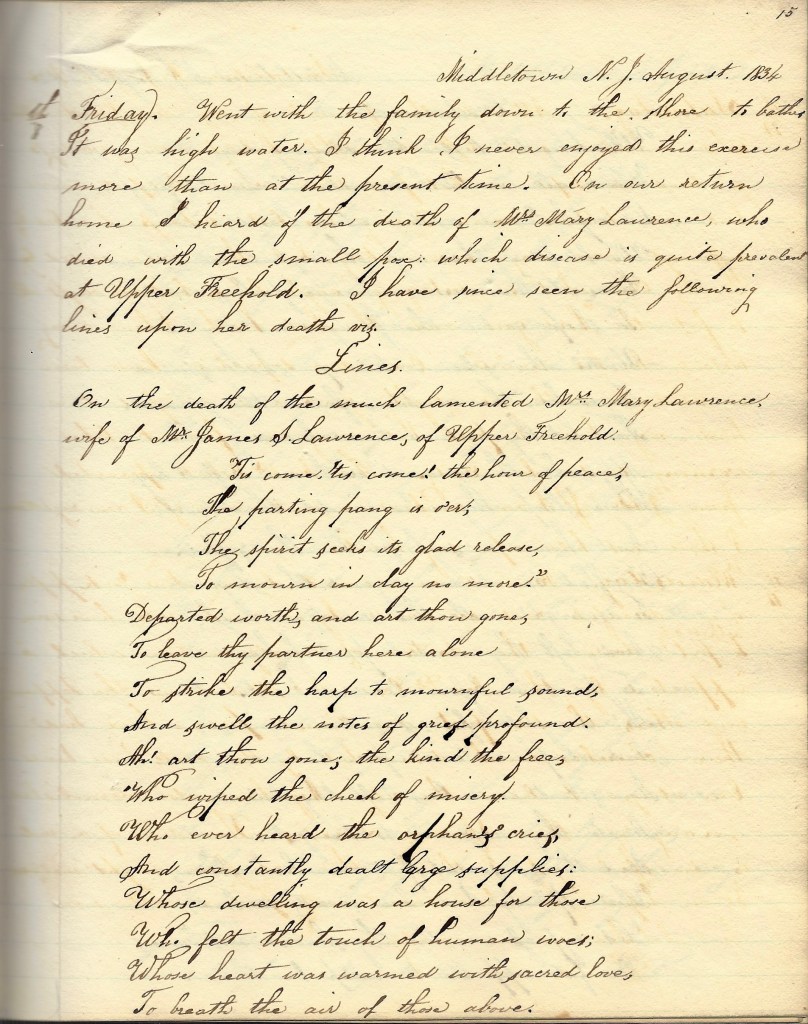
Middletown, N. J. August 8, 1834, Friday. Went with the family down to the shore to bathe. It was high water. I think I never enjoyed this exercise more than at the present time. On our return home, I heard of the death of Mrs. Mary Lawrence who died with the small pox which disease is quite prevalent at Upper Freehold. I have seen the following lines upon her death—viz:
Lines. On the death of the much lamented Mrs. Mary Lawrence, wife of James S. Lawrence of Upper Freehold.
These lines [in poem above] portray nothing but Mrs. Lawrence’s true character.
Middletown, New Jersey, August 19, 1834, Wednesday. Pleasant. I attended the funeral of Uncle and Aunt Beckman’s only child, Edwin. He died yesterday evening with the summer complaint [dysentery]. The Rev. Mr. Woodhull, a Dutch Reformed minister preached the funeral sermon. Text was in Genesis. His opinion was that infants when they leave this world go to a happy one. His Mother was so much grieved as to faint upon account of his death. It was the wise will of the Lord to call him from tis terrestrial world before he had tasted its pleasures or been seduced by its vices; and it is our duty to say, “Thy will be done.” I heard in the evening that Mrs. Eusebia Tilbons’ child was brought over on Monday from New York to Middletown and buried here.
Monday 24th. Saw an authentic account in the newspaper of the burning of the Ursuline Convent, Mount Benedict, Charlestown [Massachusetts], a Catholic Institution, by a mob and the [fire] engines when called out refused to help stop the flames. Their reason for burning it was they thought a young lady was confined there but it was not the case. The young lady had voluntarily taken the veil and her friends were permitted to call when they wishes. Her name was Miss Elizabeth Harrison, and she was a music teacher. She has a brother residing in the city. There were forty-six young ladies at the nunnery at the time of its demolition. Many of them owned much valuable property which was stolen at the time of the conflagration which took place the 15th of August [actually 11 & 12, 1834].
The Ursuline Convent near Charlestown, Massachusetts, burned by an anti-Catholic mob.
Friday, September 5, 1834. Rainy, as this week has been principally, and which we received from the clouds with thankful hearts, as before it came we had quite a drouth, but which did not do much damage here as in the upper part of the state. The cholera has again visited our country and the number of deaths today in New York were 24. It rages now in Detroit and Buffalo, but has ceased to in Montreal.
Sabbath 7th. Very warm but clear. Attended the Baptist church. Heard a very good sermon delivered by the Rev. Mr. Roberts. The text was, “Awake, wake; put on the strength, O Zion; put on thy beautiful garments, O Jerusalem, the holy city; for henceforth there shall no more come unto the uncircumscribed and unclean.” The subject of discourse was how much good a Christian could do and ought to do, for the world, and those who complain they have no talents, if they would only employ what they have for the good of their fellow men, do their duty and sometimes do astonishingly. In the afternoon had several showers.
Wednesday 10th. In the afternoon Mama and myself visited at Mr. Van Doren’s. The family was at home and well. Miss Lydia Stillwell was there also. The afternoon was spent in laughing and chatting, neither of which contributed to instruction or improvement in knowledge. Old Mrs. Van Doren continues well, but I think has grown more childish than when I last saw her.
Thursday 11th. Nothing of importance has occurred.
Friday 12th. So very cold. I should presume we were in the winter solstice, if I had lost my senses. I went in the afternoon to spend a week with my grandmother to entertain her as well as I know, as Aunt and Uncle B[eckman] with whom she resides. Left today for New Brunswick and intend spending a week at her Father-in-laws who resides north of New Brunswick. I expect to spend the week very happily.
13th, 14th, 15th. All passed away pleasantly. As we two are the only human beings in the house, we appear lonesome, but in reality are not so as my grandmother related to me incidents of her early life which to me are new and interesting, and it also give her pleasure to review them. I have spent some time in reading in Buck’s Theological Dictionary. The meaning of the wold “Catholic” is universal or general. Ruth, the colored woman, is recovering her health.
Tuesday 16th. Was called home to see Uncle James and Aunt A. Murray from Staton Island. Was very happy to see them. Returned to Grandmother’s in the afternoon.
Friday 19th. Rainy all day at intervals. I went with Sarah Ann Hendrickson and her brother to spend the day at cousin Th. Conover’s. I was there introduced to Miss R. McFarquor and Miss Castle, from my short acquaintance with both. I am most pleased with the last. I returned in the evening just before Aunt and Uncle B[eckman]. They were much fatigued with traveling; consequently we all retired early.
Saturday 20th. Returned home very early this morning to prepare for going to Trenton with Papa and Mama. The former is called there upon business, and we go for curiosity and visiting. Left home at ten o’clock in the morning. Reached Hightstown, our place of destination until Monday, in the evening after riding 30 miles and being much fatigued. We took our dinner at English town which is half way between home and Hightstown. We also passed through Millford. The country presented a very level appearance and also appeared fertile. Found Mr. Ely’s family well. They reside three miles from Heights town. Spent the evening in talking until eleven o’clock when I retired.
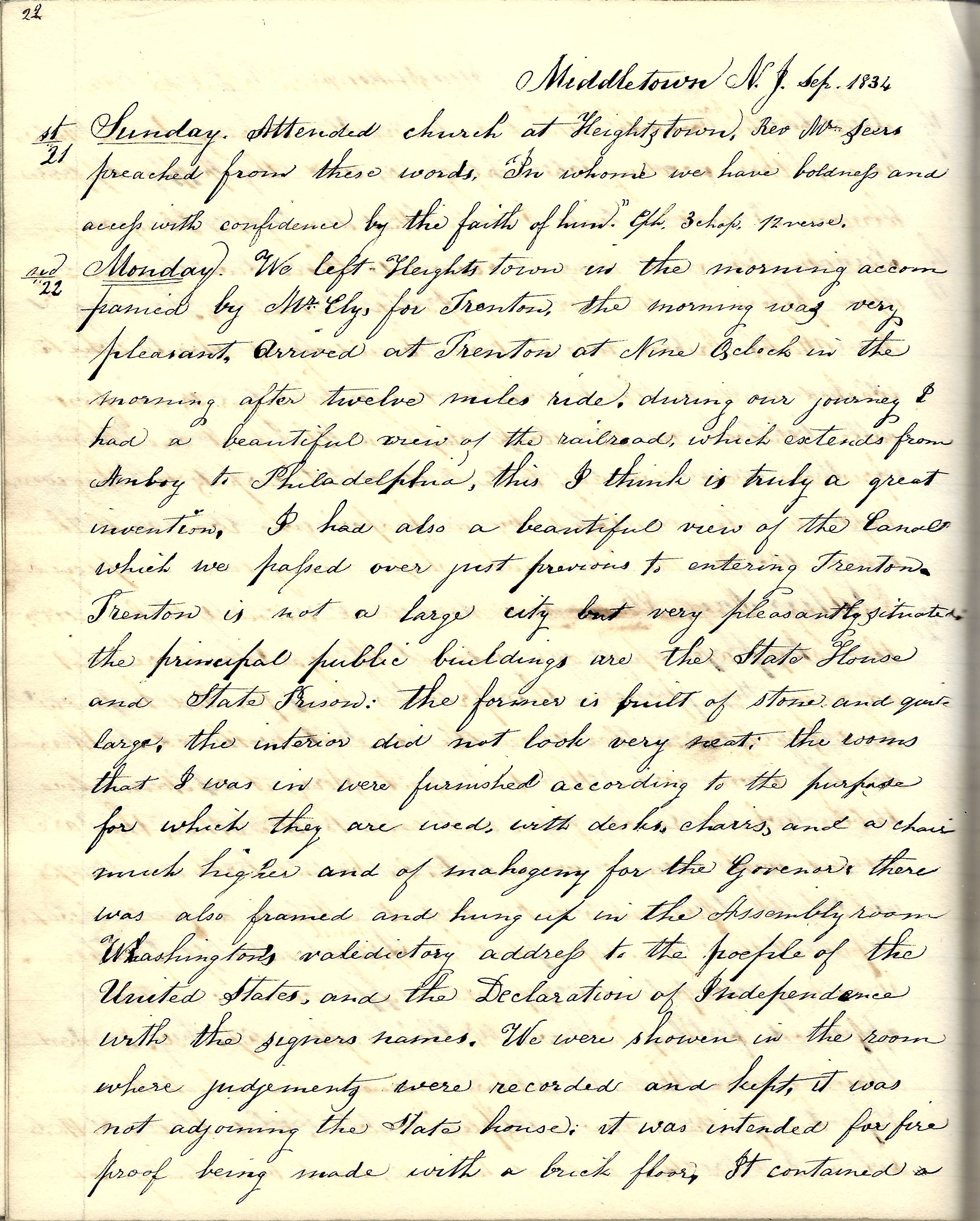
Sunday 21st. Attended church at Hightstown. Rev. Mr. Seers preached from these words. “In whom we have boldness and access with confidence by the faith of Him.” Ephesians 3rd Chapter, 12 verse.
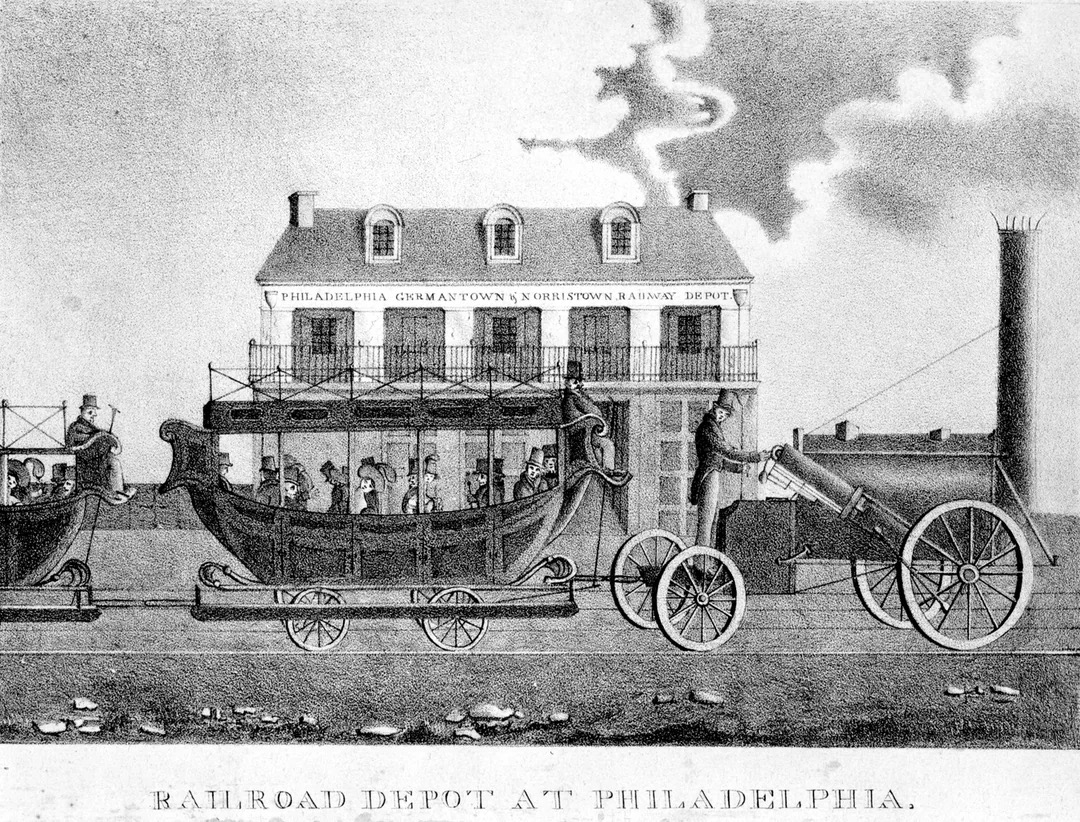
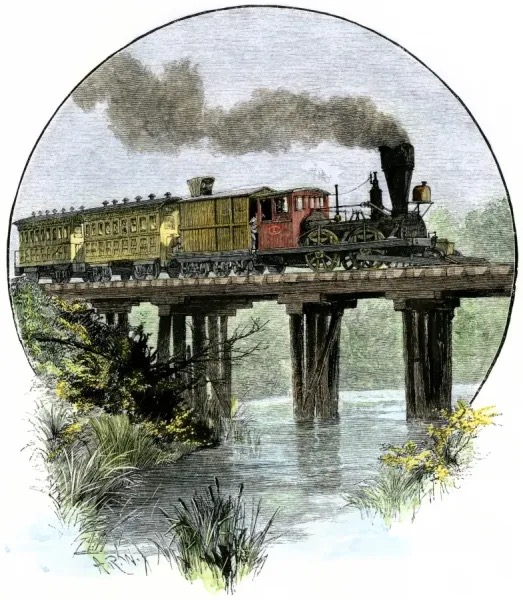
Monday 22nd. We left Hightstown in the morning accompanied by Mr. Ely’s for Trenton. The morning was very pleasant. Arrived at Trenton at nine o’clock in the morning after twelve mile ride. During our journey I had a beautiful view of the railroad which extends from Amboy to Philadelphia. This I think is truly a great invention. I had also a beautiful view of the [Delaware and Raritan] canal which we passed over just previous to entering Trenton.
Trenton is not a large city but very pleasantly situated. The principal public buildings are the State House and State Prison. The former is built oddly stone and quite large. the interior did not look very neat. The rooms that I was in were furnished according to the purpose for which they were used with desks, chairs, and a chair much higher and of mahogany for the Governor. There was also framed and hung up in the Assembly room Washington’s valedictory address to the People of the United States and the Declaration of Independence with the signers names. We were shown in the room where judgements were recorded and kept. It was not adjoining the State House. It was intended for fire proof being made with a brick floor. It contained some of the proceedings of parliament which was written during Queen Ann’s reign. The writing was very good and the paper appeared almost as well as new. I learn that during the King’s reign over America, each lawyer recorded their own judgements upon papers in the form of parchment rolls.
The 1st State Prison of New Jersey in Trenton, 1797-1836. The plaque above the door of the prison from 1797 reads, “Labour, Silence, Penitence.”
The State Prison was a large building of stone, white washed and enclosed with a large high yard. We first were shown in the work shops. In the first one the prisoners were wearing tablecloths, cloth carpets, &c. They were kept busily employed by a keeper who was with them constantly. In the shoemaker shop, many were employed making shoes. I soon saw none were allowed to be idle. The shops are upon one side of the yard and are not adjoining the prison. The prisoners had pointed hats on and shirts numbered in the breast with red. Their dining room is in the basement story. It contains two tables which reach from one end to the other. They are set out with small wooden tubs bound with iron hoops which the prisoners eat out of at intervals. A pail of water is placed. Their principal diet is mush made of yellow corn. It contains 120 prisoners, 7 of who are women. In the sick room or hospital were 7 or 8 indisposed.
The most interesting were those in solitary confinement of which there were four. One of them was a splendid writer and had written his name on the wall of his cell most beautifully which name was Philip Brockaway. He had also cut the whole name several times in German text with a pen knife on the wall which was also done elegantly. What a pity such talents should moulder in a prison. I requested him to write his name for me. This he did not do, but gave me a part of a letter which he had written, which contained nothing of importance. It is not written as well as he can write, owing to the weakening of his arms.
From the top of the prison I could see across the Delaware River into Pennsylvania, and also had a fine view of Trenton bridge. In the new prison which is building near this, every prisoner has a separate cell which will make it more solitary than this, where two prisoners sleep together except those in solitary confinement. Seeing the prisoners made such an impression on my mind, I will not attempt to describe it. Left Trenton at sunset and arrived at Mr. Ely’s at nine in the evening. Retired at 11 o’clock.
Tuesday 23rd. Left Mr. Ely’s at 9 o’clock in the morning for home. Traveling was not very pleasant as we rode through the rain three hours. At Englishtown, took our dinner and proceeded on our journey at three o’clock. Arrived at home in the evening. Found sister and brother well and also the other members of the family. Being much fatigued with my journey, retired early.
Wednesday 24th. Very pleasant. Spent the day at home in various employments.
Tuesday, October 21, 1834. This afternoon one of my schoolmates, Sarah Ann Hendrickson [1816-1843], is to be married to [Rev.] Mr. Garret [Conover] Schenck [1806-1888], a Dutch Domini. Uncle Beekman is to perform the ceremony. The number of the company invited is quite small. In the morning left home to visit New York City.
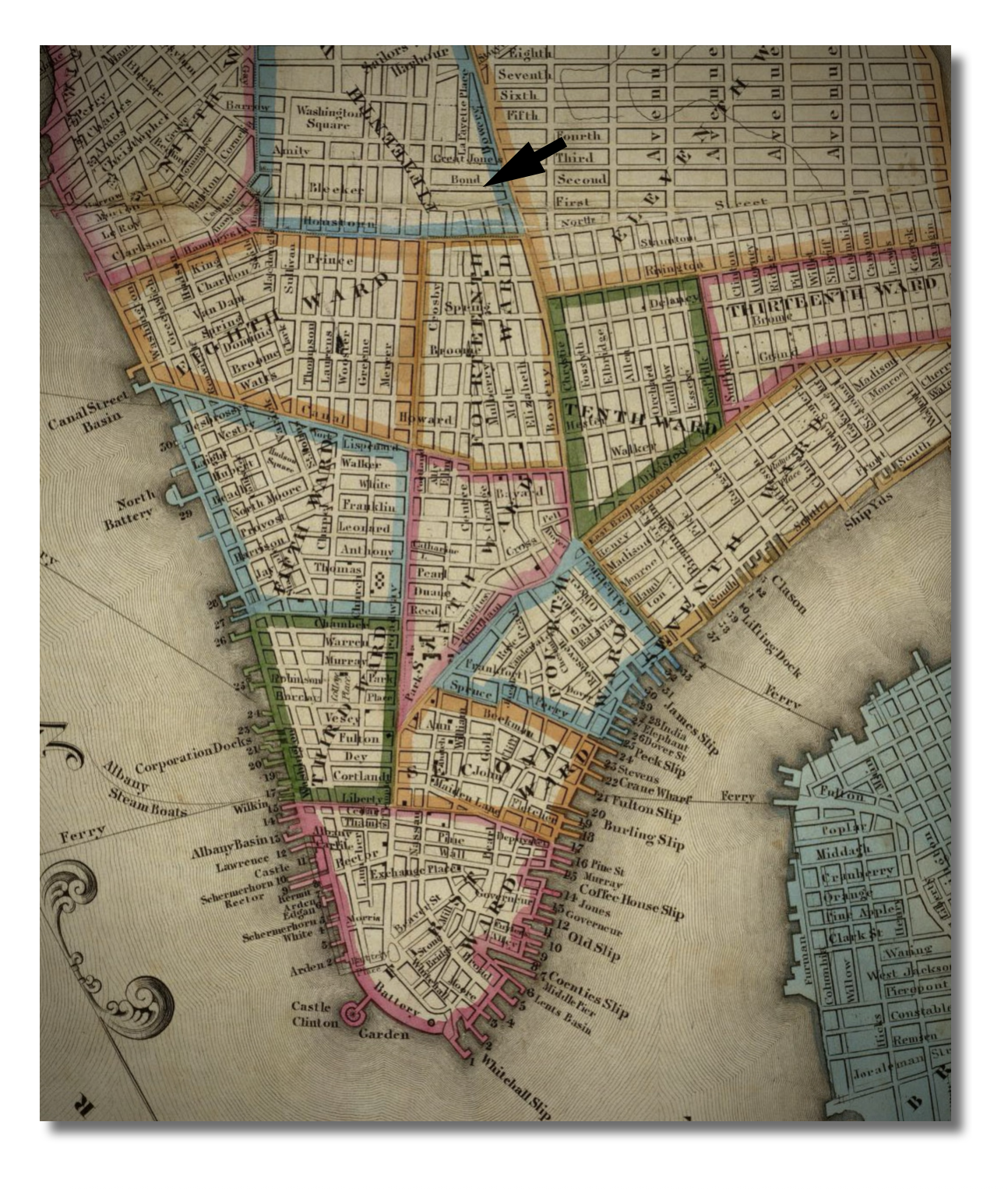
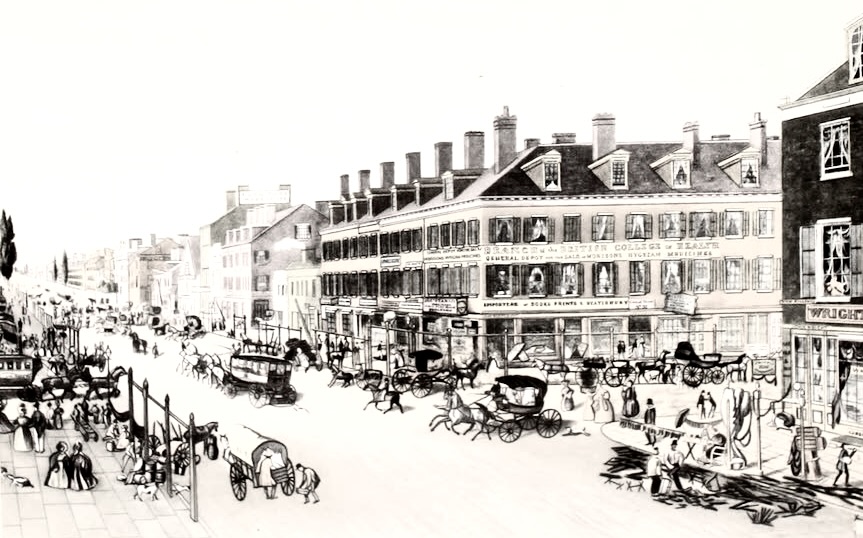
Bond Street—a secluded, peaceful two block stretch east of Broadway in New York City—where the city’s wealthy residents relocated from bustling, overcrowded downtown. In the 1830s, Bond Street was one of the city’s most fashionable. It was lined with Greek Revival style houses. Miss Dawson’s School was located at No. 41 Bond Street.
1832 Map of New York City, David Burr Atlas; arrow points to Bond Street
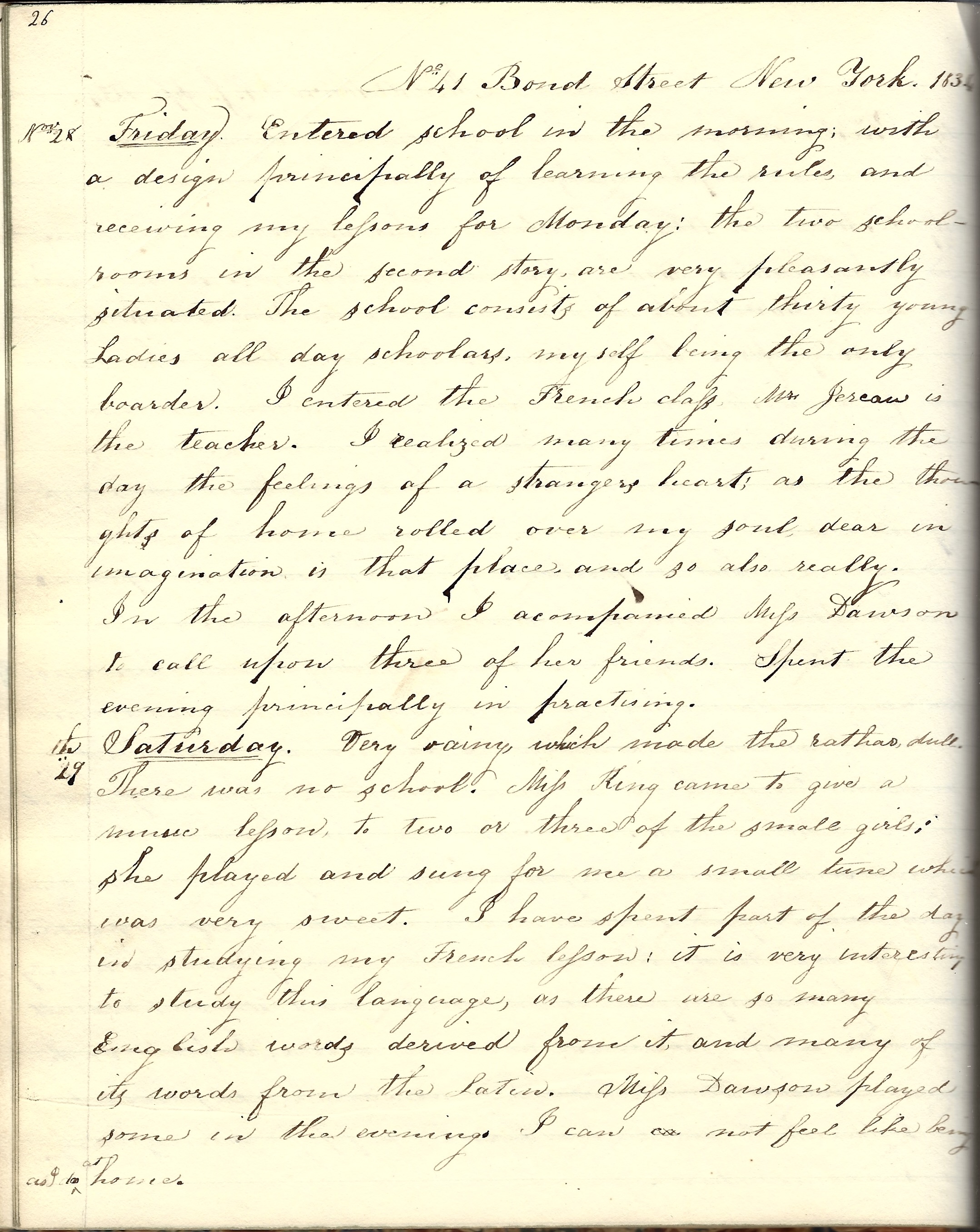
No. 41 Bond Street, New York [City]
November 27th 1834, Thursday. The sun shone delightfully upon our earth and distributed particles of much warmth upon us. In the morning I called upon Miss Julia Mallison, my wax teacher. I found her engaged as she almost constantly is with wax making flowers. She received this year the gold medal at the American Institute for superiority in wax work. Left my friends in the afternoon in company with Papa for Miss Dawson’s School. Papa left me in a short time after we arrived there to return home. Spent the evening in practicing my music and in conversation with Miss Dawson and her sister. I feel quite in love with them. They are so kind and pleasant. I think I shall be happy during my residence here.
Friday 28th. Entered school in the morning with a design principally of learning the rules and receiving my lessons for Monday. The two schoolrooms in the second story are very pleasantly situated. The school consists of about thirty young ladies—all day scholars; myself being the only boarder. I entered the French class. Mr. Jereau is the teacher. I realized many times during the day the feelings of a stranger’s heart as the thoughts of home rolled over my soul. Dear in imagination is that place and so also really. In the afternoon I accompanied Miss Dawson to call upon three of her friends. Spent the evening principally in practicing.
Saturday 29th. Very rainy which made the day rather dull. There was no school. Miss King came to give a music lesson to two or three of the small girls. She played and sung for me a small tune which was very sweet. I have spent part of the day in studying this language, as there are so many English words from the Latin. Miss Dawson played some in the evening. I cannot feel like being as I do at home.
Sunday, November 30th. Pleasant. In the morning, Miss Dawson and myself attended the Episcopal Church in a hotel in Broadway. A stranger preached. The text was, “It is a true saying and worthy of all acception that Christ Jesus came into the world to save sinners.” At six minutes after 1 o’clock, the great Eclipse of the Sun commenced. The greatest obscuration was at 29 minutes after two o’clock. It ended 47 minutes after three o’clock. This was a sight worthy of attention from its singularity and more so, as we will not again have the moon’s shadow fall on any part of the United States for thirty-five years. I will then, perhaps, be sleeping in the chambers of the dust, and those who are with me at the present day—viz: Miss E. H. Dawson, M. Dawson, and Mr. Dawson. The sun was totally eclipsed at Charleston, S. C., at Augusta, Georgia, and at Tuscaloosa two minutes.
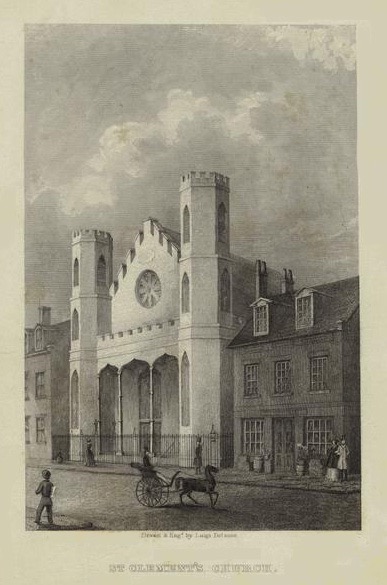
In the afternoon, attended with Miss Dawson St. Clements Church. The Rev. Mr. Biard preached from these words, “There is no respect of persons with God.” It was an excellent sermon. Spent the evening in learning a Bible lesson in Second Samuel. It gave an account of Uzza’s death & showed with what awe we should deal with sacred things. It also contained mush of the history of David. Retired to rest at nine o’clock.
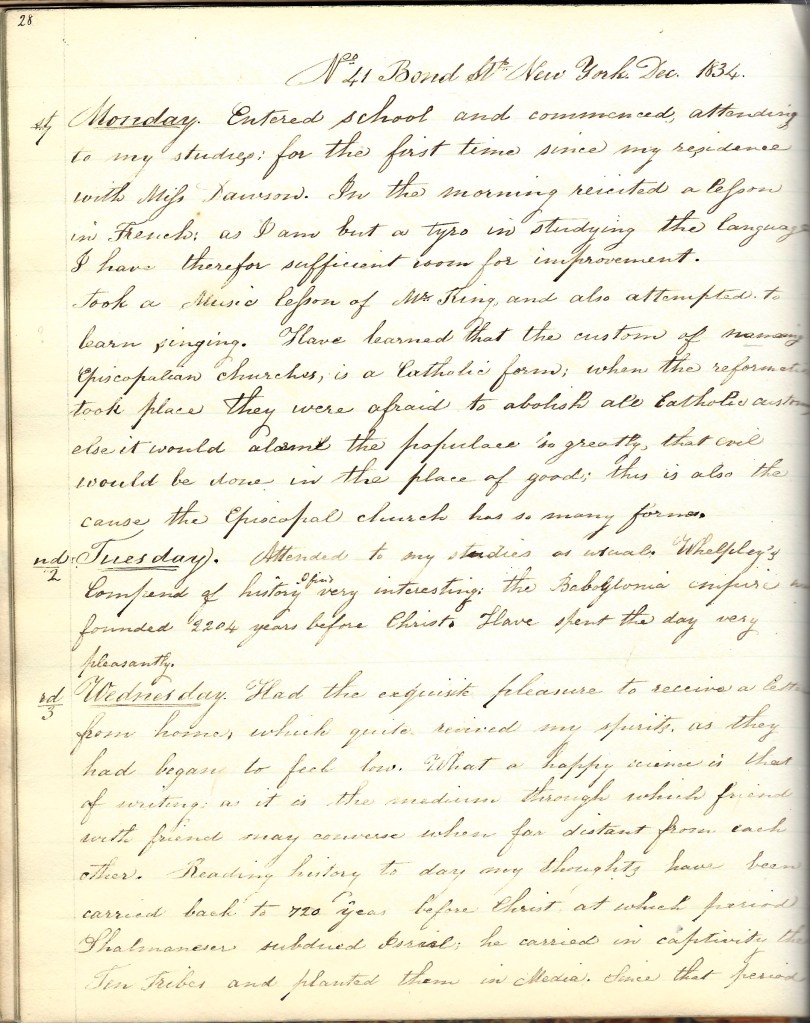
Monday, December 1st. Entered school and commenced attending to my studies for the first time since my residence with Miss Dawson. In the morning, recited a lesson in French as I am but a tyro in studying the language. I have therefore sufficient room for improvement. Took a music lesson of Mr. King and also attempted to learn singing. Have learned that the custom of naming Episcopalian churches is a Catholic form. When the reformation took place, they were afraid to abolish all Catholic customs else it would alarm the populace so greatly that evil would be done in the place of good. This is also the cause the Episcopal church has so many forms.
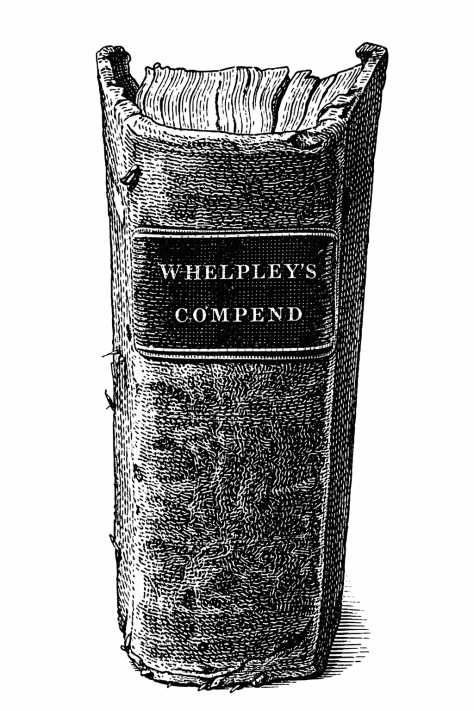
Tuesday 2nd. Attended to my studies as usual. [Samuel] Whelpley’s Compend of History I find very interesting. The Babylonia empire was founded 2204 years before Christ. Have spent the day very pleasantly.
Wednesday 3rd. Had the exquisite pleasure to receive a letter from home which quite revived my spirits as they had began to feel low. What a happy science is that of writing as it is the medium through which friend with friend may converse when far distant from each other. Reading history today my thoughts have been carried back to 720 years before Christ at which period [the Assyrian King] Shalmaneser subdued Israel. He carried in captivity the ten tribes and planted them in Media. Since that period they have never been a distant nation. They were carried into captivity 250 years after the separation of Judah from Israel.
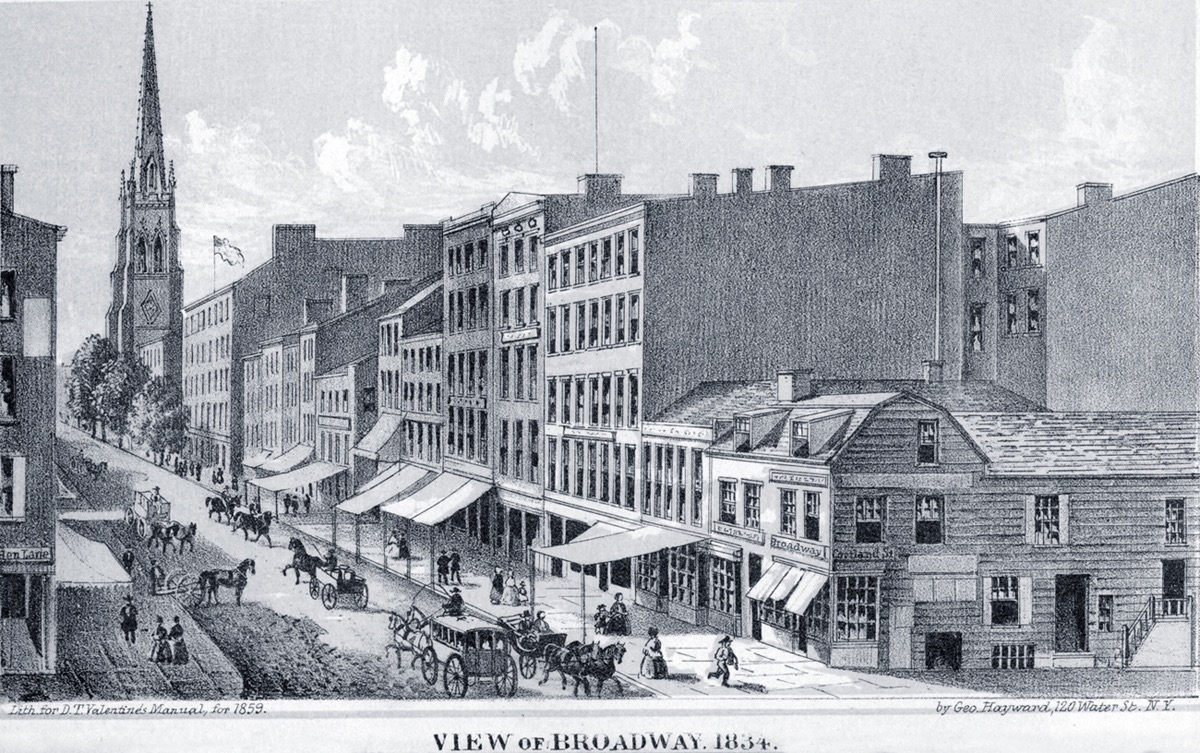
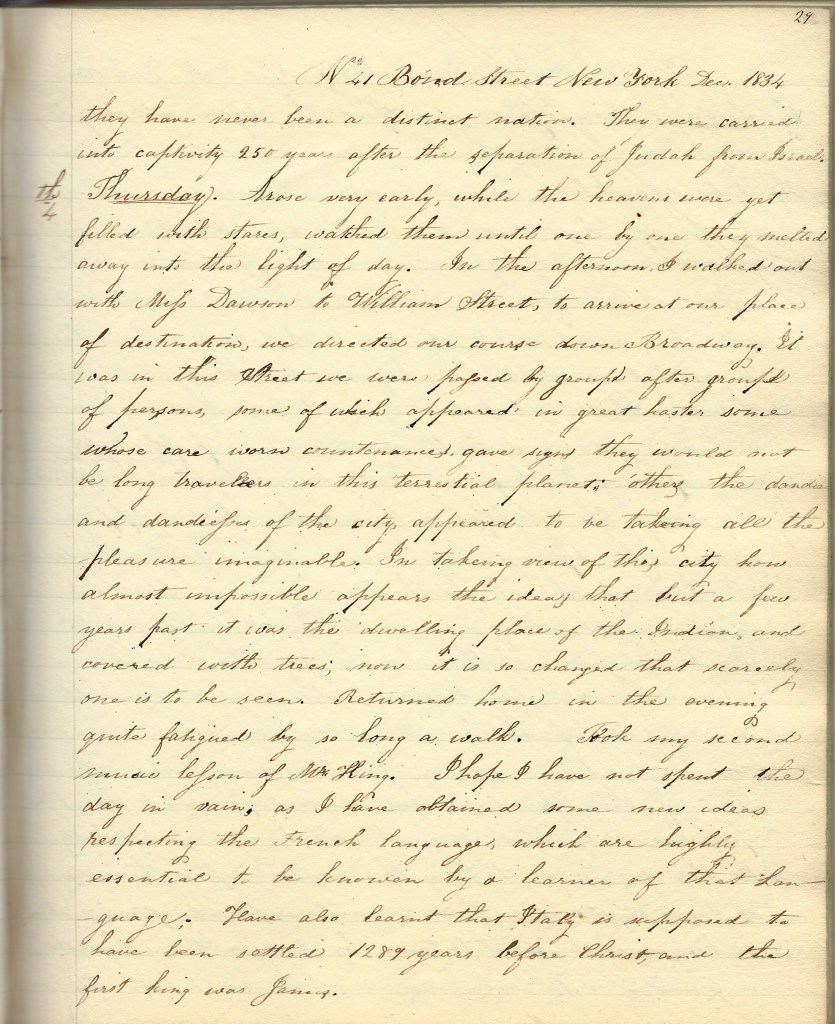
Thursday 4th. Arose very early while the heavens were yet filled with stars. Watched them until one by one they melted away into the light of day. In the afternoon I walked out with Miss Dawson to William Street. To arrive at our destination, we directed our course down Broadway. It was in this street we were passed by group after group of persons, some of which appeared in great haste, some whose careworn countenances gave signs they would not be long travelers in this terrestrial planet; others—the dandies and dandiesses of the city—seemed to be taking all the pleasure imaginable. In taking view of this city, how almost impossible appears the ideas that but a few years past it was the dwelling place of the Indian and covered with trees. Now it is so changed that scarcely one is to be seen. Returned home in the evening quite fatigued by so long a walk.
Took my second music lesson of Mr. King. I hope I have not spent this day in vain as I have obtained some new ideas respecting the French language which are highly essential to be known by a learner of that language. Have also learnt that Italy is supposed to have been settled 1289 years before Christ and the first king was Janus.
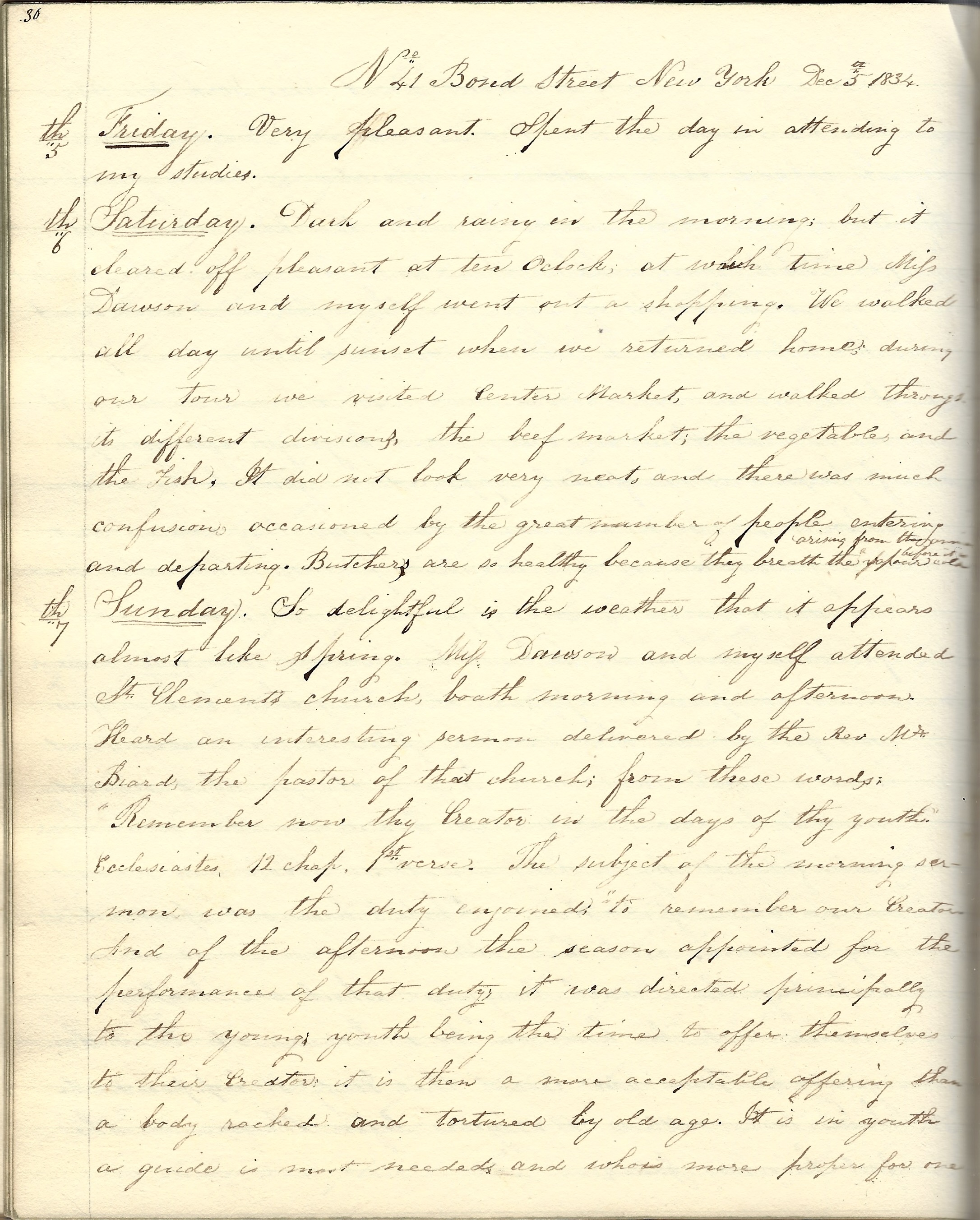
Friday, December 5, 1834. Very pleasant. Spent the day in attending to my studies.
Saturday 6th. Dark and rainy in the morning but it cleared off pleasant at ten o’clock at which time Miss Dawson and myself went out a shopping. We walked all day until sunset when we returned home. During our tour we visited Center Market and walked through the different divisions—the beef market, the vegetable, and the fish. It did not look very neat and there was much confusion occasioned by the great number of people entering and departing. Butchers are so healthy because the vapor arising from the [ ] before it is cold.
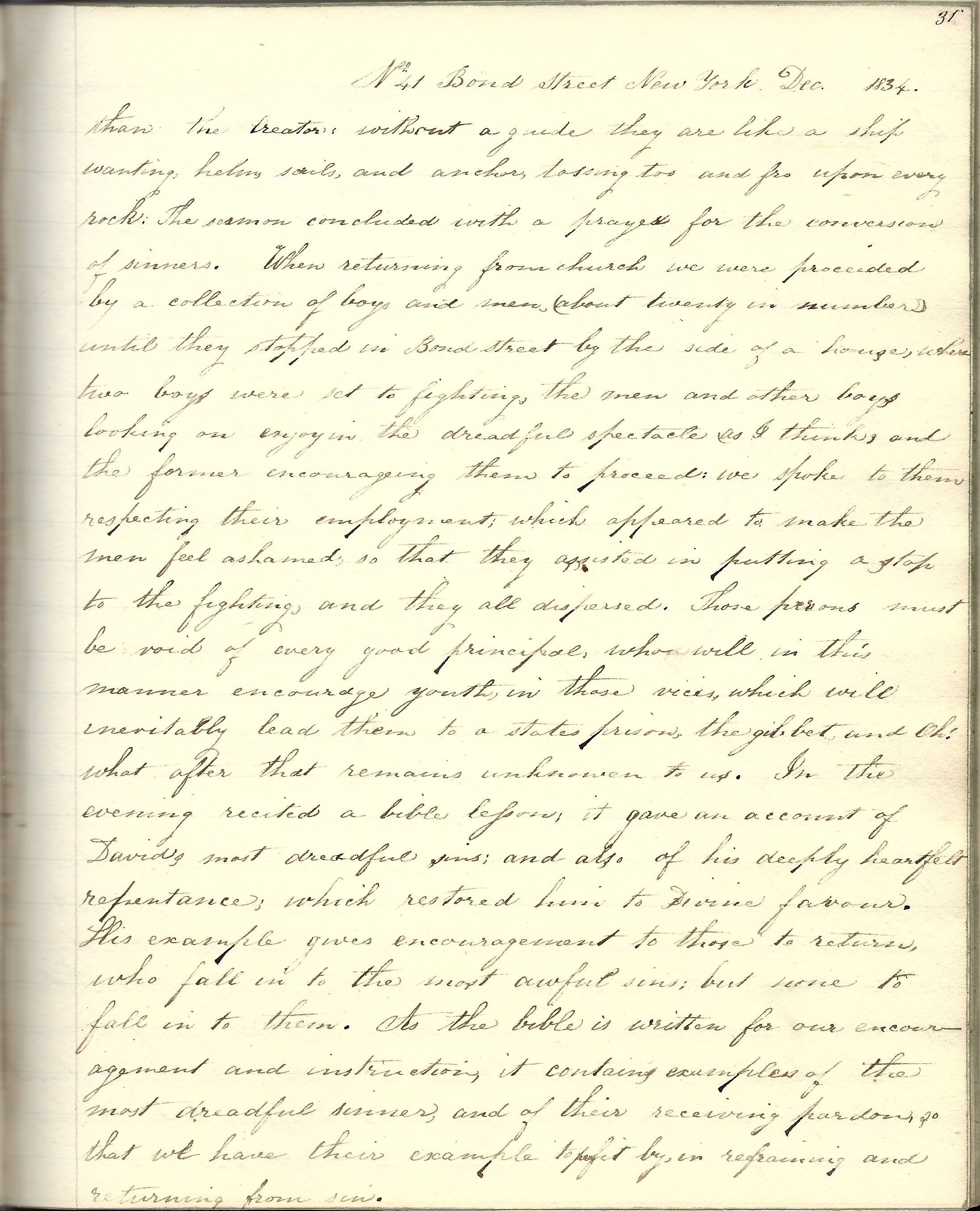
Sunday 7th. So delightful is the weather that it appears almost like Spring. Miss Dawson and myself attended St. Clement’s [Episcopal] church [108 Amity Street], both morning and afternoon. Heard an interesting sermon delivered by the Rev. Mr. Biard, the pastor of the church, from these words, “Remember now the Creator in the days of thy youth.” Ecclesiastics, 12th Chapter, 1st Verse. The subject of the morning sermon was the duty enjoined to remember our Creator and of the afternoon the season appointed for the performance of that duty. It was directed principally to the young; youth being the time to offer themselves to their Creator. It is then a more acceptable offering than a body racked and tortured by old age. It is in youth a guide is most needed and who is more proper for one than the Creator. Without a guide they are like a ship wanting helm, sails, and anchor, tossing to and fro upon every rock. The sermon concluded with a prayer for the conversion of sinners.
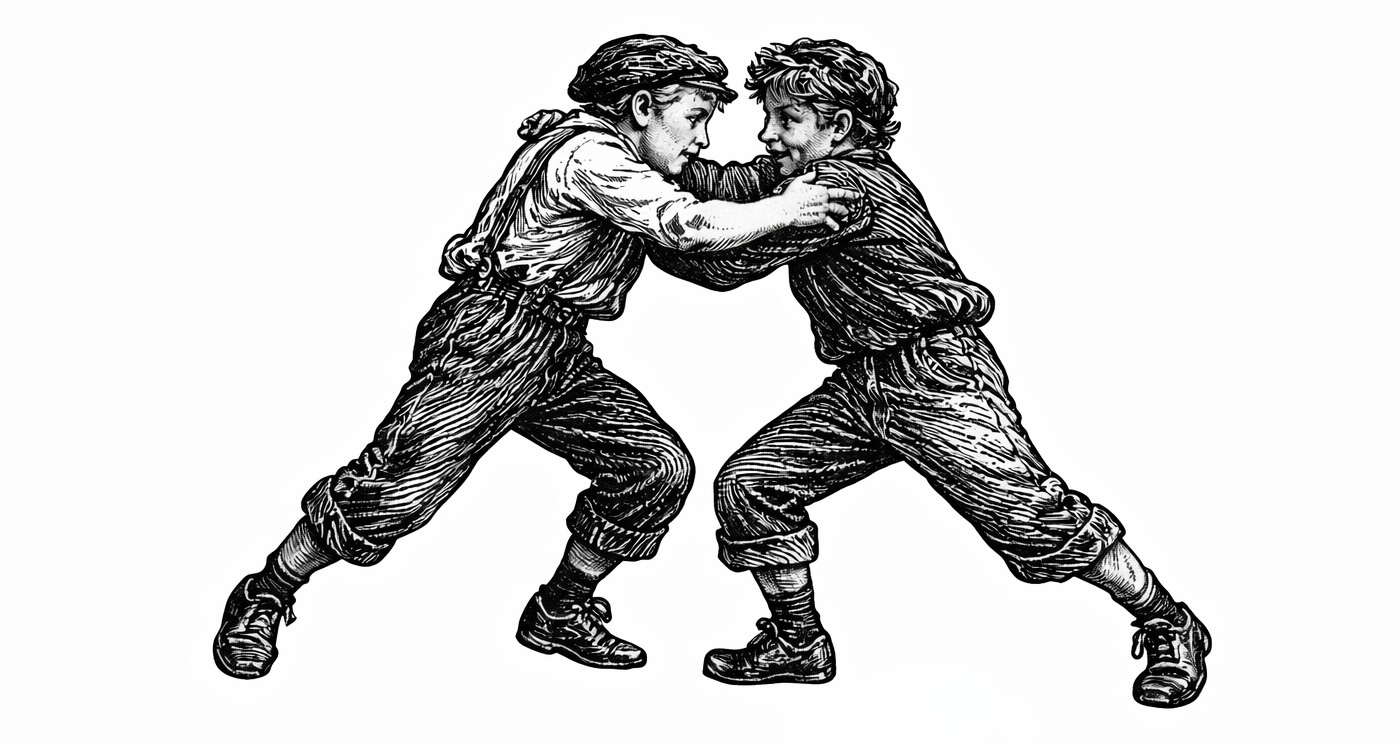
When returning from church, we were preceded by a collection of boys and men (about twenty in number) until they stopped in Bond Street by the side of a house where two boys were set to fighting, the men and other boys looking on enjoying the dreadful spectacle (as I think) and the former encouraging them to proceed. We spoke to them respecting their employment which appeared to make the men feel ashamed so that they assisted in putting a stop to the fighting and they all dispersed. Those persons must be void of every good principle who will in this manner encourage youth in those vices which will inevitably lead them to a state prison, the gibbet and Oh! what after that remains unknown to us.
In the evening recited a bible lesson. It gave an account of David’s most dreadful sins and also of his deeply heartfelt repentance which restored him to Divine favor. His example gives encouragement to those to return who fall into the most awful sins, but none to fall into them. As the bible is written for our encouragement and instruction, it contains examples of the most dreadful sinner, and of their receiving pardon so that we have their example to profit by in refraining and returning from sin.
Monday 8th. Pleasant and quite warm for the season. Have been much engaged with my studies but do not feel satisfied with my days labor as I have not been diligent in business fervent in spirit serving the Lord “but may I be led to see the manner in which to improve my time rightly and rejoice to perform the same. Spent the evening in practicing my music.
Tuesday 9th. Was aroused from sleep by the wanderings of my mind. Spent the day in study.
Wednesday 10th. Nothing of importance has occurred during school times. In the evening when the moon had thrown her silvery mantle over our earth, I had a beautiful prospect of a chimney on fire in a street opposite this. The flame and smoke continued to ascend for an hour, the one rolling up from the mouth of the chimney in dark clouds; the other casting light upon all adjacent objects.
Thursday 11th. A day of general thanksgiving throughout the state, so of course a holiday for us. It is the third one I have spent in New York. It is the custom on this day to attend church and have feasting and mirth as though the latter can never spring from a more perfect source than a thankful heart and this we must have if a spark of gratitude remains unquenched as our whole life is but a succession of blessings.
Friday 12th. Spent the day with Miss Dawson and was employed part of the time in writing a letter home.
Saturday 13th. Remained at home engaged in study and in practicing. I cannot feel contented as I have not received a letter from home in so long time.
Sabbath 14th. Attended Mr. Biard’s church in the morning. As I cannot remember the text, cannot relate much of the sermon. Returning from church Miss Dawson and I became nearly frozen—the weather is so trestres cold. Did not attend church in the afternoon. Have learnt that the word Sheol or Hell means place of the departed and the word Hell when used to signify place of the damned, conveys an improper meaning of the original word which is derived from the Saxon word helan to cover. Recited a bible lesson in the evening.
Monday 15th. The cold is so great that the thermometer at eleven o’clock stood six degrees below the freezing point. Have learnt from Geology that the greatest excavations of earth only extend perpendicularly half a mile. The primitive rock is found always at the bottom of the greatest excavations and at the tops of the highest mountains—a fact which shows the wisdom of the Creator. Spent the evening in studying my lessons for the coming day.
Tuesday, December 16, 1834. Much warmer of which fact I was much pleased. The first lesson I recited was history which was interesting. It contained an account of the distinguished persons who lived from the period 752 years before Christ to the Battle of Marathon 490 years before Christ. The distinguished characters who lived during the period were Romulus who was the founder of the city of Roma. Aesop, a theologian philosopher and fableist. He is supposed to have been ugly and deformed in his person. Thales the founder of Ionic Philosophy which was distinguished for deep and obtuse speculations. Solon, a legislator and wise man of Greece. Pythagoras, a Grecian philosopher. Also Sappho, a poetess who drowned herself, leaving by her conduct an example not to be followed by posterity. In the evening Miss Dawson and myself walked down Broadway as far as Lockwood’s Book Store where we purchased some articles and returned home.
Wednesday 17th. My sixteenth birthday. I am really lost in amazement when I consider that I haves pent 16 years on the earth and have done scarcely anything for the good of the world. I must profit by past experience and from henceforth commence a life of more activity and usefulness. The ground has been partially covered with snow which I think adds much cheerfulness to winter. In the afternoon, the post man brought me a letter from home which formed an important ingredient in my mixture of happiness.
Thursday 18th. My intellect has become quite expanded with the news & ideas I have received this day, some of which were that rocks are composed of the following few simple minerals—quartz, mica, feldspar, limestone, gypsum or plaster of Paris, slate, and hornblende. Countries are named from the different strata which constitutes their basis or which predominate there, either primary, transition, secondary, tertiary, diluvial, or alluvial. Monsieur Girard related to the class an anecdote of Franklin, who with a Mr. [Silas] Deane and [Arthur] Lee was sent to France upon State affairs during the American Revolution. Franklin, during his stay there. became much beloved and respected, and received many presents, one of which was a box presented by the ladies which had embroidered upon, Le digne Franklin, which means the worthy Franklin. When the other two saw it they were jealous and appeared angry. Franklin, observing it, said the box was for them all, but the French people did not know how to spell English words so had merely the initials correct. This was one example of the nobleness of Franklin’s character.
Friday 19th. Warm and pleasant. Spent the day in study &c. Nothing of importance has occurred today as far as my knowledge extends.
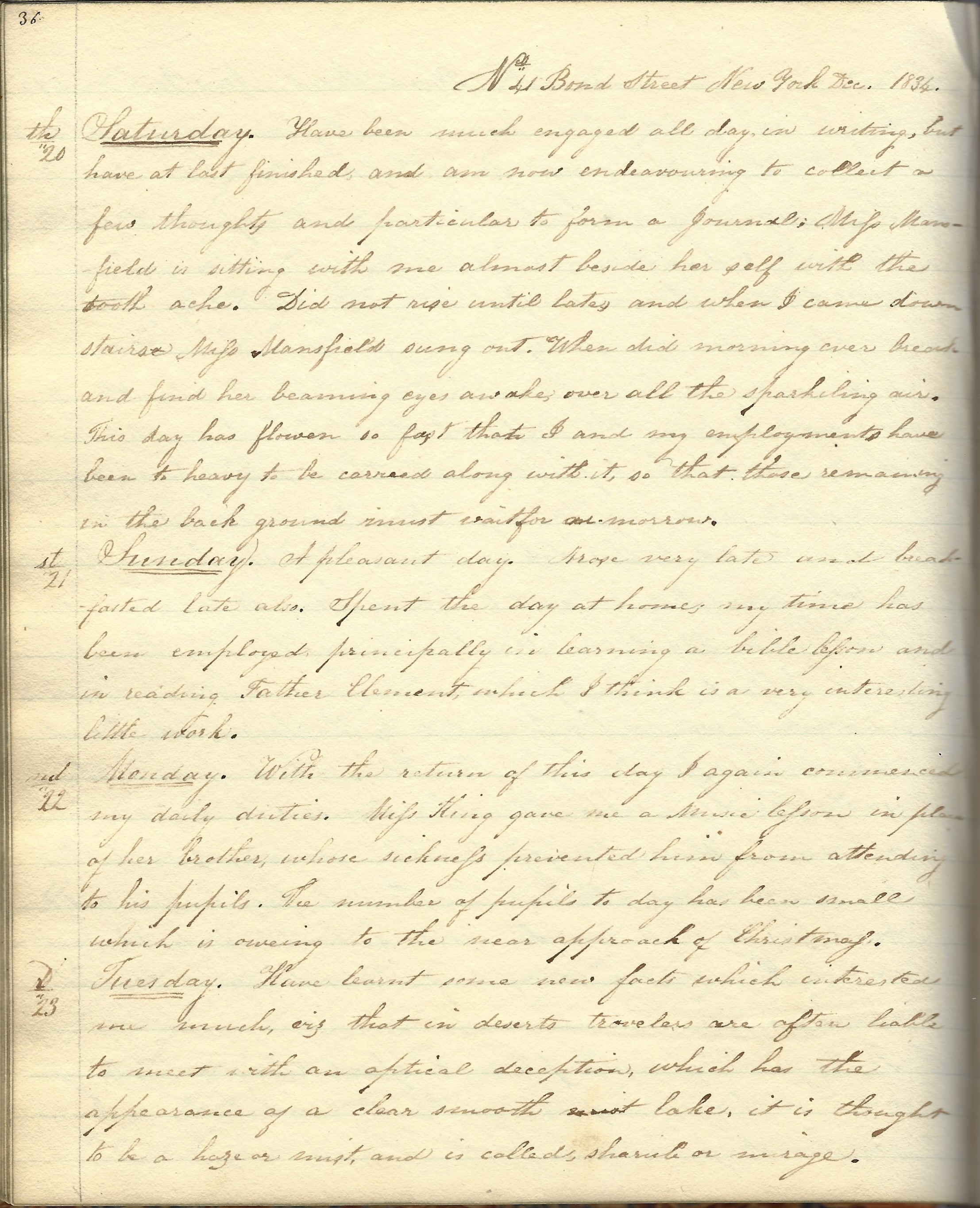
Saturday 20th. Have been much engaged all day in writing but have at last finished and am now endeavoring to collect a few thoughts and particular to form a journal. Miss Mansfield is sitting with me almost beside herself with the toothache. Did not rise until late and when I came downstairs, Miss Manfield sung out. When did morning ever break and find her beaming eyes awake over all the sparkling air. This day has flown so fast that I am my employments have been too heavy to be carried along with it so that those remaining in the background must wait for tomorrow.
Sunday 21st. A pleasant day. Arose very late and breakfasted late also. Spent the day at home. My time has been employed principally in learning a bible lesson and in reading Father Clement which I think is a very entertaining little work.
Monday 22nd. With the return of this day, I again commenced my daily duties. Miss King gave me a music lesson in place of her brother whose sickness prevented him from attending to his pupils. The number of pupils today has been small which is owing to the near approach of Christmas.
Tuesday 23rd. Have learnt some new facts which interested me much—viz, that in deserts, travelers are often liable to meet with an optical deception which has the appearance of a clear, smooth lake. It is thought to be a haze or mist and is called sharob or mirage.
Wednesday 24th. This afternoon commenced the Christmas holidays which was to continue until the first Monday after New Year’s day. I think I never saw the whole school taken collectively in better spirits.
Thursday 25th. Christmas. With pleasant weather is this day ushered in, although much like winter. In the morning it snowed until ten o’clock when it ceased and became very pleasant. I have remained at No. 41 Bond Street all day and have spent this Christmas with Miss Dawson and her sister. It touches the cord of melancholy in my heart when looking back at the past. I find myself separated far, far from all those with whom I spent this day last year. It proves the frailty of all human enjoyments and bids us prepare for another world, and more so as I am unable to penetrate the veil which conceals the future from my eyes.
Friday 26th. Snowed very fast in the afternoon but it did not prevent Miss Dawson, her sister, and myself from paying a visit at Mr. Hart’s in Fourth Street. We were there entertained with some delightful music which consisted of songs, marches, comical pieces, &c. among which was the A. B. C. Duet. We returned home at ten o’clock but not without breaking nearly our necks as the pavement had become covered with ice. It had also ceased snowing. I retired late, quite fatigued with walking and visiting.
Saturday 27th. Miss Dawson and myself ventured out to take the air and to do errand. We directed our steps down Broadway. It was quite amusing walking along to see the people twisting and turning in all directions to prevent themselves from falling as there was so much ice upon the pavements. We first visited the Intelligence Office, then the market which was crowded as usual with persons of all classes. We called upon Miss Stites in Amity Street but were disappointed in seeing her as she had returned to her home in New Jersey to spend the Christmas holiday.
Sabbath 28th. In the morning attended the Baptist church in Amity Street in company with Miss Dawson, the casual companion of my walking and visiting. I heard an excellent sermon delivered by the Rev. Mr. Williams. The text was, “It is a fearful thing to fall into the hands of the living God.” He concluded with a few remarks upon the close of the year which will now soon take place. Spent the time between morning and afternoon service in learning a bible lesson. In the afternoon, attended a Presbyterian church in Thompson Street. A stranger preached. The text was, “We will not have this man to reign over us.” I was not pleased with the sermon as the preacher, I think, introduced some very inappropriate comparisons. Spent the evening in reading and in reciting my bible lesson.
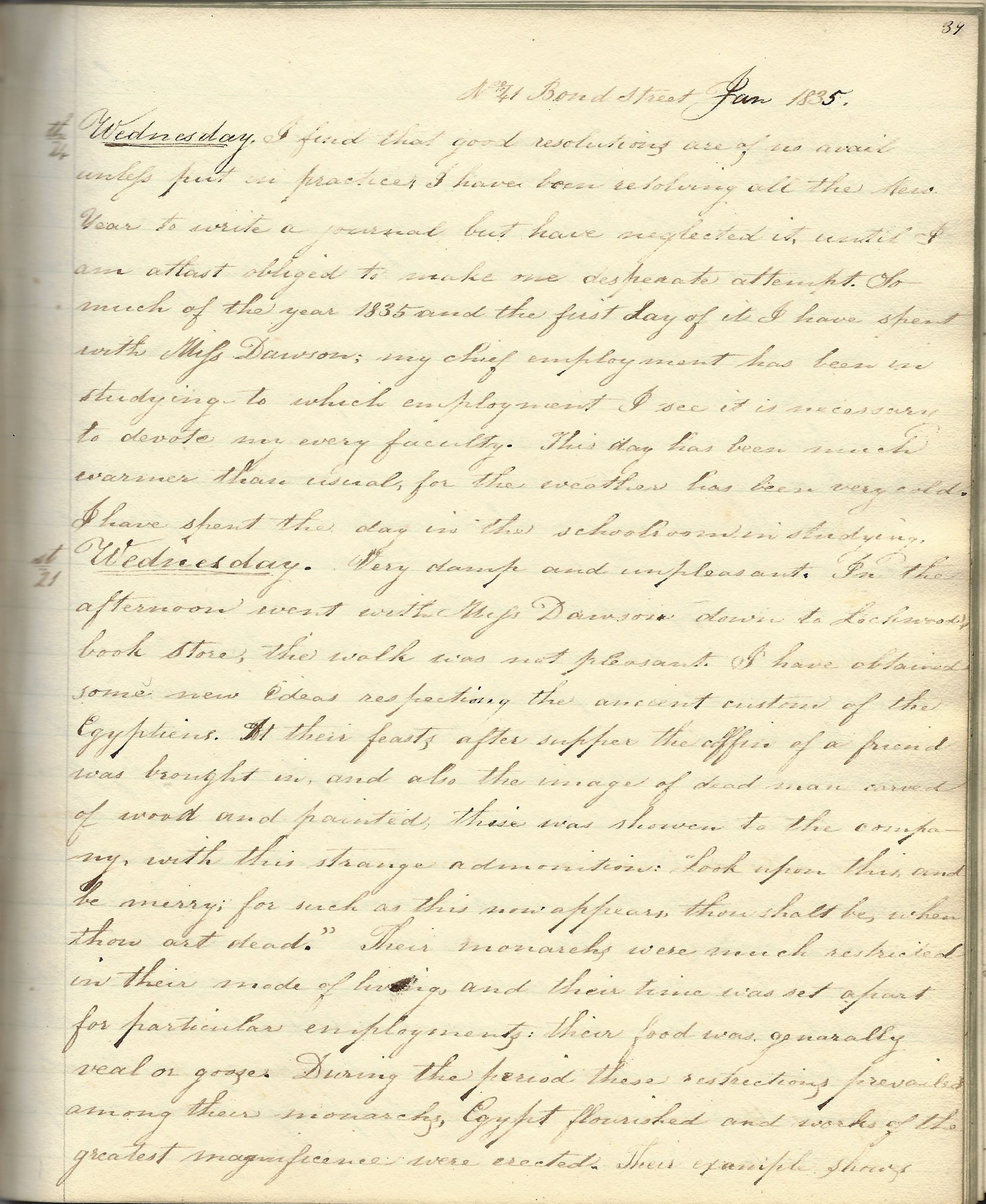
Wednesday, January 14, 1835. I find that good resolutions are of no avail unless put in practice. I have been resolving all the New Year to write a journal but have neglected it until I am at last obliged to make one desperate attempt. So much of the year 1835 and the first day of it I have spent with Miss Dawson. My chief employment has been in studying to which employment has been in studying to which employment I see it is necessary to devote my every faculty. This day has been much warmer than usual for the weather has been very cold. I have spent the day in the schoolroom in studying.
Looking down Broadway at the junction with Canal Street in NYC in 1835. Roe Lockwood’s Stationery & Book Store was located among the line of shops on the right side of Broadway in the distance.
Wednesday 21st. Very damp and unpleasant. In the afternoon went with Miss Dawson down to [Roe] Lockwood’s Book Store [at 415 Broadway below Lispenard Street]. The walk was not pleasant. I have obtained some new ideas respecting the ancient custom of the Egyptians. At their feasts, after supper, the coffin of a friend was brought in and alsothe image of dead man carved of wood and painted. This was shown to the company with this strange admonition: Look upon this, and be merry, for such as this now appears, thou shall be when thou art dead.” Their monarchs were much restricted in their mode of living and their time was set apart for particular employment. Their food was generally veal or goose. During the period these restrictions prevailed among their monarchy. Egypt flourished and works of the greatest magnificence were erected. Their example shows the good effects resulting from self denial.
Friday 23rd. Received a call from P. Truex and his sister. The former brought me a letter from home. By it I was informed of the death of my old aunt Sally Shephard. She resigned her claims to earth on the 17th of this month after having been an inhabitant of it for 97 and a half years. She had lived until all earthly ties were dissolved. The companions of her youth she had seen all go down to the silent chambers of the tomb while she remained to see others—and again others occupy their places. in whose employments and pleasure she was too inform to take a part. Independent of this she possessed a happiness which the world can neither give nor take away. It was founded upon the rock Christ Jesus. Her funeral sermon was preached by the rev. Mr. Roberts (our pastor at Middletown) in the Baptist Church at Middletown, of which denomination she had for many years been a professor. The text of the sermon and also the hymn she had selected for years before, which was “Because I live, ye shall live also.” John, 14th Chapter, 19th verse.
I have learnt a lesson today by experience which I hope never to forget. It is so to improve our manners and habits as not have them so unpleasant that they will cause others to become enraged, which will lead to many unpleasant circumstances and much unhappiness and mortification.
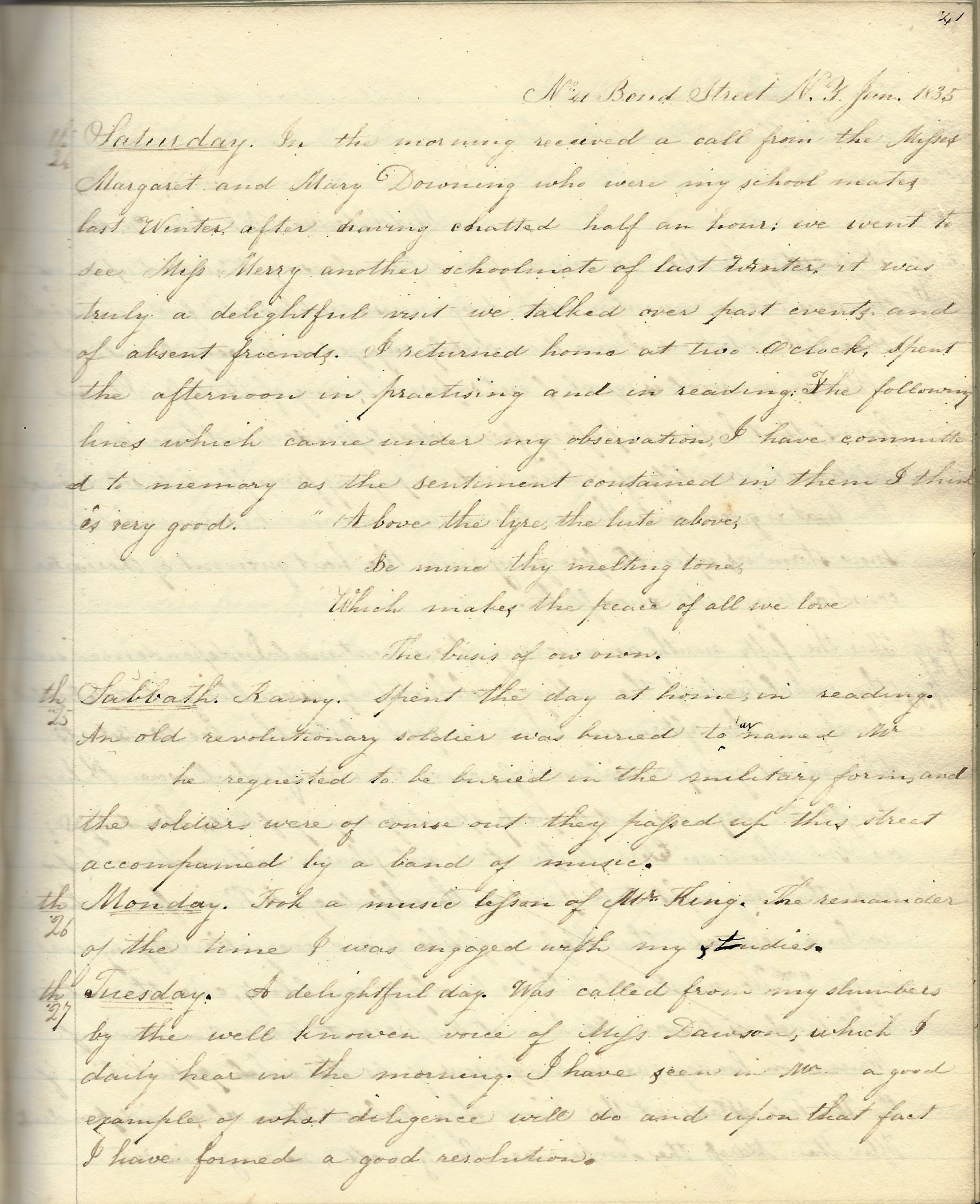
Saturday 24th. In the morning received a call from the Misses Margaret and Mary Downing who were my schoolmates last winter. After having chatted half an hour, we went to see Miss Merry, another schoolmate of last winter. It was a truly delightful visit. We talked over past events and of absent friends. I returned home at two o’clock, spent the afternoon in practicing and in reading. The following lines which came under my observation I have committed to memory as the sentiment contained in them I think is very good.
“Above the lyre, the lute above; Be mine thy melting tone, Which makes the peace of all we love The basis of our own.” [poem by William Hayley]
Sabbath 25th. Rainy. Spent the day at home in reading. An old revolutionary war soldier was buried today named Mr. [blank]. He requested to be buried in the military form and the soldiers were of course out. They passed up this street accompanied by a band of music.
Monday 26th. Took a music lesson of Mr. King. The remainder of the time I was engaged with my studies.
Tuesday 27th. A delightful day. Was called from my slumbers by the well known voice of Miss Dawson which I daily hear in the morning. I have seen in [her?] a good example of what diligence will do and upon that fact I have formed a good resolution.
Sabbath, February 1, 1835. Attended the Episcopal Church in Broom Street.
A scene depicted in Walter Scott’s historical novel, Ivanhoe
Middletown, New Jersey, Wednesday, June 10, 1835. In the morning our friends from Sing Sing, N. Y. called upon us. They were five in number including nurses and babe. It is five years since they last visited us. I have been deeply engaged in reading Ivanhoe which although a novel, is equal if not superior to any of its class. I have learnt that bodies in passing from solids to fluids must have an additional quantity of caloric, and in passing from fluids to solids the heat is given out. This is the cause we have it warmer before a snow storm—viz: upon the foregoing rule the heat given out by the water consolidating into snow flakes.
July 4, 1835. This is the 59th Anniversary of our national Independence. We (the inhabitants of the village) celebrated by assembling at the Baptist church in the afternoon where our good rector, the Rev. Mr. Roberts, delivered a good, practical address, one or two ideas of which were:
1st, he thought the day was not properly spent by ringing of bells, shouting, &c. Our God who is an Eternal Spirit is not pleased with such worships and the day ought to be spent in thankfulness to Him, from whom we have received the blessing of liberty and every other blessing we enjoy.
2nd, we must not talk too loudly of our liberty, else the nations will laugh us to scorn. We have at the present time 3 millions of Africans in bondage—as many persons as the white population of the United States at the time they declared themselves independent. After the address, the Temperance Society met. No one joined it.
Sabbath, July 26, 1835. Attended the Baptist church. The Rev. Mr. Kenniesta, stranger from Philadelphia preached. He was in ill health and preached, he said, contrary to the strict injunction of his physician. The text was “And I saw a great white throne, and him that sat on it, from whose face the earth and the heaven fled away; And I saw the dead, small and great, stand before God; and the books were opened and another book was opened which is the book of life. And until the 14 verse which concluded the text, the discourse was very solemn.
Monday, August 10, 1835. This day and Thursday in every week that I spend at home always affords me some pleasure as the mail arrives and brings the newspaper which I always take delight in reading. Have obtained some new ideas from Grimshaw’s History of England. I have made a resolution to be more diligent. In the morning, much of my time was spent watching Grandmama in whose mind the star of reason is quenched.
Tuesday 11th. Rained all day. I have spent the day at home engaged in sewing principally. My dear grandmother has been more composed than for weeks before, and has been much more reasonable. Her bodily health has not been so exempt from disease, but what is the body to the mind. She spent the evening with us in the sitting room and retired to bed very willingly. Papa departed in the afternoon for New York but returned as the vessel did not go on account of the rain. The hours have flown swiftly though silently past, showing thereby with what diligence the present one ought to be improved.
Wednesday 12th. Have been much interested with reading history. Dull and rainy. Spent the day at home.
Thursday 13th. The weather very war. Mrs. Truex, W. W. Hendrickson, and J. Crawford drank tea with us.
Wednesday, September 16, 1835. Papa, Mama, Miss Mary Burrowes, and mysef took our departure from home for Staten Island before sun rise. After a cold ride of eighteen miles (for there was frost upon the earth), we reached South Amboy at half past eight o’clock. We there took the steamboat at 9 o’clock and after sailing up Staten Island Sound, reached Rossville situated upon the north side of the island to 10 o’clock. We found Uncle James’ family all in good health, as also were Mr. & Mrs. Ellis who remained at Uncle’s house during our stay with him. In the afternoon visited Colonel [William E.] Ross’s residence which is a superb looking building situated on the coast of the Sound, built in Gothic style, painted white. It has been completed a year.
17th. Rode sixteen miles over the Island. Visited Richmond which is a considerable town. The Island contains (or the soil of it) many stones. Most of the houses are low and ancient looking. Saw several willow swamps. These are cultivated for the purpose of making baskets. Called upon Mrs. Moss who resides upon the south coast of the Island.
18th. Took our departure for home in the morning. We first rode to Mr. Biddle’s who took us over to South Amboy in a sailboat. While there (at South Amboy) I was much pleased with seeing the cars pass upon the Camden & South Amboy Railroad, and the gentleman was so kind as to permit us to ride in the engine upon the railroad the distance of a mile previous to the arrival of the steamboat before the cars were wanted. Dined at South Amboy & arrived at home in the afternoon.
First train on the Camden & Amboy Railroad
October 7, 1835. Mama and myself spent the day at Uncle Edward Burrowes’s; she returned in the evening. I tarried all night.
8th. Mary and myself spent the afternoon with the Misses Mary and Esther Stout and Mother. Spent a very pleasant afternoon. Returned home with Miss M. B. in the evening.
9th. Arrived at home in the morning accompanied by Mary B. In the afternoon we visite our pastor, the Rev. Mr. Roberts, and family. He mentioned that when he was among the Cherokee Nation at the South, he saw much of the Passion flower grow wild there in abundance. It bears a yellow apple filled with seeds and slime which children eat. Returned in the evening.
10th. M.B. and myself called upon Aunt Beekman after which we walked upon Mr. Osborn’s hill which commands a view of Long Island, Staten Island, The Narrows, &c. Called upon Mrs. Martha Thompson. Mary departed for her home in the afternoon.
Tuesday 22nd. I left home in the morning at 6 o’clock accompanied by Papa and my sister for New York City. We arrived there Wednesday morning, took breakfast at a boarding house in Courtland Street termed the Northern Hotel, Weather very foggy and unpleasant; the streets very dirty. Spent the day in shopping. In the evening we attended the American Institute—an Annual Fair held for the encouragement of the different arts; a mechanic after receiving a premium three times in succession receives the gold medal, It was held at Niblo’s Garden. Machines and articles of every kind are exhibited there, but the great crowd prevented me from viewing them half. Returned to our boarding house at nine o’clock.
The American Institute Annual Fair at Niblo’s Garden in NYC
Thursday 24th. Spent in shopping.
[October] 25th. Left the city at one o’clock for home. Took passage in a sloop, the same we arrived there in. Reached home at eight o’clock in the evening.
Wednesday, December 16, 1835. Very cold. In the evening had a view of what appeared a tremendous fire in the City of New York. It gave a splendid illumination but its effects were much to be lamented. It is stated to be one of the most extensive conflagrations that has happened to a City since the burning of Moscow. 624 buildings were destroyed, principally stores, situated in the most commercial and wealthiest part of the City, namely that part situated between Wall Street, Broad Street, and the East River. We have to mourn among extensive losses that of the statue of Hamilton and the Exchange. Its ravages were stopped by blowing up buildings before it, thus forming a vacancy. It ceased off Friday afternoon. The engines were prevented from working by the freezing of the water. Thirty millions of property were destroyed by it, thus showing the instability of earthly things. That which had employed the labor of years in collecting, destroyed in a few hours by the devouring elements. It is supposed the fire proceeded from the bursting of a gas pipe.
Thursday 17th. My seventeenth birthday. The arrival of this day recalls to mind past birthdays. Another year has been allotted me and how has it been improved? The answer wounds conscience, not to the utmost of my abilities. the incidents of the past have been various. I still retain hope of improving by past experience.
Friday, December 25, 1836. Christmas. This day was hailed as usually joyfully. Brother George up by twelve o’clock at night running around to all the bedrooms wishing each occupant a happy Christmas. The weather very rainy. I spent the day pleasantly at home. It is the first Christmas I have spent in that dear place in three years.
Tuesday 29th. Left home in the morning at 10 o’clock for New York City. Took passage in the sloop New Jersey, Captain Stony, sailing from Key Port. I was together with Papa on board all night and the unpleasantness of that night is past description. We arrived at the City in the morning. In the afternoon visited the ruins of the fire.
This diary fragment was written by James Andrew Guirl (1841-1868), the son of Isaac Guirl (1813-1879) and Jane Redick (1813-1888) of Benville, Jennings county, Indiana. In the 1860 US Census, James was enumerated in his parent’s home as a 19 year-old portrait painter. Just prior to his enlistment, James moved to San Jacinto in Jennings county, and while there offered his services in Capt. Michael Gooding’s Co. A of the 22nd Indiana Volunteers in July 1861. He later transferred to Captain David Dailey’s Co. D. Throughout his time in the service, James suffered ill health and a game leg. He was eventually discharged for disability in August 1863. After the war, he moved to Franklin, Venango county, Pennsylvania to visit an uncle and work in the oil fields but again his health failed and her returned to Indiana where he died in 1868.
This diary fragment of unbound pages only spans the period from October 19, 1862 through November 11, 1862 while James was absent without leave from the army, hiding out at his home in Jennings county, Indiana. We learn from the diary fragment that he spent his time reading, writing and drawing while he earned money working at the cane mill or cutting wood for the Passmore family. His last entry expresses his deep concern for his arrest by the county sheriff or a provost marshal and his fear of being shot for desertion. He provides a brief summary of how he came to enlist in the army, his endless troubles with physical illness while a soldier, and of his intentions to leave the state and go to Western Pennsylvania to avoid arrest. Some time after this last entry, we know that James was arrested and taken to Indianapolis where he was held awaiting trial as a deserter. A set of letters written in April and May 1863 informs us how he avoided trial and sentencing, see—1863: James Andrew Guirl to his Family.
Though I could find no public record to confirm my suspicions, it’s my personal belief that James suffered from a psychological disorder which he described as “nervousness.” His anxieties reached a level that one might say he suffered from paranoia. One better educated than myself in psychiatry might be able to accurately diagnose his condition based on his diary and letters. One of his dreams is extensively detailed in his diary and he admits that it was a common reoccurrence and that he suffered from insomnia as a result of these dreams.
James older brother, William Guirl (1838-1861), served in the same regiment, Co. A, and died at Otterville, Missouri on 15 December 1861. James refers to another brother in his diary—Charles A. Guirl (1836-1870), the husband of Mary Milhous (1832-1884), and the father of two boys, William and Ellet) at the time this diary was penned in 1862. The Guirl family, Mihous family, the Passmore Family and most others mentioned were Quakers and members of the Hopwell Friends Meeting. Much of the area in which these families lived were taken up by the US Government for use as the Jefferson Proving Ground in the 1940s.
T R A N S C R I P T I O N
A Journal of my every day life, Volume 2nd
We have now finished one volume of my daily life. Let us begin another and go on together as we did before.
Sunday, October 19, 1862. I was drawing part of the day at a picture Amandud and Amandaof my own designing. I intend to send it to Miss. H. M. Middleton, one of my old school mates in Ohio. Was sketching some pictures from the Travels of Herodotus and also from the New Testament. A clear, pleasant day.
Monday 20th. Was drawing part of the day at Amandus and Amanda. Did not do anything in the afternoon. Do not feel well. A cloudy, cool day. We worked at the cane mill till midnight.
Tuesday 21st. I was drawing part of the day at Amandus and Amanda. Was quite unwell all day and night, but worked at the cane mill till midnight. Cloudy and quite cool in the evening; a clear cold, frosty night.
Wednesday 22nd. I finished the picture of Amandus and Amanda and shall send it with the large letter to John Middleton by the next mail. I also wrote a letter to Miss H. M. Middleton to accompany the picture. Was copying off my diary into my large journal. Hiram Bigg spent the day at our house. Clear and pleasant.
Monday 23rd. Was copying off my diary into my large journal and reading in Tristram Shandy. Worked at the cane mill awhile in the evening. Received a long letter from Miss H. M. Bigg. I also began a History of Benville [Indiana] on the opposite page, and went over to Hiram Bigg’s at dark and wrote two chapters of it. I came home again at 9 o’clock. A clear, pleasant day.
Friday 24th. I was writing part of the day at the History of Benville. I finished the 3rd, 4th, 5th, 6th, and 7th chapters of it. Was working a little at the cane mill. Received a letter from Mrs. M. A. Miller living in Mt. Union, Ohio. A clear, pleasant, warm day.
Saturday 25th. Was writing most all day at the History of Benville. It came up a severe snow storm in the morning and snowed without intermission all day. Very cold and disagreeable. I helped to gather up a good quantity of cane leaves and seeds, and also helped brother Judson haul some wood. They finished working at the cane mill about noon. The snow melted off almost as fast as it fell, but in the evening it had got to be two or three inches deep.
Sunday 26th. Was writing all day at the City of Benville. Yesterday I wrote the 8th, 9th, 10th, and 11th chapters of it, and today the 12th, 13th, 14th, 15th, and 16th chapters. Cleared away about noon. Snow most all melted away at night. Brother Charley spent an hour or two with us.
Monday 27th. I was writing all day at the History of Benville. Wrote the 17th, 18th, 19th, and 20th chapters of it. Clear and cool.
Tuesday 28th. I wrote the 21st chapter of the History of Benville, and chopped a half cord of wood for Joseph and George Passmore. Hiram Bigg and Hannah Walton spent the evening at our house. Cloudy and cool.
Wednesday 29th. Chopped a cord of wood for Joseph and George Passmore. It took me all day. How awful tired I am. Clear and pleasant.
Thursday 30th. Wrote a letter to Mrs. Mary A. Miller, one to Mrs. E. Sanders, and a long one to Miss H. M. Bigg. I also cut some wood for Joseph and George Passmore. Clear, warm, and pleasant.
Friday 31st. I chopped a cord and a half of wood for Joseph and George Passmore, and wrote the 22nd and 23rd chapters of the History of Benville. Clear, warm, and pleasant.
Saturday, November 1st. I chopped a cord of wood for Joseph and George Passmore, and took a little one-horse wagon and went with Hannah Walton to the farm where Mrs. Pamela Smith formerly lived, got several bushels of potatoes, and came home in the evening. A clear, pleasant day.
Sunday 2nd. I wrote the 24th chapter of the History of Benville. Was also reading a little in Tristram Shandy. In the evening I wrote two letters for a poor old mulatto living near named Dunken [Duncan] McDowell, commonly called “Old Dunk.” He has lately become slightly insane and one of the letters which I wrote for him was an earnest appeal to “His Excellency Abraham Lincoln,” to put his late Emancipation Proclamation in immediate force, or else give the negroes the power to fight for their liberty. 1
Hiram Biggs and Hannah Walton spent part of the evening at our house. A bright, warm morning. Clouded up at nine. Began raining at ten and continued slowly most all day. Quite cool in the evening.
Col. Michael Gooding, 22nd Indiana Vols.
Monday 3rd. I chopped a cord of wood for Joseph and George Passmore; half of it beech and half of it gum. I have decided to leave here soon and go to Cincinnati and probably on to Uncle Thomas J. Myrer’s in Western Pennsylvania. My old Captain [Michael] Gooding of the 22nd [Indiana] Regiment, now Colonel of the same, came home a few days ago slightly wounded in the head. He received it in the Battle of Perryville in Kentucky. He told my brother Charley that I was a deserter and that he was going to take measures to affect my arrest immediately and send me to the army for severe punishment—probably to be shot. But I am going to take measures to make my escape if possible. I have been meanly treated by my regimental officers. I have expected to see the sheriff out after me every day since I made my escape from the Soldier’s Home at Indianapolis. Every time a small wooden bridge near our house rumbles by someone passing over it, I make haste to peep out to see whether it is the sheriff or not.
My dreams every night are chases and captures and court martials, always closing with my death. Last night I dreamed that a large number of officers and men surrounded our house and attempted to take me prisoner, but I succeeded in getting safely away to the distance of several hundred yards when I was discovered by my pursuers and a terrific chase began. Never before did my long legs serve me so faithfully as then. I flew like an arrow over a vast plain, jumping stumps, logs, fences, and runs in my way, hotly pursued by a large band of furious savages eager to drag me to a cruel and bloody death. At length I was brought to a stand on the edge of a giddy precipice with a roaring stream of water beneath. There seemed no possible chance for my escape now. The precipice was before me and my pursuers gradually forming themselves into a semicircle were closing in upon my right and my left, and upon my rear. The very earth seemed to tremble with the loud and repeated cheers of the furious body of men as they rapidly closed upon their defenseless prey. Their eyes gleamed like fire and their lips was covered with a phosphorescent foam, making them look like hideous demons. I gave myself up at last and fell to the ground in a paroxysm of fear and despair; but at the moment the lovely Goddess Athena came soaring over the chasm, and, gently raising me in her arms, she bore me safely across the frightful torrent and set me down on the opposite side.
Then what a yell of rage and disappointment echoed across the chasm! Never before did I hear such earthly sounds come from human beings. But in a moment more, a horrible crash accompanied with a roar a thousand times louder than the loudest thunder completely drowned the dismal yells of the infuriated men. It was they shooting at my fair protectren and I, with monstrous siege guns which had somehow or other suddenly planted themselves on the edge of the precipice. A storm of huge balls came flying around us, which threatened our immediate destruction. But Athena, thinking discretion the better part of valor, suddenly disappeared in a cloud leaving me to make my escape if possible.
I started on a brisk run, every now and then stumbling over the great cannon balls strewed in my pathway, which threw me headlong onto the ground. But scrambling to my feet again, I started briskly forward, only to be, the next moment, sent sprawling as before. The roaring of the siege guns ceased not for a moment, and the hailstorm of ball came pouring in around me unceasingly. But by some good fortune, I escaped being hit by them. At length I was startled by a furious yell immediately behind me, and, on turning my head, I saw several of my pursuers with muskets in their hands only a few yards away, coming toward me with the swiftness of the wind. I redoubled my exertions to escape, every moment expecting the reappearance of my protectress Athena to aid my faint [ ] strength, but I looked [ink blotch hides the script]… was useless to assist me against such fearful odds.
I soon came to a huge new log house with no doorways or windows cut out and the cracks between the logs undaubed. Through one of these cracks, not large enough to admit a rat, I crept and lay down close to the wall on the ground. My pursuers arrived upon the spot a moment after and began firing their muskets through the cracks at me. For some time not a ball touched me, but at last, one of the men put the muzzle of his musket through a small hole near my head and fired. The ball passed entirely through my neck and tore up the ground on the opposite side of me. The crimson blood poured out of the wound in two large streams which soon flooded the ground around me, and, in the end, entirely covered me over till I was drowned by it. Of course I knew no more till I awakened next morning. Such dreams as these disturb me every night. I suffer all the horrors of death but it is very pleasant the next day to think over all my escapes and feelings and the sensation which I felt while dying. A clear, pleasant day.
Tuesday 4th. I chopped a load of beech and maple wood for Joseph and George Passmore. In the evening, Judson and I took the violin and went over to Hiram Bigg’s. Hiram was not at home and Mrs. Miller and her children were there. First place, Judson played the “fiddle” while Hannah Walton and I kicked up our heels in a “stag dance” around the room. Next we rested and smoked a cigar. And last we played blindman’s bluff, children and all, till we were all tired. Then we kissed all round, shook hands, and “Kinnix” and I took our departure for home. A clear, warm, pleasant day. Bright and lovely moonlight at night.
Wednesday 5th. I rose this morning with a horrible tooth-ache, and, after breakfast, went to the woods to chop wood; but my tooth pained me so that I threw my ax down and came to the house. I wrote the 25th chapter of the History of Benville and read a little in Tristram Shandy. After dinner, I went to the woods again and chopped wood till three o’clock when it began to rain. George Bland came to our house in the evening and stayed all night. Clear till noon; rained all night.
Thursday 6th. I chopped two cords of maple and oak wood for George and Josepg Passmore. Brother Charley removed today into the house near here, formerly occupied by Marb. Cook. I spent a few minutes there in the evening with the family, James Painter, and “Good Robin Williard.” Clear, warm and pleasant till most evening, when it clouded over and snowed at night.
Friday 7th. A cold, snowy morning. I was looking over my Magazines and sitting by the fire all the morning. Should I go away, I shall have to sell all my dearly beloved books and pictorial papers to help defray my expenses on the journey. I shall regret to part with Don Quixote, Children of the Abbey, Up the Rhine, Tristram Shandy, Sentimental Journey, Scottish Chiefs, &c. It was for this reason that I was assorting them over this morning. I received a letter from Miss H. M. Middleton living near Alliance, Ohio. Also received a long letter from Miss H. M. Bigg. Afternoon, it cleared away and before night the snow all melted off. Very cold and disagreeable.
Saturday 8th. I designed and drew the outlines of a picture called “Dar-thula.” from Ossian’s Poems. I think a great deal of this sketch and shall take it with me to Cincinnati. to show to the artists there. I wrote a long letter to Miss H. M. Middleton and read an excellent story called Thrown Together. A clear, cold, disagreeable day. One year ago today I arrived home from the army.
Sunday 9th. I was drawing part of the day at a picture of Morning which I began several weeks ago. I want to finish it now and send it to Miss H. M. Middleton. Brother Charley, his wife and children, spent the day at our house and in the evening we all went home with them. Hiram Bigg and Mrs. Hannah Walton were there also. We all stayed till bed time. A clear, pleasant day.
Monday 10th. I cut a cord of wood for Joseph and George Passmore. I want to start away on Wednesday or Thursday next. At noon I went over to Hiram Bigg’s for a few minutes. I was drawing all the evening till late bed time at the picture of Morning. I am making it with minute dots of the pen, a forming a very pretty effect of light and shade. Hiram Bigg spent the evening and night at our house. He sat up with me till bed time writing a voluminous record of his daily life. A clear, pleasant day.
Tuesday, 11th [November 1862]. I am in a desperate situation at this time! Governor Morton has issued an order to Sheriffs and Provost Marshalls in the various counties throughout the State [of Indiana] to immediately arrest all deserters, stragglers, and soldiers who may be home without leave of absence, and send then to Indianapolis for trial. No doubt but a great many of them will be shot. I have no money or else I should have left ‘ere this. I shall try to borrow a little this evening or early tomorrow morning. It seems that I was born to bad luck and constant misfortune. Probably the scale will turn soon. My misfortunes began on the unfortunate day that Master Horace Boston [Barton?] 2 threw me down on the frozen ground. Ever since then my life has been one continual disappointment and draw back. I went to Cincinnati to become a great painter, and came home in a short time a beggar. I joined the army and fell sick in four weeks afterward. I went again and in four weeks more, I was again taken sick and lay in the hospital for eight weeks. I at last got home on a thirty day furlough more dead than alive. My furlough was never renewed and for a long time I violated the army law by not returning to my regiment. At last I started but before I reached the end of my journey, I came near dying and was again sent home more dead than alive. Then I went to Indianapolis to get a discharge but was arrested and sentenced to work six months upon the breastworks at Memphis, Tennessee. I made my escape and came home again, more dead than alive. Then I was advertised as a deserter and shall now have to flee for my life. This has taken most all my patriotism away and the whole country may go to “Old Nick” for all I care.
God knows whether I will ever get clear of this dreadful misfortune. Every night comes the horrors of a disturbed mind in dreams that haunt me throughout the entire day. Mental misery is the most acute of all our many distresses.
1 Free Black Duncan McDowell is mentioned frequently in connection with George Waggoner’s Underground Railroad Station #4 which was located near Big Graham Creek. Fugitives slaves were sent from Benville to Waggoner’s farm and from there McDowell conducted them to Waddle’s Grist Mill, then on to Dr. Andrew Cady’s Station at Holton. McDowell is listed among the best known conductors along this route. He lived near Bethel Hole. [See: Southeastern Indiana’s Underground Railroad Routes and Operations, 2001]
2 I have not been able to identify Master Horace Barton (or Boston) was but my hunch is that he may have been a school master at the Quaker school that James attended in Ohio. He doesn’t give the name of the school but he mentions acquaintances in Mount Pleasant so I’m inclined to believe James attended the Mount Pleasant Friends Boarding School in Mount Pleasant.
I could not find an image of James Guirl but here is one of James Martin Coffey (1837-1861) who served in Co. I, 22nd Indiana Infantry, He died at Syracuse, Missouri.
These four letters were written by James Andrew Guirl (1841-1868), the son of Isaac Guirl (1813-1879) and Jane Redick (1813-1888) of Benville, Jennings county, Indiana. In the 1860 US Census, James was enumerated in his parent’s home as a 19 year-old portrait painter. Just prior to his enlistment, James moved to San Jacinto in Jennings county, and while there offered his services in Capt. Michael Gooding’s Co. A of the 22nd Indiana Volunteers in July 1861. He later transferred to Captain David Dailey’s Co. D. Throughout his time in the service, James suffered ill health and a game leg. He was eventually discharged for disability in August 1863. After the war, he moved to Franklin, Venango county, Pennsylvania to visit an uncle and work in the oil fields but again his health failed and her returned to Indiana where he died in 1868.
James had an older brother, William McGowan Guirl (1838-1861), who served in the same company with him but died on 14 December 1861 at Otterville, Cooper county, Missouri.
In his letters, James makes several references to his drawings and some of his artistry was indeed utilized by Harpers Magazine. Here is one of his most famous drawings entitled, “A Rebel Prowler Shooting A Union Picket near Jefferson City, Missouri.”
Letter 1
Murfreesboro, Tennessee April 6th 1863
Dear father and mother,
It seems strange that I now write from this place away down here in the “Sunny South” when only three short weeks ago I wrote to you from the “frozen regions” of Western Pennsylvania. How quick one can fly over this old world of ours now-a-days. In the good old days of yore, when minstrels played from cottage to cottage, when powdered knights and gallant warriors fought for honor and glory, and when it took a man a lifetime to go half way round the world, if they could then have gotten a transient peep into the future and save us at this age, how bewildered they would have been; aye, more, like Sancho Panza when officiating as Governor of the island, they would wish themselves safely out of it, back to the simple and primitive manners of their own period.
I wrote to you from the guard house at Indianapolis on Thursday last and then expected to be severely punished; but that evening I begged our jailor to take me to Gen. [Henry B.] Carrington and let me explain the whole matter. He did so and it proved satisfactory, and that evening at eight I was put under a strict guard with about three hundred others and sent to Louisville. We arrived there at three in the morning and placed in a dismal barracks in the city. There was no fire and we were very cold and uncomfortable all day, and at night we suffered a great deal.
At eight next morning we took the train for Nashville. It was Saturday and a clear, lovely day. When about 80 miles out from Louisville, the train met with a serious acident. A rail gave way over a courfit [?], throwing two cars off the track, one of which rolled over a steep embankment and was totally demolished. It was filled with ladies and children, besides a number of officers returning to their regiments. I was in the other car that ran off but escaped except a sprained shoulder. The sight of the wounded was sickening to behold. A brakeman was completely crushed about the thighs and groin, and was carried to a neighbor’s house insensible. He was in a dangerous position, but instead of jumping off like the other brakeman did, he hung to his post trying to stop the train till he met his fate. One woman with a little child in her lap was bruised from head to foot and almost blinded with her own blood, and when she came to conciousness, she saw her child unhurt sitting, smiling, at the distance of twenty rods. It had been thrown there by the violence of the shock, but alighted unhurt. The woman said it was smiling when the accident took place and it had taken placed so sudden that the child was still smiling when the tragedy was over.
We started on again at two o’clock with 8 or 10 of the wounded in the baggage car, and arrived at Nashville at midnight, We took on a heavy guard of well-armed men at Bowling Green to protect us from the guerrillas who were expected to attack us every moment but we got through in safety. Next morning we took the train to Murfreesboro and about noon I arrived at my old regiment. The boys came from all directions to shake me by the hand and Col. [Michael] Gooding spoke very kindly to me, and this morning elected me as Adjutant’s Clerk. He says that he knew all along that I was unfit for duty but he got word from some of my “friends” on Graham [Creek] that I was as stout as any man in the army, and had boasted as much several times, and he said he then thought I deserved punishment.
Some of the boys say that I was discharged long ago but I can’t tell how it is. I am now writing in the Adjutant’s office, and feel very happy and contented. I want you to thank Joe Passmore for me as he was the sole cause of my returning to honor and duty. Being so long sick in the hospital, I have had ever since a untold honor of the army. But now I am all right again.
George Thomas is unwell at the convalescent camp and Jack Haynes is well and hearty. Poor fellow—his hair is far more gray than when I saw him last, but his great warm heart is just as it always was. I am very unwell, but the surgeon says he will get me well in a few days. I got a desperate cold at Louisville and can scarcely speak above a whisper. It has settled on my lungsm but the mild climate here I hope will prove a cure for me. I feel so confused that I can write no more today. I have jumbled together all that I have written so that I expect you will all laugh at it. Send all letters to me as follows:
James A. Guirl, Co. D, 22nd Regt. Indiana Volunteers, Murfreesboro, Tennessee, in care of Captain [David] Dailey.
Write soon. Yours, — Jim
Letter 2
Murfreesboro, Tennessee Monday, May 3rd 1863
Dear Father and Mother,
I shall attempt to write you a few lines though I do not know whether you can read them after they are received for I have been bedfast since Friday evening last with flux and liver complaint, and have to write this lying down, besides being very nervous too.
Yesterday I received a letter from you with Aunt’s enclosed, and also one from Hiram Bigg. I was very glad to hear from all of you but, above all, I was delighted that a permanent peace had been restored once more among our old neighbors in Benville. I am very sorry that I said one word about any of these petty disturbances in my letters of late. But it was all done in the best nature in the world. In fact, I never thought those feuds would become larger in the great globe’s hide than a flea bite. Therefore, I treated it as such, giving it a scratch here and there, and now and then a hasty slap by way of emphasis. Never more will I say a single uncourteous word about Benville and if I live to get back there, it shall have its whole glorious history finished up un schoolmaster’s style, and for many years I hope to see it decorate the good Governor’s enter table. I have written two letters to Joe Passmore, neither of which have met with an answer yet, but I look for letters from him soon.
Tell Hiram that I will write to him soon, and also show his letter to Isaac Gunder.
The surgeon wanted to send me to the hospital this morning, but I would not go. I shudder at the thoughts of a hospital, and hope never to enter one again. George Thomas is getting better quite fast, and I expect will not get his furlough. I am very glad that some of the boys from the 26th [Indiana] are getting home and hope they enjoy—and will continue to enjoy—themselves to the end of their furloughs.
Dr. Nathaniel J. Beachley, originally as an Assistant Surgeon in the 22nd Indiana Infantry.
I am sorry that Dr. [Nathaniel J.] Beachley 1 told me the scandalous story about Angeline’s money. He told me all about it without any questioning from me which caused me to think it more likely to be true. I beg pardon from all parties injured. I will never again write anything I hear of that kind. It is all folly. Besides, it keeps up a constant turmoil, and God knows I never want to create any disturbances with anyone.
I have not got quite well acquainted with Ike Gunder and think him a mighty good fellow. He is a great deal like his father. I am keeping a diary again though I haven’t written any in it for five days. About half an hour ago I pulled off my small clothes and caight fifty-two greybacks [lice] inside the legs! These breeches were washed on Thursday last, and completely purified, but everything here is perfectly swimming with body lice. You can see them on the ground, on the tents, on the clothes of the men, on the trees around—everywhere—all body lice!
I feel a great deal better than I did this morning when I began this letter though I am very weak yet. It is very queer that I can never be well again. Our doctor is very kind to me and is trying to get me up again. I cannot sleep at nights and lay awake till after midnight trying to get asleep and thinking over my whole past life.
The writing of that song about the Old 22nd has gained me still greater favor from the Colonel [Michael Gooding]. It is wonderful what a kind, good man he has got to be. 2
I hope you will send me the box which I spoke of in my last and add a sweet cake or two as my food is very unpalatable. I have scarcely eaten anything since last Thursday. Give my love to everybody in our neighborhood and tell them to write to me. I like letters so well. One letter received here is worth a half dozen at home. Tell Charley to write me a good long letter. He should also write one to his old friend Leander Kelly, teamster in the 65th Ohio.
I must close for this time. Write soon for I think a little world of your letters. I remain yours, — Jim
1 Nathaniel Jacob Beachley (1831-1908), a native of Somerset county, Pennsylvania, and a graduate of the Jefferson Medical College of Philadelphia who was practicing medicine in Vernon, Jennings county, Indiana, when the Civil War began in 1861. In the first year of the war he organized Co. H, 26th Indiana Volunteers and served with that company until mustering out on 24 February 1863 to accept a commission as Assistant Surgeon of the 22nd Indiana Volunteers. In April 1864, he was commissioned Major Surgeon of the 69th Indiana Volunteers.See 1861-64: Nathaniel Jacob Beachley to George Washington Shober.
2James must have written the lyrics of a song (“The Old 22nd”) dedicated to the 22nd Indiana Infantry that no doubt praised the Colonel of the regiment, but I have not been able to find a copy.
Letter 3
Camp Hospital near Murfreesboro, Tennessee Sunday, May 10th 1863
Dear brother Charley,
As I expected you have not answered my letter to you but I believe you are almost excusable owing to the care naturally resulting from a large family, and the multiplicity of little matters forever crowding upon a married man, In lieu of this, I freely forgive you and shall try to write a few lines to you once again.
Last night by candlelight I wrote a letter to Mrs. Painter giving her a few of my many queer experiences since coming here. If I was only able I should write somebody, I care not who, one of the longest letters ever sent through the mail. I feel like I must do it, and unburden my mind, like Sterne did to the lady in the “Disobligement” at Paris. But when I pick up my pen and get it well inked, all the burden on my mind vanishes like California fleas, leaving your humble servant standing naked and alone, with only one thought in his head—that is, “Naked we come in to the world and naked we go out of it,”—a thought which does not go far in composing a letter. Now if I was at home with one week’s repose, I could then sit down and write a hundred pages of a letter and feel no lack of words. To be sure, the letter might not contain an over amount of genuine philosophy, but it would be a letter, and a letter is a letter any day.
I have been here since last Thursday noon, and feel better today. It has got warm and pleasant again, after four or five of the coldest days and nights I ever saw or heard of this time of the year. This is a lovely Sabbath morning here but a horrible misery rages through the camp. A poor fellow is dying in my tent and as I write, he is struggling in death a few feet from me. He has had the dropsy, and yesterday morning was able to sit up and talk. Even last night he said he wished he had a furlough for ten days and he would go to Terre Haute, Indiana, and try and find his brother who went there two or three years ago. Poor fellow! his family lives in Eastern Tennessee and all communication with them is cut off. In two hours more, he will be in eternity, and his family will never know where he died, nor what became of him.
A boy died here on Friday morning last and one more in my tent will die before a week. Twenty or thirty die in this camp every day. Every morning I can see a man driving into camp with an immense load of coffins to be used through the day. This is what I call awful! So many dying day after day, yet no help for it. It is not unhealthy here but in so many troops, there are always some dying, and one out of each regiment every now and then makes up a large quota here every day.
The U. S. graveyard here covers two or three acres. Everyone is buried neatly in a stout coffin and a board is placed at their head with their name, &c. &c. I am getting very thin, yet I do not feel very bad. The surgeon has just passed through and he says I am afflicted with liver complaint, affection of the lungs, and flux. When I get very thin, I shall then apply for a discharge. I believe I shall get one. My leg has no sign of getting sore again though it is much weaker than the other one. One good thing here, the surgeon gives me no calomel or quinine and says for me never to take any more such medicine.
I am not able to draw but I hope to be soon. Then I shall send more sketches to Harper & Brothers. I have several that I wish to draw, but I am too nervous.
When father sends the box to me, I wish Mary would send me one of her sweet cakes. The one I took to Indianapolis with me was as good as I ever eat. Our food here is very poor, consisting of bread, coffee, meat and potatoes. I scarcely eat any of it. They are making garden near this camp, covering several acres, all planted with such vegetables as will be good and palatable for sick men.
Gen. Rosecrans and staff accompanied by several ladies rode through here [at the hospital camp] last night. Rosey is a very blunt man. When opposite our tent he roared out like some every-day farmer, “Hello there boys! how d’ye do, eh? I’ll have to bring my headquarters here, I guess, for most of my army seems to be here.”
“Bully for you, General!” sung out a score or two of boys standing round on their canes. Then the General laughed, the ladies laughed, the staff laughed, and our invalids fairly roared. Everybody loves Gen. Rosecrans!
I must now quit writing for this time. I positively command you to write to me soon! I remain yours, &c. — Jim
Direct to General Field Hospital, Murfreesboro, Tennessee, Ward C, Tent No. 1.
Letter 4
General Field Hospital near Murfreesboro, Tennessee May 22nd 1863
My dear Father and Mother,
Your letter of the 18th arrived yesterday evening and I should have answered it immediately had I been able, but then I felt worse than usual and was confined to my bed. This morning I was still worse but now (three o’clock p.m.), I am able to sit up and write. A few days ago I was able to ride to the 22nd Regiment and get my Descriptive List and Pay Roll so that I can draw my pay here. Thanks to the kindness of Jack Haynes, who is now orderly of Co. D, for procuring me the necessary papers, as my Captain and Lieutenants were all too lazy and indifferent to make them out though they knew that I had come most a mile through a severe illness to procure them. How infernally mean are some of the officers of the 22nd Regiment! While at camp I received two letters but neither from Benville.
I came back late in the evening, weak, sick, and exhausted. I had almost given up the idea of ever receiving any more letters from you. It seems so very long since I came to this place. I have some of the best of friends here and most of them were brought round by my drawings and kindness to my fellow sick. The young lady who brings us our delicacies after the meals each day never fails to give me a goodly portion and then follows a pleasant chit chat of a minute or two, which, I assure you, is very agreeably maneuvered by us so as to interest all in the tent.
The doctor is also interested in me and my drawings and the result may bethat I may get a discharge sometime; but God only knows when. Several have been discharged since my arrival here, but they were men entirely ruined and who will die on the way home, or shortly after reaching there. When I first returned to my regiment, I thought that I would have refused a discharge had they offered me one; but now I plainly see that I cannot stand army service of any kind. Lying on the ground, drinking strange water, eating hard and worse food, and all the time laboring under a kind of excitement from the multiplicity of strange things constantly taking place in a great army is more than I can undergo.
How thankful and doubly thankful I was when I learned that you had started a box of eatables to me. I have no appetite, but I know I can eat something that comes from the hands of my mother and sister! I only hope that you will not think me a son who is far more trouble to his parents than he is worth. I know I have always been a poor, needy wretch, forever unfortunate, yet sometimes one of the happiest fellows alive. When I look back at the golden times when I built miniature railways round our pleasant cottage, when I sauntered along to the Old Quaker School on the hill on bright spring and summer mornings, and when I greedily looked for books in the library at San Jacinto and proudly carried my selection home to be perused with untold joy—then a dizziness seems to grow over me, and in spite of all my efforts, tears will come into my eyes, and a foreboding that such times are gone forever come into my soul never to be effaced.
I am a queer, queer fellow. No one can read me in a day or even a year. No man but Dr. Davidson of Madison ever got a complete confession of thoughts from me. That outpouring was like a fairy view of Heaven to me, It was joy of the purest kind. I shall never forget what he told me on separating at DuPont on the day I took him home from brother Charley’s. “You are poor now,” he said, taking my hand, “but before you die, you will be the coveted companion of the greatest men!”
I thought of this for a long time, and tried to imagine myself at some future day a “hale old fellow with silver hair” surrounded by opulence and wealth, with a name equal to that of the great painter Raphael. The doctor had built a dangerous castle in the air for me, and I was constantly adding and enlarging its beauty. Next I would see myself a great author—a perfect literary lion, with the whole world enraptured with my works. How much larger was my castle then! How gloriously it shone down through th mystic clouds and vapors of time! It has all faded and disappeared now. I am left standing on a barren shore, made tenfold more desolate by the remembrance of the golden structures which once hovered around and above me. My only hope now, like Irving’s Poor-Devil-Author, is to be a common village portrait painter, or maybe half an author for frivolous magazines. Is not the just and sober reality of the future of my life? But enough of this.
I have received Hannah Bigg’s letter which you sent me. I received it three weeks ago today and answered it immediately. I should like to see Tom Batcheler very much but I am not able to hunt him up. I am glad you have got your corn in so early and want you to raise me some tobacco for next winter’s use. I am now ab inveterate smoker and have a very curious pipe of my own manufacture with a stem four feet long. I hope to bring it home as relic of Murfreesboro. You know I love relics.
I am very glad that so many of the Benville people are going to write to me. I almost bless them for it. I shall send to town after the box tomorrow and then write to you the result. No danger of me hurting myself eating for I can scarcely eat a few dainties supplied by our lady. Nine hundred sick and convalescents came here yesterday from the hospitals at Murfreesboro. I heard this morning that the whole of my division moved forward this morning at six o’clock and I believe that the whole army is moving, but am not certain. I may be taken to Nashville soon, but I don’t care now, for I have my Descriptive Roll with me.
You write very good letters now and I want plenty of them. There are about fifteen hundred sick soldiers in this army now; not may when the vast bulk of the army is taken into consideration. You wanted to know whether I was very sick or not. I am quite sick but I believe am not dangerous. I have chronic dysentery (getting better), liver complaint (getting worse), lungs affected, and billious stomach. I must quit. Write soon.
These letters were written by Henry Humble (1836-1908), the son of Marshall Humble (1807-1896) and Emily Reed (1808-1899) of Abington, Plymouth county, Massachusetts.
A post war image of Henry Humble
Henry was a 24-year-old shoemaker when he enlisted at Abington on 16 April 1861 and was mustered six days later as a Sergeant in Co. E of the 4th Massachusetts. This 90-day regiment was the first from the Bay State to answer President Lincoln’s call and were deployed to garrison Fortress Monroe in Hampton, Virginia, and Camp Butler at Newport News. Half the regiment was engaged in the battle of Big Bethel on Jun. 10th. The regiment returned to Boston on July 22nd and was mustered out of service.
Henry was commissioned as a 1st Lieutenant in Co. E, when the 4th Massachusetts was mustered for a second service of 9-months duration on 26 September 1862. His regiment left the State on Dec. 27th and, after a brief stop in New York City was sent to Louisiana, arriving on 13 February 1863. The regiment assisted in Admiral Farragut’s running of the fleet past Port Hudson, was involved in the assault on Fort Brisland in April and the siege and assault on Port Hudson, which culminated in that city’s surrender on 8 July 1863. On June 23rd Henry was one of a large number from the 4th Massachusetts who were captured and taken prisoner. They were transported to Texas where they were first imprisoned at Camp Groce near Hempstead and then later at Camp Ford at Tyler, Texas. He was released with others of his regiment in July 1864 and was mustered out of service on 9 August 1864.
Henry, who never married, worked in shoe and boot factories following his military service and was a member of the David A. Russell G.A.R. Post 78 in Whitman. He was 72 when he died of heart disease.
Letter 1
Addressed to Mr. Marshall Humble, South Abington, Massachusetts
Fort Monroe April 28, 1861
Mr. Humble,
Dear Father, we are in Fort Monroe and all well. I am better than I ever was before. It is healthy here. We are in good spirit, have a good living and clothing and twenty-seven dollars month. Do not want to come home yet. Want you to write as soon as you can and tell me how you all get along. Want to know if you are well and how business is.
We have beef, pork all we want. Have captured one prize armed with artillery. We are at work mounting guns as fast as we can. There is 1500 to man the guns. It will take 50,000 to take this fort from us. Feel safe.
When you write, address Fort Monroe, Virginia. Write soon. Want to hear from home. Want all to write. From your son, — Henry
Letter 2
Camp Butler Sunday, June 2, 1861
Dear Father,
Since I left home, have been in all kinds of business—the business that I like. Our living has not [been] so good as it might be but it will do well enough. Our living consists of beef, pork, beans, peas, sweet potatoes, and hard bread, a little coffee, but we have to drink it without sweetening. Don’t find any fault with it. We do not get any soft bread, butter, tea, but our time has expired.
Since we went from the fort, have been at work throwing up entrenchments. We are now at the place called Newport News, twelve miles above the fort on the banks of the James river. Splendid place for our camp. The climate is healthy but it is rather warm sometimes. We have heard that our regiment—the 4th—have had a battle at Sewell’s Point. We have never been there and I think we shall not go any farther.
The Vermont regiment is here and a Dutch regiment making in all over 2500 men. With our fortifications, we can hold out against ten thousand troops. Have to work harder here than at the fort. Yesterday I was Sergeant of the Guard. In the afternoon when I was at supper, one of my guard shot two of his fingers off while he was capping his gun.
Have not had any rainy weather to speak of since we left home until today. We had a heavy shower that lasted some four hours. I never was as healthy in my life as I now am. Do not want to go home until we have some kind of a brush today, We had green peas for dinner. Wish you would write as soon as can. The boat is going and I must stop now.
From your obedient son, — Henry
Have to write on the ground or hold paper in my hand.
Letter 3
Addressed to Lieut. Henry Humble, Co. E, 4th Regt. Mass. Vol. Militia, Banks Expedition, New Orleans, La.
South Abington [Mass.] March 30th [1863]
Dear Henry,
I received your letter the 25th. I was very glad to hear from you that you were well and enjoying yourself so well. I felt very anxious, it were so long since I heard from you. You wrote that you have not been paid off yet. How do you get along? If you want any money, you can have it any time you want it if you let us know. I should rather not be paid off till I get home if I could get along without; it will be so much trouble to take care of it and keep it safe.
How do you get your washing and mending done. Take good care of your health. I don’t know where you be now. Perhaps you are called to battle before now. Some think you are going to take Port Hudson. We heard that there was a goo many of your regiment sick. You must be careful what you eat in that warm climate. The sick soldiers are coming home almost every day. Frank wrote to you about Alve Gurney being brought home sick. I have not seen any of them since but I shall go and see them soon. Salmon Reed is in the hospital in New Orleans sick. He belongs to the 42nd [Mass.] Regiment. I hope you will not have to go into battle. If you do, go not in your own strength but in the strength of the Lord as David did when he went out to meet Goliath and the same God will protect you.
Have you received my letter the 4th instant? We are all well as common. The cannons are going as fast as they can. I don’t know what is come to Boston. We all want you to come home. Don’t forget your mother, — E. H.
Letter 4
Baton Rouge, Louisiana March 12, 1863
Dear Mother,
We left our camp at Carrollton last Friday at seven o’clock and took the steamer and went farther up the river. We were but two days on the boat. We landed at the city of Baton Rouge where we are now on high ground where we can lay down and sleep with being covered with water as it was at Camp Mansfield, Carrollton. I have not seen a sick day since we left Camp Joe Hooker excepting being a little seasick on board the ship, George Peabody.
This life just suits me. There is something that I like about it. It is healthy where we are now and we get good water and enough to eat and is all we ask—but the pay. We have not been paid yet.
Last night Major Turiel came over to see me. He is in the 41st [Massachusetts] Regiment. He is in camp within one mile of us. The 38th are close by and the 43rd so that I know lots of them. Tell Newton and Adam and Father to write for I would like to hear from them. Give my respects to Augusta and tell her to write and Mary too for I would like to hear from them. Tell them all to write and write yourself too.
I can’t get much time to write. I would like to hear from home every week. The call has for dress parade and I must close. From your son, in haste. — Henry
Letter 5
Brashear City April 14, 1863
Dear Mother, I received yours and Frank’s letters. We left Baton Rouge the fifth and came down the river to Algiers and landed just across the river from New Orleans where we remained two days. Then packed up everything but our blankets and took the cars and rode eighty miles to the city of Brashear where we are now in camp. It is the most healthiest place that we have been in yet. I haveenjoyed good health the most of the time.
We have not been paid a cent yet. We are within thirty miles of the Gulf. We are where we can get all the sweet potatoes we want. All we have to do is dig them. The cane is left standing in the field, thousands and thousands of acres spoiled by standing over winter.
When we went up to Port Hudson, we had all the sugar molasses we wanted, beef, fresh pork, and such stuff. There is plenty of alligators where we are now. We saw lots of them on the side of the railroad as we came along in the cars and there [are] lots of snakes—rattlesnakes, copperheads. I have not seen but a few of them.
We are having what I call a good time. This is the kind of life that suits me and I am in no hurry to get out of it. Our time is almost out. I have heard it said that Gen. Banks is going to give us thirty days to go home. Whether it is so or not, we don’t know and I don’t care. If we don’t start for home until the very day our time is out, then I want to start for home and shall.
I can’t think of anything more to write now and it is growing dark. Tell Adam and Newton that I should like to hear from them and tell Father to write. From your son, — Henry
I shall [write] again in a few days and there will [be] some news then.
— Henry
Letter 6
Abington [Massachusetts] May 5, 1863
Dear brother,
I now take the time to write a few lines to you to let you know that we are all well and hope that you are the same. Mother received a letter from you last night and we were all glad to hear from you and to hear that you was well again. I heard that you was sick but we did not tell Mother of it for if we had she would have worried about you more than she does now and that is useless.
On May Day they had a big time down in the vestry. In the morning they had a breakfast. The tickets were 25 cents. They had speaking and the band played in the evening. They had a levee. They had singers from Weymouth, More than thirty spoke a piece. The title of the piece was Uncle Sam. It was tip top, I can tell you. They had fancy things to sell and pies and cakes and all kinds of things to sell. I went in the evening and I had a tip top time. The money is going to the soldiers. I have heard that they made over $150.
A week ago last Sunday night I went to the soldier’s meeting. It is in the last Sunday night in the month. They have good meetings. They pray for the soldiers and Mr. Edwards reads letters that he receives from the 7th and from the 38th and from the 4th [Massachusetts Regiments]. It is interesting to hear them read. Mr. Edwards said that when we wrote to our friends, to say for him that he would be glad to have a letter from anyone and he would write back.
By the way, Mother and Frank have just stopped here. Frank is a going in with his shoes. He feels big. He makes 5 pairs a day now. Adam told him that he had better get a cases [?] this time for you would be at home to peg them for him. Adam is in the shop to work today for it is a rainy day. He works a painting now. He gets $1.50 a day.
Summer is drove with work now and so are shoemakers. I was down to Mother’s last Saturday. Frank and I went down in the meadows and got a handle basket full of cow slips. We all thought how well you love them and wished that you was at home so that you could had them. I miss you more now it is warmer. When I go to the back door in the morning, it seems that I must see you coming up to the shop. We miss Morton too. Mrs. Harding said that when Saturday night comes and Sunday, that it seems to her that Morton must be here. So you see that you are missed at home, Henry.
When you write, I want you to write all about Frank—how he is a getting along. It is some time since he wrote home. I want you to write if he is with you or where he is or if he is sick. Give my love to him for me. You tell him to write home often as he can if not more than a line. Adam thinks that you have got a early garden. I should like some of those sweet potatoes that you wrote about. I wish, Henry, you would send me a flower or a leaf. I wish you was where I could send you and Frank something. I think about it quite often. If I could send you anything now I would but it is too far to think of it. Adam has sent you three letters and he wants you to write to him as soon as you received his. I want you to write to me when you get this letter if you can read this. So no more. Goodbye, Henry. Write soon. From your sister, — M. A. Humble
Letter 7
Brashear City, La. May 18, 1863
Master F[rank] Humble,
Little boy, I received your letter of the 26th April and got it last night, the 17th of May. I have been to one of the prettiest [places] that I ever saw—Franklin. The company was detached from the regiment, Capt. [Lewis] Soule was [sent] to New Orleans on extra duty. At half past eleven we received orders to take the boat and proceed to Franklin and at twelve with everything, we ewre on board the boat and on our way to Franklin. When at the city, we ewnt ashore and quartered in lawyers’ offices. The people were very friendly towards us. The most of them were paroled prisoners. We had a pleasant time of it. The office where I was quartered was in front of the court house shaded with beautiful trees. There was a market where we could get fresh meat. I have had green peas.
I have some confederate money which you will find enclosed within. This is all I can write no. P. S. You can tell Adam that I have received the letter from him of the 20th with the money. I should have written before if I had been where I could have a letter but being detached from the [regiment], had no opportunity. But I am now with the regiment and shall soon be on our way home. I am in good health. This money came from Franklin.
Our adjutant has applied for transportation. We shall hear the result when he arrives from New Orleans. I hear that from home that they are a going to keep us until September but we can’t see it. Just let them try it on if they like and they will find all the nine-months men will refuse duty after their time is out. Not a man will obey an order. But there will be no trouble. The talk comes from the men at home who are afraid of the draft. I have not time to write much. You wrote that you wanted me to write to all the folks that I shall write as soon as I can. Your affectionate brother, — Henry Humble
P. S. I have got a prize that I am a going to bring home with me.
Letter 8
Brashear City [Louisiana] May 27, 1863
Dear Mother,
It has been some time since I wrote. I have been on duty most of the time. Have been to the town of Franklin on Provost duty and no chance to write and when I got back to the regiment, was detailed Officer of the Day and the next day I was detailed Commissary and it takes most of my time.
We are in the same old place, Brashear City. It is getting pretty warm now. The mosquito are thick as you ever saw flies around the table in the hottest day and are as large as common wasps. I never saw anything beat them. The business that I am in is dealing out rations. I have nearly two thousand under my charge.
We have lost two men, Sergt. John B. Hutchinson and Jason Duncan. The rest of our sick men [are] gaining as our time is so near out will make them feel better. We be on the water in two weeks, I think. We shall be in Boston the 26th of June.
I received your letter while I was writing this. We have been paid five months pay. I thought it would be safer with me than running the risk of sending it home. I have sent Father some papers. Don’t know whether he has got them or not. I have all kinds of papers printed on wallpaper. Their official paper is room paper.
The rebels are drove out of this state. There is but a few left. You need not write any more for I shall be on the water before I could get it. — Henry
Letter 9
Franklin, Louisiana July 13th 1863
Dear Father,
I take the only chance of sending you a few lines as our surgeon is released and is going home and I send this letter by him. I was captured at Brashear the 23rd and remained there until the 4th of July, then went to Franklin where I still remain. Tell Mother that I am well. I have not been as well for months as I am now. I was surprised at the treatment we received at their hands. They treat us well as they can—far better than we treat their prisoners.
I shall be at home again in a short time, I think but I shan’t worry so long as I am well. I shall write whenever I can get a chance to let you know how I am. From your son, Henry.
Letter 10
Camp Groce [near Hempstead], Texas 1 October 5, 1861 [should be 1863]
Dear Father,
I am still in [confinement] and doing very well. Was never better in my life. We are enjoying ourselves. We are looking for an exchange every day. If not exchanged, they say we shall be paroled so you may be looking for me soon.
I am treated very kindly with plenty to eat and good quarters. We are quartered in a building and three cooking stoves and do our own cooking. Yesterday we had roast turkey for dinner and beef every day if we want it. We have so much we throw it away and I am very satisfied and shall not worry if I stay through the winter for we have everything [as] comfortable as their own men.
I am writing by a lamp of our own making and it won’t burn. You will do well if you [can] make it [out] for I can’t hardly see hte marks. I shall write every time I can get a chance. I should like if you are all well. I suppose Mother is worrying her[self] about me. Tell her not to worry for I am tough, hearty and ranged out of all danger. Am in the souther states and have two doctors with us—one Federal and the other a Confederate who takes a great care of any are sick.
From your son, — Henry Humble
I wish you would tell Wm. R. Vining to write to me of the company and regiment if they refused duty at Port Hudson as it has been reported and if the company got that was left with me that I sent to Lieut. McAlloy. Tell him to write this night or it may be too late [as] I may be on my way home. — Henry Humble
1 “Camp Groce, at times referred to as Camp Liendo, was located on Col. Leonard W. Groce’s Liendo Plantation on Clear Creek and the Houston and Texas Central Railway, two miles east of Hempstead in Waller County. Established in 1862 as a place for instruction for Confederate recruits, Camp Groce had two rows of barracks built in what seemed an ideal spot. However, stagnant water in the creek made the location sickly, and the camp was little used until the summer of 1863 when it was designated as a prison for Union soldiers captured in the battles of Galveston (January 1, 1863) and Sabine Pass (January 21, 1863). After the second battle of Sabine Pass (September 8, 1863), the prisoner population swelled to more than 400 officers, soldiers, and sailors. At first most prisoners lived in an open clearing, but in October 1863 a stockade was built to enclose them.” Conditions included rations supplemented by local sources, access to wells and nearby woods for water and fuel, and barracks that offered relative shelter compared to other Texas prisons, though illnesses like typhus and a severe yellow fever outbreak in September 1864 prompted evacuations. Rations were sparse—typically cornmeal, occasional beef, and limited vegetables—reflecting Confederate supply constraints in Texas. [Source: Camp Groce: A Historical Overview of the Confederate Prison by Brad Clampitt, published 1952, updated 23 November 2012.]
Letter 11
Texas November 1, 1863
Dear Mother,
I am still in Texas and well. There is nothing new for me to write. I only write to let you know how I am getting along. I should like to hear from home and how you are all getting along but I am in hopes I shall be at home myself. But I am doing well—better than I can do at home.
I can’t think of anything more to write. I did think that I should be at home to Thanksgiving and may yet. I have not time to write any more for the cars is going. — Henry Humble
Letter 12
Camp Ford, Tyler, Texas 1 June 6th 1864
I write you another letter and I hope it will be the last that I shall have a chance to write in this camp as we are expecting an exchange every day. I am in good health—never better before. I have had the chills and fever but I have got over them and are in the best of health and are looking for the time when I shall be with friends once more when I shall see the glorious flag waving with victory everywhere I go. The exchange officers are here with rolls. As soon as they are made out, they will take them to our exchange agent and if they can effect an exchange, I will soon be at home again. I have…
…log houses and live in fine style. But when I think of home, I feel lonesome for I know not how many or who may be gone. I know that Mother is moving about. My, but I am in good spirits yet and the time is coming when I shall be free—perhaps before you get this letter and perhaps not until the war is over. But I think that we shall be in New Orleans in one month from today. It will be a glorious day.
I shall write every chance that I have and shall write as soon as I get in New Orleans. I have wrote a great many times since I have been a prisoner but I don’t think half of them ever get home. You can tell Mother that I am in first rate health. I never felt better before and… My weight is…[paper torn at bottom]
1 Camp Ford was the largest Confederate Prisoner of War camp west of the Mississippi River. It was established in August 1863 and did not close until May 1865. In July 1864, it held over 5300 prisoners.
Letter 13
New Orleans [Louisiana] July 30, 1864
Dear Father,
I am once more with friends—released from prison. We were exchanged at the Red River landing the 22nd and a happy exchange it was after all the hardships we have passed.
We left [Camp] Tyler the 9th, marched one hundred [miles] in three days. At Shreveport we went on the boats and at twelve o’clock started down the river. Arrived at the mouth of Red River the 21st, went on board of our boats the 22nd, and there I saw Col. Walker. I saw Holbrooke and Edward Harding.
I am in good health. I have been sick but I am tough and hearty now. It is getting late and I must close. In half an hour, the mail goes. We shall soon be at home, We are waiting for transportation. Soon as it can be furnished, we will start.
Tell Mother that I am safe. I will write again if I have a chance. We may be two weeks yet. We will have to wait until we can get transportation. Goodbye until then. Give my respects to all. Respectfully your obedient son, — Henry Humble
I could not find an image of Oliver but here is one of Robert Delos Haight who also served the 21st New York Cavalry at the same time.
The following letters were written by Oliver H. Green (1837-1929) of Stephentown, Rensselaer county, New York, who was drafted at the age of 27 in September 1863 to serve as a private in Co. I, 21st New York Cavalry. He was immediately made a corporal and in January 1865 made a sergeant. He was reduced to the ranks in March 1865 before mustering out of Co. D in July 1866 at Denver, Colorado Territory. Oliver was a farmer before the war and later worked in the coal business.
Oliver wrote the letters to his wife Elisabeth M. Green (1839-1870). On the very same day Oliver wrote the first letter below, President Abraham Lincoln gave his address to the assembled citizens honoring the fallen soldiers of the battlefield and dedicating the National Cemetery at Gettysburg.
Letter 1
Camp Sanman [Stoneman] 1 November 19, 1863
Dear wife and children.
I take this opportunity to write to you again to let you know that I am well at present and hope that these few lines will find you all the same.I had a letter from Gale and have answered it. I had one from F. Hatch but have not wrote to him yet but shall soon. I am uneasy about that money that I sent you. I am afraid thsat it is lost.
The weather is pleasant here now. It is very unhealthy here now.
I wrote to Father Green but he has not answered it yet. I wrote to George Moffitt and have not heard from it yet. I wrote to Nancy Moffit and have not had no answer yet ad have wrote four or five to you that I have had no answer from. I wrote another to Mother Wiley the other day and that I have not heard from yet. Tell them all that they must [write] to me and I will answer them. I want you should write how that old mare gets along. Tell Dr. Graves that it is time that he paid that money.
I have just got back from taking the sick to the doctors.
I want you to write as soon as you get this. If you knew how much better I felt when I get a letter from you. It has been most a week since I got a line from you and it seems like a month. Write often if but a little. I would give all the world if I could see you and the children but that can’t be so I must make the best of it. But I hope the day is coming when we shall see each other again. But it looks blind to me. I have a great many sad hours but I shall keep up as good courage as I can. Write often and write all the news.
There is some deserting most every day but I never shall leave my post, let the cost be what it will. I shall do my duty as far as I can. We have not drawed anymore pay yet and I don’t know when we shall but I think we shall before long. They talk all kinds about the war here.
This is from Oliver H. Green
Direct as before. To his loving wife.
1 Camp Stoneman was a United States Army military facility located in Washington, D.C., during the American Civil War. It served as the Dismounted Camp for the cavalry forces of the Army of the Potomac from September 1863 to December 1864.
Letter 2
Camp Stoneman, Washington D. C. May 29th 1864
The weather is fine and pleasant. I sit in the Sergeant Major’s tent downhearted, thinking of home. We have had a warm spell of weather. I took the sick to the doctor this morning. There was seven in all in our company. Two got off duty. The rest was marked [for] duty. My arm is very sore and lame.
Good news from the front. Lee on the retreat. Old Jeff has left Richmond so the reports say. Don’t know how true it is. Guess it is so. No signs of getting mounted yet.
I wrote this when I had nothing else to do. I picked up this paper on the ground and wrote this to pass away time and I guess you will think so when you see it. There is some dirt on it you will observe but never mind, we live in a dirty place.
Dear wife and children, I now sit down to write a few lines to let you know how I get along. I am well at present and I hope that these few lines will find you the same. The talk is that we shall come home in July but I don’t think so, do you? But I hope I shall, don’t you? I had a letter from Dwight a few days ago. I am going to send this letter without a stamp for fear that I shan’t get any more right off as you can. Give my love to all the folks and tell them if I ever come, we will have a time. But I am afraid there will be two wet days and a dry one first.
I guess that you will think that this is a funny letter but when I begun writing it, I did not think of sending it to you. My love to you all and a pile of it to you, dear wife, — O. H. Green
To E. M. Green
[Note, the following scraps written on pages ripped from a diary were included with the letter.]
May 16, 1864
Dismounted Camp near Sandy Hook, Maryland in care of P. L. Hogboom
Dear wife and children, I thought that I would write a few lines to you so as I had time. I expect to go to the front tomorrow. We are agoing to get our horses today. It may be that I shan’t go this tie. You must write often if I don’t. I shall write as often as I can. There has been three or 4 days of very hard rain here.
They ar fighting to the front and have been for ten day. Our loss has been very heavy but we got the best of them, I think, and hope that we can keep it. But it looks doubtful now. I have not had but one letter from you in two weeks. I don’t know what it means. Write as often as you can. Write where Ed is. Give my love to M’s folks and keep a good share for yourself. This is from your true friend, Oliver H. Green to his loving wife, Elisa Moser Green
May 18th 1864
Dear wife, as I did not have a chance to mail this letter, I thought I would write a few more lines. Why don’t you write? I am afraid you are sick/ Write and let me know what is the matter. Write soon as you get this. I am here in camp yet but don’t expect to stay long. Write soon. This is from your true husband, — O. H. Green
To his dear wife, Eliza M. Green.
I send you a list of my guard relief.
May 21st 1864
Dear wife, as I had bo chance sooner to send this letter, I would finish it now and it is a good thing that I did not it. well, we have moved camp again. We are in the old camp once more—Camp Stoneman. I don’t know how long we shall stay here. They intend to mount us again soon as they can. I don’t know when that will be. Write soon as you get this and direct to:
Camp Stoneman, Washington D. C., Co. I, 21st N. Y. Cavalry, in care of Capt, Graham
The following letter was written by John M. Ellis (b. 1824). He appears in the 1850 US Census as a law student living in Hopkinsville, Christian county, Kentucky. He wrote the letter to William B. Harrison (1808-1884) of Elkton, Todd county, Kentucky.
John’s letter speak’s of local and state politics as well as of “pretty girls” at a Methodist camp meeting in Salubria Springs.
T R A N S C R I P T I O N
William B, Harrison, Esqr. Elkton, [Todd County] Kentucky
Hopkinsville, [Christian county] Kentucky July 21, 1846
Dr. William,
Your very interesting and acceptable document came to hand in due time & had I not been very busily engaged, I should have given it my immediate attention. But as circumstances placed me, I was bound to defer answering for some time—1st as I had no news of importance to communicate, and 2ndly, because I have no other reason.
Times are flourishing for McL and we are going to do all we can for him but because that is the case we should not remain in a state of lethargy but be up and doing and Capt. Bristow I am informed by some will grow all in the northern part of your county. Said yourself and one or two more, “This I do not put any confidence in as being the truth.” Show them how many you can carry in with you, and go up to the polls early in the day with all that you can think the least wavering, if such you have, and make them vote if possible the right way. Three cheers for M. G. and our side and will do all you can and you will be doing sure enough.
The southern part of Todd will give a considerable majority for McL. and by balancing as much as possible in your range you will do a great deal of good. We are going to give McL in our county I think a majority of some four or five hundred and it will keep us working hard to dit yet nevertheless we will try.
I went to a camp meeting on Sunday last at old Salubria Springs [near Pembroke, KY] and the Lord knows there were more pretty girls there than ever were together before since the foundation of Christian county. Seen I could scarcely get along for looking and gaping about. I was just like a green horn who had just entered a city looking at signs, &c. You never saw the like in your life. [ ] Gals want nothing to them and you think they are some punkins—that last word is spelled wrong but what the odds in electioneering times. We get along in our way just as well as the nature of the case will admit. We have a fight in town occasionally and kind Justices of the Peace to keep the peace.
Will, I have been among the women so much for a few days past that I am entirely out of sorts for writing a letter and therefore I hope you will excuse this disconnected, disjoined scroll and hope for one better when I hear from you again which I trust will be as soon as you get this and send me all the news—local, political, statistical, or otherwise you may have and be sure to nurse the Brethren in politics and you will be remembered long in this world by many friends and lovers of the light side of all questions. Send me that magazine you were speaking of and give my very best respects to all friends and acquaintances. Take a liberal share of my love to yourself and believe that I as ever remain your sincere friend, — Jn. M. Ellis
The following letter was written by Dr. Charles Augustus Cheever (1793-1852), the son of Dr. Abijah Cheever. It describes his sea voyage to St. Bartholomew (St. Barts) to perform vaccinations, presumably for small pox. In datelining his letter, Dr. Cheever failed to write the year. In a book published in 1854 under the title, “Extracts from the writings of Charles A. Cheever,” it is stated that Charles made his voyage to the West Indies “for the purpose of introducing vaccination as a preventative for the smallpox” and this trip was made during the period he worked for Dr. Brown of Boston in the Spring of 1815 and the autumn of 1816 when he moved to New Hampshire.
Charles “entered Harvard in 1809 and took his A. M. in 1813. He had the good fortune to study medicine with Dr. John Warren and in 1815 with Dr. John B. Brown, and enjoyed the benefit of his large dispensary practice, then the only clinical opportunity in Boston. In 1816 he received his M. D. and settled in Portsmouth, New Hampshire, where he was the leading surgeon for thirty-six years, until his untimely death in 1852. Previous to this he made a voyage to the West Indies to carry vaccination, then a new practice, there. His material of vaccine was embodied in an Irish lad whom he vaccinated on starting and took with him to supply the vaccine virus. This trip was entirely successful. Portsmouth, New Hampshire, was a compact town of about seven to nine thousand people. It was intensely conservative, older physicians were abundant, and his progress in acquiring practice was extremely slow.
Although always somewhat impecunious, he lavished his scanty means in all expenses which would advance him as a doctor. He bought new books, was extravagant in new instruments, and disregarded cost of knowledge. He early attracted students, and always had from one to three under him. He formed a good library, read and catechized his students, took them to see his cases, taught them to dissect and to prepare anatomical injections, dried specimens and skeletons, so that he collected for those times an unusual though small museum. Anatomical material could be obtained only by very expensive purchase. $25 to $50, from New York and Philadelphia (no railway transportation), or by illegal means.
The cadavers were obtained and dissected in the attic of his house. His home was the center of anatomical and surgical knowledge for thirty miles around, and over this area he was for thirty-six years known as “The Surgeon.” His work ranged from dentistry and obstetrics to the major surgical operations. Considering the limitations, ignorance, prejudice and timidity with which he was surrounded, it is remarkable that he undertook, for his first attempts, new and recently described operations.
He operated successfully for cataract, and to ensure it kept his patient in his own house and nursed him. He operated for strabismus, also removed breasts and tumors, amputated limbs. The first asepsis of subcutaneous surgery coming to his early knowledge, he operated for club-foot and tendon sections, and treated his patients by apparatus. He was among the first here to follow up a trephining by laying open the dura mater for hemorrhage or for abscess. No asepsis, no ether! Nerve and audacity were required to assail these new problems; enlightened only by his own dissections and his own reading, he practised what he had never seen. The unaided natural senses of sight and touch guided a hand, erudite only by dissection, safely to the recesses of a quivering and moving patient.
Keen insight, intuition even, made him a noted diagnostician, esteemed as such by his contemporaries.
He died too early, shattered by domestic griefs which preyed on a sensitive nature.” [Sketch by David Williams Cheever]
I believe the letter was written to Brigadier General Arnold Welles (1761-1827), a Boston native, who served as the first President of the Boston Branch of the Bank of US (which is now the US Treasury). He married Elizabeth Warren of in 1790, daughter of Dr. Joseph Warren, killed at the Battle of Bunker Hill in 1775. Warren was a presiding officer of the Mass. Congress, whose portrait was painted by John Singleton Copley. Arnold Welles father, Gov. Thomas Welles, was a prominent citizen of Wethersfield/Glastonbury, CT.
Transcription
St. Bartholomew [West Indies] March 31 [1815 or 1816]
Respected Sir,
I arrived in this place on the 25th of March, 19 days from Boston and 17 from the Quarantine ground. To describe to you the suffering & anxiety I experienced the first week of my passage is impossible. We left Boston Harbor with a fair wind a prospect of fine weather—but the wind shifted and blew very hard from the east before we had proceeded 40 miles below the light. About 12 at night I was suddenly aroused by the cry of “All hands upon deck!” Thinks I to myself, the danger must be very great or the Captain would not certainly call upon his men at this time of night. With this impression, I sprung and made a bold push for the deck forgetting that I was not on terra firma and assisted by an unlucky and not a very gentle roll of the vessel, was landed high and dry on hte opposite side of my state room amongst kegs & barrels & the Lord knows what. The severity of the blow with an entire loss of nerve impressed me with the idea that all was lost—that some dreadful accident had happened—that the ship was foundered or was dashed to pieces upon the rocks. I verily believed that my last hour had come.
After the first shock was over, I picked up the pieces and mustering all my courage made another bold push to gain the deck. At the hatchway, I was met by a sailor, who, judging I presume from my appearance the state of my mind, accosted me with, “What’s the matter, doctor?” “Sure enough,” replied I, “What’s the matter?” Looking round I perceived that the weather was pretty good and that I had no great cause for alarm. I retreated to my berth, considerably mortified—the sport of all the sons of Neptune.
In the morning I learnt that in consequence of a change in the wind, the Captain thought best to put back to Quarantine. I expected a broadside from the Captain and Mate respecting my last night’s adventure but to my great joy they were quite ignorant of it. We arrived at Quarantine at noon where we remained till morning. Here I suffered so much from the cold that had I not started with the firm resolution of surmounting every obstacle, I should most certainly have turned back.
In the morning we started again, but misfortunes seldom come alone for we had nearly arrived at the same place we left before when the wind shifted and back again we went. This was too much for human nature to bear. It required more philosophy than I could muster. The moment I went below, sea sickness drove me back and compelled me to seek refuge among the wind and the waves. I had pretty much determined to give up my expedition but was prevented by another sudden change of the wind which blew very fresh for three days and completely carried us off the coast. I had now got over my sea sickness and consoled myself with the idea that all my misfortunes were ended. But a severe storm brought with it another fit of seas sickness which compelled me to keep the deck and tough it out.
While I was sitting on the boat (for stand I could not), a wave had the impudence to come on board & wet me to the skin & indeed there seemed to be a Providence in it for I had scarcely escaped below when a second broke down the bulwark opposite which I was sitting. With the exception of a few squalls, we had very pleasant weather the rest of the passage. I could relate more adventures of a like nature but have not time.
This island is a very barren place and contains but very few respectable people. Matrimony is seldom heard of in the island. Most all—even the Governor himself—live publicly in a state of concubinage. There is no danger of my staying here. I would not if they would give me the island.
I expect to hear, sir, that you take a ride every morning and I hope I shall not be disappointed. Do not be distressed about your eye for thousands in your situation have been cured. I present my best respects to Mrs. Wells & should be highly gratified with a letter from her. I have seen no preserves as yet. My regards to Eliza & Lucy Ann. No snuff but parrots in abundance. I shall send one by Capt. Becker. Remember me to Mr. & Mrs. Derby and family. There is no guinea grass in the island, but I will try elsewhere. Mr. & Mrs. Cobb and family command my best wishes. Tell Miss Margaret that her work bag is very acceptable and of great service.
For a detail of my business, I refer you to Dr. Brown. I have been engaged in business only two days & have inoculated to the amount of $70 but fear it will not last long at that rate. I never have had a great many difficulties to encounter & many vexations to bear. The Governor of this island is the most dignified, most despothe & tyrannical gentleman I ever beheld. He is in power here what Bonaparte was in France. In my next I will give you a more particular account of him and of the island. 1
Permit me to urge upon you the necessity of exercise. Do not, I beseech of you, confine yourself so much to your office. But above all, dear Sir, do not destroy present happiness by anticipating evil. You will forgive bad spelling, bad phraseology, bad everything, but I know you will not criticize when I tell you it is now 12 o’clock at night and that I have another letter to write. Though I have had many troubles & trials in my expedition, I do not repent, for I have grown quite polite, barefaced and impudent & acquired a good stock of each in one short week. I am, Sir, with the greatest respect your obedient servant, — C. A. Cheever
1 The Governor of St. Bartholomew at the time of Cheever’s visit would have been Berndt Gustav Stackelberg (1784-1845. He was a Swedish military officer and diplomat. He ruled the colony from 1812 to late in 1816.The population on the island at the time was about 6,000, with roughly half being enslaved. Slavery was not abolished on the island until 1847.