
1862-64: James Redlon Holt to Dudley Barker Holt
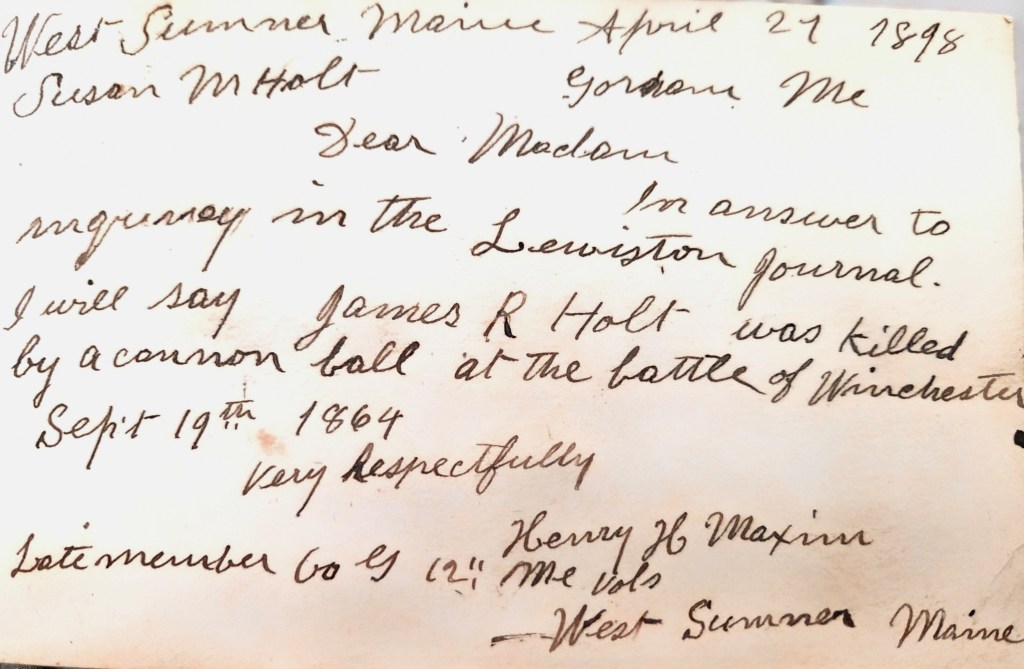
The letters penned by Pvt. James Redlon Holt (1845-1864), a 16 year-old youngster who enlisted on 15 November 1861 with Co. G, 12th Maine Infantry, tell a haunting story of sacrifice and valor. This young man, the son of Rev. Dudley Barker Holt and Susan M. Redlon from Gorham, Maine, found himself swept into the chaos of war. In the sweltering heat of Louisiana, where the 12th Maine was stranded for most of its service, he poured his heart onto paper. Just as the light at the end of the tunnel seemed near, with mustering out on the horizon, fate had a cruel twist in store. The regiment was called back East, only to face the brutal carnage of the 3rd Battle of Winchester in September 1864, where James met a tragic end on 19 September 1864—“killed by a cannon ball”—just two months before completing his three-year enlistment. What a visceral reminder of the brutality of war and the fragility of life!
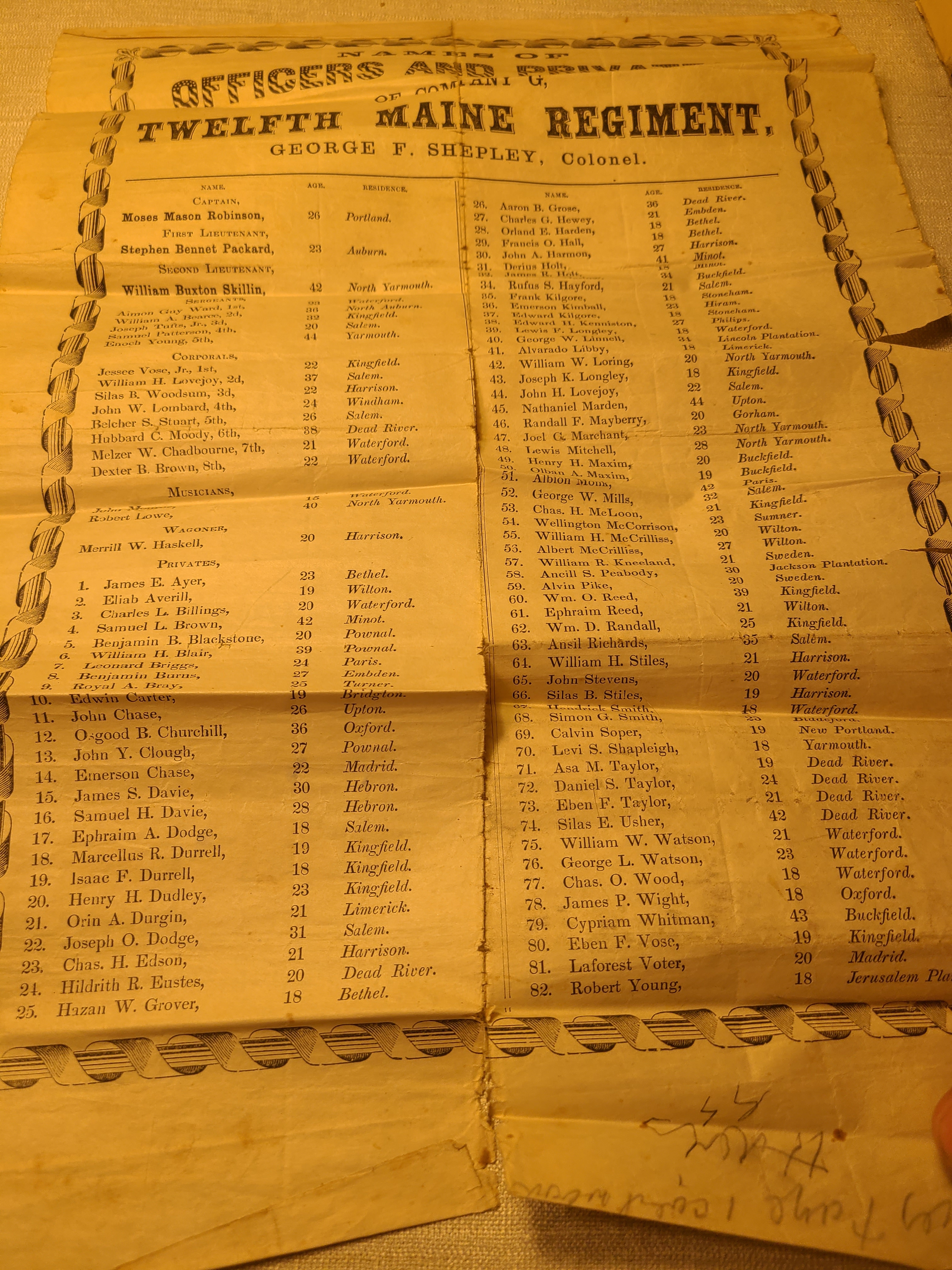
Serving with James and mentioned in some of his letters was his Uncle Darius Holt (1820-1875) who enlisted at the age of 42 and served several months until his health failed and he was discharged for disability. Darius was living in Minot with his wife, Mercy Ann (Lord) Holt (1828-1902) and six children when he enlisted.
These letters are from the private collection of a Holt family descendant and were sent to me for transcription and publication on Spared & Shared by express consent.

Letter 1

[New Orleans]
July 27, 1862
Dearest Annie,
My father says that you say I must write to you. Well now, ain’t you ashamed to be fishing after a fellow in that way. Well I suppose you think it’s war times & the young ladies must court for themselves. Well if I did not think my poor Annie had waited so long for a letter & went away to her room & wept every time the mail brought a letter for her father or Leroy & none for her, I wouldn’t write. You mustn’t think that I have forgotten you dearest, for James still loves his Annie best of all, proof of which I send you this pretty picture. You see I’ve marked the place where we stay now (the Mint). We are expecting to leave the mint in a few days & go to a school house uptown. I’be been on picket the last few days. My health is tip top. Darius is about the same. Tom is nearly well. There is no news I think of. I want to see you all. My love to you and the rest. Write soon. From your own, — Jamie

Letter 2
New Orleans, [Louisiana]
August 25, 1862
Dear Father,
As Uncle Darius expects to leave in a day or two for home, I thought I would write you a few lines. My health is very good & I never felt better in my life except that I’ve been & am still troubled with boils—one on my forehead which though not very painful makes my eyes swell so that they feel mighty queer. And now my left eye is a fine-looking object.
Everything goes on pleasantly. I still reain here at the railroad station. There was a policeman shot here a few days ago & though we turned out from our beds in no time, we couldn’t find out who it was. It was probably someone who had a grudge against him. Why don’t you send me more papers? I want you to send $1 to D. T. Pike, Augusta, Maine, for The Age for six months & $1 to Harper’s Brothers, Franklin Square, New York for “Harper’s Weekly” for 20 weeks. If you will do this, I will send you the money to pay for them when we are paid off out of my spending money. You can have them sent to you & read them, then send to me. Now be sure & do it for I want something to read.
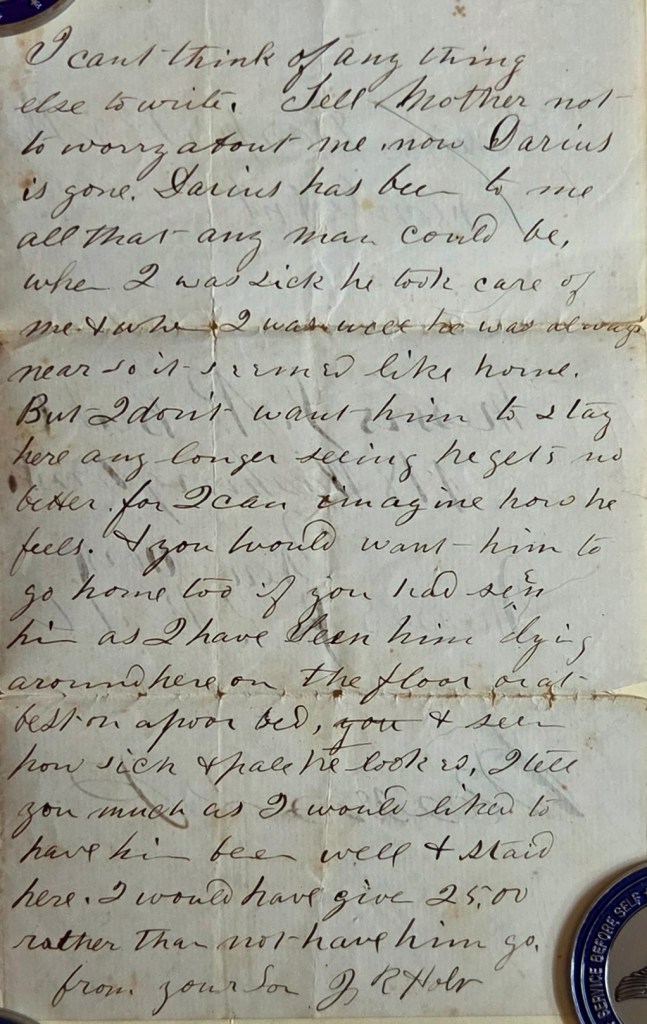
I can’t think of anything else to write. Tell Mother not to worry about me now Darius is gone. Darius has been to me all that any man could be. When I was sick, he took care of me & when I was well, he was always near so it seemed like home. But I don’t want him to stay here any longer seeing he gets no better for I can imagine how he feels & you would want him to go home too if you had seen him lying around here on the floor or at best, on a poor bed, and seen how sick and pale he looked. I tell you, much as I would liked to have him been well & stayed here, I would have give $25 rather than not have him go.
From your son, — J. R. Holt


Letter 3
New Orleans [Louisiana]
September 8, 1862
Dear Father,
I received yours of the 15th & Mothers of the 21st a day or two ago & was glad to learn that you were well though sorry to find that my curious letter has made you feel bad for I did not intend it should. I love you as well as my odd nature can, though I don’t take so much pains as I ought to share it & wish never to cause you sad feelings so I’ll tell you why I wrote it.
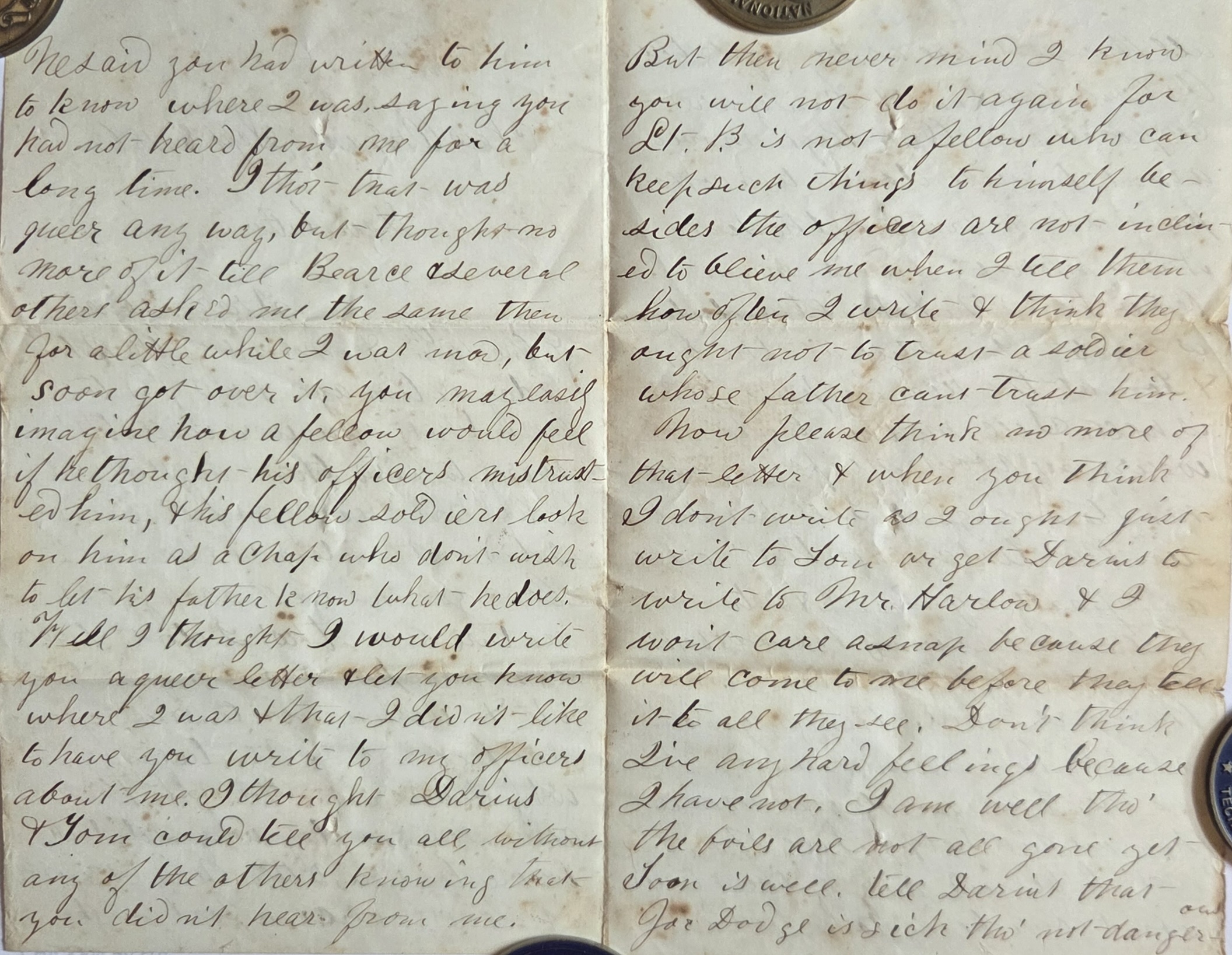
Lt. [Stephen B.] Packard 1 asked me one day why I didn’t write to you. I told him I wrote at least once a fortnight. He said you had written to him to know where I was, saying you had not heard from me for a long time. I thought that was queer anyway, but thought no more of it till [Sgt. William A.] Bearce & several others asked me the same. Then for a little while I was mad, but soon got over it. You may easily imagine how a fellow would feel if he thought his officers mistrusted him & his fellow soldiers look on him as a chap who don’t wish to let his father know what he does. Well, I thought I would write you a queer letter & let you know where I was & that I didn’t like to have you write to my officers about me. I thought Darius & Tom could tell you all without any of the others knowing that you didn’t hear from me.
But then, never mind. I know you will not do it again for Lt. B. is not a fellow who can keep such things to himself. Besides, the officers are not inclined to believe me when I tell them how often I write and think they ought not to trust a soldier whose father can’t trust him. Now please, think no more of that letter & when you think I don’t write as I ought, just write to Tom or get Darius to write to Mr. [Nathaniel] Harlow & I won’t care a snap because they will come to me before they tell it to all they see. Don’t think I’ve any hard feelings because I have not.
I am well though the boils are not all gone yet. Tom is well. Tell Darius that Joe Dodge is sick though not dangerous. All the rest are as he left them. Alf and Mahlin & Finley are corporals now. Our regiment moved about 1 mile down to a cotton press which fronts on the levee. It is a monster and is much better than the Hotel & the duty is lighter. I’m still at the Depot & Tom at the Reading Press. 2 William is well. Tell mother to stop worrying about me for it will not do any good. Tell her I’ve read the Testament through once and partly again.
As to [Gen.] Butler’s observing the Sabbath, I can’t say for in the army there are none. Things go on about the same one day as another though we do no more than we can help. Tell her not to believe any of the stories about our being taken [prisoners] for it [is not true].
[Remainder of letter missing?]
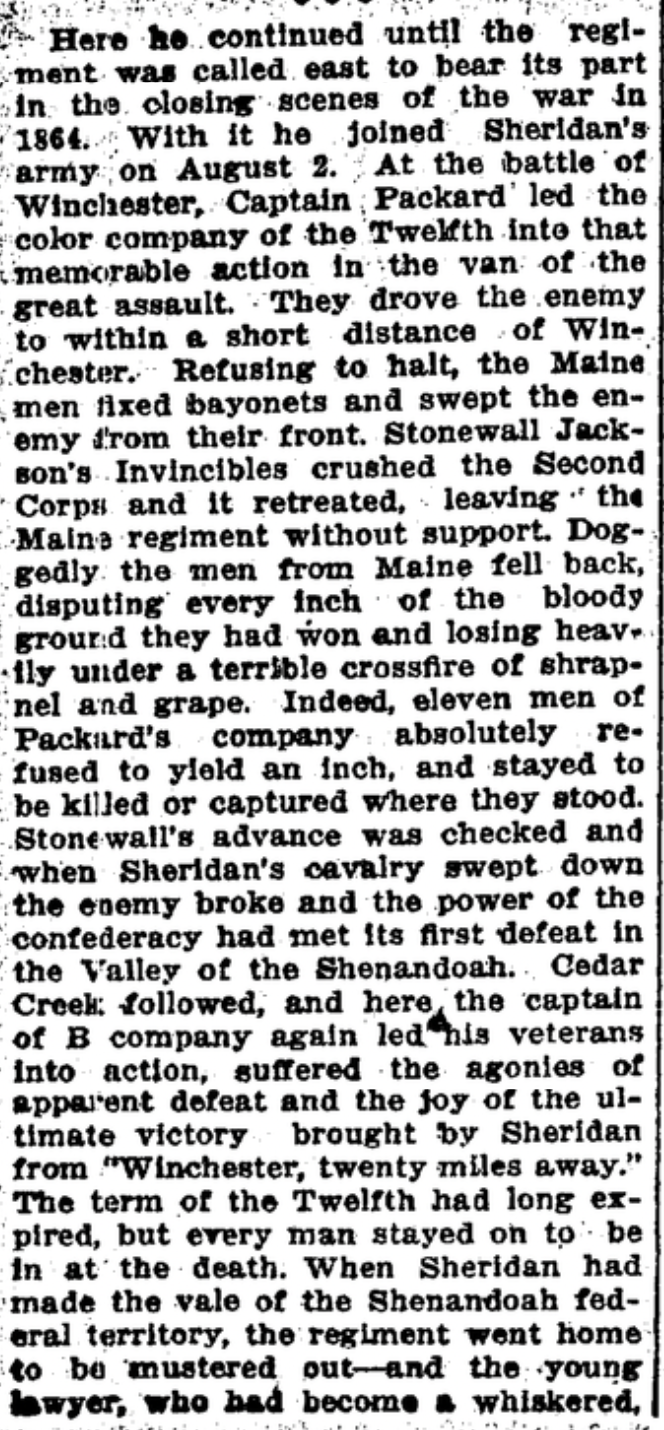
1 There is seems to be a descrepancy in the rank of Stephen B. Packard at the time. The following story of Stephen B. Packard and his wife, Emma Frances Steele, whom he married on 31 December 1863, appeared in the Evening Times-Republican of Marshalltown, Iowa, in 12 November 1907 following Emma’s death:


There is also this article on Packard that was oublished in the same paper on 23 May 1908 following his death.



2 The “Reading Press” in New Orleans during the Civil War was not a printing mechanism or a newspaper, but rather a prominent riverfront cotton press and warehouse located near the foot of Erato Street. After Union forces captured the city in April 1862, these large industrial structures were used by the Union army and navy to store munitions, coal, and other critical supplies.


Letter 4
Plaquemine (Iberville) Louisiana
January 11, 1863
Dear Father,
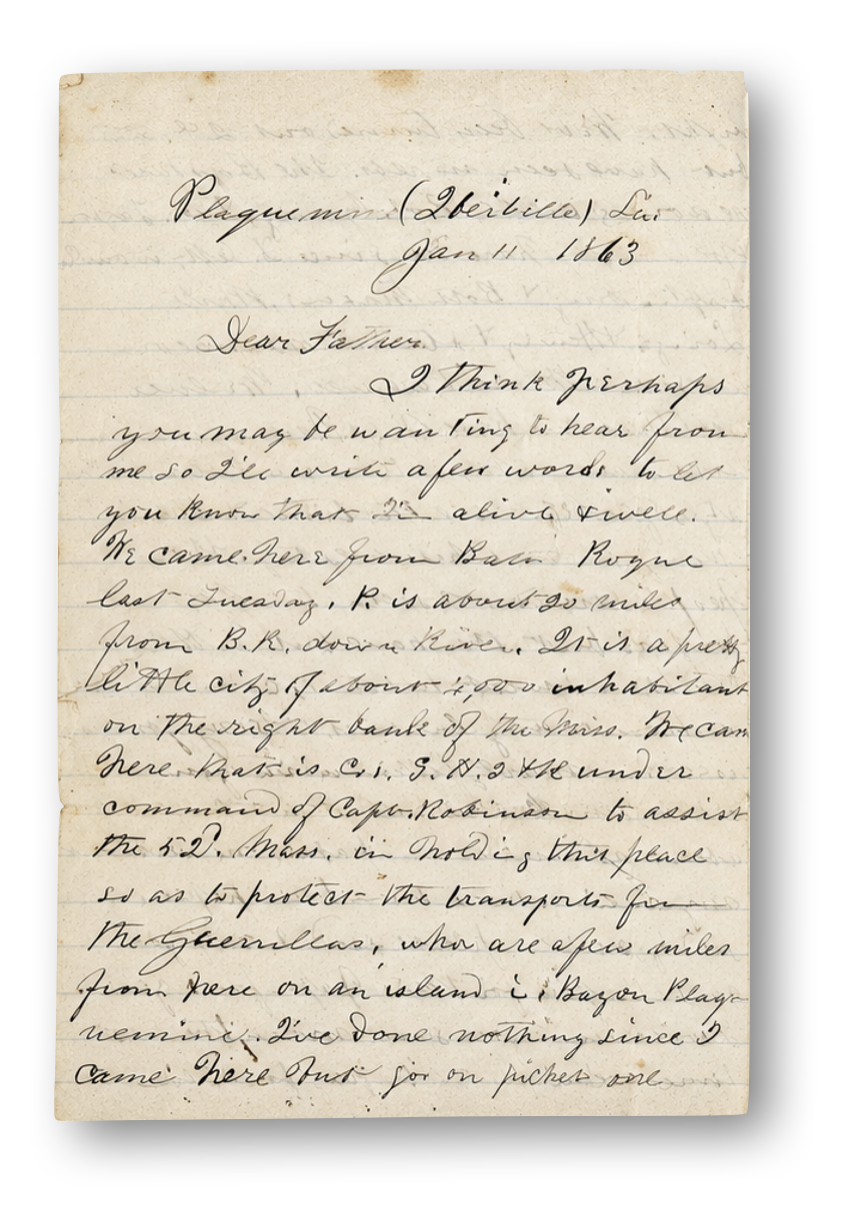
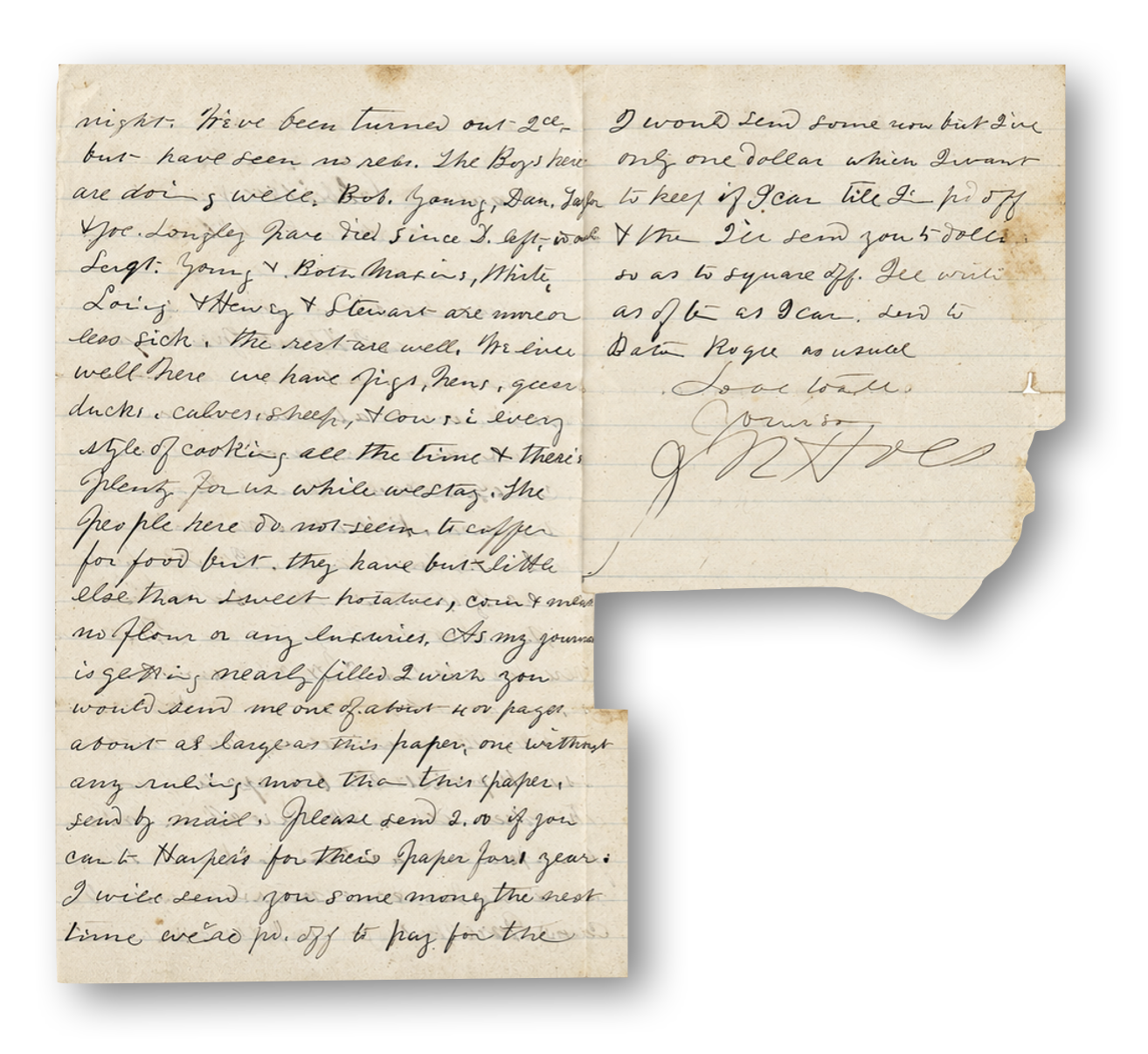
I think perhaps you may be wanting to hear from me so I’ll write a few words to let you know that I’m alive & well. We came here from Baton Rouge last Tuesday. P[laquemine] is about 20 miles from B[aton] R[ouge] down river. It is a pretty little city of about 4,000 inhabitants on the right bank of the Mississippi. We came here—that is, Companies G, H, I, & K under command of Capt. Robinson to assist the 52nd Massachusetts in holding this place so as to protect the transports from the guerrillas who are a few miles from here on an island in Bayou Plaquemine. I’ve done nothing since I came here but go on picket one night. We’ve been turned out twice but have seen no rebs.
The Boys here are doing well. Bob Young, Dan Taylor, & Joe Longley have died since I left. In our company, Sergeant Young & both [Henry & Olban] Maxims, White, [William W.] Loring, and Henry & Stewart are more or less sick. The rest are well. We live well here. We have pigs, hens, geese, ducks, calves, sheep & cows in every style of cooking all the time & there’s plenty for us while we stay.
The people here do not seem to suffer for food but they have but little else than sweet potatoes, corn & meat. No flour or any luxuries.
As my journal is getting nearly filled, I wish you would send me one of about 400 pages, about as large as this paper—one without any ruling more than this paper. Send by mail. Please send $3 if you can to Harper’s for their paper for 1 year. I will send you some money the next time we’re paid off to pay for them. I would send some now but I’ve only one dollar which I want to keep if I can till I’m paid off & then I’ll send you 5 dollars so as to square off. I’ll write as often as I can. Send to Baton Rouge as usual. Love to all. Your son, — J. R. Holt
Letter 5
Fort Banks, Louisiana
November 27 [1863]
Dear Father,
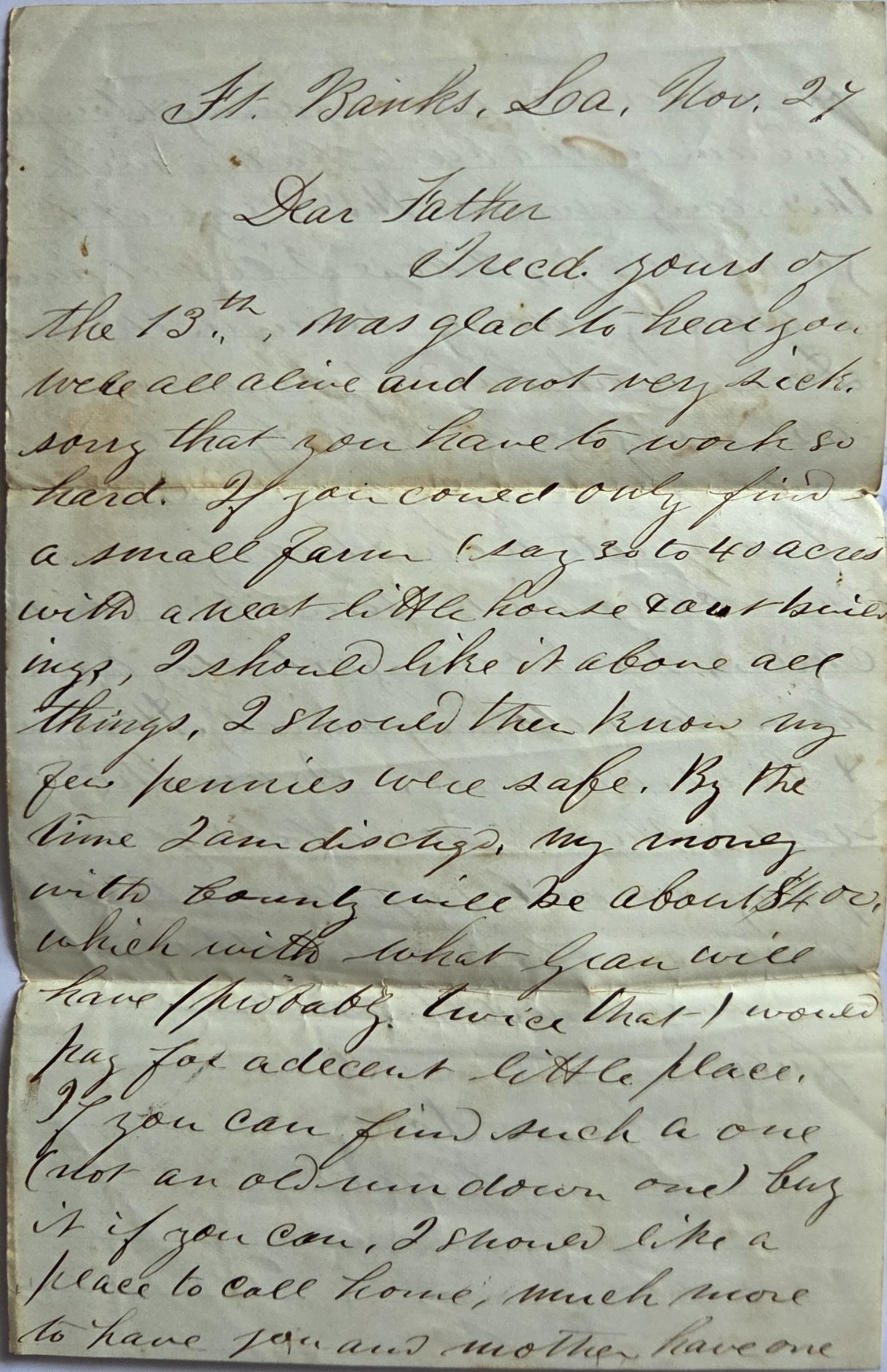
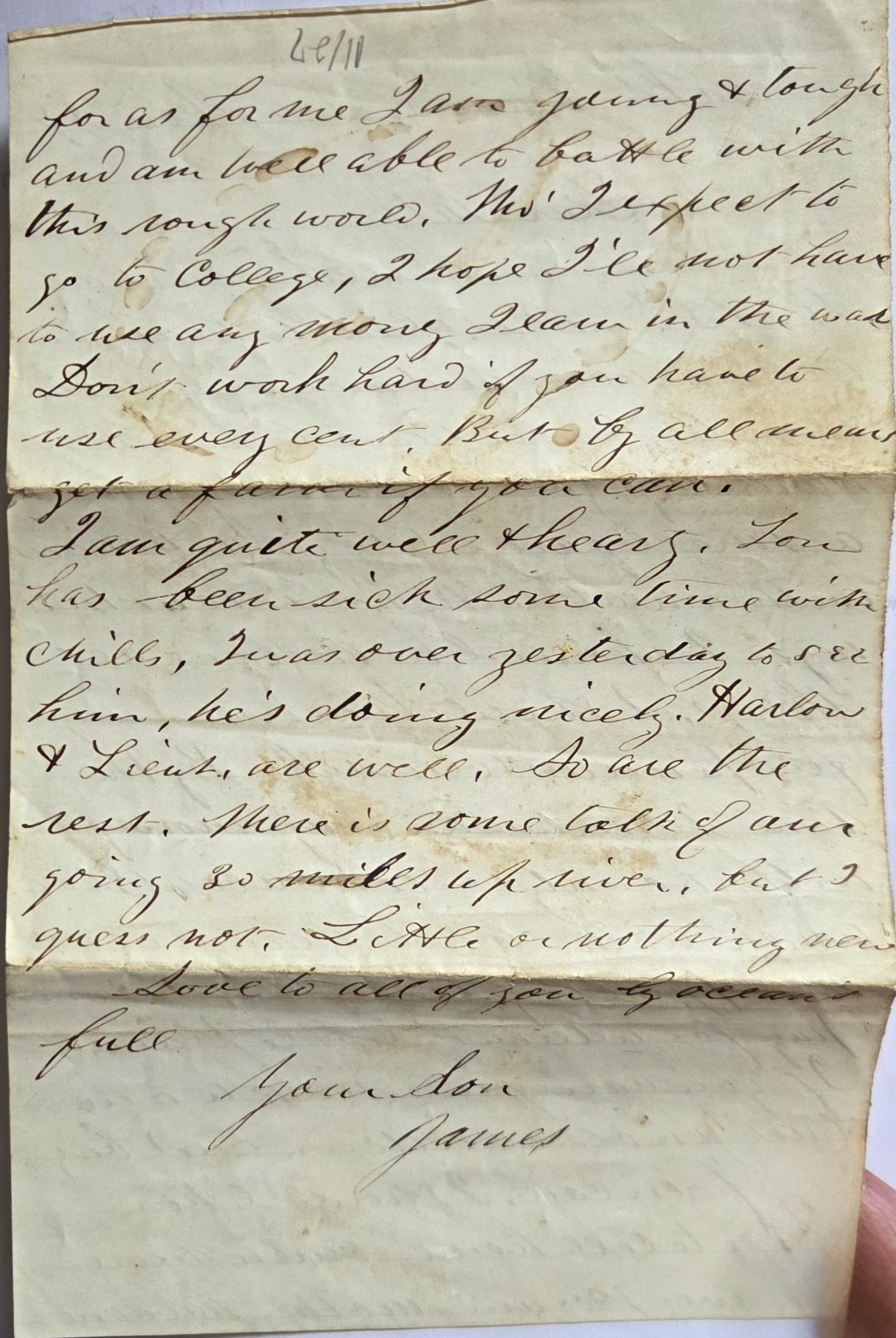
I received yours of the 13th. Was glad to hear you were all alive and not very sick. Sorry that you have to work so hard. If you could only find a small farm (say 30 to 40 aces) with a neat little house & out buildings, I should like it above all things. I should then know my few pennies were safe. But the time I am discharged my money with bounty will be about $400 which with what Gran will have (probably twice that) would pay for a decent little place. If you can find such a one (not an old run down one), buy it if you can. I should like a place to call home, much more to have you and mother have one for as for me, I am young and tough and am well able to battle with this rough world. Though I expect to go to college, I hope I’ll not have to use any money I earn in the war. Don’t work hard [even] if you have to use every cent. But by all means, get a farm if you can.
I am quite well and hearty. Tom has been sick some time with chills. I was over yesterday to see him. He’s doing nicely. [Nathaniel] Harlow & Lieut. are well. So are the rest. There is some talk of our going 30 miles upriver but I guess not. Little or nothing new. Love to all of you. Your son, — James
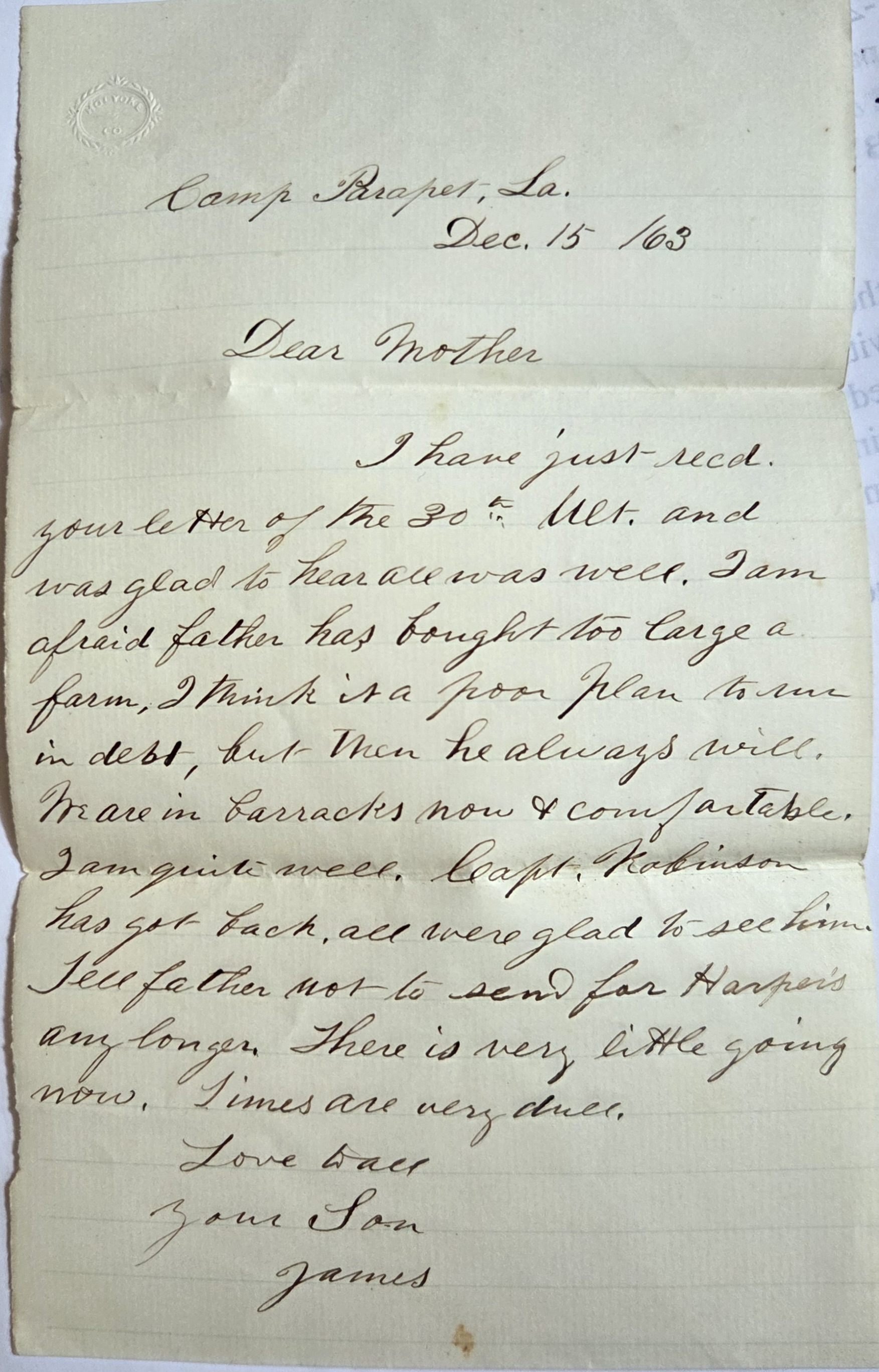
Letter 6
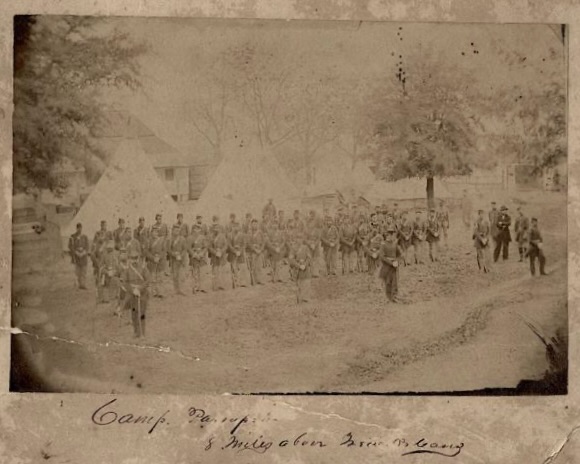
Camp Parapet, Louisiana
December 15, 1863
Dear Mother,
I have just received your letter of the 30th ult. and was glad to hear all was well. I am afraid father has bought too large a farm. I think it a poor plan to be in debt, but then he always will.
We are in barracks now & comfortable. I am quite well. Capt. Robinson has got back. All were glad to see him. Tell father not to send for Harper’s any longer. There is very little going now. Times are very dull. Love to all. Your son, — James
Letter 7
Proctorville, Louisiana
January 8, 1864
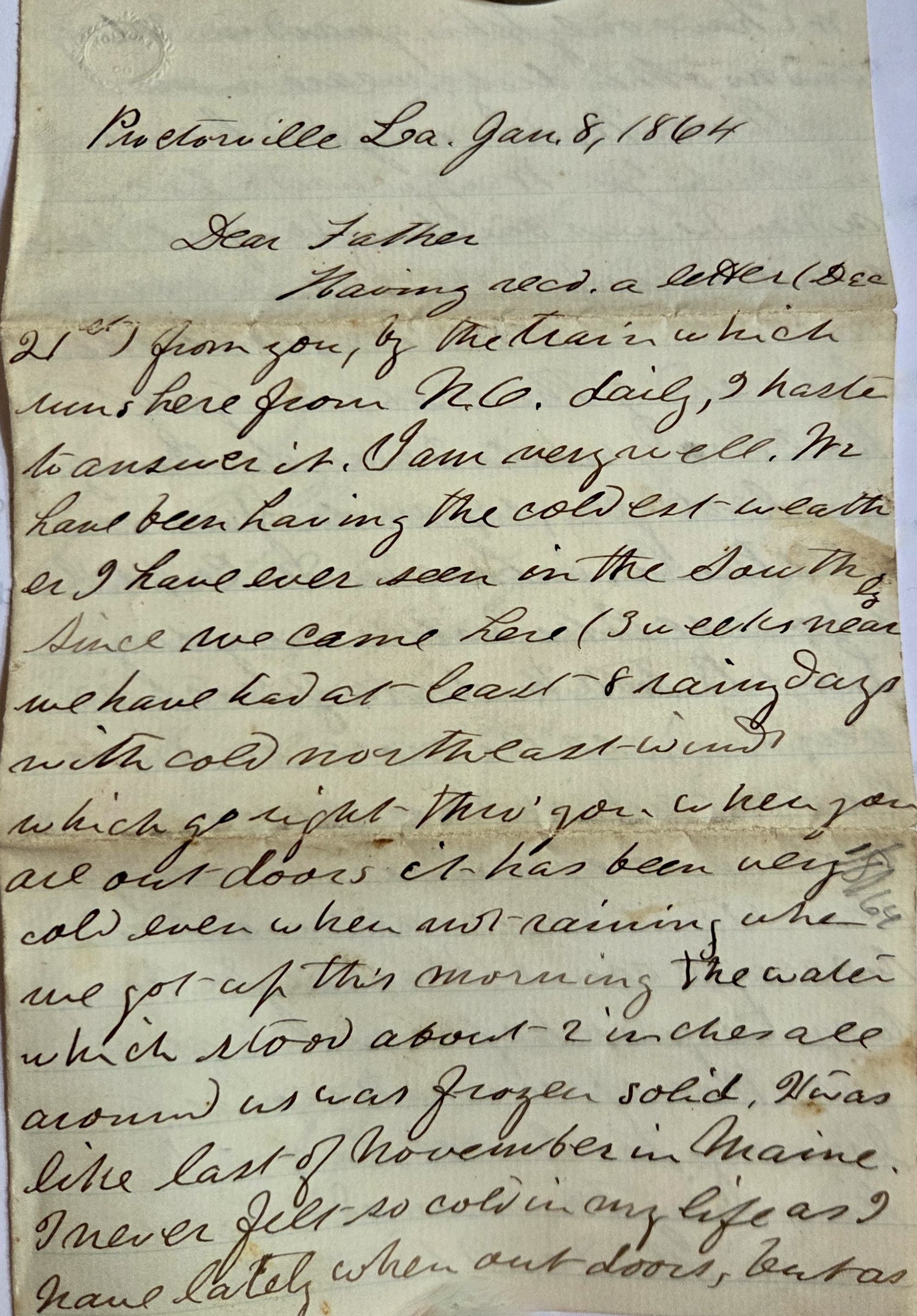
Dear Father,
Having received a letter (Dec. 21st) from you, by the train which runs here from New Orleans daily, I hasten to anwser it. I am very well. We have been having the coldest weather I have ever seen in the South. Since we came here (3 weeks nearly) we have had at least 8 rainy days with cold northeast winds which go right through you when you are out doors. It has been very cold even when not raining. When we got up this morning, the water which stood about two inches all around us was frozen solid. It was like last of November in Maine. I never felt so cold in my life as I have lately when out doors, but as we have only 4 hours guard in 3 days and no other duty, we are in[side] most of the time. We have a good house in which Gen. [Godfrey] Weitzel used to live when he was building the fort 1 here which is unfinished still, not being touched since 1860. We are at the lake end of the Mexican Gulf Railroad, while I was at the City end last year, 27 miles from here. All the company is here under Capt. [Moses M.] R[obinson] whom all like better every day.
Lieut. B. took the death of his child very hard all the more so since the mail which brought your letter brought an acceptance to the resignation which he was allowed to make to escape court martial for being too antic just before we left the fort. That spree was the cause of our leaving. The company all hate him and knowing that made her death much harder. I pitied him, but knew not how to comfort him. He came to me just after the cars came in and handed me your letter but he felt too bad to talk. He walked the room all night. He is a good fellow when he is himself, but he is very easily led astray. I really like him though I think he wil stay here till we go home. You had better not tell his wife about this or anyone else for two reasons. First, it would only hurt him and make him worse and make his wife feel bad. Second, it might still cause hard feelings between him and I and as I like him, I shouldn’t like that. So please don’t say anything to anyone.
I received a Herald & Harper’s [Weekly]. There are several Harper’s I never got. I know not if you have sent them. If not, all right. Tell me next time if you have ever received the Magazine I told you awhile ago I sent for—Leslie’s, I mean.
The regiment is off on an expedition to Pontchartrain [led by Col. W. K.] Kimball with several other regiments. 2 I haven’t seen Tom lately. [Nathaniel] Harlow is well. I am glad to know that you have a home at last and are in fair way of paying for it. It is what I have long wanted—to have you in a sure home of your own where I could come and go often as I will. Yes, too glad. What little money I had cheerfully and gladly I gve to you. Never trouble about it. I’ll not want it, I hope. If I could give everything in the world, I should still fell in debt to you.
Love to you and Mother and all. Yours son who really love you, — James
1 The unfinished fort was Fort Proctor.
2 On January 3, 1864, a Federal expeditionary force led by Colonel W.K. Kimball of the 12th Maine Infantry successfully crossed Lake Pontchartrain and occupied Madisonville, Louisiana. The mission aimed to disrupt Confederate smuggling and secure raw materials for the Union Department of the Gulf.


Letter 8
Proctorville, Louisiana
January 20, 1864
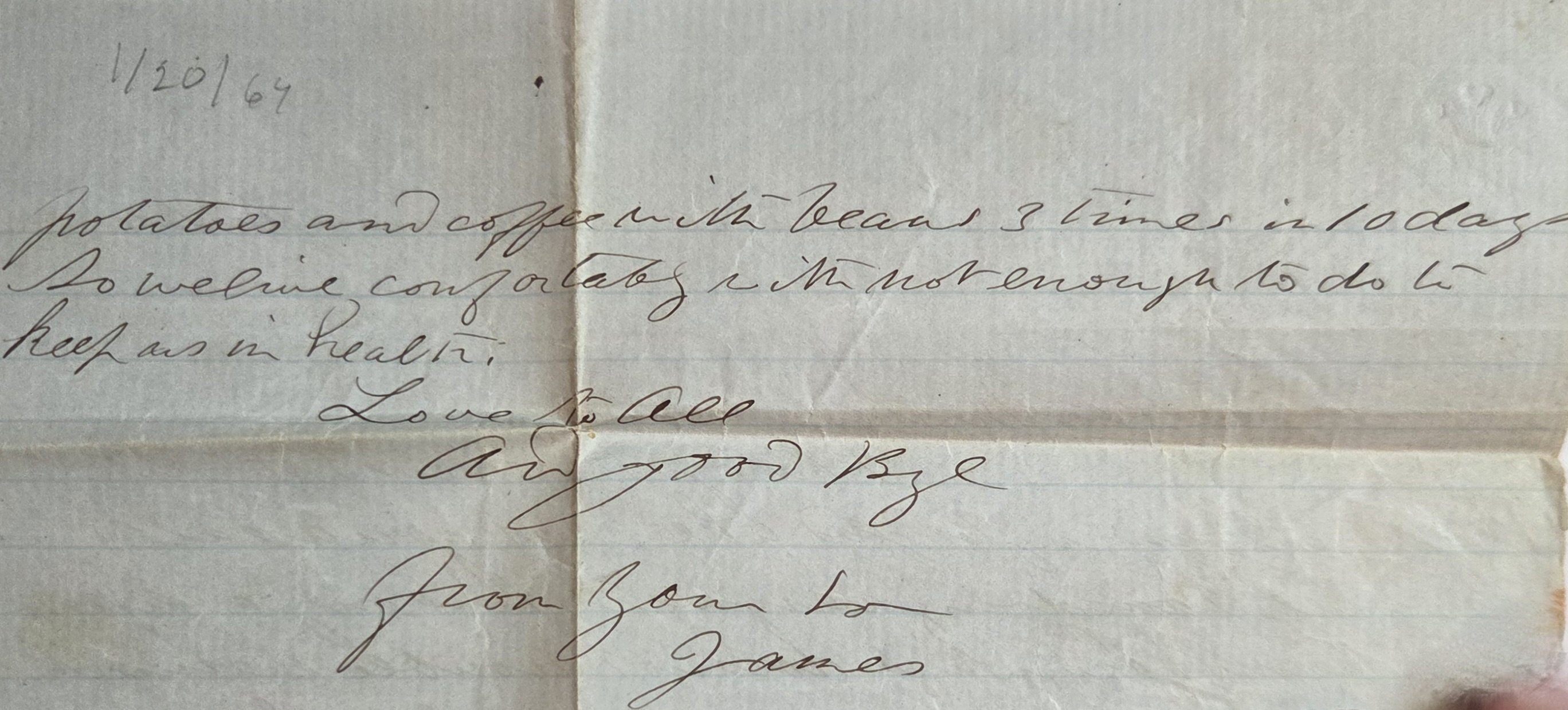
Dear Mother,
I have just received your letter and am right glad to hear that you are all so well. I am doing very well. Have only a slight cold in my head which does not trouble me much. [Nathaniel] Harlow is well. I suppose [Sgt. William A.] Bearce will be at home before this but I don’t know. Tom is well and has gone and done [enlisted] for three years more to the tune of $902 bounty [paper creased] and bounty $402 Govt., $100 State and $300 town of Paris. He’ll probably have $1500 or more at the end of his time if he lives. Very good for him. 10 have done the same in our company and about 160 in the regiment. But I think that 3 years service [volunteering] before I was old enough to fear the draft is about as much as I owe the government, don’t you? The money is no temptation. Yet I would [re]enlist were it not that I should be getting too old for college. I shall keep out of it. Those who have [re]enlisted have gone to the City to be mustered.
It is very pleasant here now—just like May or rather October, for we have heavy frosts & chilly mornings. Tell Leroy I don’t understand French but guell I’ll learn it this summer. I could give him a bit of Dutch [German], Latin, or Greek if he wanted it, but no French. If we all live and do well, 10 months from today will see us in the same state unless there is a battle here about that time, which I guess will not be the case. I want to get home and have some good bread and milk. Yet we live well here—good biscuits, meat, fresh fish, potatoes and coffee with beans 3 times in 10 days. So we live comfortably with not enough to do to keep us in health. Love to all and goodbye. From your son, — James

Letter 9
Proctorville, Louisiana
February 21, 1864
Dear Mother,
I have just received your letter & was right glad to hear you are all well. I am tough & hearty as I could wish, live well & feel equal. About 17 men have reenlisted in our company and near 200 in the regiment. I’ll keep out sure—don’t worry at all about it. I have received two magazines lately Haven’t heard from Tom since I wrote before. D[arius]’s regiment is in Algiers, opposite New Orleans, and will go to Franklin, 150 miles nearly from there. I should go & see him but it is too far for my means. We expect pay soon & perhaps I may see him. Surely shall if he don’t go before.
The State is in no little excitement about the coming election. There are three parties: 1st, Free State men who are opposed to giving negroes same rights as white men but want them free & made to work for pay as [Gen. Nathaniel] Banks does it. 2nd, men who want them to have same privileges as whites, amalgamation and all. 3rd, Copperheads who are few. [Michael] Hahn of the 1st party will be Governor, I think. Hope so anyway. I’m in for giving slaves freedom but don’t want them to vote, hold office, be officers, or marry whites. They’re so lazy they won’t do anything if they can help it. I’ve seen how the thing works and like [Gen.] Banks’ plan best of any. That gives them all they deserve though Abolitionists don’t like it.
We’ve had a bit of snow a few days ago which melted as it fell. Ice was an inch thick or more. We are pretty cold, I tell you, & mighty windy too.
[Nathaniel] Harlow and all are well. He’s not been listed. I’ve got my studies so well along that I can enter college any time. Guess I’ll do it in the fall of ’65, if I live. I’m a none-month’s man & glad of it too. Yes, 9 months from yesterday will end my soldier’s life without doubt. I hope so. Love to you and all. Your son, — James


Letter 10
New Orleans, Louisiana
April 22, 1864
Dear Father,
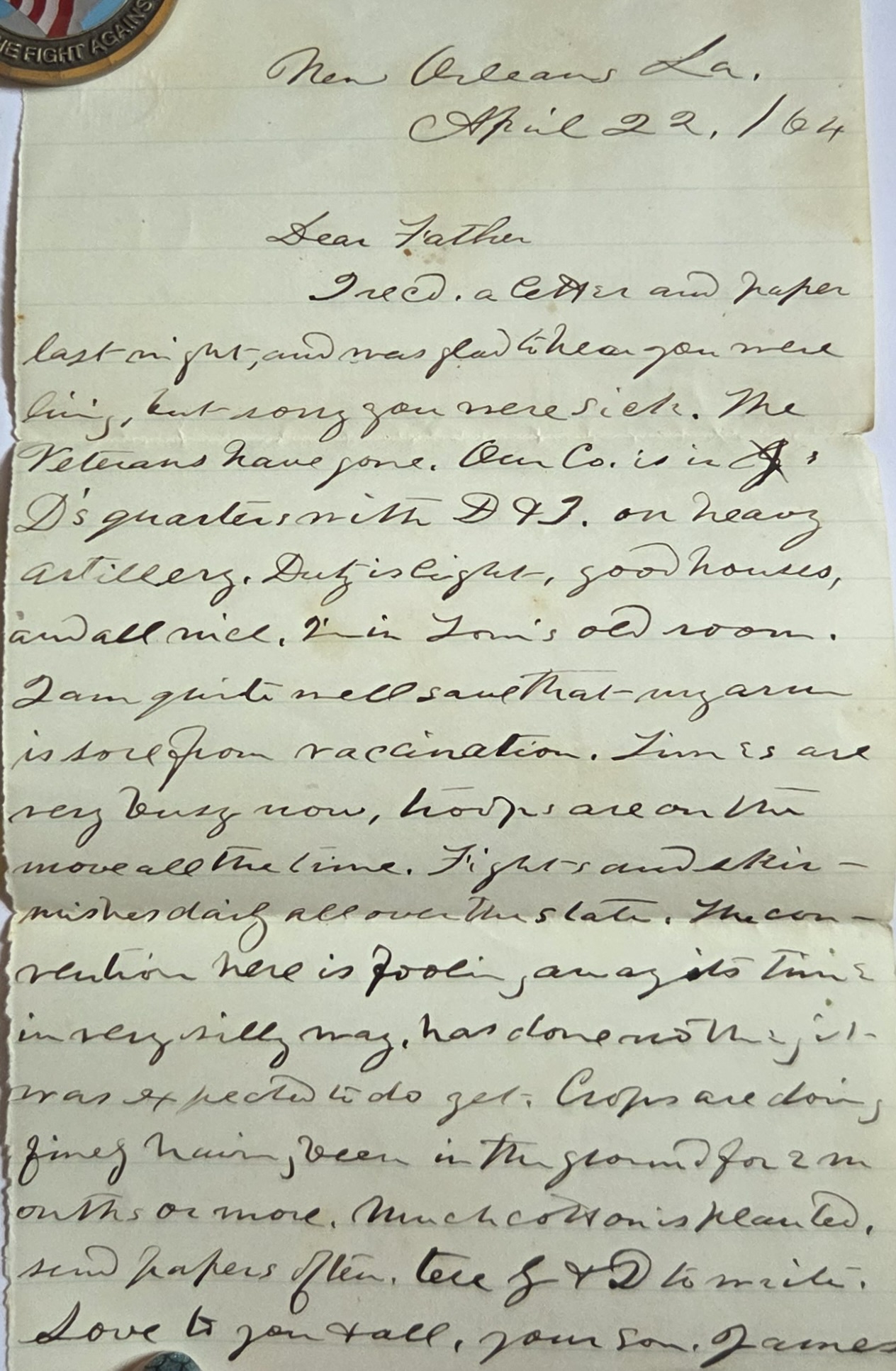
I received a letter and paper last night and was glad to hear you were living but sorry you were sick. The veterans have gone. Our company is in D’s quarters with D & I on heavy artillery. Duty is light, good houses, and all nice. I’m in Tom’s old room. I am quite well save that my arm is sore from [smallpox] vaccination. 1
Times are very busy now. Troops are on the move all the time. Fights and skirmishes daily all over the state. The convention here is fooling away its time in a very silly way—has done nothing it was expected to do yet. 2
Crops are doing finely having been in the ground for 2 months or more. Much cotton is planted. Send papers often. Tell G & D to write. Love to you & all. Your son, — James
1 A devastating smallpox epidemic swept through New Orleans in 1864 and 1865, taking thousands of lives of freedmen and soldiers in the region.
2 The Louisiana Constitutional Convention convened at Libery Hall in New Orleans on 6 April 1864. The convention was called by President Lincoln for the purpose of drafting a new state constitution to include the abolishment of slavery. It ultimately finished its work in late July, granting Black citizenship rights but denied them the right to vote.
Letter 11
Hickock’s Landing, La. 1
May 18, 1864
Dear Father,
I write his to let you know that I am well as ever. We came here the 16th. It is at the lake end of the shell road where all the New Orleans highbucks drive with their ladies. It is a pleasant place. We were paid a day or two ago and I’ll enclose 15 if I don’t let D[arius] have it. I am going to see him today and think he’ll want to borrow it and pay you when he gets home. I was very glad of those [Portland] Transcripts you sent. Send more and Leslie’s [Illustrated]. Love to all. Your son, — James
1 “Hickock’s Landing,” or “Port Hickock,” was situated on the southern shore of Lake Pontchartrain, Louisiana, at the terminus of the New Orleans shell road.

Letter 12
Algiers, Louisiana
July 13, 1864
Dear Father,
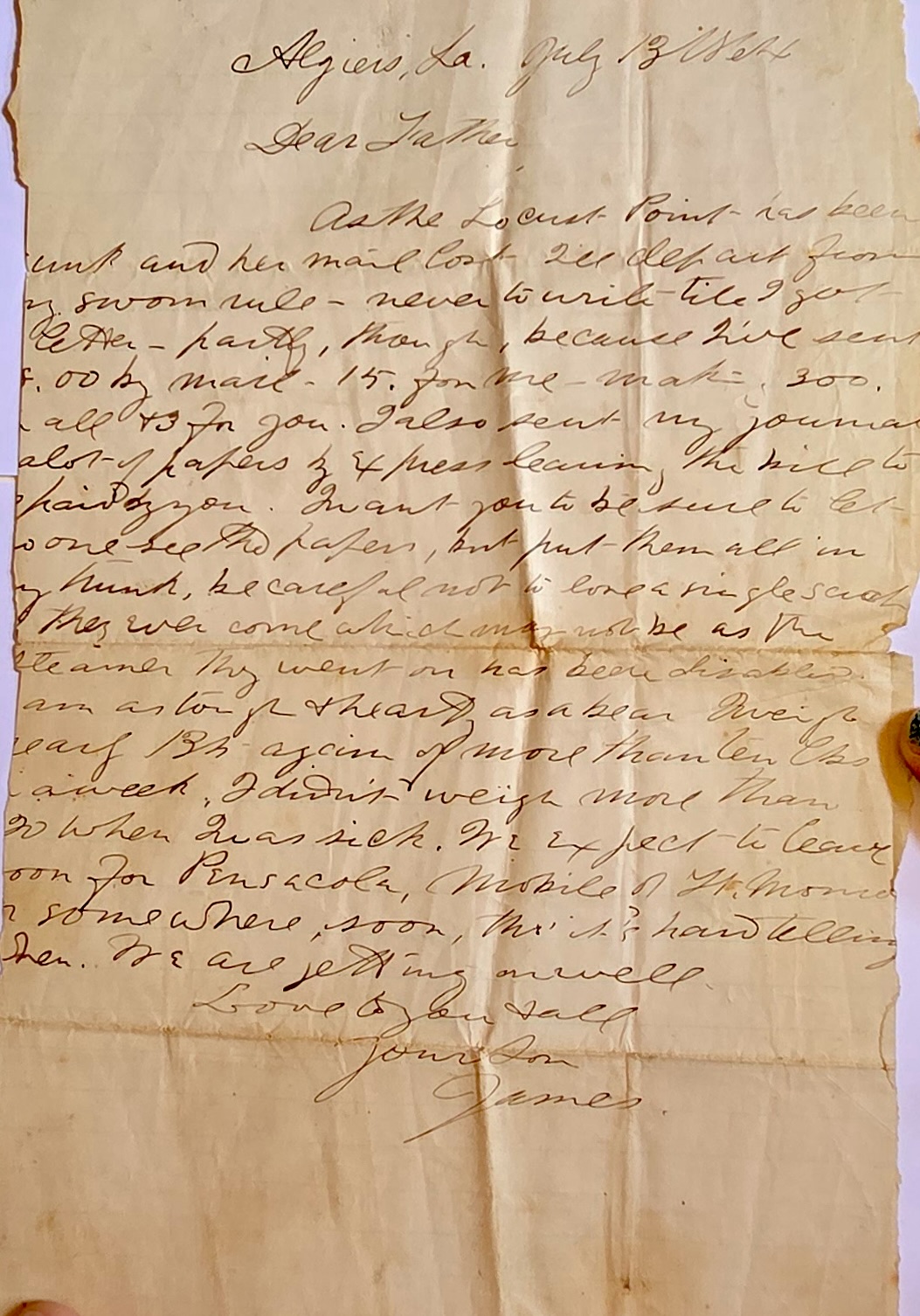
As the Locust Point has been sunk and her mail lost, I’ll depart from my sworn rule never to write till I got a letter. Partly, though, because I’ve sent $18 by mail, 15 for me—making 300 in all—and 3 for you. I also sent my journal and a lot of papers by Express leaving the bill to be paid by you. I want you to be sure to let no one see the papers, but put them all in my trunk. Be careful not to lose a single scrap—that is, if they ever come, which may not be as the steamer they went on has been disabled.
I am as tough & hearty as a bear. I weigh near 135 again of more than ten lbs. in a week. I didn’t weigh more than 120 when I was sick. We expect to leave soon for Pensacola, Mobile, or Fort Monroe or somewhere soon though it is hard telling when. We are getting on well.
Love to all. Your son, — James
The following postcard was sent to James’ mother, Susan Holt, in 1898. It was sent to her in response to an ad she placed in the newspaper as she continued to gather additional evidence or testimony to validate her pension claim—33 years after her son’s death! The pension records in Washington D. C. may have some interesting material in it—possibly even some of James’ letters.

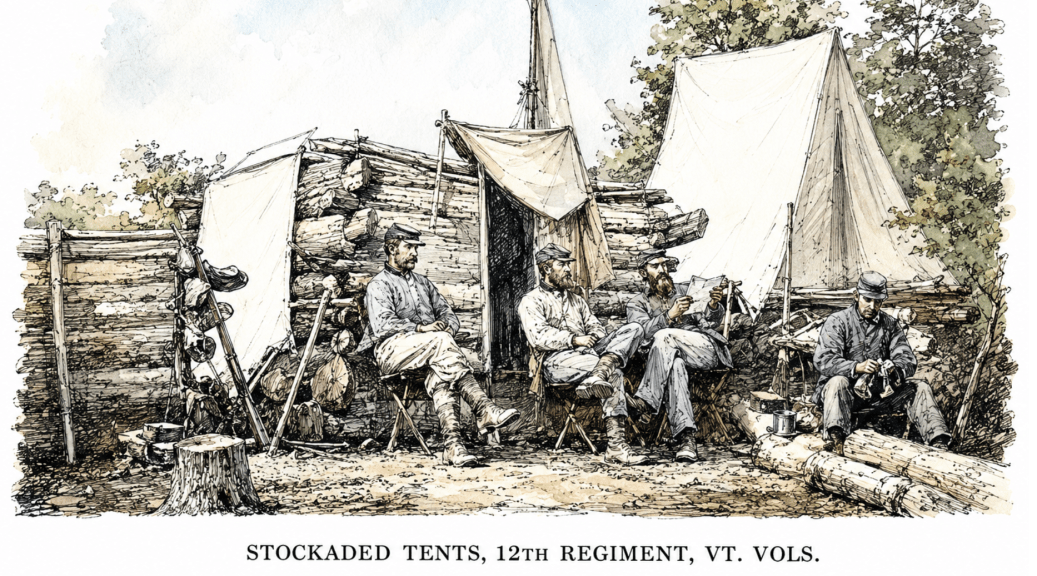
1862-63: Daniel Webster Rodgers, Augustine W. Rodgers & William Wallace Rodgers to Jacob Rodgers

The following letters were written by Daniel Webster Rodgers (1840-1931) and his brother Augustine W. Rodgers (1843-1893) while serving in Co. B, 12th Vermont Infantry—a nine-month’s regiment organized at Battleboro, Vermont in early October 1862 and sent to Washington D. C. in mid October. Once there, they were attached to Abercrombie’s Division, Military District of Washington. Late in their term of service they sent to the Rappahannock and then marched to Gettysburg but did not participate in the fighting. They mustered out shortly after the battle.
From the 1850 US Census, we learn that Daniel and Augustine were the orphaned children of Frederick William Rodgers (1806-1854) and Lorana Hadley (1806-1856) of Hartland, Windsor county, Vermont.
Included in this same set of letters are two by their cousin, William Wallace Rodgers, the son of Lorenzo Rodgers (1808-1846) and Mary Ann Rood (1812-1880) who also served Co. B, 12th Vermont Infantry.
There is only 1 letter written by Daniel, 3 by Augustine, and two by William. All of them were addressed to Daniel and Augustine’s younger brother, Jacob Rodgers (b. 1846), in Hartland, Vermont.
To read other letters by members of the 12th Vermont Infantry transcribed andpublished by Spared & Shared, see:
Mark P. Bartlett, Co. D, 12th Vermont (1 Letter)
Leonard Emery, Co. D, 12th Vermont (6 Letters)
Silas Goddard Emery, Co. D & F, 12th Vermont (1 Letter)
Oscar F. Marston, Co. D, 12th Vermont (2 Letters)
[My thanks to Abbey Weber Jones for providing me with a first draft of these transcriptions.]
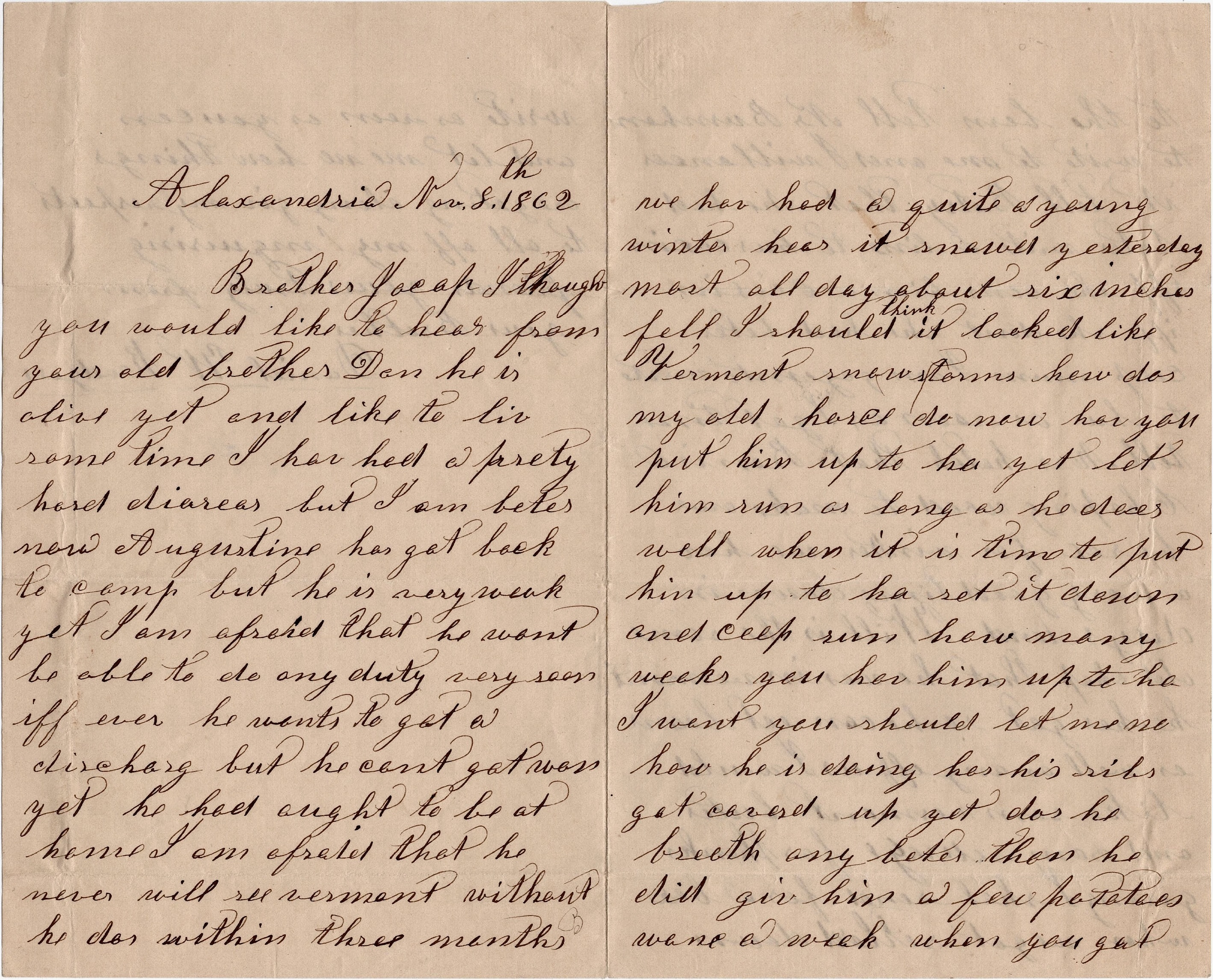
Letter 1
Alexandria, [Virginia]
November 8th 1862
Brother Jacob,
I thought you would like to hear from your old brother Dan. He is alive yet and like[ly] to live some time. I have had a pretty hard diarrhea but I am better now. Augustine has got back to camp but he is very weak yet. I am afraid that he won’t be able to do any duty very soon—if ever. He wants to get a discharge but he can’t get one yet. He had ought to be at home. I am afraid that he never will see Vermont without he does within three months.
We have had a quiet a young winter here. It snowed yesterday most all day. About six inches fell. I should think it looked like Vermont snow storms.
How does my old horse do now? Have you put him up to hay yet? Let him run as long as he does well. When it is time to put him up to hay, set it down and keep run how many weeks you have him up to hay. I want you should let me know how he is doing. Has his ribs got covered up yet? Does he breathe any better than he did? Give him a few potatoes once a week when you get to the barn.
Tell Mr. Burnham to write to me and I will answer it. Tell Betsy that she had better write a line to her cousin if she wants him as a cousin. If she don’t, she had better keep mum. I am a going to write to her as soon as I get time. Tell Mrs. Hatch that Ben is a chopping wood to make our barracks for winter. We have a very good time down in Dixies land. Will is the same old chap that he was in Vermont. He has got so he can eat beans as well as any of us. I would like some Vermont butter and some sausage for Thanksgiving. I shall send for a box when we get settled down.
Write as soon as you can and let me know how things are getting along. Give my respects to all of my inquiring friends. Yours truly, from your brother, — Daniel W. Rodgers

Letter 2

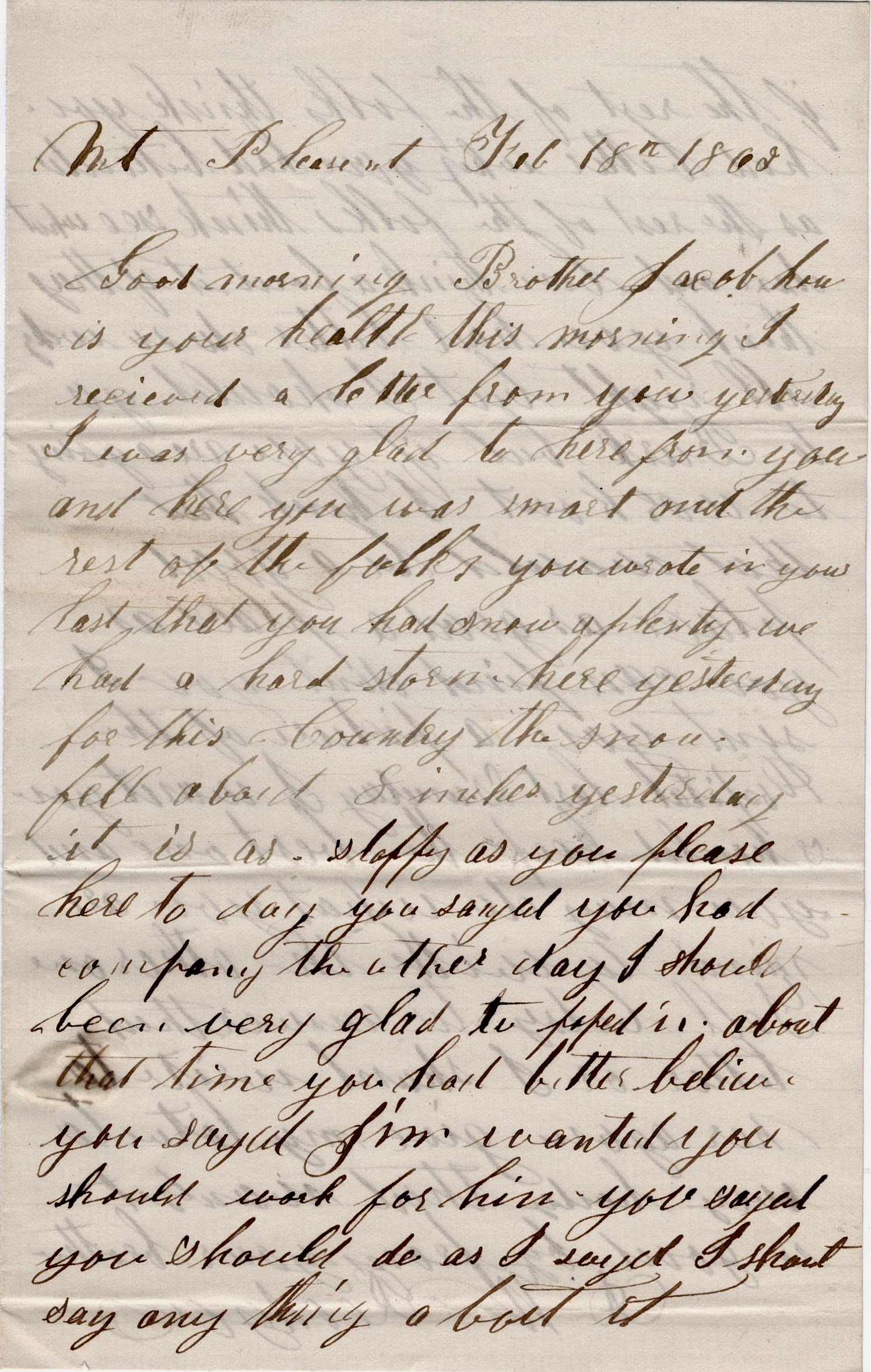
Mt. Pleasant [Hospital]
February 18th, 1863
Good morning brother Jacob,
How is your health this morning? I received a letter from you yesterday. I was very glad to hear from you and hear you was smart and the rest of the folks. You wrote in your last that you had snow aplenty. We had a hard storm here yesterday for this country. The snow fell about 8 inches yesterday. It is as sloppy as you please here today.
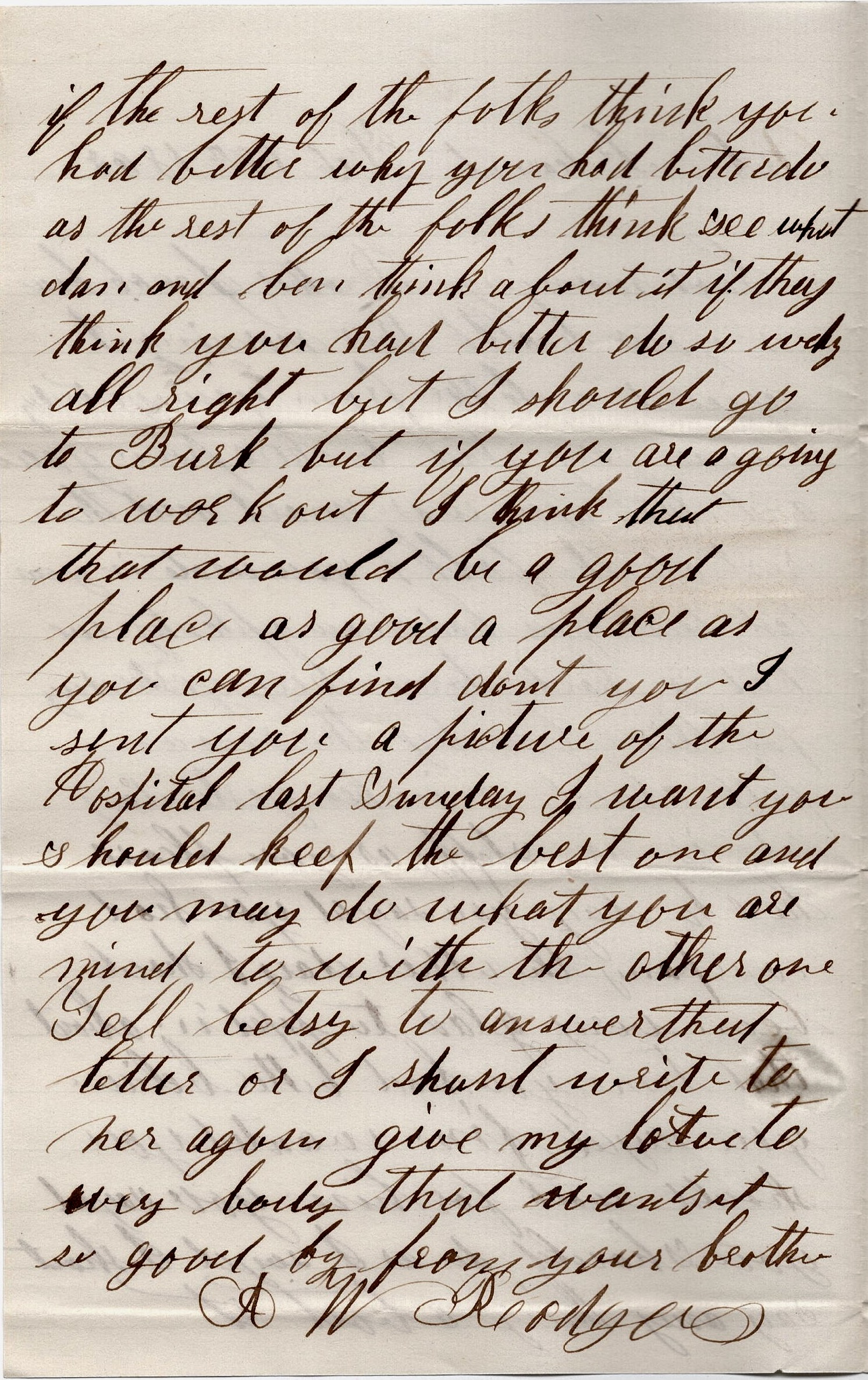
You said you had company the other day. I should been very glad to popped in about that time, you had better believe. You said Jim wanted you should work for him. You said you should do as I said. I shant say anything about it. If the rest of the folks think you had better, why you had better do as the rest of the folks think. See what Dan and Ben think about it. If they think you had better do so, why all right. But I should go to Burk. But if you are a going to work out, I think that that would be a good place—as good a place as you can find, don’t you?
I sent you a picture of the hospital last Sunday. I want you should keep the best one and you may do what you are mind to with the other one. Tell Betsy to answer that letter or I shant write to her again. Give my love to everybody that wants it. So goodbye from your brother, — A. W. Rodgers
Letter 3
Mt. Pleasant Hospital
February 27th, 1863
Dear Brother,
I just received a letter from you. I was glad to hear from you and to hear that you was well and the rest of the folks also. I got a letter from Ben yesterday. He told me Dan was sick. That I hated to hear, but I could not help it. He will take good care of himself, I guess. If he practices what he preaches he will. He used to talk to me most all the time about being careful when he was sick. He used to take good care of himself when I was there. You wanted to know how I was. Well, I am quite smart. I am out of doors all I want to be and take care of myself.
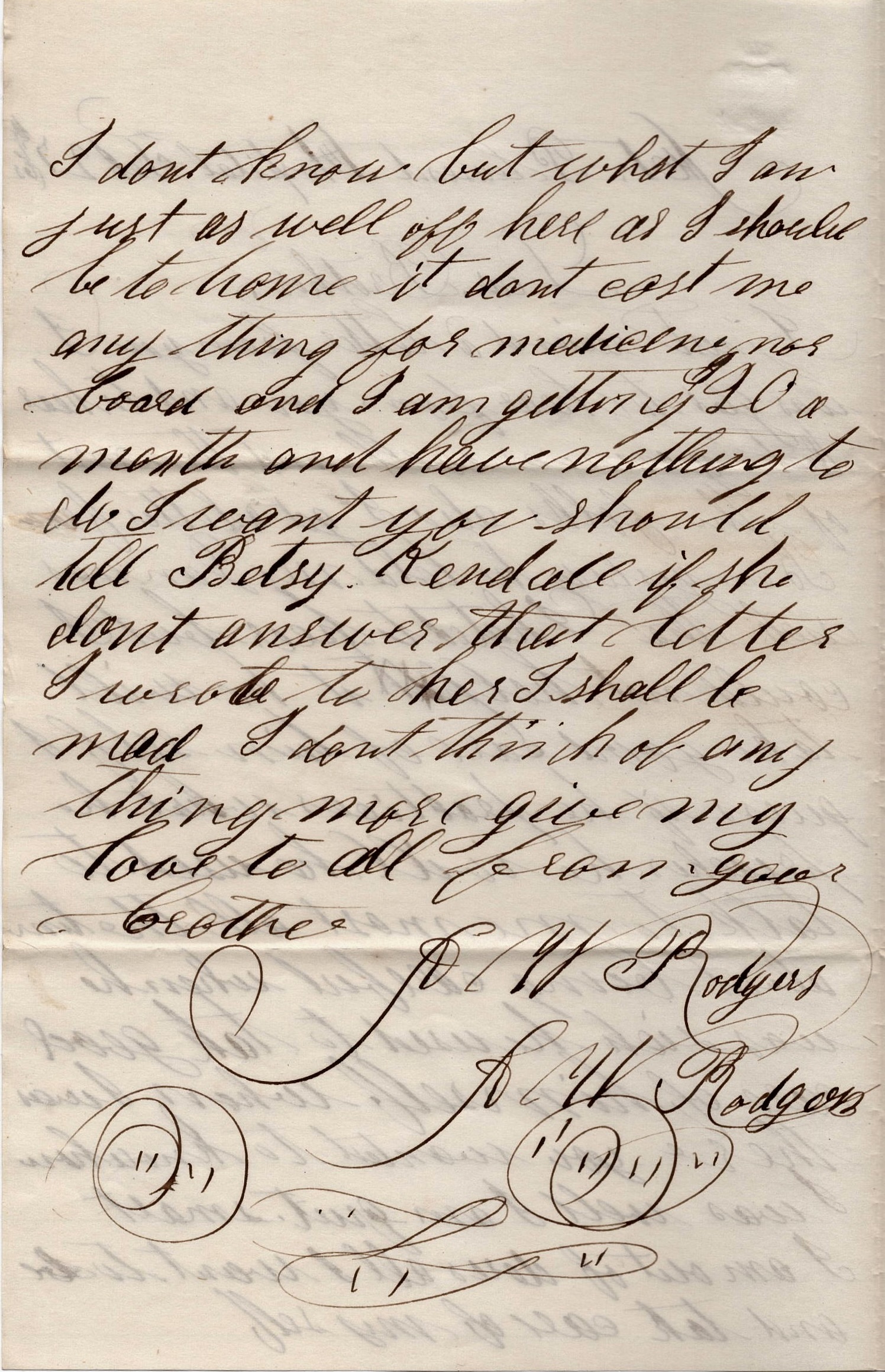
I don’t know but what I am just as well off here as I should be to home. It don’t cost me anything for medicine nor board and I am getting $20 a month and have nothing to do. I want you should tell Betsy Kendall if she don’t answer that letter I wrote to her, I shall be mad. I don’t think of anything more. Give my love to all from your brother, — A. W. Rodgers

Letter 4
Mt. Pleasant Hospital
March 11th, [18]63
Dear brother,
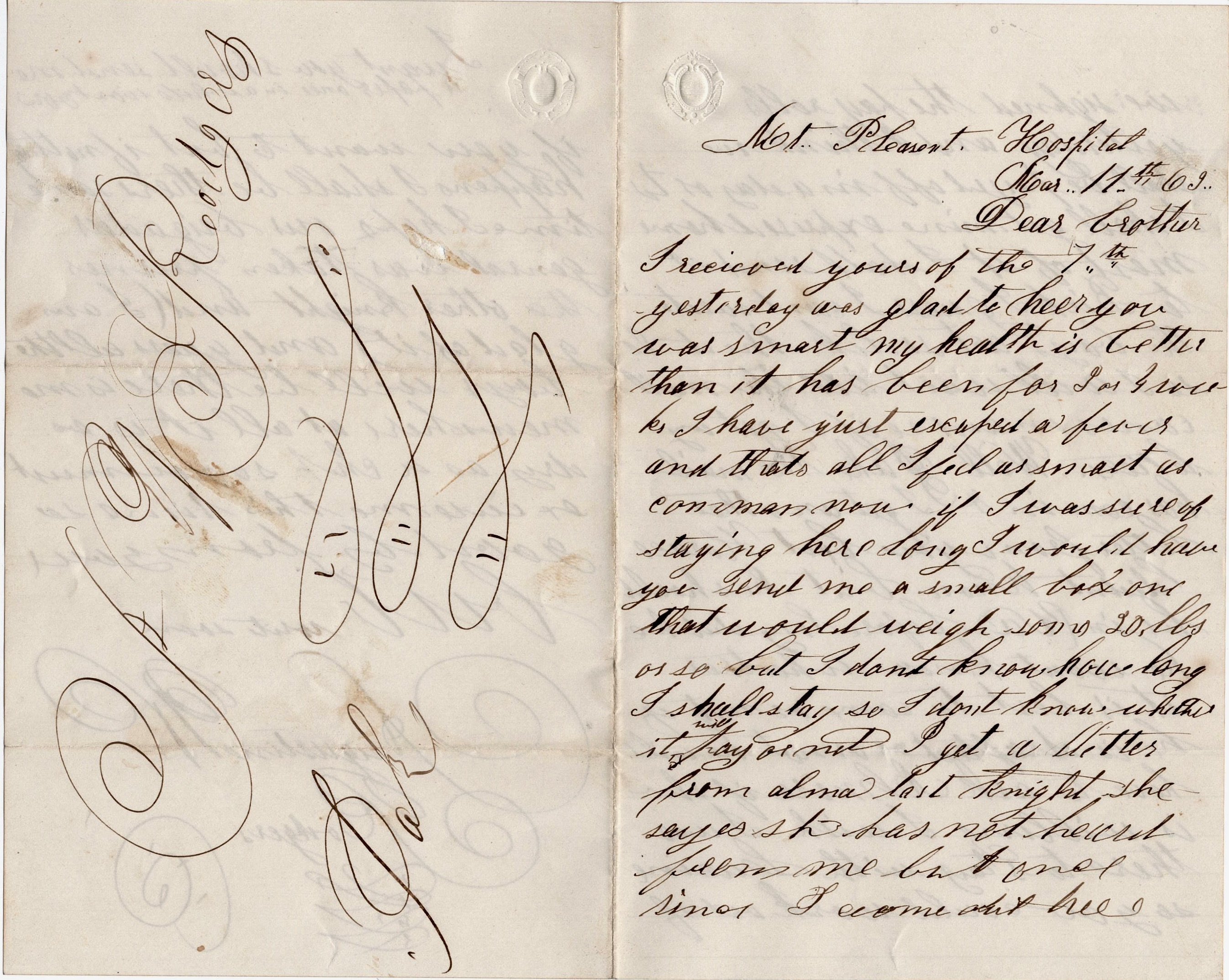
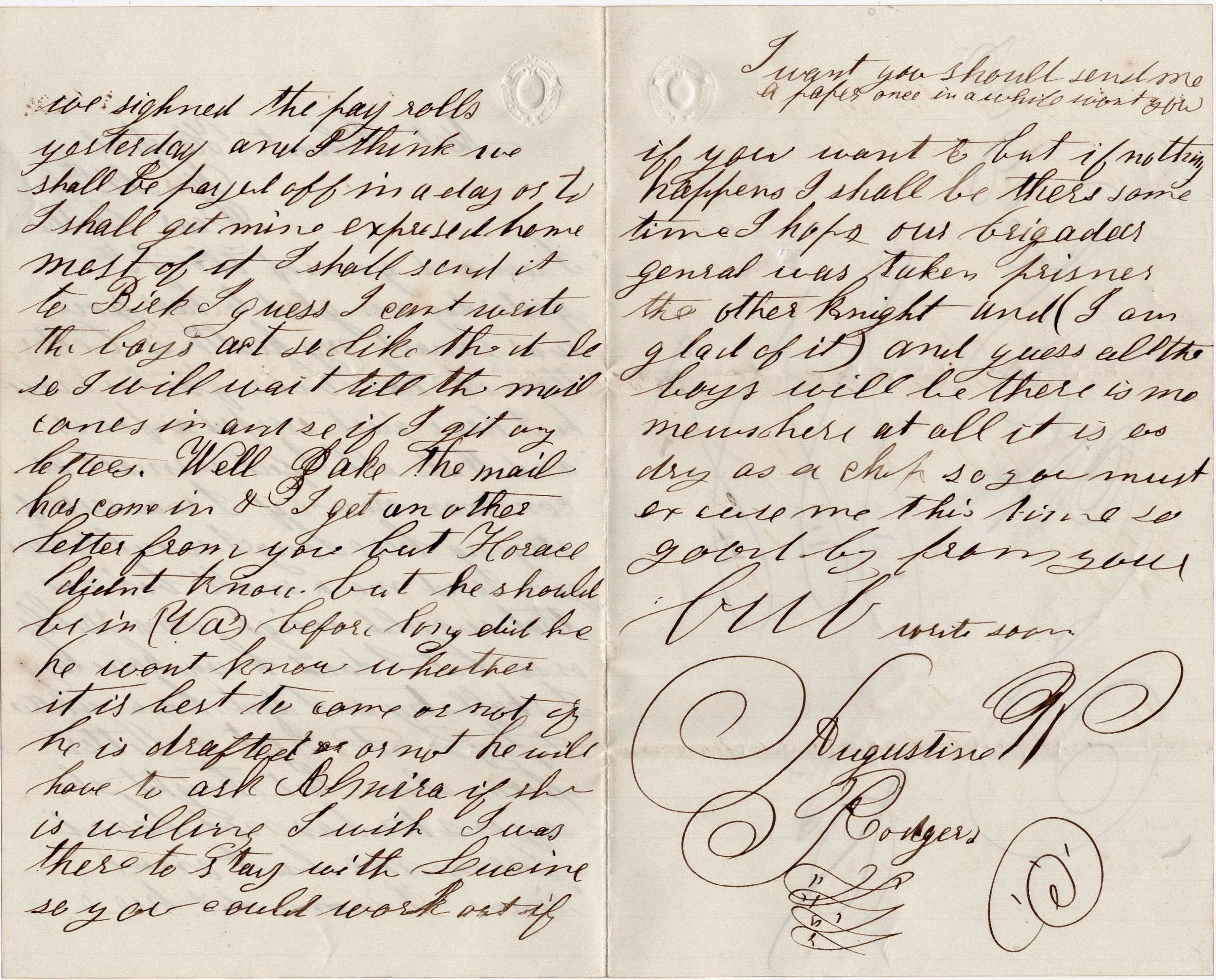
I received yours of the 7th yesterday. Was glad to hear you was smart. My health is better than it has been for 3 or 4 weeks. I have just escaped a fever and that’s all. I feel as smart as common now. If I was sure of staying here long, I would have you send me a small box—one that would weigh some 20 lbs or so. But I don’t know how long I shall stay so I don’t know whether it will pay or not. I got a letter from Alma last night. She says she has not heard from me but once since I came out here.
We signed the pay rolls yesterday and I think we shall be paid off in a day or two. I shall get mine expressed home—most of it. I shall send it to Birk, I guess.
I can’t write [because] the boys act so [up so much]. I will wait till the mail comes in and see if I get any letters.
Well Jake, the mail has come in and I got another letter from you but Horace didn’t know but he should be in Virginia before long did he? He wont know whether it is best to come or not if he is drafted or not. He will have to ask Elmira is she is willing. I wish I was there to stay with Lucine so you could work out if you want to but if nothing happens, I shall be there sometime, I hope.
Our brigadier general was taken prisoner the other night and (I am glad of it) and guess all the boys will be. There is no news here at all. It is so dry as a chip, so you must excuse me this time. So goodbye from your bub. Write soon, — Augustine W Rodgers
I want you should send me a paper once in a while, won’t you?
Letter 5
Camp near Rappahannock Bridge, Va.
May 17, 1863
Friend Jacob,
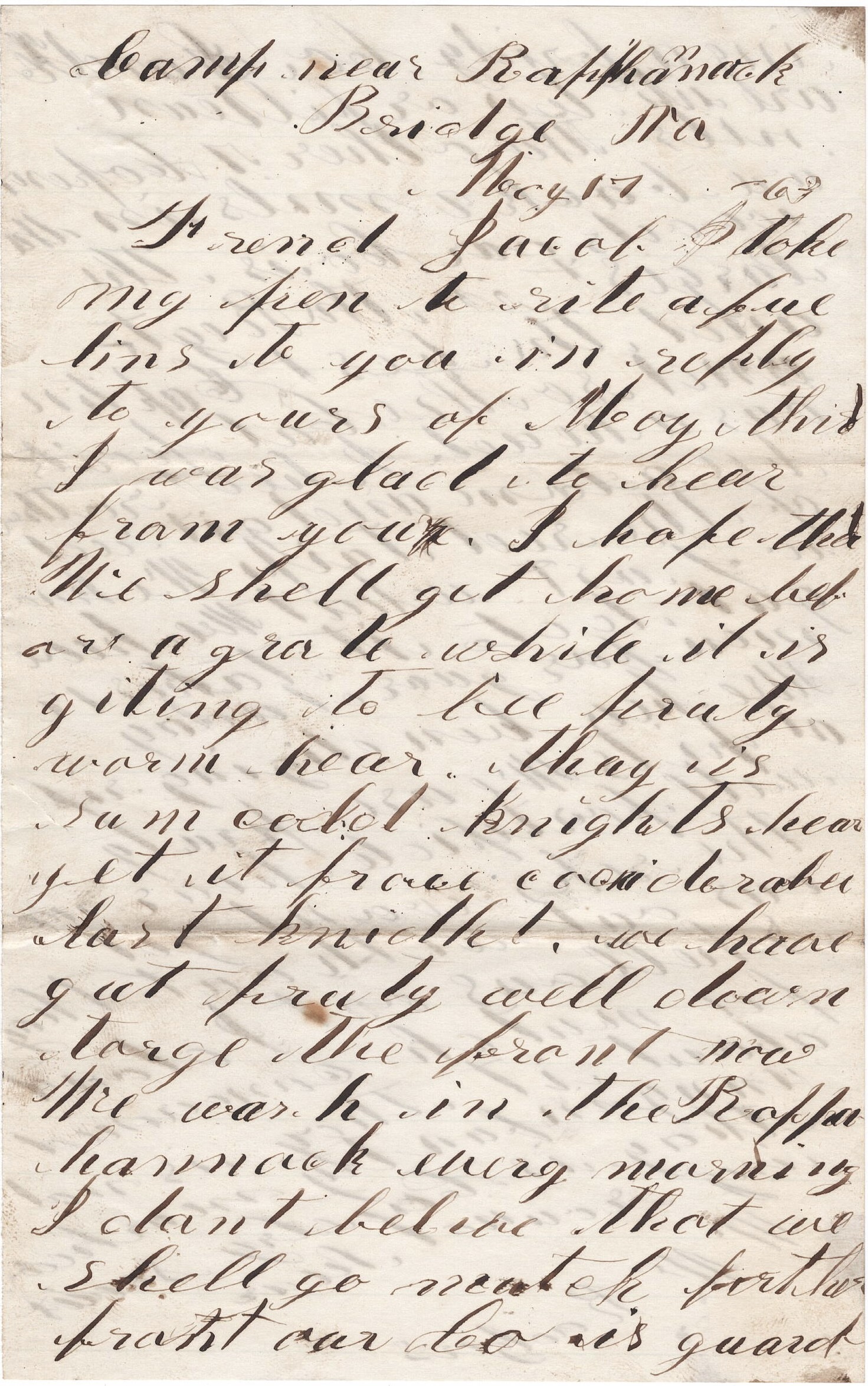
I take my pen to write a few lines to you in reply to yours of May 3rd. I was gla to hear from you. I hope that we shall get home before a great while. It is getting to be pretty warm here. There is some cold nights here yet. It froze considerable last night.
We have got pretty well downtoward the front now. We wash in the Rappahannock every morning. I don’t believe that we shall go much farther [to the] front. Our company is guarding a bridge. Cos. G and K are up ten or fifteen miles. The other 7 companies are back two miles in the woods. Our company is the largest in the regiment and the best captain and so the colonel puts ours ahead. I had rather be alone and get rid of the red tape. We know just what we have got to do. It takes 12 men for guard a day.
We have been digging rifle pits. We are pretty well fortified here now. The rebs won’t get us out without they shell us out. I don’t feel much concrened about it. There is not any infantry near hear. There is cavalry scouting round here. — W. W. Rodgers

Letter 6
Union Mills, Va.
June 18, 1863
Friend Jacob,
Sir, I now take my pen to write a few lines in return for the few lines that I received from you [on] May 31st. I was glad to hear from you. You must begin to think about haying. I guess you farmers will get some help from here to do your haying. If you don’t, you will come out slim for help.
I don’t expect that we shall have to stay here but about 8 days longer without of [Gen.] Lee gets ahead of us. If he does, they would be some tall fighting if he gets in our way on the road home. I don’t know where he is now. The last time that we heard from him, he was going up the Shenandoah. He is getting to be pretty bold. I heard they had started for Maryland. I think they will have to fight considerable before they get there. It was the report that General McClellan is put back in command of the army again.
We have had a good chance to see a part of the Army of the Potomac. The Vermont Brigade is out near Fairfax Station. Will went over there yesterday. He see the Hartland Boys. They are all tough and rugged. You would like to have been here yesterday and day before. The Boys say that [now] he has come out from behind his breastworks, they are a going to give him a licking.
There was a train of artillery crossed Bull Run the other day. It took it 7 hours to cross. You would call it a long string. Any quantity of wagons.
Dan is getting yp be smart again. All of the rest of the Boys are smart. — Wm. W. Rodgers


1865: George Helm Yeaman to Abraham Lincoln

The following letter addressed to President Abraham Lincoln was penned by U. S. Representative George Helm Yeaman (1829-1908) of Kentucky who served in the 38th US Congress. Yeaman was elected as a Unionist to the 37th Congress to fill the vacancy caused by the resignation of James S. Jackson. He was reelected to the 38th Congress and served from December 1, 1862, to March 3, 1865. He was an unsuccessful candidate for reelection in 1864 to the 39th Congress. As depicted in the recent movie “Lincoln,” he is best remembered for having provided the critical vote for passing the 13th Amendment to the United States Constitution abolishing slavery through the U.S. House of Representatives.
Yeaman’s letter is brief, forwarding the names of nine Kentuckians for their release from prison under the Amnesty Oath. Lincoln’s Amnesty Oath of 1863 was a loyalty pledge created as part of his Proclamation of Amnesty and Reconstruction on December 8, 1863. It offered clemency to most Confederates if they swore to uphold the U.S. Constitution, protect the Union, and accept the abolition of slavery.
[Editor’s Note: This letter is from the personal collection of Al Niemiec and was offered for transcription and publication on Spared & Shared by express consent.]
T R A N S C R I P T I O N
Stationery of the 38th Congress
House of Representatives
Washington City
February 27, 1865
Sir,
I recommend the release, under the Amnesty Oath, of the following prisoners.
Seraiah Lashbrook, Co. A, 1st Kentucky Cavalry, Camp Morton
Gustavus Johnston, Co. G, 4th Kentucky Infantry, Camp Douglas
Very Respectfully, your obedient servant, — Geo. H. Yeaman
To The President
Also the following, February 28, 1865
William C. Johnson, Kentucky Prison 3, Camp Chase
James H. Cottrell, Kentucky, Camp Douglas
Augustus I[gnatius] Moore, [Co. B, 9th KY Mounted Cavalry; held at Camp Chase since 31 July 1864; released 18 March 1865] Kentucky Prison 3, Camp Chase
John Blanford, 10th Kentucky Cavalry, Co. I, Camp Chase
Edmund T. Guthrie, Co. F, 13th Kentucky Cavalry, Camp Chase
Benjamin F. Williams, Kentucky, Camp Chase
Benjamin Huston, Kentucky, Camp Douglas
Very respectfully, — Geo. H. Yeaman, Feb. 28, 1865

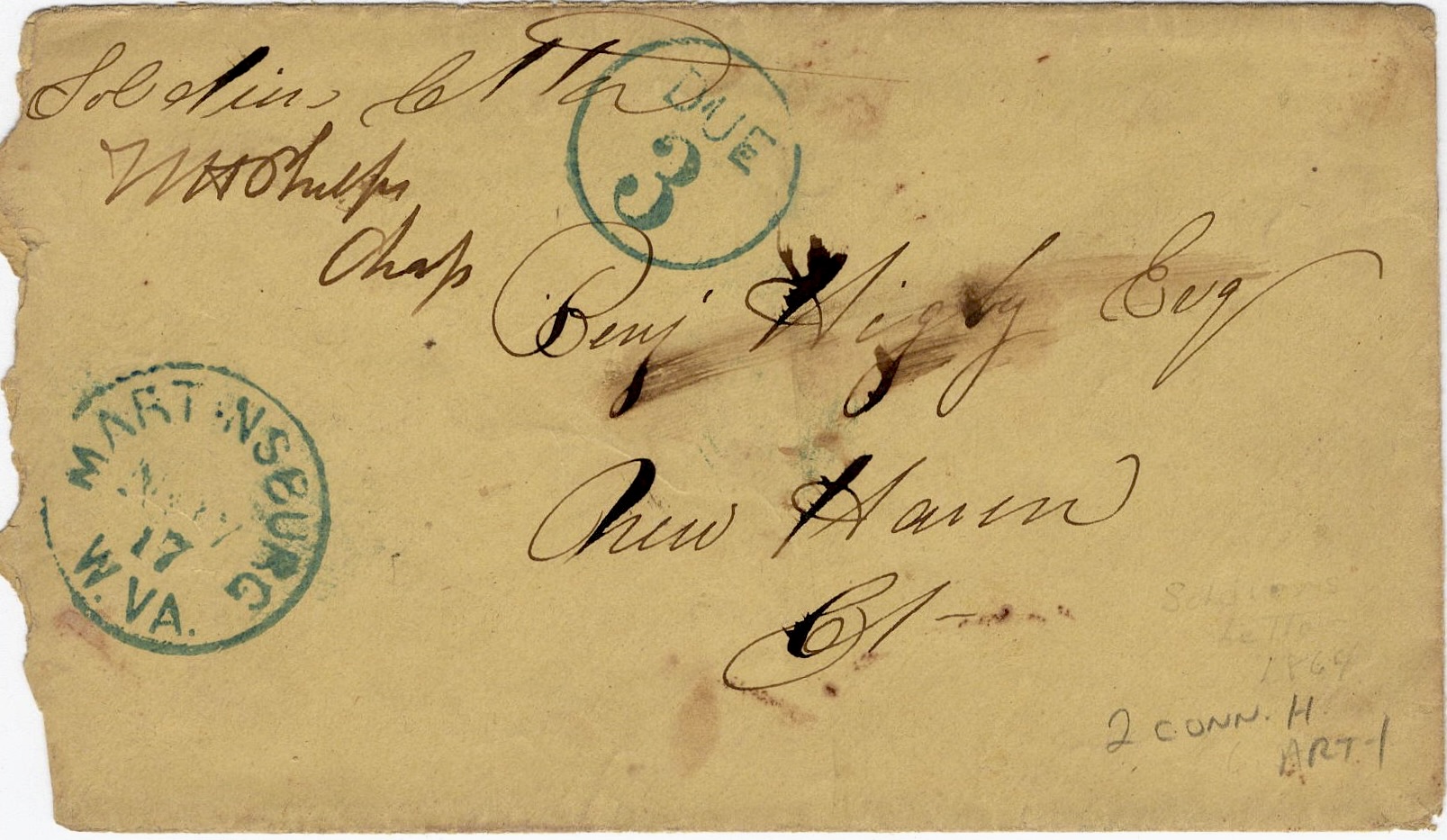
1862: Benjamin W. Higby to Benjamin Higby
The following penciled letter was written by Benjamin W. Higby (1844-1871), the son of Benjamin Higby (1804-1882) and Mary Emeline Fowler (1809-1878) of New Haven, Connecticut. Muster rolls indicate that Benjamin enlisted as a private on 10 February 1864, initially as a recruit in Co. K of the 2nd Connecticut Heavy Artillery. He was later transferred to Co. A and mustered out of the regiment on 18 August 1865.
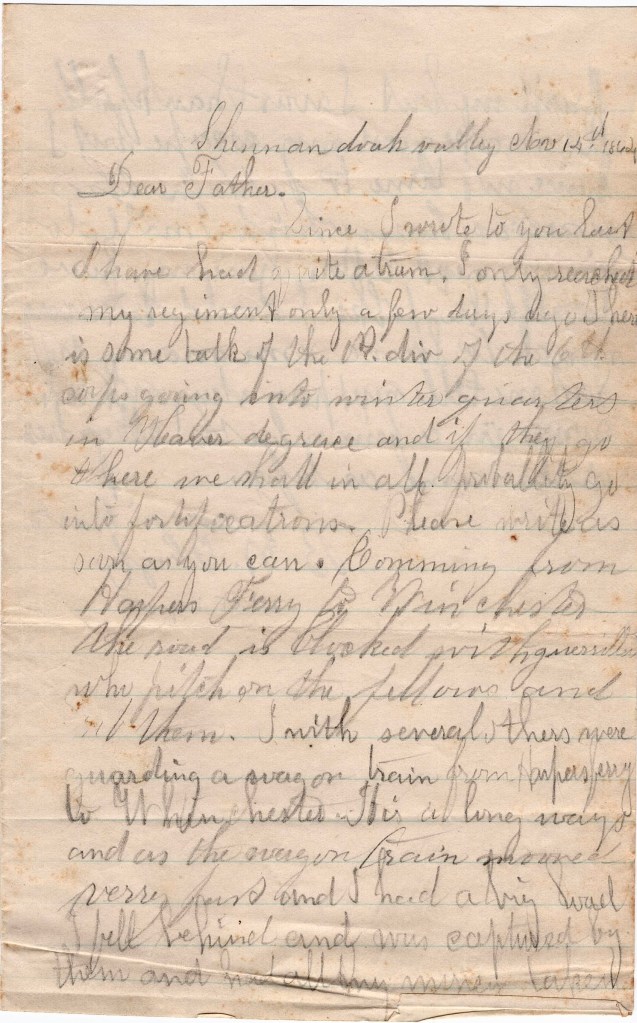
19 year-old Higby’s letter speaks of armed guerrillas on the road between Harpers Ferry and Winchester in 1864 who often apprehended stragglers and robbed them of anything valuable. We learn that he fell victim in this manner, lost his money, but made good his “escape.”
T R A N S C R I P T I O N
Shenandoah Valley
November 14th 1864
Dear Father,
Since I wrote to you last I have had quite a tram[p]. I only reached my regiment only a few days ago. There is some talk of the 1st Division of the 6th Corps going into winter quarters in Havre de Grace and if they go there, we shall in all probability go into fortifications. Please write as soon as you can. Coming from Harpers Ferry to Winchester, the road is blocked with guerrillas who pitch on the fellows and rob them. I with several others were guarding a wagon train from Harpers Ferry to Winchester. It is a long ways and as the wagon train moved very fast and I had a big load, I fell behind and was captured by them and had all my money taken from me but I was thankful to make good my escape.
But i have not time to explain the particulars which I will do in my next letter. Give my love to all the folks. I would like very much to have some money to last me till next pay day which comes in a few months. My address is the same as before. Yours in haste, — B. W. Higby

1863: John Oliver Quinby to Olive (Hampton) Quinby
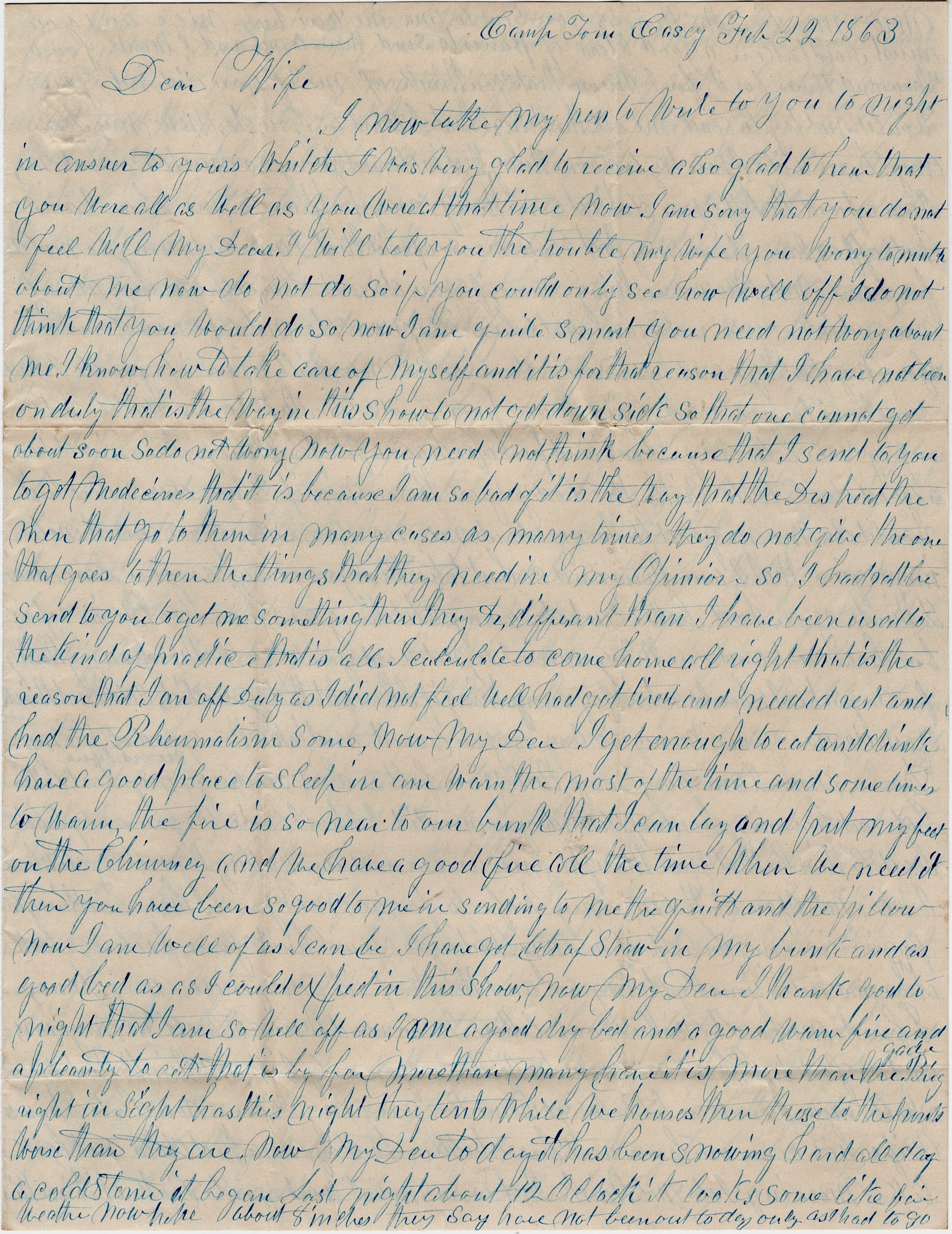
The following letter was written from Camp Tom Casey in mid-February 1863 by John Oliver Quinby (1827-1911), a musician in Co. E, 25th Maine Infantry (9 months 1862-63). He was born in 1827 at Minot, Maine, and married first Mary Pendexter in 1848 and had two children: Sarah F. Quinby (b. 1850) and Mary (died in infancy). After his first wife’s death, John married Olive A. Hampton (1834-1910) in 1853. In 1860, the couple were living at Westbrook, Maine, where John was enumerated as a shoecutter. Their children at that time, included the aforementioned Sarah, as well as Isabel (age 5).
Quinby volunteered in late September 1862 and mustered out with his regiment on 10 July 1863 after 9 months. About 1870 he moved his family to Malden, Massachusetts.
Back in 2018, I transcribed a letter by another member of the same company from Camp Tom Casey in March 1863. It was written by William Roberts to his sister. See—1863: William Roberts to Marietta Roberts.
T R A N S C R I P T I O N
Camp Tom Casey
February 22, 1863
Dear wife,
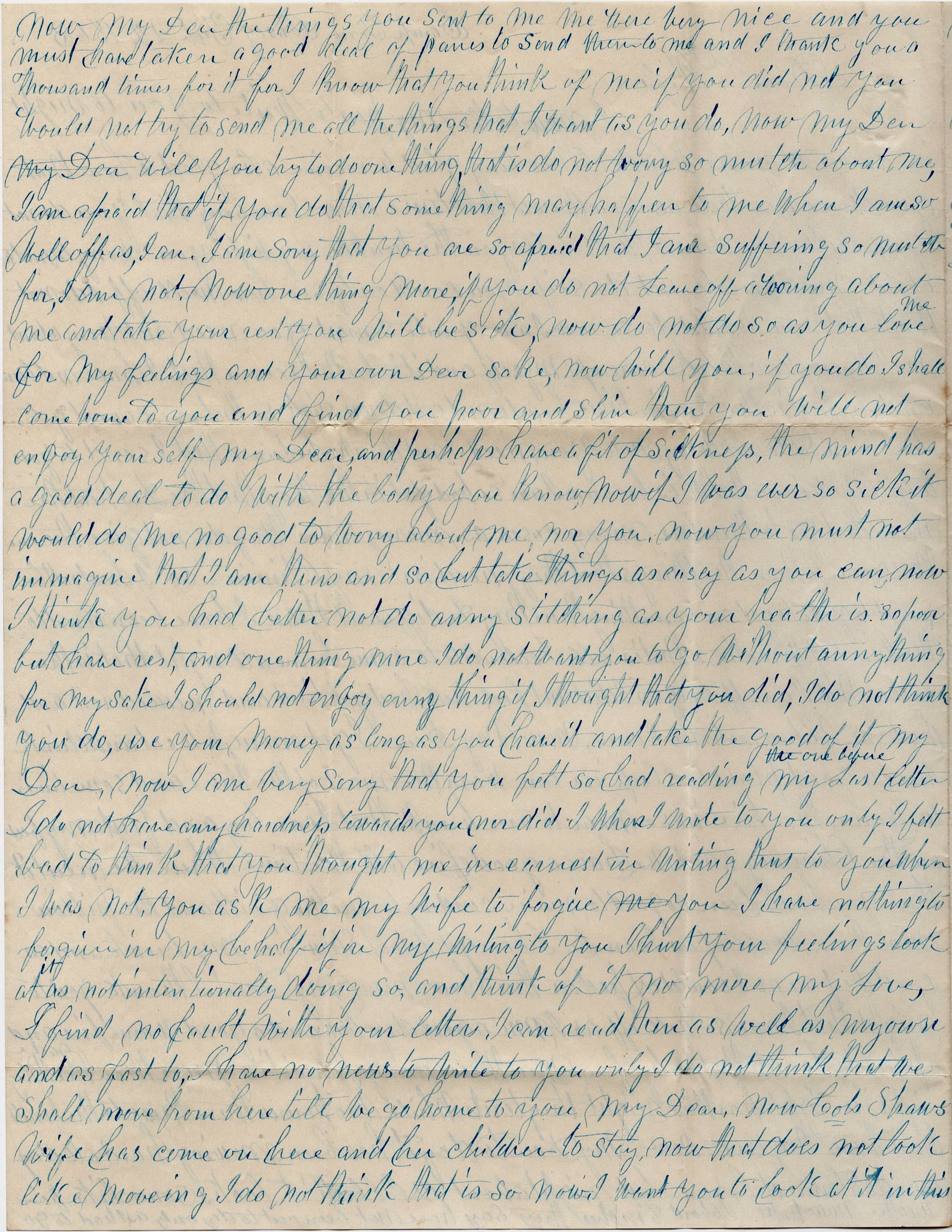
I now take my pen to write to you tonight in answer to yours which I was very glad to receive. Also glad to hear that you were all as well as you were at the time. Now I am sorry that you do not feel well, my dear. I will tell you the trouble, my wife. You worry too much about me. Now do you not do so? Now I am quite smart. You ned not worry about me. I know how to take care of myself and it is for that reason that I have not been on duty. That is the way in this show—to not get down sick so that one cannot get about soon. So do not worry now. You need not think because that I send to you to get medicines that it is because I am so bad off. It is the way that the doctors treat the men that go to them. The things that they need, in my opinion. So I had rather send to you to get something than the doctors [who will give me] something different than I have been used to. That is all.
I calculate to come home all right. That is the reason that I am off duty as I did not feel well. Had got tired and needed rest and had the rheumatism some. Now my dear, I get enough to eat and drink, have a good place to sleep in, am warm most of the time and sometimes too warm. The fire is so near to our bunk that I can lay and put my feet on the chimney and we have a good fire all the time when we need it. Then you have been so good to me sending to me the quilt and the pillow. Now I am well off as I can be. I have got lots of straw in my bunk and as good bed as I could expect in this show.
Now my dear, I thank God tonight that I am so well off as I am—a good dry bed and a good warm fire and plenty to it. That is by far more than many have. It is more than the Brigade right in sight has this night. They tents while we houses. Then those to the front are worse than they are. Now my dear, today it has been snowing hard all day a cold storm. It began last night about 12 o’clock. It looks some like fair weather now here. About 8 inches, they say. Have not been out today, only to get the things you sent to me. They were very nice and you must have taken a good deal of pains to send them to me and I thank you a thousand times for it for I know that you think of me. If you did not, you would not try to send me all the things that I want as you do.
Now, my dear, will you try to do one thing—that is, do not worry so much about me. I am afraid that if you do that, something may happen to me when I am so well off as I am. I am sorry that you are so afraid that I am suffering so much for I am not. Now one thing more, if you do not leave off worrying about me and take your rest, you will be sick. Now do not do so as you love me for my feelings and your own dear sake, now will you? If you do, I shall come home to you and find you poor and slim. Then you will not enjoy yourself, my dear, and perhaps have a fit of sickness. The mind has a good deal to do with the body, you know. Now if I was ever so sick, it would do me no good to worry about me, nor you. Now you must not imagine that I am thus and so but take things as easy as you can.
Now I think you had better not do any stitching as your health is so poor but have rest, and one thing more, I do not want you to go without anything for my sake. I should not enjoy anything if I thought that you did. I do not think you do. Youse your money as long as you have it and take the good of it, my dear. Now I am very sorry that you felt so bad reading the one before my last letter. I do not have any hardness towards you, nor did I when I wrote to you—only I felt bad to think that you thought me in earnest in writing that to you when I was not. You ask me, my wife, to forgive you. I have nothing to forgive in my behalf. If in my writing to you, I hurt your feelings, look at it as not intentionally doing so, and think of it no more, my love. I find no fault with your letter. I can read them as well as my own and as fast too.
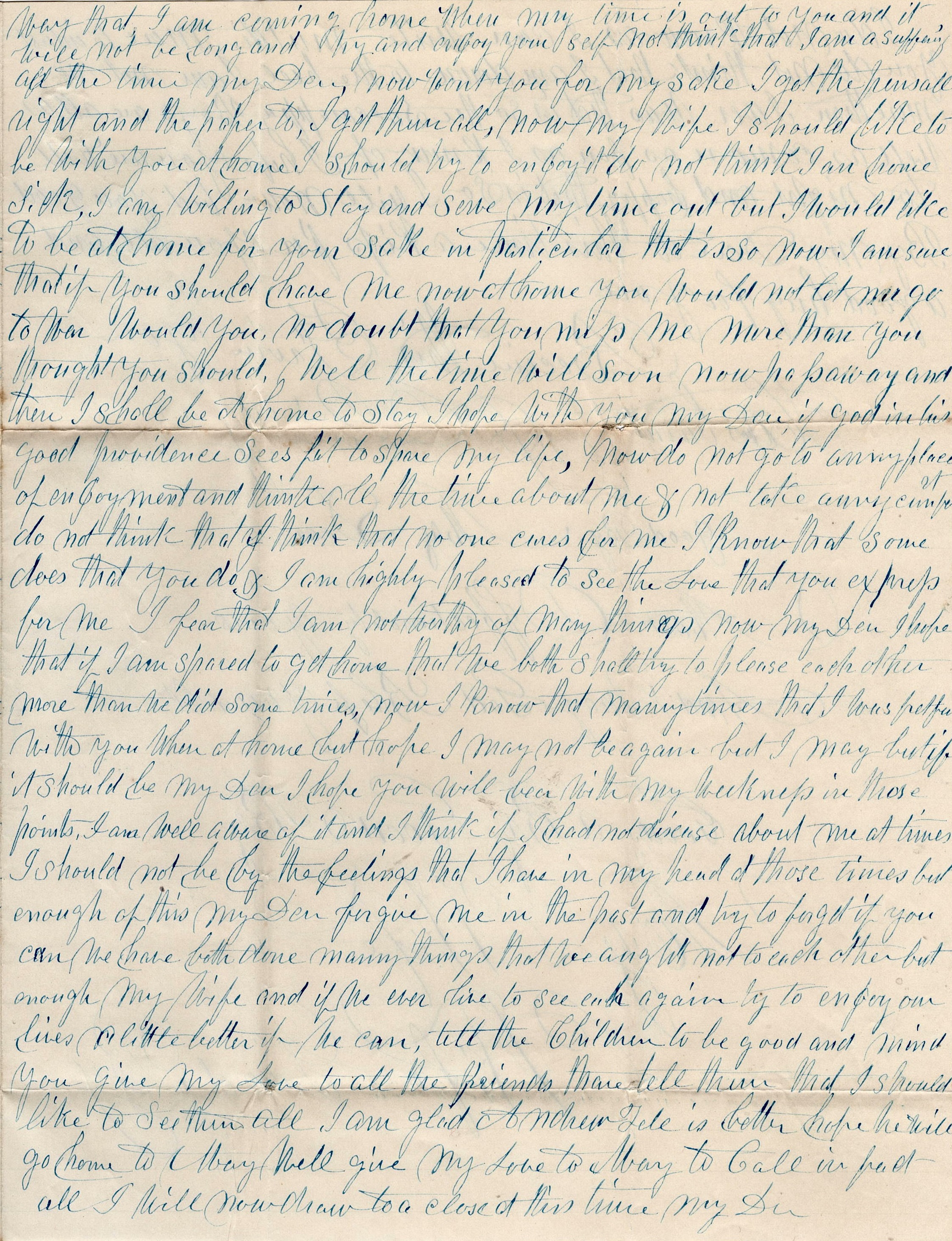
I have no news to write to you—only I do not think that we shall move from here till we go home to you, my dear. Now. Cols. Shaw’s wife has come on here and her children to stay. Now that does not look like moving, I do not think. That is so. Now I want you to look at it in this way—that I am coming home when my time is out to you and it will not be long. And try and enjoy yourself [and] not think that I am suffering all the time, my dear. Now won’t you for my sake?
I got the pens all right and the paper too. I got them all. Now my wife, I should like to be with you at home. I should try to enjoy it. Do not think I am homesick. I am willing to stay and serve my time out but I would like to be at home for your sake in particular. hat is so. Now I am sure that if you should have me now at home, you would not let me go to war, would you? No doubt that you miss me more than you thought you should. Well the time will soon pass away and then I shall be at home to stay, I hope, if God in His good Providence sees fit to spare my life. Now do not go to any place of enjoyment and think all the time about me & not take any comfort. Do not think that I think that no one cares for me. I know that some does, that you do, and I am highly pleased to see the love that you express for me. I fear that I am not worthy of many things. Now my dear, I hope that if I am spared to get home, that we both shall try to please each other more than we did sometimes. Now I know that many times that I was fretful with you when at home but hope I may not be again, but I may. But if it should be, my dear, I hope you will bear with my weakness in those points. I am well aware of it and I think if I had not disease about me at times, I should not be by the feelings that I have in my head at those times. But enough of this, my dear. Forgive me in the past and try to forget it if you can. We have both done many things that we ought not to each other but enough, my wife, and if we ever live to see each other again, try to enjoy our lives a little better if we can.
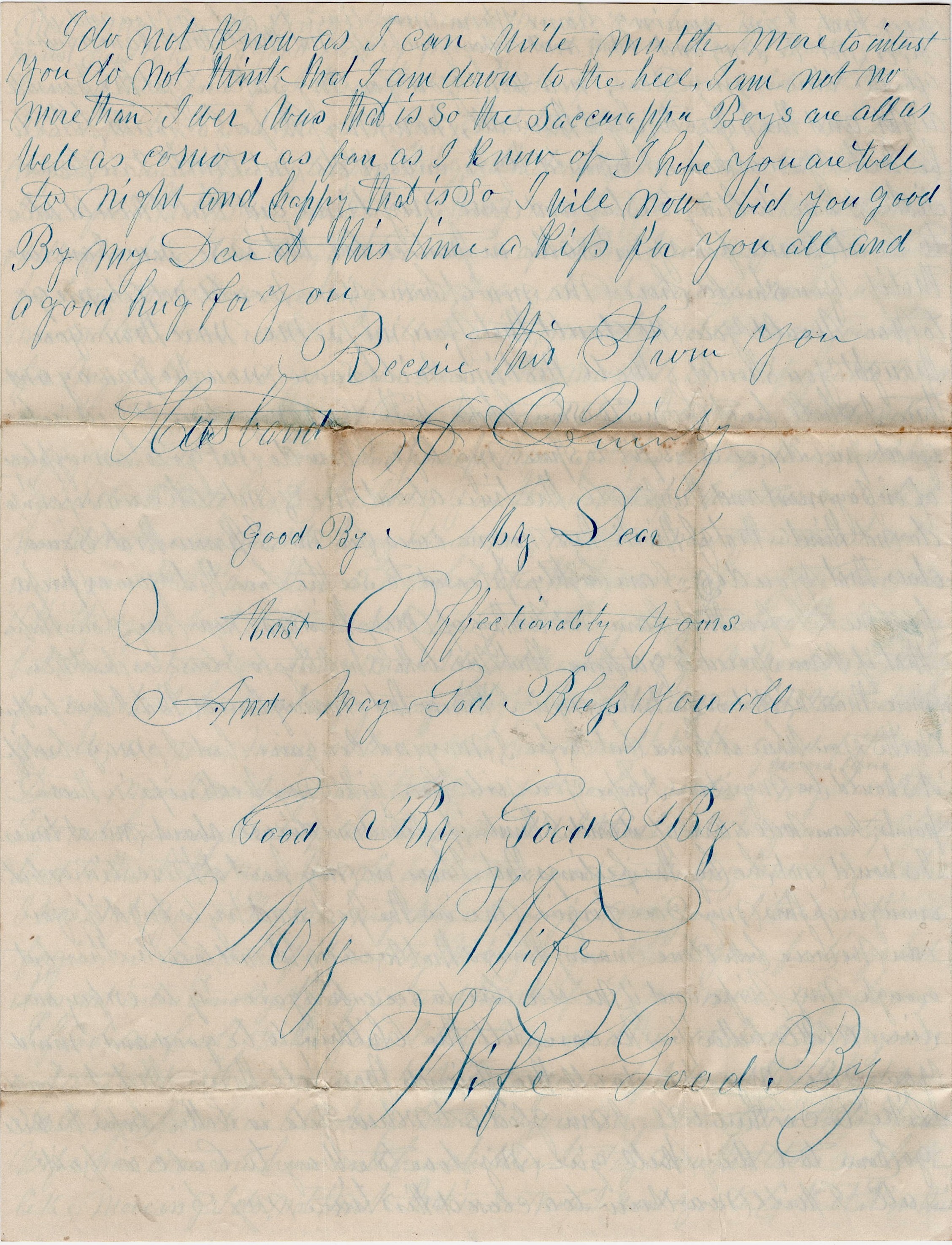
Tell the children to be good and mind you. Give my love to all the friends there. Tell them that I should like to see them all. I am glad Andrew Tell is better. Hope he will go home to May. Well, give my love to Mary, to Call, in fact all. I will now draw to a close at this time, my dear. I do not know as I can write much more to interest you. Do not think that I am down to the heel. I am not—no more than I ever was. That is so. The Saccarappa Boys are all as well as common as far as I know of. I hope you are well tonight and happy. That is so. I will now bid you goodbye, my dear, this time. A kiss for you all and a good hug for you. Receive his from your husband, — J. O. Quinby
Goodbye my dear. Most affectionately yours and may God bless you all. Goodbye, goodbye, my dear wife, goodbye.
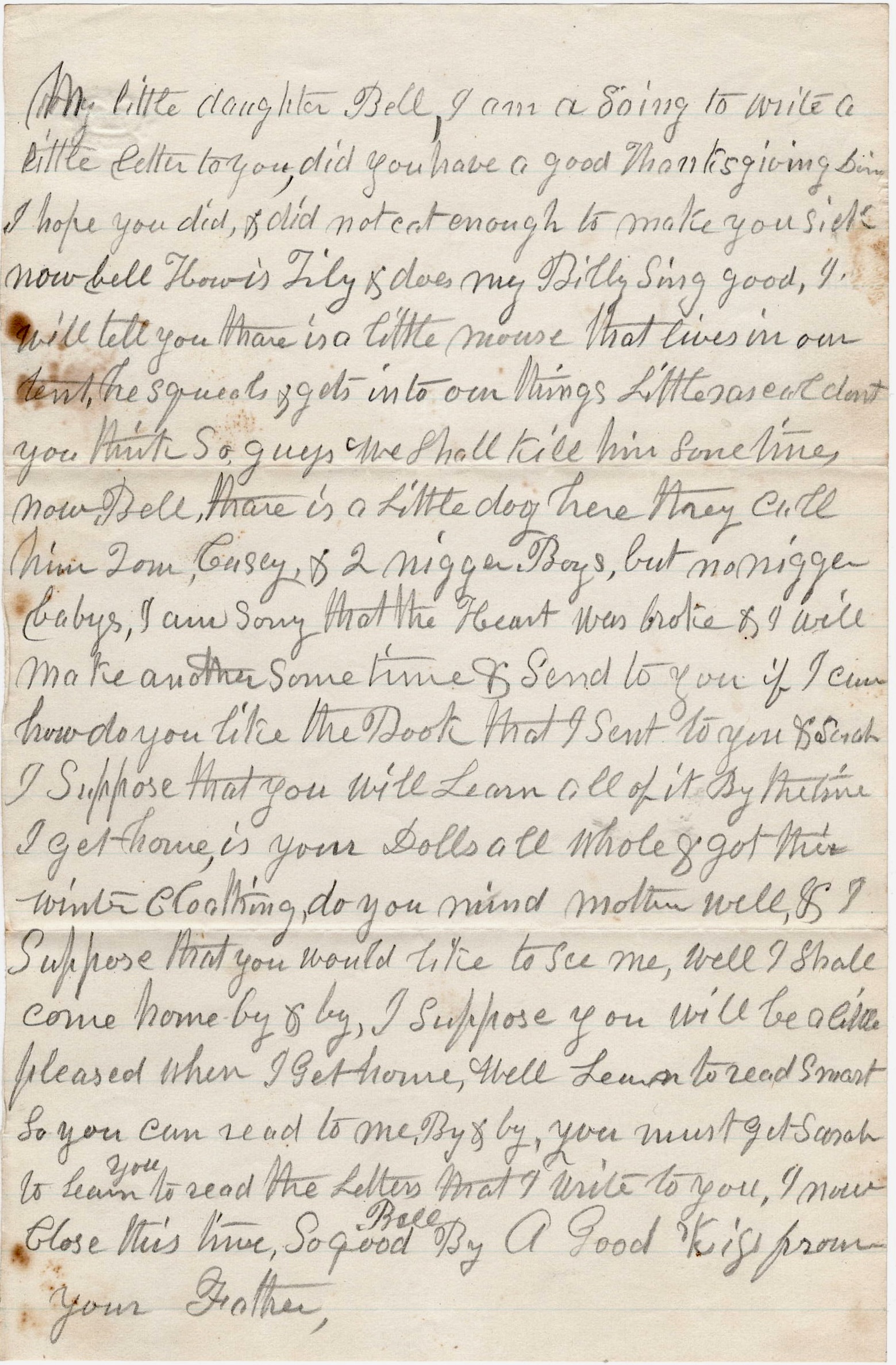
My little daughter Bell. I am a going to write a little letter to you. Did you have a good Thanksgiving dinner? I hope you did and did not eat enough to make you sick. Noe Bell, how is Tilly and does Billy sing good? I will tell you there is a little mouse that lives in our tent. He squeals & gets into our things. Little rascal, don’t you think so? Guess we shall kill him sometime.
Now Bell, there is a little dog here. They call him Tom Casey & two nigger boys, but no nigger babies. I am sorry that the heart was broke and I will make another sometime and send to you if I can. How do you like the book that I sent to you & such. I suppose that you will learn all of it by the time I get home. Is your dolls all whole & got their winter clothing? Do you mind Mother well &c.? I suppose that you would like to see me. Well I shall come home by & by. I suppose you will be a little pleased when I get home. Well learn to read smart so you can read to me by and by. You must get Sarah to learn you to read the letters that I write to you. I now close this time. So goodbye Bell. A kiss from your father.

Spared & Shared Podcast 8: Week ending July 10, 2026
Pip: There is a particular kind of history that only survives because someone kept the letter — not the official report, not the regimental record, but the actual piece of paper a soldier held when he wrote home.
Mara: That’s exactly the territory Griff covers in this set of posts — soldiers writing to parents, siblings, cousins, and friends from the field, alongside one set of enlistment documents that tells its own compressed story.
Pip: Let’s start with the letters themselves.
Letters Home From the Front Lines
Mara: The question these posts collectively ask is what the Civil War looked like from inside it — not from a general’s dispatch, but from the men who carried the colors, stood picket in the mud, and waited for the paymaster who never came.
Pip: The anchor here is Charles L. Hewitt, a Connecticut infantryman who wrote 31 letters home over three years. His March 1862 letter from Jones Island gives you the texture of it immediately. He’s cataloguing the battery’s firepower — nine guns, two thirty-pound rifles, a Columbiad — and then pivots without a breath to: “green peas I have not seen some yet since I left home.”
Mara: That line does a lot of work. The guns are real, the danger is real, and so is the homesickness for something as ordinary as green peas. His later 1864 letter from Bermuda Hundred tracks wartime inflation with the same precision: “New potatoes are 8 cts. a lb. Tobacco $1.50 a lb. Milk 70 cts. a can, butter 60.”
Pip: The man kept a notebook recording the fates of nearly 120 fellow soldiers — wounded, killed, promoted, deserted — which is its own kind of monument.
Mara: Corp. Titus Euson’s 1861 letter from the Battle of Scary Creek covers similar ground from Ohio. He carried the colors of the 12th Ohio Infantry into the fight, survived a cannon shot close enough to fray his hat, and then spent most of the letter blaming General Cox for the defeat — quoting the men around him directly: Cox was “a good for nothing; cowardly, incompetent, and worse than worthless general.”
Pip: Strong words, written four days after the battle, on patriotic stationery captioned “Wait Till the War is Over.”
Mara: Lorenzo Harrington’s June 1862 letter from near Winchester is quieter but harder to read knowing what comes next. He describes volunteering for the color guard — “It is a very dangerous place but it gives me pleasure to have the privilege of defending at such a time as this” — and mentions his mother is gravely ill and wants him home. He died of typhoid fever two weeks after sealing the letter.
Pip: William Cook writing from in front of Atlanta in August 1864 has a different register — almost conversational, telling a friend named Linda that he’d rather be at a concert in Orrville than watching real battles, and noting that a mutual friend named Ed was definitely dead, whatever Augusta McDowell chose to believe.
Mara: And Corp. Alfred Bryant’s partial letter from Donaldsonville, Louisiana, describes the aftermath of the Bayou Lafourche fighting — buildings still smoking, the dead unburied, the wounded being carried to Baton Rouge — and closes because a rainstorm is threatening his shelter tent.
Pip: Solomon Starbird’s December 1863 letter from Cole’s Island rounds out the picture on a different note entirely — he’s furious about political patronage handing commissions to unqualified men, including what he calls “our little, greasy, stupid under cook,” and he’s applying to transfer to a Colored regiment just to find something worth doing.
Mara: Which connects directly to what the next post is about.
One Enlistment, One Death, Eighty-Nine Days
Mara: The post on Anderson West presents his enlistment papers rather than a letter — a set of official documents that compress an entire life into a few administrative lines.
Pip: West was eighteen, listed as a farmer from Jackson County, Arkansas, almost certainly a formerly enslaved man. He enrolled in Co. B, 11th US Colored Infantry at Fort Smith on December 21, 1863. The examining surgeon recorded his height, eye color, hair color. Eighty-nine days later he was dead of fever at the General Hospital.
Mara: The post notes his clothing withdrawal records are consistent with the enlistment date — meaning the paper trail confirms he barely had time to draw a uniform before he died.
Pip: The letters in the previous segment were written by men who survived long enough to describe what they saw. Anderson West left no letter.
Mara: What holds all of this together is the gap between official records and what actually happened — the cannon shot that frayed a hat, the moldy cheese in the care package, the commission handed to a cook.
Pip: History keeps the dispatches. The letters keep everything else.
1862: Lorenzo Clark Harrington to his Cousin
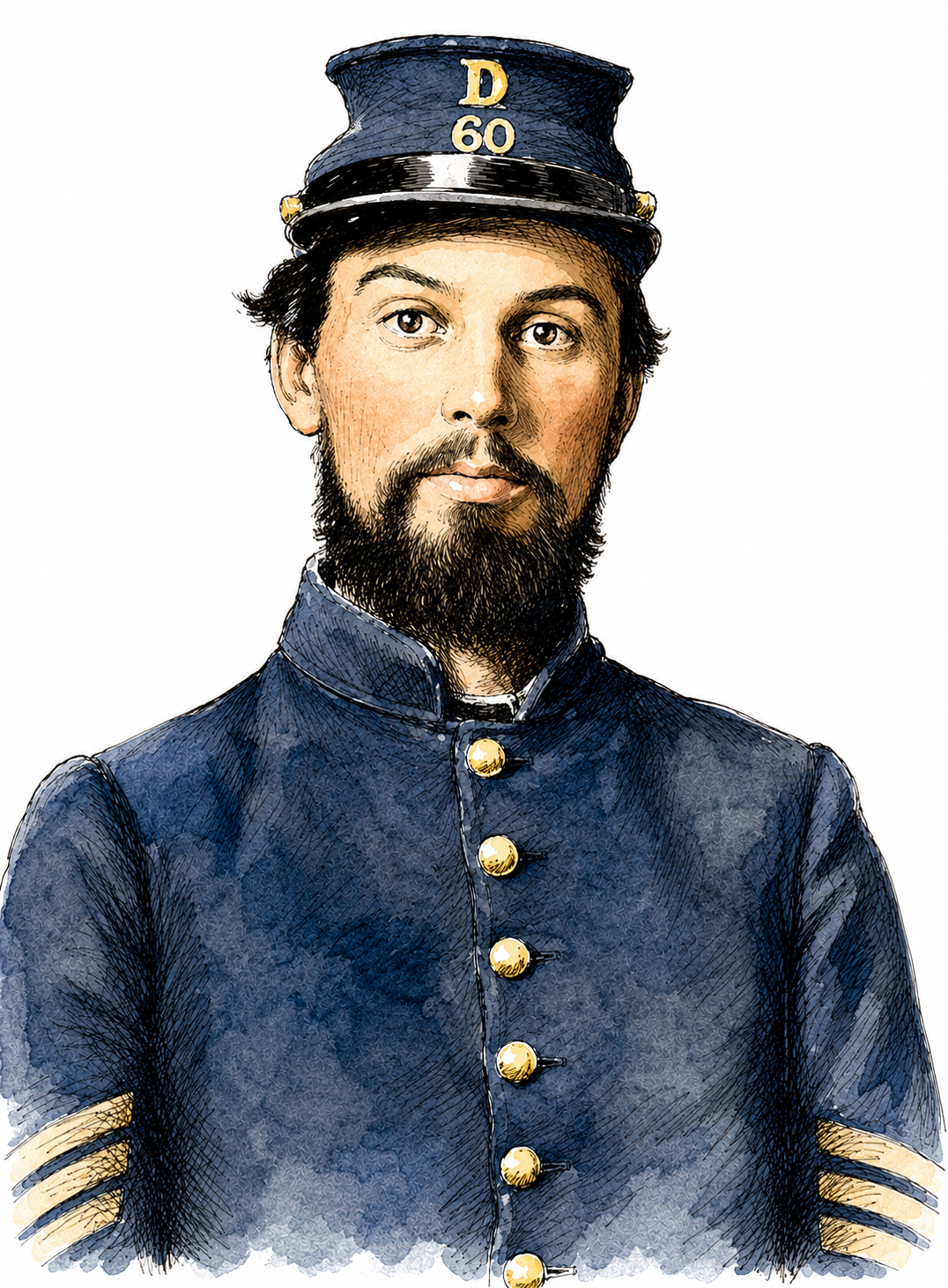
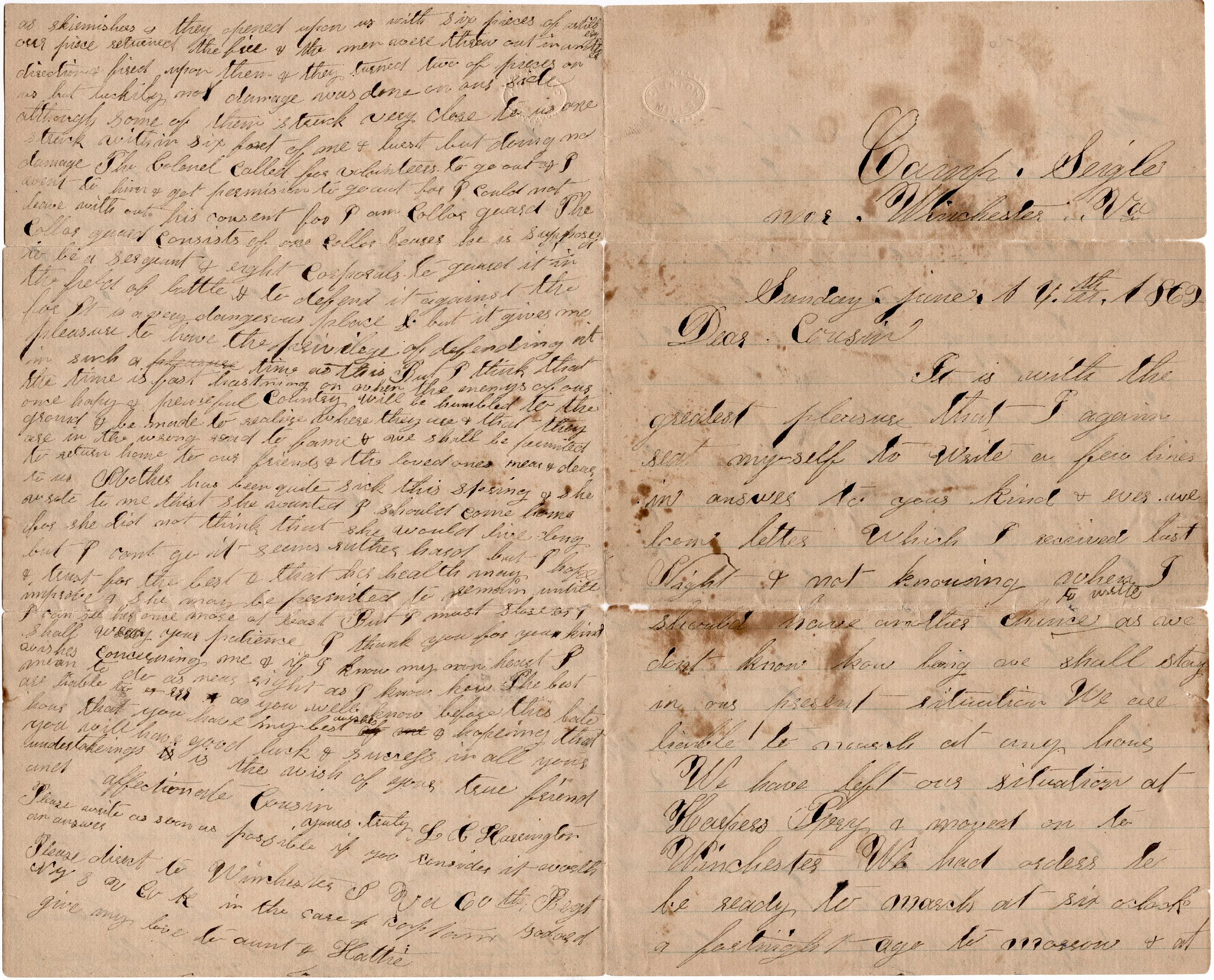
The following letter was written by Lorenzo C. Harrington (1841-1862), the son of Joshua Bailey Harrington and Fidelia Norton of Stockholm, Saint Lawrence county, New York. Lorenzo was 20 years old when he enlisted for three years as a private in Co. K , 60th New York State Volunteers on 30 October 1861. He was promoted to corporal on 1 May 1862 and proudly served in the color guard of his regiment though he understood the peril of carrying the flag in battle: “It is a very dangerous place but it gives me pleasure to have the privilege of defending at such a time as this.”
In his letter of 14 June 1862, Lorenzo expressed concern for his sick mother who feared she might die before seeing her son again. Ironically, it would be Lorenzo who would die—just two weeks after sealing this letter to his cousin who probably preserved it as a keepsake. A headstone in Harrington’s memory was erected at Fairview Cemetery in Brasher Falls. It isn’t known if his body was returned home or if he was buried at Little Washington, Virginia, where he died of typhoid fever.
I have previously transcribed and published the following letters by other members of the 60th New York Infantry, also in Co. K:
Levi Crawford, Co. K, 60th New York (1 Letter)
John D. Stevens, Co. K, 60th New York (1 Letter)
T R A N S C R I P T I O N
Camp Sigel near Winchester, Va.
Sunday, June 14, 1862
Dear Cousin,
It is with the greatest pleasure that I again seat myself to write a few lines in answer to your kind & ever welcome letter which I received last night. And not knowing when I should have another chance to write as we don’t know how long we shall stay in our present situation. We are liable to march at any hour.
We have left our situation at Harper’s Ferry & moved on to Winchester. We had orders to be ready to march at six-o’clock a fortnight ago tomorrow & at the hour we were ordered into line ready to march & to add to our comfort, it commenced raining just before we started & rained very hard most all night. We marched until about two o’clock when we halted for the night. We lay down & went to sleep notwithstanding it still rained & we were wet through to the lining.
When we woke up it had stopped raining & cleared up & the sun rose as beautiful as ever & we took up the line of march & traveled until about two o’clock when we halted for the day. It was very warm through the day but about six o’clock it commenced raining again. We lay down that night in the open field & slept as sound as heart could wish, it raining very hard. When we woke up in the morning, we were dripping wet again.
In the evening at six o’clock we were ordered into the line again ready to march which we done immediately. We marched through to Winchester & arrived there about one o’clock p.m. It rained all the day through so that it made it very hard traveling. The mud was very deep & often we had to ford streams. But amid all the hardships we traveled about 40 miles in less than two days. The boys—most of them—are in good spirits & enjoying good health/ We stayed in Winchester quite a number of days but we are about three miles from there encamped in a splendid little grove.
There about 70 thousand here in the valley. The country through which we passed was very beautiful—nice fields of grain thirty and forty acres in a field. I think we shall make an advance before many days. While we were at the Ferry, we had a little skirmish with the rebels. We found that the rebels were advancing & we threw out 75 men and a piece of artillery as skirmishers & then opened upon us with six pieces of artillery. Our piece returned the fire & the men [who] were thrown out in another direction, fired upon them and they turned two of [their] pieces on us but luckily no damage was done on our side although some of them struck very close to us. One struck within six feet of me & burst but doing no damage.
The Colonel called for volunteers to go out & I went to him & got permission to go out for I could not leave without his consent for I am color guard. The color guard consists of one color [ ]. He is supposed to be a sergeant & eight corporals to guard it in the field of battle & to defend it against the foe. It is a very dangerous place but it gives me pleasure to have the privilege of defending at such a time as this. But I think that the time is fast hastening on when the enemies of our once happy and peaceful country will be humbled to the ground & be made to realize where they are and that they are in the wrong side of fame, and we shall be permitted to return home to our friends and the loved ones near and dear to us.
Mother has been quite sick this spring & she wrote to me that she wanted I should come home for she did not think that she would live long but I can’t go. It seems rather hard but I hope & trust for the best that her health may improve and she may be permitted to remain until I can see her once more at least.
But I must close as I shall weary your patience. I thank you for your kind wishes concerning me and if I know my own heart, I mean to do as near right as I know how. The best are liable to err as you well know before this late hour that you have my best wishes and hoping that you will have good luck and success in all your undertakings is the wish of your true friend and affectionate cousin. Yours truly, — L. C. Harrington
Please write as soon as possible if you consider it worth an answer. Please direct to Winchester, Va., 60th Regiment NYSV, Co. K, in the care of Captain [Abel] Godard. Give my love to Aunt Hattie

.
1863: Solomon B. Starbird to George B. Starbird

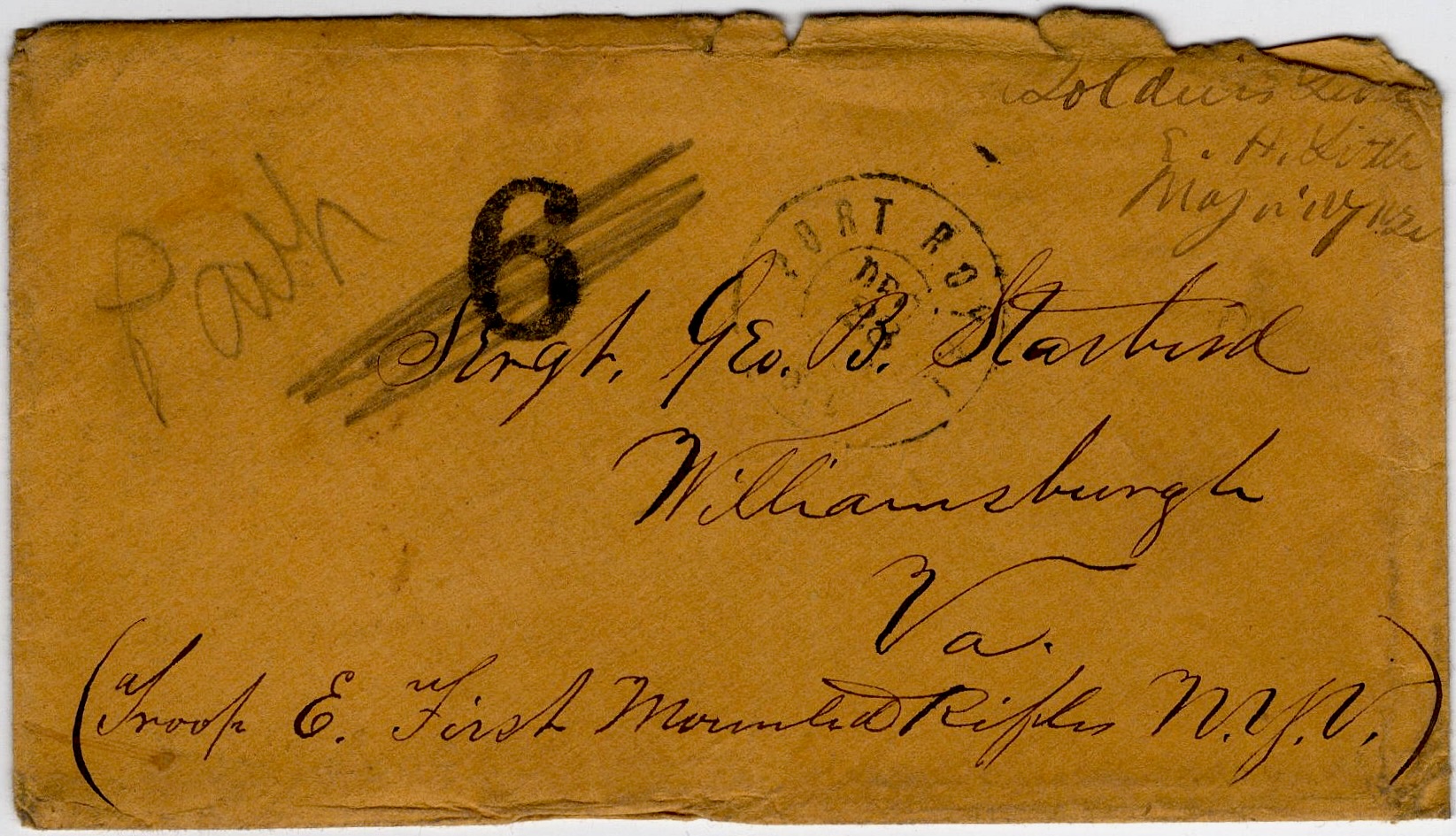
The following letter was written by Solomon Bates Starbird (1832-1889). After working for several years as a lawyer in New York City, Solomon was mustered into Co. B, 127th New York Volunteers on September 8, 1862, at the rank of sergeant and served with that regiment until October 31, 1864. He then served as a 1st Lieutenant in the 55th Massachusetts Volunteers—an African American regiment—from October 31, 1864 to August 29, 1865. After the war, he married Hannah Judkins (1832-1922) and moved to Nebraska and then Colorado, where he continued to work as a lawyer. He died in Denver, Colorado, in 1889.
This letter must have once been part of a huge collection of letters written by members of the Starbird family. There are 331 letters among the Starbird family papers housed at the William C. Clements Library at the University of Michigan, ranging from 1848 to 1864. They were written by three Starbird siblings: Solomon and George, who served in the Civil War in the 127th New York Infantry and 1st New York Mounted Rifles respectively, and Marianne, who operated a struggling art school in New York City.
Solomon Starbird wrote less frequently than his siblings, but his long letters were often filled with details of camp life. On January 23, 1863, he wrote to Marianne concerning the lack of pay to soldiers and the slovenliness of the privates. In his letter of August 21, 1863, he described a military gathering on Folly Island and Union positions in South Carolina. In other letters he gave accounts of being fired on during picket duty (September 30, 1863) and Christmas celebrations in camp (December 22, 1863). A talented sketcher, he included in a letter of October 8, 1863, a penciled map of Cole’s Island, South Carolina, labeled with the “old fort;” the 127th Regiment’s camp; and the surrounding marshes.
Over the years I have transcribed numerous letters by members of the 127th New York Infantry. These include:
William Edgar Oakey, Co. A, 127th New York (3 Letters)
Henry Blain Graham, Co. C, 127th New York (1 Letter)
John Allen, Co. E, 127th New York (1 Letter)
Lord Wellington Gillett, Co. H, 127th New York (1 Letter)
George Elbert Jayne, Co. I, 127th New York (1 Letter)
Jonathan Allen Bennett, Co. K, 127th New York (33 Letters)
Orlando S. Edwards, Co. K, 127th New York (1 Letter)
Josiah Parsons Miller, Co. K, 127th New York (3 Letters)
William B. Miller, Co. K, 127th New York (4 Letters)
T R A N S C R I P T I O N
Cole Island, South Carolina
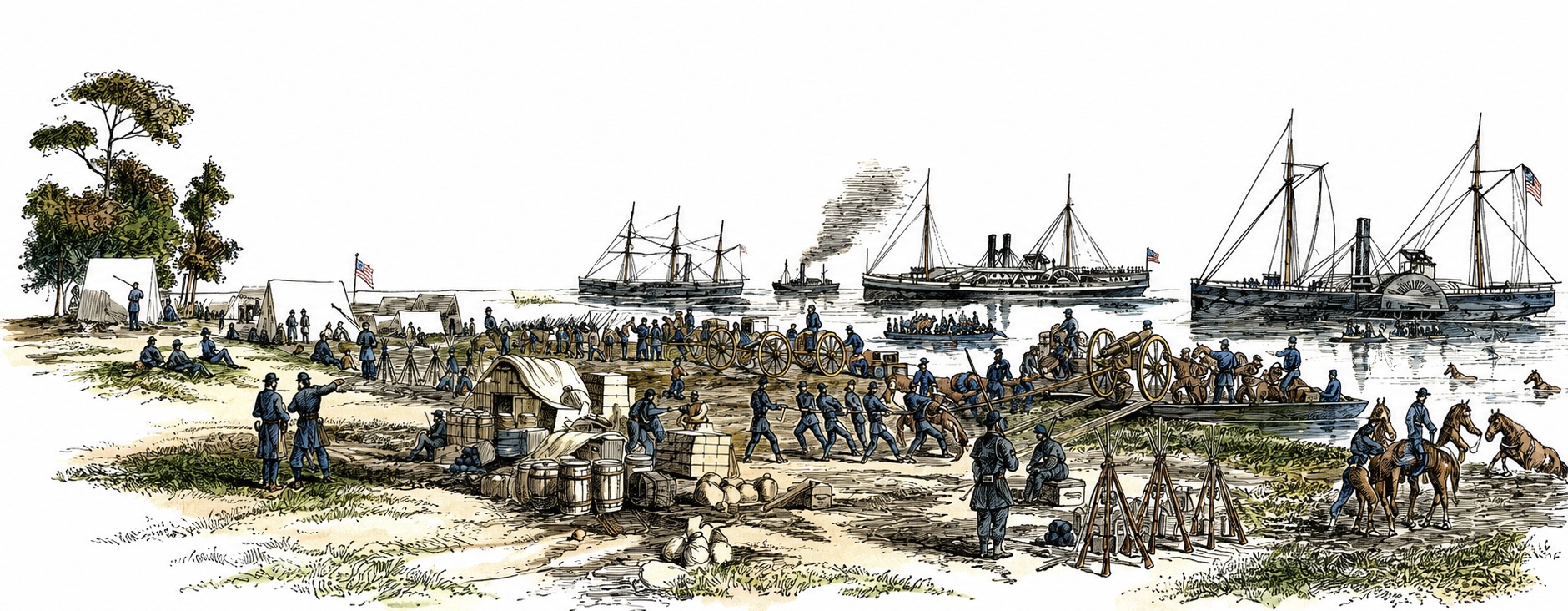
Day after Christmas, December 26, 1863
Dear Brother George,
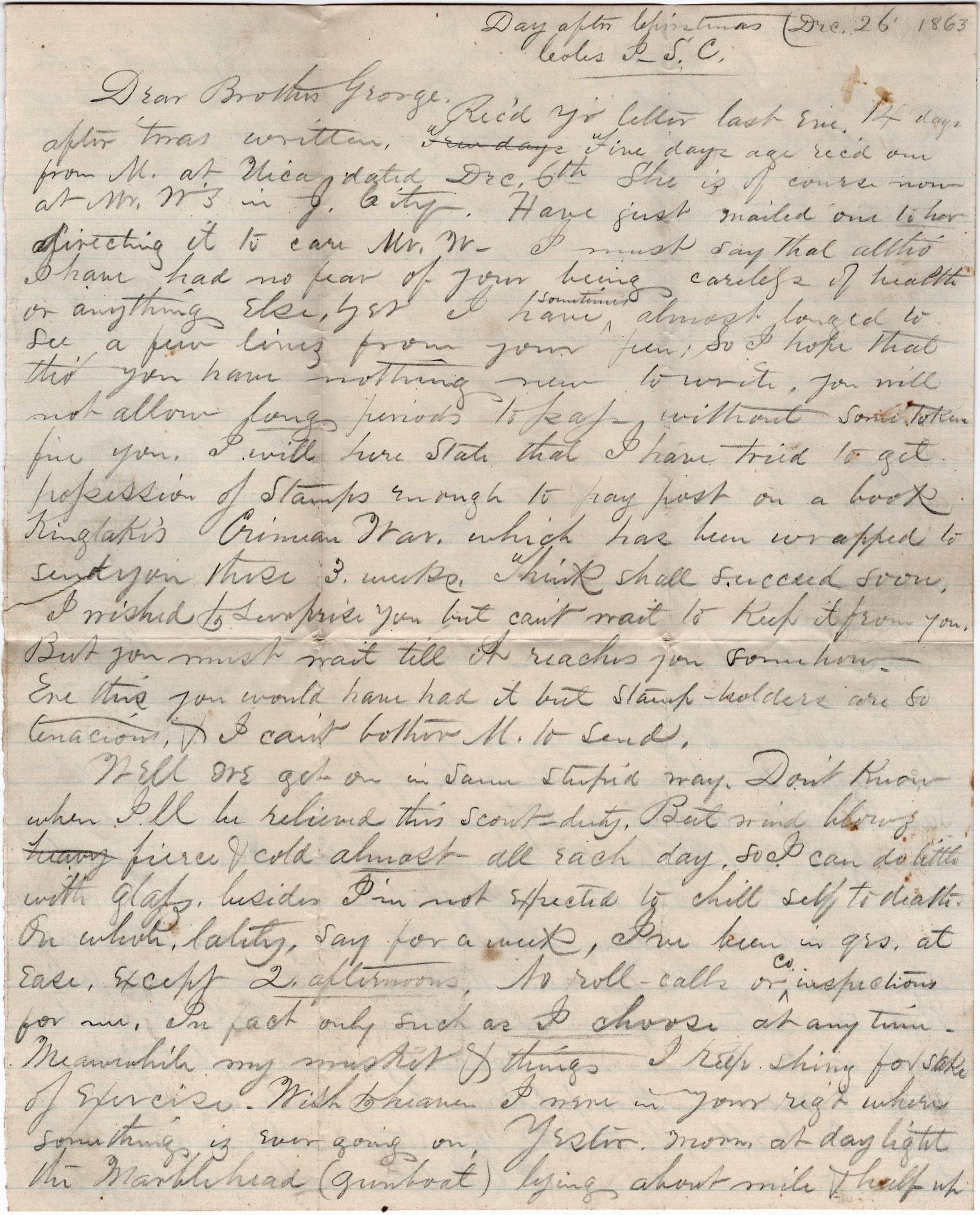
Received your letter last eve, 14 days after twas written. Five days ago received one from M[arianne] at Utica dated December 6th. She is of course now at Mr. W’s in Jersey City. Have just mailed one to her directing it to care of Mr. W. I must say that although I have had no fear of your being careless of health or anything else, yet I have sometimes almost longed to see a few lines from your pen, so I hope that though you have nothing new to write, you will not allow long periods to pass without some token from you. I will here state that I have tried to get possession of stamps enough to pay post on a book—Kinglake’s Crimean War—which has been wrapped to send you these 3 weeks. Think I shall succeed soon. I wished to surprise you but can’t wait to keep it from you. But you must wait till it reaches you somehow. Ere this you would have had it but stamp holders are so tenacious & I can’t bother M. to send.
Well we get on in the same stupid way. Don’t know when I will be relieved [of] this scout duty. But wind blows fierce & cold almost all each day so I can do little with glass. Besides, I’m not expected to chill self to death. Lately, say for a week, I’be been in quarters at ease except two afternoons. No roll calls or company inspections for me. In fact, only such as I choose at any time. Meanwhile my musket & things I keep shiny for sake of exercise. Wish to heaven I were in your regiment where something is ever going on.
Yesterday morning at daylight, the Marblehead (gunboat) lying about a mile and a half up Stono was attack[ed] by 13 reb field guns on a line half mile back from W shore Stono & about a mile from Marblehead. The Pawnee soon came up & helped to drive rebs from position, but the Marblehead, tis reported, lost three killed & 5 wounded. Reckon it was only a Christmas salute.
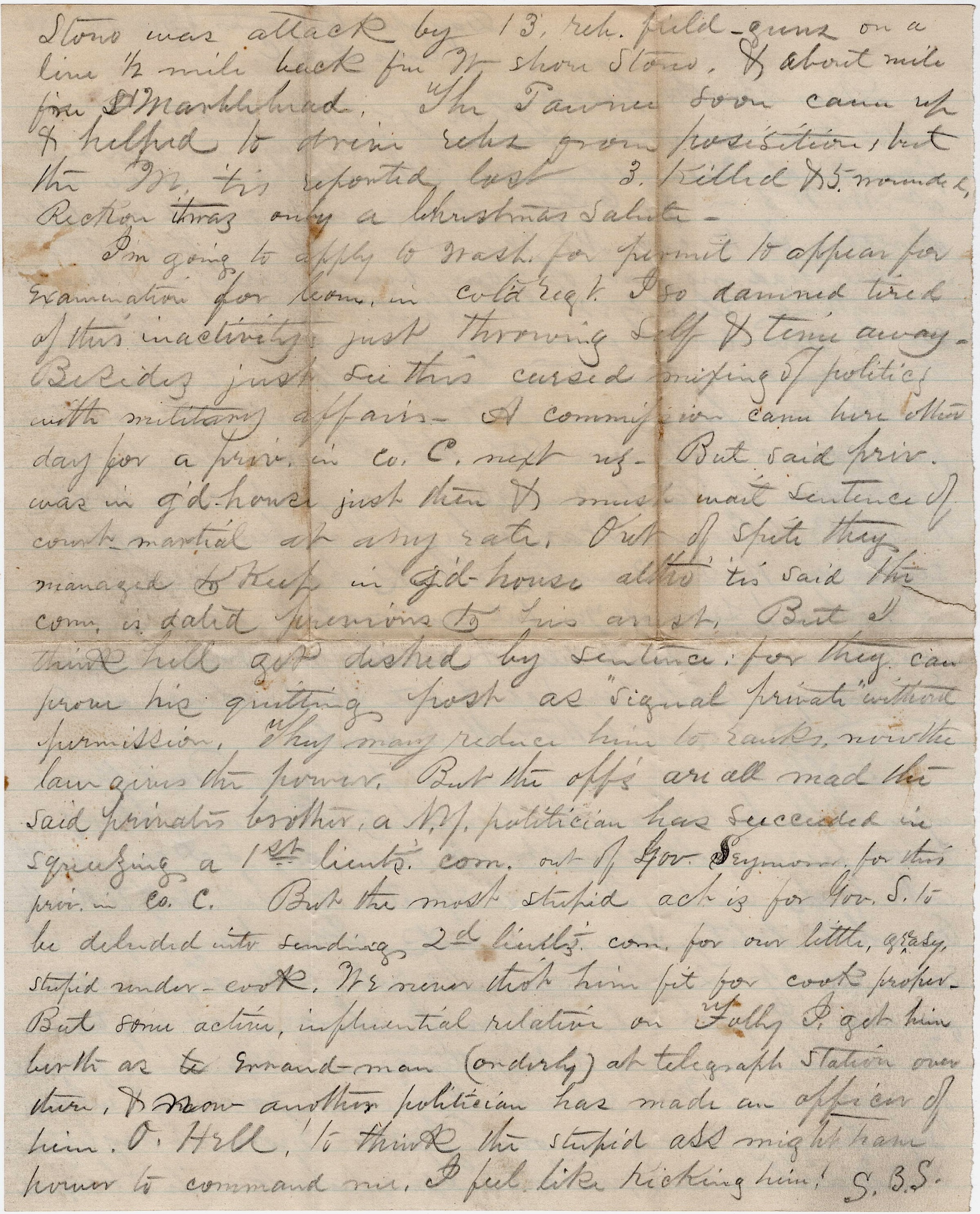
I’m going to apply to Washington for permit to appear for examination for commission in Colored Regiment. I [am] so damned tired on this inactivity—just throwing self & time away. Besides, just see this cursed mixing of politics with military affairs. A commission came here the other day for a private in Co. C next us. But said private was in guard house just then & must wait sentence of court martial at any rate. Out of spite, they managed to keep [him] in guard house although tis said the commission is dated previous to his arrest. But I think he’ll get discharged by sentence for they can from his quitting post as “signal private” without permission. They may reduce him to ranks, now the law gives the power. But the officers are all made that the said private’s brother—a New York politician—has succeeded in squeezing a 1st Lieutenant’s commission out of Gov. Seymour for this private in Co. C.
But the most stupid act is for Gov. Seymour to be deluded into sending a 2nd Lieutenant’s commission for our little, greasy, stupid under cook. We never thought him fit for cook proper. But some active, influential relation on Folly Island got him berth as errand man (orderly) at telegraph station over there & now another politician has made an officer of him. Oh Hell! to think the stupid ass might have power to command me. I feel like kicking him! — S. B. S.

1864: William Campbell Cook to Linda Hughes
The following letter was written by William C. Cook (1843-1936), the orphaned son of Asa C. Cook (1810-1850) and Mary Margaret Campbell (1814-1846) of Dalton, Wayne county, Ohio. William entered the service at age 18, enlisting for three years on 30 August 1862 in Co. C, 41st Ohio Volunteer Infantry (OVI). He made the jump from musician (drummer boy) to sergeant on 9 July 1864 and was appointed the 1st Sergeant of his company on 9 January 1865. He mustered out as a veteran on 27 November 1865. William married Eliza Ellen Fletcher (1847-1914) in 1868 and was a merchant in Dalton in the latter half of the 19th century.
Over the years I have transcribed a few other letters by soldiers in the 41st OVI; three of them by members of Co. C: These letters include:
Norman Chaffin, Co. C, 41st Ohio (1 Letter)
Joseph Alexander McGonagle, Co. C, 41st Ohio (2 Letters)
Jacob Shanklin, Co. C, 41st Ohio (1 Letter)
John Henry Wakefield, Co. D, 41st Ohio (2 Letters)
T R A N S C R I P T I O N

In front of Atlanta, Georgia
August 21, 1864
Miss Linda Hughes, kind Friend.
Thinking a few lines from a soldier friend would prove acceptable to you, I take the liberty to address a few lines to you. As I have not written to you yet, although I believe I promised to write soon after I left Dalton [Ohio] for the army.
We are having a different time now that we had last winter. We are marching or fighting most all the time—more amusement than I like. I would rather go to Orrville to a concert and see the picture of a battlefield as some we see here. How should you like to take another wagon ride? I think I could enjoy one now very well. But the party that took that ride will never be all together again. I heard from Dalton a few days ago. Gust [Augusta] McDowl [McDowell] is more than down on us boys. She does not believe Ed was killed She says we do not know anything about it. Well perhaps we don’t, but I know she will never see him again as I never knew of a dead man coming to life yet.
Since we left Dalton, we have seen some hard times. We have been under fire almost every day since the 6th of May. Now we are in sight of the rebs and are skirmishing with them every few days. There has been some hard fighting along the line but none in our front. But we have our share. We are close to Atlanta but there is going to be some hard fighting before they let us go in.
Today is Sunday and is midling quiet but can’t tell how long it will last as they start up firing all at once sometimes. We can’t tell one minute what shall happen the next. Don’t care much either. If we have to fight, I want to do it and get home again—that is, if they don’t hurt me.
Linda, I hardly know where to direct my letters to as I do not know whether you are at your home or not, as it has been quite a while since I heard from you. Milt Fletcher says he wrote you some time ago and never received any answer. It is now getting late and I shall have to close for this time but if I am so lucky as to receive an answer, I will write more the next time. Hoping to hear from you soon, I remain your friend, — W. C. Cook
P. S. Milt & Will sends respects. Direct to W. C. Cook, County. C, 41st O[hio] V[et.] V[ol.] I[nfantry], Marietta, Georgia


